Krauss Anastigmaat – Zeiss 8/205mm N°20716 + 3 plates + case | Wetplate camera



Open for bids in 29min
Starting bid
€ 1
Add to your favourites to get an alert when the auction starts.

Expert
Selected by Thorsten Pöllath
Has 40 years of experience in photography and 25 years of collecting expertise, specialising in M42 lens mounts.
Estimate € 170 - € 210
Catawiki Buyer Protection
Your payment’s safe with us until you receive your object.View details
Trustpilot 4.4 | 122290 reviews
Rated Excellent on Trustpilot.
Description from the seller
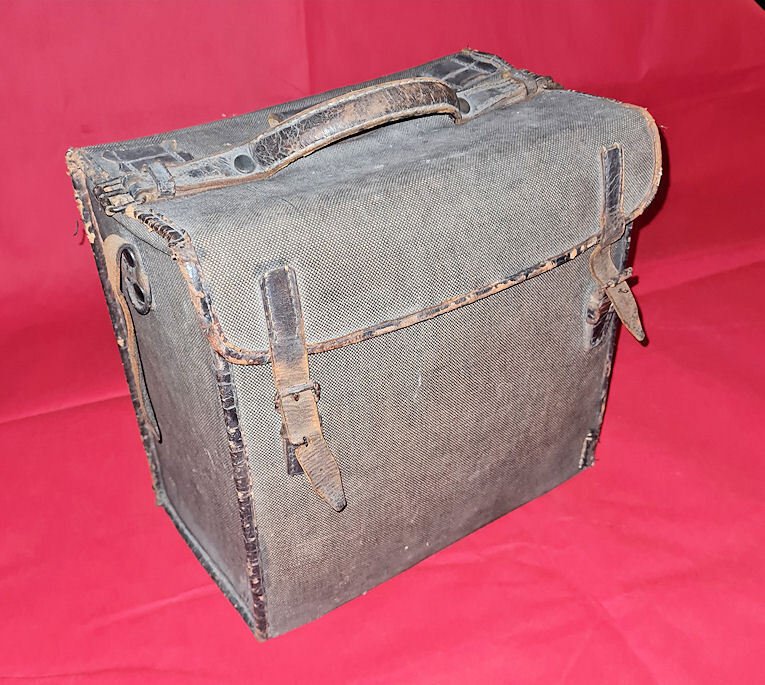
wooden plate field camera
lens: E Kraus & Cie Paris - Anastigmat – Zeiss 1.8 F 205 M/M box SGDG No. 20716
Dimensions: camera
Height 25 cm
Width 22 cm
Folded thickness 8 cm
Maximum unfolded: 48 cm
The glass mat plate is missing.
Most foldable wooden travel cameras are characterized by a number of features. The devices are equipped with:
A removable front with an objective lens.
Guides for a sliding wooden panel holder.
A rear hatch with frosted glass
A foldable wooden camera house
A wooden frame with a bellows that can be moved forward and backward in a rail system via gears.
A finish with lacquered brass or nickel-plated brass metalwork.
A camera with the object front fixed to the base plate, while the back can be moved forward and backward.
Lens: E. Krauss Paris) E Kraus & Cie Paris - Anastigmat – Zeiss 1.8 F 205 M/M Box SGDG No. 20716
E. Krauss was a French camera and lens manufacturer, founded in the late 1880s. Founder Eugen Krauss was the brother of G.A. Krauss. The company had a license in 1891 to produce certain lens types from Carl Zeiss. (License S.G.D.G. No. 141, 229 E.Krauss Paris)
The term Anastigmat, which we used for our first lenses, is a scientific term and has been used by various other manufacturers since then. We have abandoned this term and replaced it with 'Protar,' a term that is exclusively specific to our V-, VII-, and VIIa-series lenses. (Source: https://largeformatcameras.net/picture.php?/2122/category/91)
Astigmatism is a lens defect that causes a point of the subject to appear as a line on the focal plane. In anastigmatic lenses, the defect is corrected through a careful combination of lens elements.
wooden plate field camera
lens: E Kraus & Cie Paris - Anastigmat – Zeiss 1.8 F 205 M/M box SGDG No. 20716
Dimensions: camera
Height 25 cm
Width 22 cm
Folded thickness 8 cm
Maximum unfolded: 48 cm
The glass mat plate is missing.
Most foldable wooden travel cameras are characterized by a number of features. The devices are equipped with:
A removable front with an objective lens.
Guides for a sliding wooden panel holder.
A rear hatch with frosted glass
A foldable wooden camera house
A wooden frame with a bellows that can be moved forward and backward in a rail system via gears.
A finish with lacquered brass or nickel-plated brass metalwork.
A camera with the object front fixed to the base plate, while the back can be moved forward and backward.
Lens: E. Krauss Paris) E Kraus & Cie Paris - Anastigmat – Zeiss 1.8 F 205 M/M Box SGDG No. 20716
E. Krauss was a French camera and lens manufacturer, founded in the late 1880s. Founder Eugen Krauss was the brother of G.A. Krauss. The company had a license in 1891 to produce certain lens types from Carl Zeiss. (License S.G.D.G. No. 141, 229 E.Krauss Paris)
The term Anastigmat, which we used for our first lenses, is a scientific term and has been used by various other manufacturers since then. We have abandoned this term and replaced it with 'Protar,' a term that is exclusively specific to our V-, VII-, and VIIa-series lenses. (Source: https://largeformatcameras.net/picture.php?/2122/category/91)
Astigmatism is a lens defect that causes a point of the subject to appear as a line on the focal plane. In anastigmatic lenses, the defect is corrected through a careful combination of lens elements.
Details
Era
1900-2000
Brand
Krauss
Model/ type nr
Anastigmaat – Zeiss 8/205mm N°20716 + 3 plates + case |
Physical condition
Good
Functional condition
Not tested
Lens Mount Type
Lensboard
Film type
5x7 Inch
Estimated Period
1900-1920
Sold by