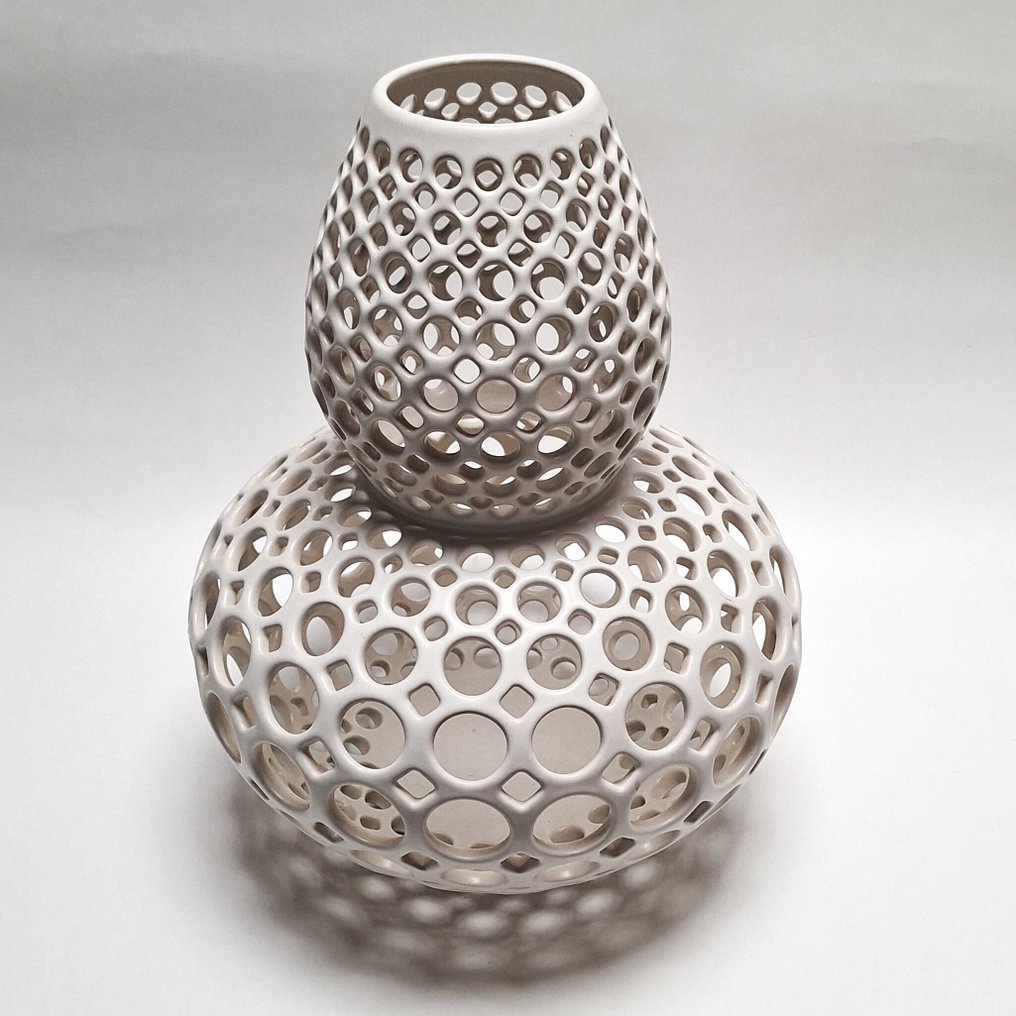
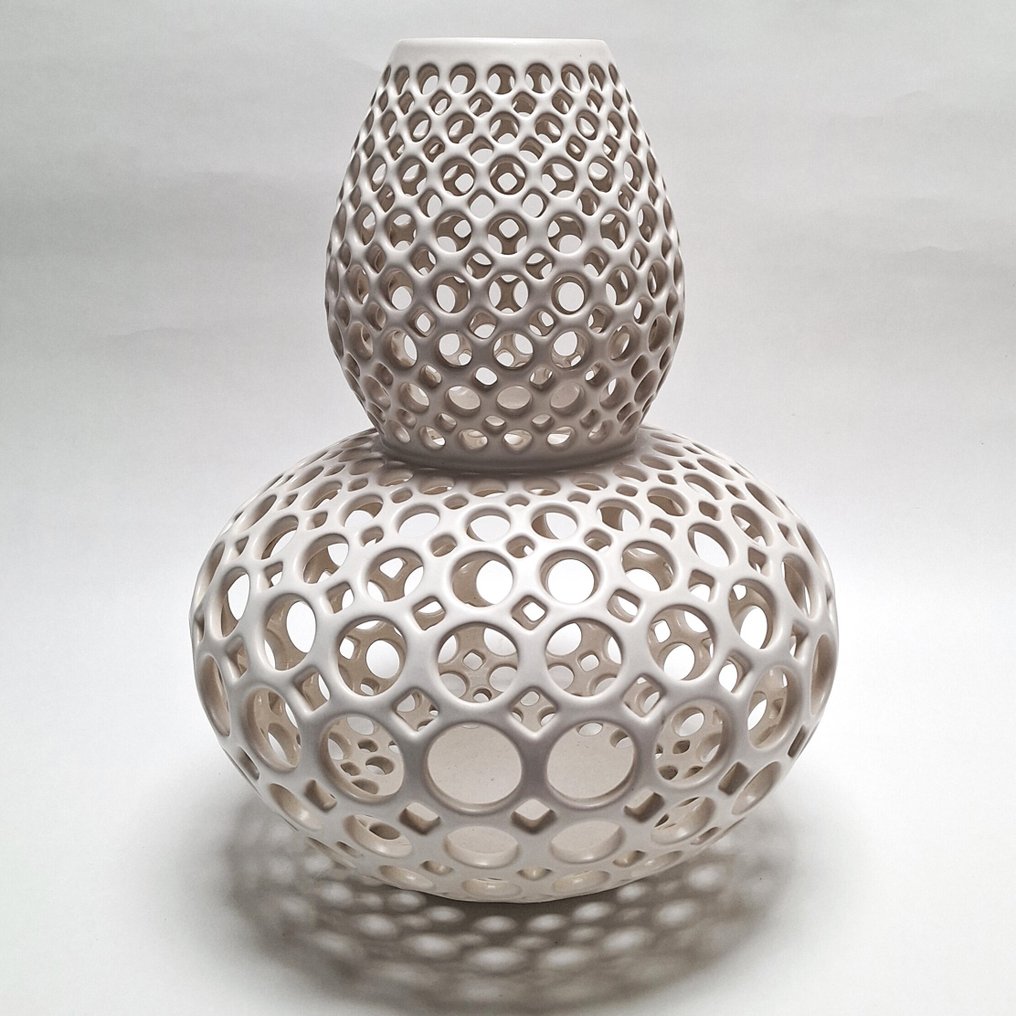
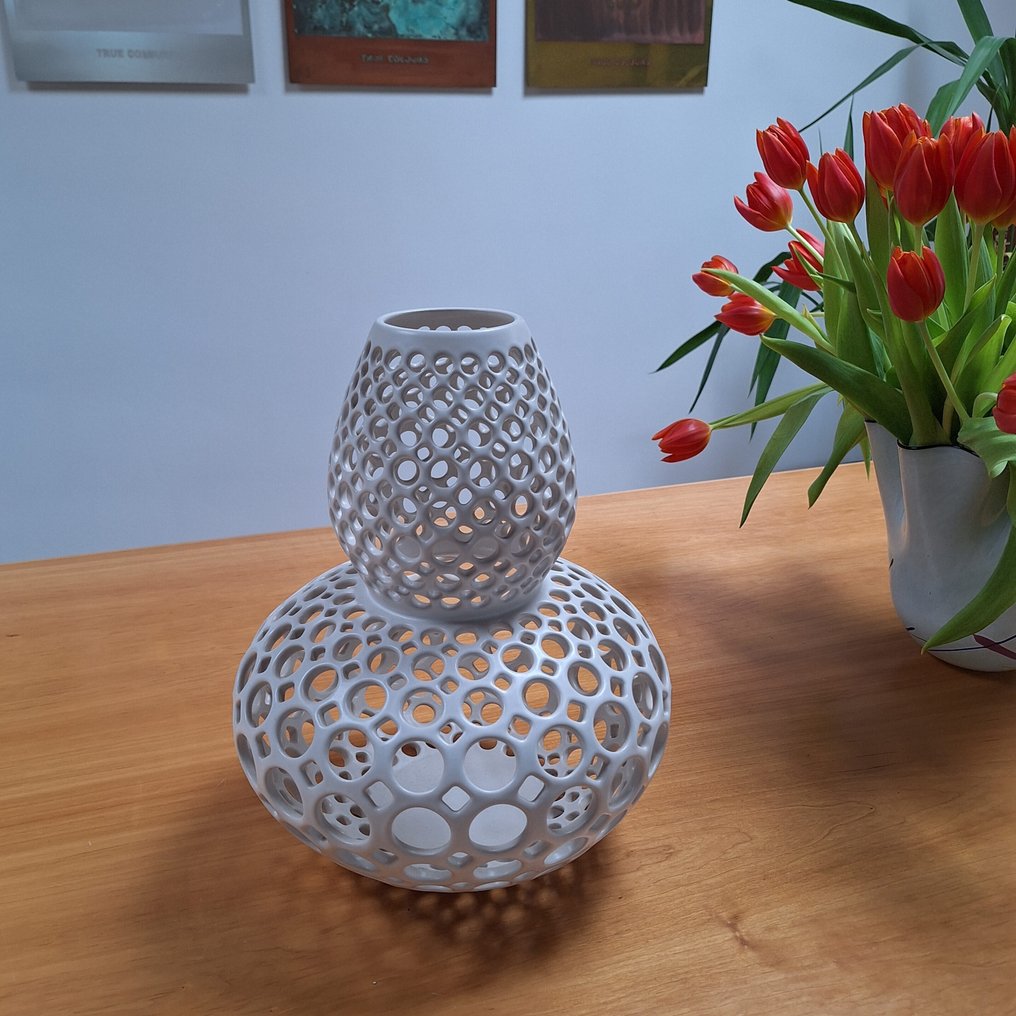
Lynne R. Meade - Sculpture, Double Gourd Round Lace Vessel - 38 cm - Stoneware - 2023
06
days
16
hours
03
minutes
54
seconds
Current bid
€ 2
No reserve price

Expert
Selected by Henri Daumont
Taught design history at ISG Business School and owned Midi design shop for eight years.
Estimate € 400 - € 500
6 other people are watching this object
 Bidder 4960 Bidder 4960 | €2 | |
|---|---|---|
| Bidder 8598 | €1 |
Catawiki Buyer Protection
Your payment’s safe with us until you receive your object.View details
Trustpilot 4.4 | 122529 reviews
Rated Excellent on Trustpilot.
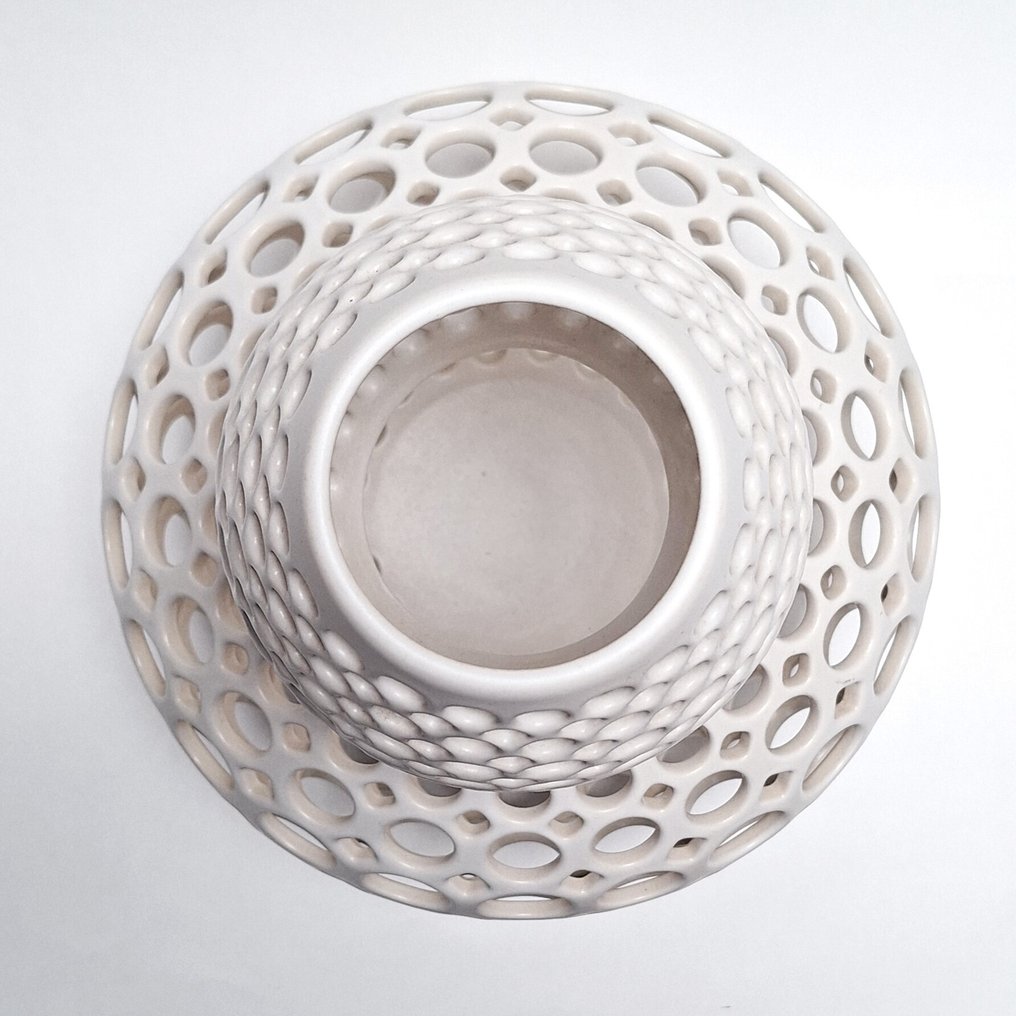
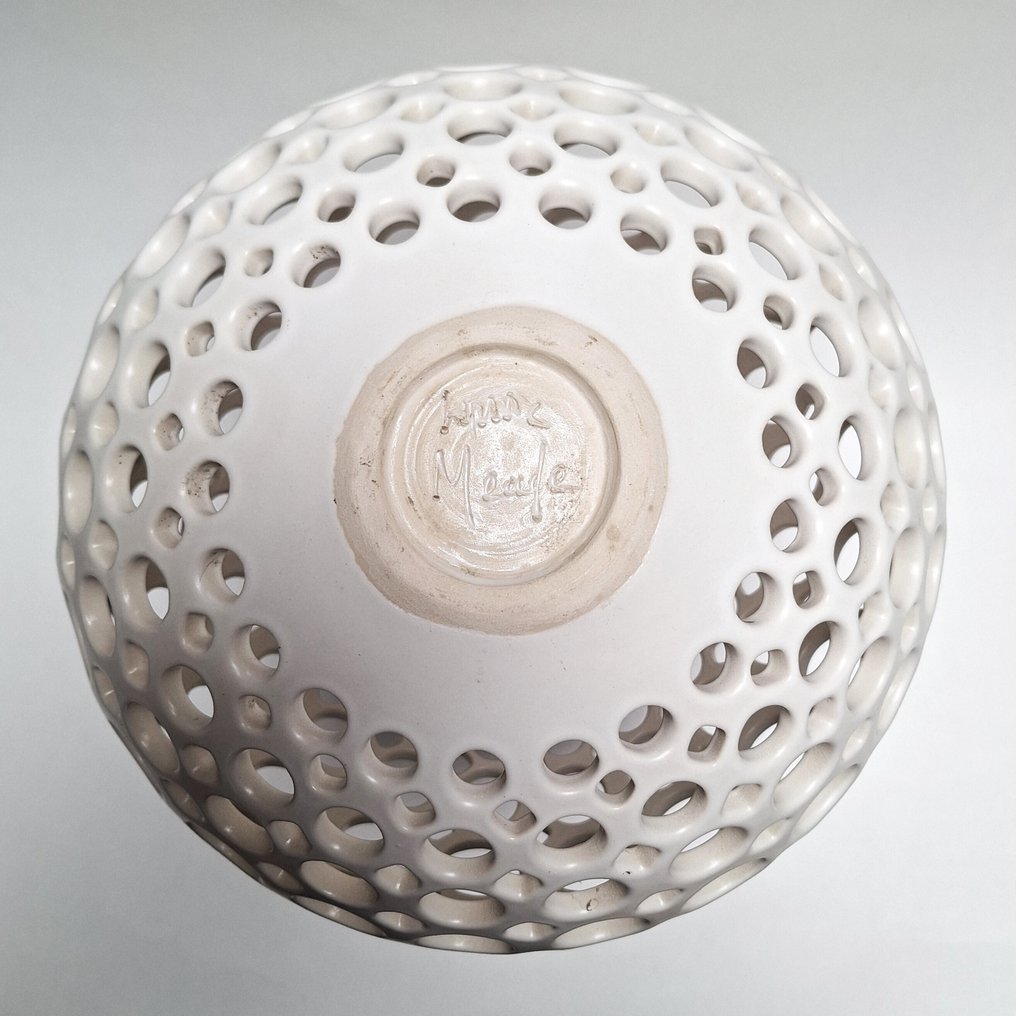
Lynne R. Meade, an American artist, created in 2023 a unique white stoneware vase titled 'Double Gourd Round Lace Vessel', hand-signed, measuring 29 cm wide, 38 cm high and 29 cm deep, originating from the United States in a Modern style and in excellent condition.
AI-assisted summary
Description from the seller
This Double Gourd Round Lace white vase is a unique, medium-sized, contemporary, modern ceramic object by California artist Lynne Meade. It was wheel-thrown, hand-perforated, and features a smooth, white satin glaze. Everything is handcrafted, without molds or stencils. She adheres to a simple color palette to avoid toxic metals in many clay pigments and to let the complex design speak for itself. The straight lines and flowing curves in architecture and nature permeate her organic, geometric forms.
Lynne Meade (1962, VS) studied at the Penland School of Crafts and earned a bachelor's degree in ceramic design from Wesleyan University in Connecticut in 1986. She has taught at MIT, the New Jersey Center for Visual Arts, the Walnut Creek Center for Community Arts, ASUC at UC Berkeley, and conducted workshops across the country. In 2009, Meade received the Carol Duke Artist Award for Excellence in Craft at the Bellevue Arts Museum. She has permanent collections at the American Museum of Ceramic Art in Pomona, California, and at Benedict University in Chicago, Illinois, and is part of many private collections worldwide. She currently works from her studio in Oakland, California. Her clay works are examples of stunning forms, intricate details, and subtle beauty.
The symmetry and dynamic patterns of Juan Quezada, the master potter of Mata Ortiz, inspire her. The patterns in her ceramics tell stories that unfold as a viewer turns a piece. By piercing a vase for days, a peaceful, meditative space is created that is embodied in the work. Her collection of 'pierced' ceramics from the mid-20th century explores the play of light and shadow, transparency and inner space, and complements any urban, contemporary, or transitional space.
This Double Gourd Round Lace white vase is a unique, medium-sized, contemporary, modern ceramic object by California artist Lynne Meade. It was wheel-thrown, hand-perforated, and features a smooth, white satin glaze. Everything is handcrafted, without molds or stencils. She adheres to a simple color palette to avoid toxic metals in many clay pigments and to let the complex design speak for itself. The straight lines and flowing curves in architecture and nature permeate her organic, geometric forms.
Lynne Meade (1962, VS) studied at the Penland School of Crafts and earned a bachelor's degree in ceramic design from Wesleyan University in Connecticut in 1986. She has taught at MIT, the New Jersey Center for Visual Arts, the Walnut Creek Center for Community Arts, ASUC at UC Berkeley, and conducted workshops across the country. In 2009, Meade received the Carol Duke Artist Award for Excellence in Craft at the Bellevue Arts Museum. She has permanent collections at the American Museum of Ceramic Art in Pomona, California, and at Benedict University in Chicago, Illinois, and is part of many private collections worldwide. She currently works from her studio in Oakland, California. Her clay works are examples of stunning forms, intricate details, and subtle beauty.
The symmetry and dynamic patterns of Juan Quezada, the master potter of Mata Ortiz, inspire her. The patterns in her ceramics tell stories that unfold as a viewer turns a piece. By piercing a vase for days, a peaceful, meditative space is created that is embodied in the work. Her collection of 'pierced' ceramics from the mid-20th century explores the play of light and shadow, transparency and inner space, and complements any urban, contemporary, or transitional space.
Details
Era
After 2000
Style subtype
Retro
Country of Origin
United States
Style
Contemporary
Material
Stoneware
Artist
Lynne R. Meade
Title of artwork
Double Gourd Round Lace Vessel
Signature
Hand signed
Edition
Unica
Year
2023
Colour
White
Condition
Excellent condition
Height
38 cm
Width
29 cm
Depth
29 cm
Sold by