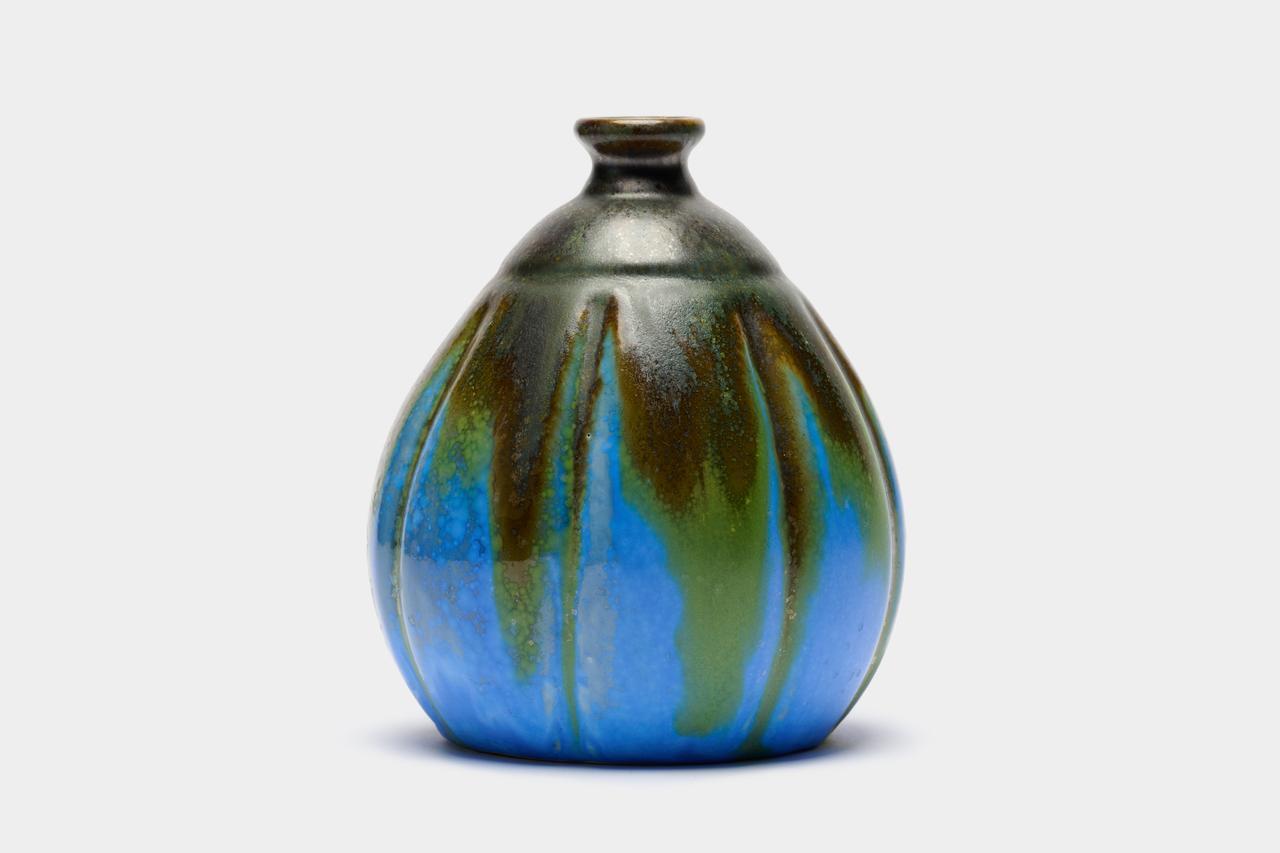
Pietro Melandri - Sculpture, Leda e il cigno - 18 cm - Ceramic


09
days
20
hours
47
minutes
51
seconds
Current bid
€ 160
Reserve price not met

Expert
Selected by Fiammetta Fulchiati
Over five years' experience with antiques and expertise in Murano glass.
Estimate € 800 - € 900
14 other people are watching this object
 Bidder 8764 Bidder 8764 | €160 | |
|---|---|---|
| Bidder 0236 | €150 |
Catawiki Buyer Protection
Your payment’s safe with us until you receive your object.View details
Trustpilot 4.4 | 122473 reviews
Rated Excellent on Trustpilot.
Ceramic artwork titled “Leda e il cigno” by Pietro Melandri (Italy), measuring 18 cm wide, 18 cm high and 5.5 cm deep, in good condition and signed.
AI-assisted summary
Description from the seller
Significant work by Pietro Melandri (Faenza, July 24, 1885 – Faenza, October 25, 1976) in good condition, made of glazed ceramic.
Painter, decorator, set designer, and ceramist, Pietro Melandri was born in Faenza on July 25, 1885.
A student at the local School of Arts and Crafts, pupil of Antonio Berti, who at just thirteen years old became an apprentice at the 'Minardi' factory, owned by brothers Venturino and Virginio Minardi, where he remained until 1905. In 1906, he moved to Salerno and worked as a mural decorator. After completing his military service in Turin, he moved to Milan, where, in addition to working as a set designer and decorator, he attended evening courses at the Brera Academy and courses in Applied Arts at the Castello Sforzesco.
In 1908, he participated with some paintings in the Torricellian Exhibition. Called to arms in 1916, he returned to Faenza after several months of imprisonment at the end of 1918, and after a few months spent as director at the 'Minardi' factory, in 1919 he opened, together with Paolo Zoli and Francesco Nonni, the workshop for artistic ceramics production 'La Faience,' dedicating himself with maximum commitment to technical and stylistic research for the renewal of traditional Faenza ceramics.
The mark from this period consists of a four-part circle containing the initials M and Z of the two partners, from which four serpentine shapes extend.
In 1920, after ending the partnership with Paolo Zoli but not with Francesco Nonni, with whom he would collaborate until the 1930s, he took over the 'Calzi Ceramiche' workshop owned by Achille Calzi, located on Via Roma Nuova in Faenza, and invited Arturo Martini to collaborate with him.
In 1921, the year he participated with some ceramics in the First Biennale of Rome, he met the Ravenna industrialist Umberto Focaccia, and the following year, thanks to Focaccia's financial intervention, he purchased the premises already owned by the 'Minardi' factory and founded the 'Melandri-Focaccia' factory, located in Faenza, via Baccarini 29/a.
They present their creations, marked with a symbol enclosed in a circle and the initials F M, at the Monza Biennials of 1923 and 1925.
Also in 1925, they participated in the Expo des Arts Decoratives in Paris, and in 1930 at the Triennale di Monza, earning a diploma of honor at the Barcelona Expo.
After collaborating with Giò Ponti on the interior decoration of some large transatlantic ships and Lombard villas, in 1931, financial difficulties forced Focaccia to sell the factory, and Melandri, who acquired a share of the ownership with an entrance on Via Salvolini, in 1932, finally established himself independently.
As the sole owner of the manufactory, he revolutionized production by dedicating himself to works far from tradition, strongly innovative and inspired by broad experimentation. In 1933, he participated with some ceramics in the Milan Triennale. Awarded at the Milan Triennale of Art in 1936, he achieved great success at the 1937 Paris Universal Exposition, where he was recognized as the most important Italian ceramist and was awarded the Grand Prix. That same year, he received the Gold Medal at the Gaetano Ballardini Prize in Faenza. In 1938, with the Golden Rose Vase, and in 1939, with the Announcing Angel panel, he won first prize at the National Ceramic Competition in Faenza. The mark from the 1930s features the usual star within a circle and the initials M or simply the inscription P. Melandri Faenza. In 1944, a bombing destroyed the factory, and Melandri remained inactive until 1946, when he resumed contact with architect Ponti, for whom he created ceramic panels intended to decorate the ship 'Conte di Biancamano'.
In the post-war period, Melandri, with whom the leading figures of 20th-century ceramics collaborated over the years—including Francesco Di Cocco, Ercole Drei, Carlo Corvi, Giovanni Guerrini, Bruno Innocenti, Carlo Lorenzetti, Domenico Matteucci, Enrico Mazzolani, Giuseppe Mazzullo, Giuseppe Tampieri—created a rich and original production that, while drawing on Faenza ceramic tradition, is imbued with a strong and compelling modernity, making him fully one of the great ceramic masters of the century. In 1966, Pietro Melandri participated in a major retrospective exhibition at the Gubbio Ceramic Art Biennale. From 1969, he slowed his creative activity and gradually handed over the management of the company to his closest collaborators.
Pietro Melandri, who remained active until the age of 86, died in Faenza in 1976.
The furnace owned by Melandri continued to produce on its molds until 1986.
Provenance: private collection, Milan, Italy
Fast shipping with secure packaging
Seller's Story
Art dealer specializing in old master paintings and 19th century works
In collaboration with ART & INVESTIGATION historical and artistic investigations on works of art
Translated by Google TranslateSignificant work by Pietro Melandri (Faenza, July 24, 1885 – Faenza, October 25, 1976) in good condition, made of glazed ceramic.
Painter, decorator, set designer, and ceramist, Pietro Melandri was born in Faenza on July 25, 1885.
A student at the local School of Arts and Crafts, pupil of Antonio Berti, who at just thirteen years old became an apprentice at the 'Minardi' factory, owned by brothers Venturino and Virginio Minardi, where he remained until 1905. In 1906, he moved to Salerno and worked as a mural decorator. After completing his military service in Turin, he moved to Milan, where, in addition to working as a set designer and decorator, he attended evening courses at the Brera Academy and courses in Applied Arts at the Castello Sforzesco.
In 1908, he participated with some paintings in the Torricellian Exhibition. Called to arms in 1916, he returned to Faenza after several months of imprisonment at the end of 1918, and after a few months spent as director at the 'Minardi' factory, in 1919 he opened, together with Paolo Zoli and Francesco Nonni, the workshop for artistic ceramics production 'La Faience,' dedicating himself with maximum commitment to technical and stylistic research for the renewal of traditional Faenza ceramics.
The mark from this period consists of a four-part circle containing the initials M and Z of the two partners, from which four serpentine shapes extend.
In 1920, after ending the partnership with Paolo Zoli but not with Francesco Nonni, with whom he would collaborate until the 1930s, he took over the 'Calzi Ceramiche' workshop owned by Achille Calzi, located on Via Roma Nuova in Faenza, and invited Arturo Martini to collaborate with him.
In 1921, the year he participated with some ceramics in the First Biennale of Rome, he met the Ravenna industrialist Umberto Focaccia, and the following year, thanks to Focaccia's financial intervention, he purchased the premises already owned by the 'Minardi' factory and founded the 'Melandri-Focaccia' factory, located in Faenza, via Baccarini 29/a.
They present their creations, marked with a symbol enclosed in a circle and the initials F M, at the Monza Biennials of 1923 and 1925.
Also in 1925, they participated in the Expo des Arts Decoratives in Paris, and in 1930 at the Triennale di Monza, earning a diploma of honor at the Barcelona Expo.
After collaborating with Giò Ponti on the interior decoration of some large transatlantic ships and Lombard villas, in 1931, financial difficulties forced Focaccia to sell the factory, and Melandri, who acquired a share of the ownership with an entrance on Via Salvolini, in 1932, finally established himself independently.
As the sole owner of the manufactory, he revolutionized production by dedicating himself to works far from tradition, strongly innovative and inspired by broad experimentation. In 1933, he participated with some ceramics in the Milan Triennale. Awarded at the Milan Triennale of Art in 1936, he achieved great success at the 1937 Paris Universal Exposition, where he was recognized as the most important Italian ceramist and was awarded the Grand Prix. That same year, he received the Gold Medal at the Gaetano Ballardini Prize in Faenza. In 1938, with the Golden Rose Vase, and in 1939, with the Announcing Angel panel, he won first prize at the National Ceramic Competition in Faenza. The mark from the 1930s features the usual star within a circle and the initials M or simply the inscription P. Melandri Faenza. In 1944, a bombing destroyed the factory, and Melandri remained inactive until 1946, when he resumed contact with architect Ponti, for whom he created ceramic panels intended to decorate the ship 'Conte di Biancamano'.
In the post-war period, Melandri, with whom the leading figures of 20th-century ceramics collaborated over the years—including Francesco Di Cocco, Ercole Drei, Carlo Corvi, Giovanni Guerrini, Bruno Innocenti, Carlo Lorenzetti, Domenico Matteucci, Enrico Mazzolani, Giuseppe Mazzullo, Giuseppe Tampieri—created a rich and original production that, while drawing on Faenza ceramic tradition, is imbued with a strong and compelling modernity, making him fully one of the great ceramic masters of the century. In 1966, Pietro Melandri participated in a major retrospective exhibition at the Gubbio Ceramic Art Biennale. From 1969, he slowed his creative activity and gradually handed over the management of the company to his closest collaborators.
Pietro Melandri, who remained active until the age of 86, died in Faenza in 1976.
The furnace owned by Melandri continued to produce on its molds until 1986.
Provenance: private collection, Milan, Italy
Fast shipping with secure packaging
Seller's Story
Art dealer specializing in old master paintings and 19th century works
In collaboration with ART & INVESTIGATION historical and artistic investigations on works of art
Translated by Google TranslateDetails
Era
1900-2000
Country of Origin
Italy
Material
Ceramic
Artist
Pietro Melandri
Title of artwork
Leda e il cigno
Signature
Signed
Condition
Good condition
Height
18 cm
Width
18 cm
Depth
5.5 cm
Sold by