Caio M. Garrubba - Photographs - 2000


08
days
01
hour
44
minutes
52
seconds
Starting bid
€ 1
No reserve price

Expert
Selected by Sebastian Hau
Founded and directed two French book fairs; nearly 20 years of experience in contemporary books.
Estimate € 110 - € 170
No bids placed
Catawiki Buyer Protection
Your payment’s safe with us until you receive your object.View details
Trustpilot 4.4 | 122529 reviews
Rated Excellent on Trustpilot.
Book title 'Photographs' by Caio M. Garrubba.
AI-assisted summary
Description from the seller
Color and black-and-white photographs by Caio Mario Garrubba. Text by Diego Mormorio on the back of the dust jacket.
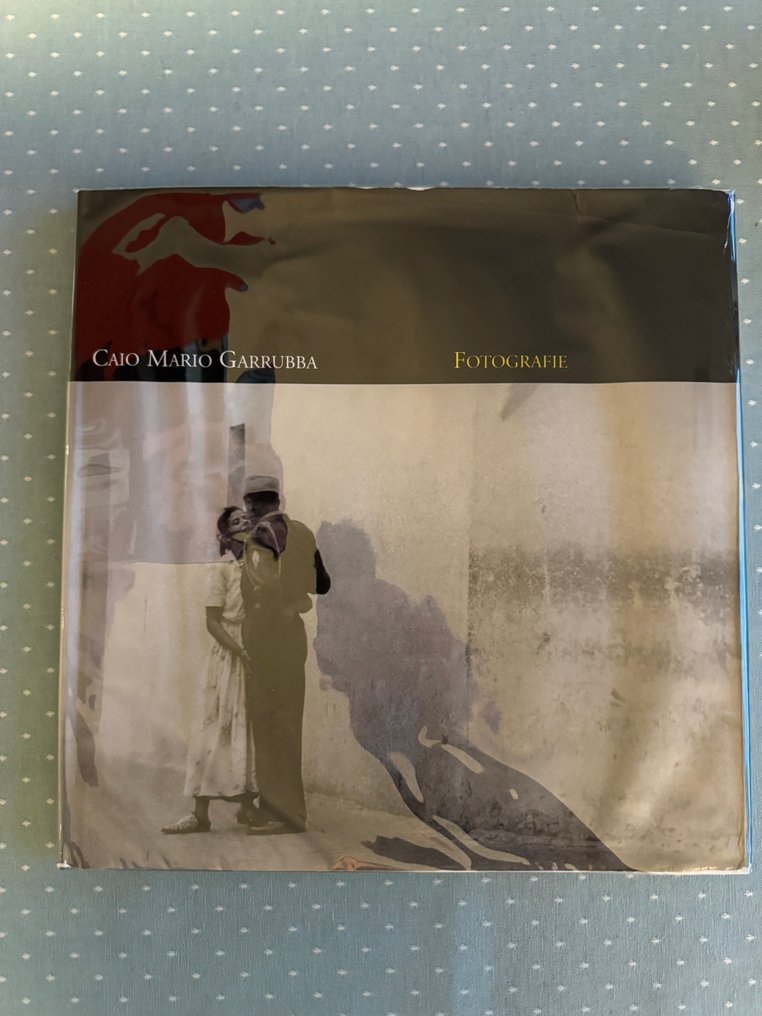
4to (32.5 x 32.5 cm), 80 pp. hardcover, extra dust jacket of the Italian edition (most likely the English edition was issued without a dust jacket). The book is in good condition, with some signs of use on the outside (see photos), and the dust jacket has a tear on the front cover and is wavy. Inside, it is very good, with no markings and a firm binding.
Caio Mario Garrubba (Naples, 1923 – Spoleto, 2015), associated with the left-wing culture that saw promise and hope in the Soviet Union and the countries of real socialism, was able to photograph this reality with a disenchanted eye, but always with a constant focus on people and the human factor. The result is photography that is not an eyewitness account of a century of history, but of the humanity and vitality that drove it. (...) You could meet him at two in the morning in a nightclub in East Berlin, amidst the Cold War, sipping Soviet champagne, or on a sunny street in Madrid eating shrimp and studying the faces and gestures of passersby. Taciturn and silent as a sly cat ready to ‘pounce’ – as writer and photographer Ermanno Rea described him – Caio Mario Garrubba replied to those who asked why he used such basic equipment (a Leica camera and a few extra lenses) that photographs ‘are taken with the head and not with machines’. His instinctive dislike of the powerful, whom he tried to capture in their most ‘stinking’ moments, as he recounts, was matched by an unconditional passion for the people he met on the street, who became extraordinary subjects of one of the most profound photographic perspectives of the late 20th century.
Caio Garrubba photographed Naples and Calabria—the places he comes from—quite extensively, as well as the countries of what was once the communist world—especially Poland, Germany, the USSR, and China—even more so. To use Parise's words again, we could say that, to be concise, Garrubba can be defined as the photographer of communism. But even then, in 1983, the author of Il Prete bello (The Handsome Priest) wondered: which communism? Not the real one, with its dictatorship and bureaucracy, but the one rooted in hope (from Mormorio's text).
Color and black-and-white photographs by Caio Mario Garrubba. Text by Diego Mormorio on the back of the dust jacket.
4to (32.5 x 32.5 cm), 80 pp. hardcover, extra dust jacket of the Italian edition (most likely the English edition was issued without a dust jacket). The book is in good condition, with some signs of use on the outside (see photos), and the dust jacket has a tear on the front cover and is wavy. Inside, it is very good, with no markings and a firm binding.
Caio Mario Garrubba (Naples, 1923 – Spoleto, 2015), associated with the left-wing culture that saw promise and hope in the Soviet Union and the countries of real socialism, was able to photograph this reality with a disenchanted eye, but always with a constant focus on people and the human factor. The result is photography that is not an eyewitness account of a century of history, but of the humanity and vitality that drove it. (...) You could meet him at two in the morning in a nightclub in East Berlin, amidst the Cold War, sipping Soviet champagne, or on a sunny street in Madrid eating shrimp and studying the faces and gestures of passersby. Taciturn and silent as a sly cat ready to ‘pounce’ – as writer and photographer Ermanno Rea described him – Caio Mario Garrubba replied to those who asked why he used such basic equipment (a Leica camera and a few extra lenses) that photographs ‘are taken with the head and not with machines’. His instinctive dislike of the powerful, whom he tried to capture in their most ‘stinking’ moments, as he recounts, was matched by an unconditional passion for the people he met on the street, who became extraordinary subjects of one of the most profound photographic perspectives of the late 20th century.
Caio Garrubba photographed Naples and Calabria—the places he comes from—quite extensively, as well as the countries of what was once the communist world—especially Poland, Germany, the USSR, and China—even more so. To use Parise's words again, we could say that, to be concise, Garrubba can be defined as the photographer of communism. But even then, in 1983, the author of Il Prete bello (The Handsome Priest) wondered: which communism? Not the real one, with its dictatorship and bureaucracy, but the one rooted in hope (from Mormorio's text).
Details
Number of Books
1
Subject
Photography
Book Title
Photographs
Author/ Illustrator
Caio M. Garrubba
Condition
Good
Publication year oldest item
2000
Edition
1st Edition
Language
English
Original language
Yes
Binding/ Material
Hardback
Extras
Dust jacket
Number of pages
160
Sold by