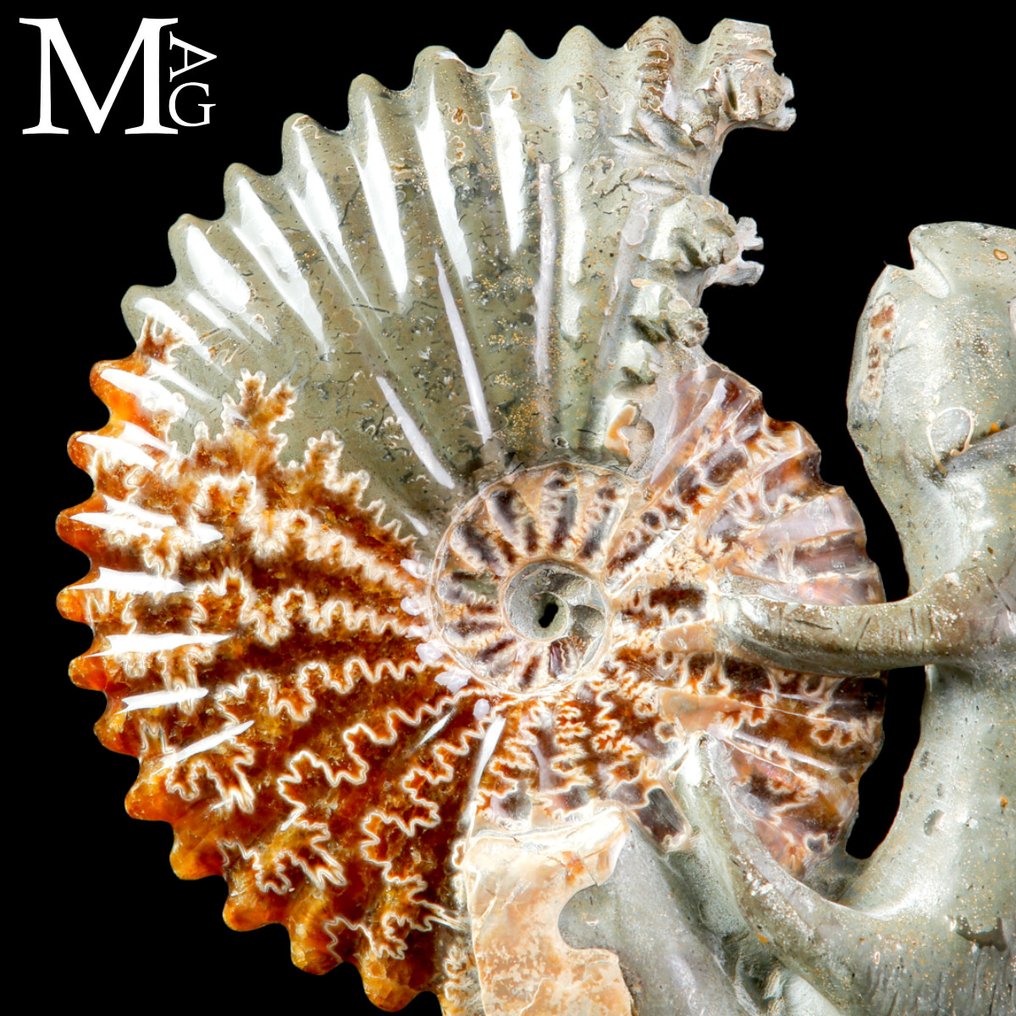
Fossil Sculpture Carved Cleoniceras Ammonite with Iguana Sculpture – - Height: 205 mm - Width: 200 mm- 1525 g



03
days
18
hours
45
minutes
01
second
Starting bid
€ 1
Reserve price not met

Expert
Selected by Antonio Rapisarda
Holds a master’s in chemistry with 25 years’ experience in minerals consulting.
Estimate € 400 - € 450
No bids placed
Catawiki Buyer Protection
Your payment’s safe with us until you receive your object.View details
Trustpilot 4.4 | 122630 reviews
Rated Excellent on Trustpilot.
Description from the seller
Ammonite Cleoniceras from the Cretaceous (~110 million years ago), originating from Madagascar, transformed into a unique sculpture where ancient nature meets the artisan's hand. The specimen features a polish that reveals the complex, branching sutures typical of the species, resembling petrified plant fronds or fossil maps of ancient corals, with hues ranging from honey to reddish-brown to a deep mineral green. The ammonite has been carved to incorporate a stylized iguana figure, seamlessly modeled within the same fossil matrix. The lines of the body blend with the whorls of the shell, creating a visual connection between the marine world of the Cretaceous and contemporary life in Madagascar. The posture suggests a primordial embrace: the reptile appears to support and protect the fossil shell, like a guardian of geological time. The piece retains natural, unworked parts, sedimentary traces, and original organic details, which dialogue with the polished and sculpted surfaces. A rare fusion of paleontology and lapidary art, where every vein and relief tells of millions of years of transformation.
Seller's Story
The Mineral Art Gallery offers minerals, fossils, shells and natural elements.
Born in Italy in 2017, today she collaborates with international galleries and collectors, she is a direct importer of large minerals and naturalistic collectible elements; deals with the processing to insert them inside the living space. A section of the gallery was dedicated to the Wunderkammer, "chamber of wonders or cabinet of curiosities" in which Mirabilia elements are presented: naturalia and italiania, a union between "the present is the past".
All lots are shipped via DHL Express and Fercam couriers, with insured parcel and tracking.
Translated by Google TranslateAmmonite Cleoniceras from the Cretaceous (~110 million years ago), originating from Madagascar, transformed into a unique sculpture where ancient nature meets the artisan's hand. The specimen features a polish that reveals the complex, branching sutures typical of the species, resembling petrified plant fronds or fossil maps of ancient corals, with hues ranging from honey to reddish-brown to a deep mineral green. The ammonite has been carved to incorporate a stylized iguana figure, seamlessly modeled within the same fossil matrix. The lines of the body blend with the whorls of the shell, creating a visual connection between the marine world of the Cretaceous and contemporary life in Madagascar. The posture suggests a primordial embrace: the reptile appears to support and protect the fossil shell, like a guardian of geological time. The piece retains natural, unworked parts, sedimentary traces, and original organic details, which dialogue with the polished and sculpted surfaces. A rare fusion of paleontology and lapidary art, where every vein and relief tells of millions of years of transformation.
Seller's Story
The Mineral Art Gallery offers minerals, fossils, shells and natural elements.
Born in Italy in 2017, today she collaborates with international galleries and collectors, she is a direct importer of large minerals and naturalistic collectible elements; deals with the processing to insert them inside the living space. A section of the gallery was dedicated to the Wunderkammer, "chamber of wonders or cabinet of curiosities" in which Mirabilia elements are presented: naturalia and italiania, a union between "the present is the past".
All lots are shipped via DHL Express and Fercam couriers, with insured parcel and tracking.
Translated by Google TranslateDetails
Main Mineral
Fossil Sculpture
Mineral Form
Carved Cleoniceras Ammonite with Iguana Sculpture –
Weight
1525 g
Country of Origin
Madagascar
Height
205 mm
Width
200 mm
Depth
50 mm
Sold by