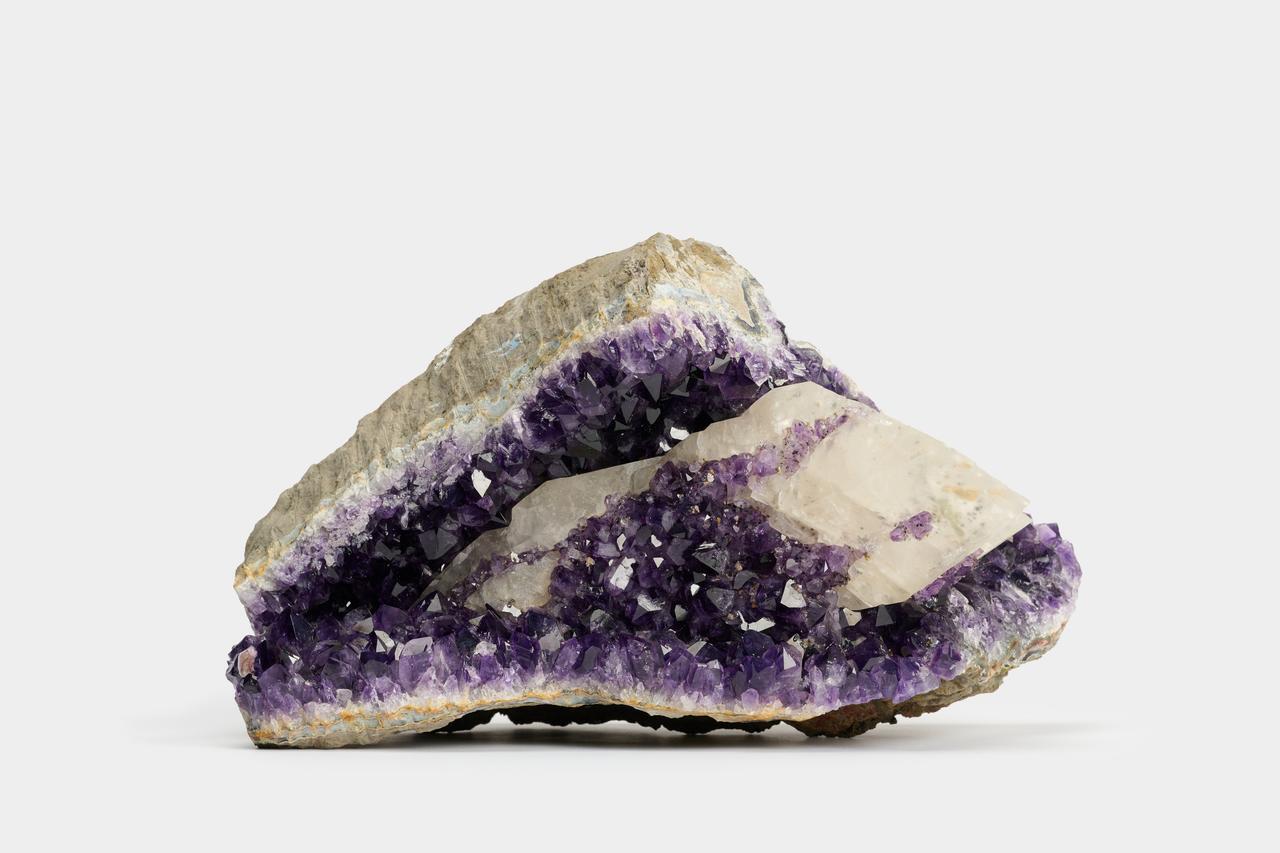
Gold Native, Gold Nugget from French Guiana or Suriname- 1.51 g - (1)


04
days
07
hours
36
minutes
30
seconds
Current bid
€ 240
Reserve price met

Expert
Selected by Luca Esposito
Geology graduate with 10 years' professional experience and webshop founder.
Estimate € 270 - € 300
11 other people are watching this object
 Bidder 3471 Bidder 3471 | €240 | |
|---|---|---|
| Bidder 3471 | €220 | |
| Bidder 3471 | €200 | |
Catawiki Buyer Protection
Your payment’s safe with us until you receive your object.View details
Trustpilot 4.4 | 122190 reviews
Rated Excellent on Trustpilot.
Native gold nugget from the Maroni River region (Fleuve Maroni) in French Guiana or Suriname, weighing 1.506 g.
AI-assisted summary
Description from the seller
Discovery zone
3°47’ North
54°04’ West
This gem comes from French Guiana, a French territory in the Amazon, or from Suriname, a former Dutch colony.
I harvested it myself more than thirty years ago on the Maroni (Marowijne River), which separates French Guiana from Suriname, in an area called Papaichton, a half-day by pirogue from the town of Maripasoula.
I was a gold prospector in French Guiana at the time, and I mainly worked on the rivers, the Oyapock which borders Brazil and the Maroni which borders Suriname.
With my team, we used a floating dredge that pumped sediments from the bottom of the river.
These sediments were dumped onto a washing ramp whose floor was covered with a mat.
The entire setup was installed on a floating barge that also served as a living base with a kitchen and dormitory.
The heaviest pebbles and sediments settled by gravity on the bed, and the rest of the sediments returned to the river.
The nuggets visible on the surface of the carpet were collected by hand.
The heavy sediments containing gold flakes and powder were embedded at the bottom of the mat.
From time to time, this carpet was washed to remove these heavy sediments.
These sediments were then processed with a vibrating plate or a pan to recover the powdered gold.
The gold collected was then regularly sold in French Guiana or Brazil.
I kept the most beautiful gems for my personal collection, and now I am selling a few of them.
Although located in the Amazon (South America), French Guiana is a French overseas department.
These nuggets are therefore French.
However, some are Surinamese (Dutch) when the barge was closer to the shores of Suriname than to those of French Guiana.
Indeed, the separation between the two countries is a simple virtual line in the center of the river.
So, French nuggets or Surinamese nuggets? It's hard to know precisely; it all depends on which side of this virtual line the barge was on the day they were harvested.
The gold from this region is quite pure; generally, its purity ranges from 950 to 980 thousandths, which corresponds to 22.80 to 23.50 carats.
At the time, this type of artisanal gold panning was permitted; now it is prohibited, and gold exploitation is reserved for a few large industrial structures.
French Guiana is now mainly known for the Kourou space base that launches satellites into space.
Of course, the photos truly match the gem being sold, and I am sending you exactly the gem that is in the photos.
All photos are taken in natural daylight.
I photographed this gem as sincerely and precisely as possible using natural daylight.
Please note that differences in screen settings and ambient lighting may result in variations in perceived color, saturation, and tones.
I send a secure and discreet quick shipment in a tear-proof C5 envelope (162mm x 229mm) via French La Poste registered mail.
Discovery zone
3°47’ North
54°04’ West
This gem comes from French Guiana, a French territory in the Amazon, or from Suriname, a former Dutch colony.
I harvested it myself more than thirty years ago on the Maroni (Marowijne River), which separates French Guiana from Suriname, in an area called Papaichton, a half-day by pirogue from the town of Maripasoula.
I was a gold prospector in French Guiana at the time, and I mainly worked on the rivers, the Oyapock which borders Brazil and the Maroni which borders Suriname.
With my team, we used a floating dredge that pumped sediments from the bottom of the river.
These sediments were dumped onto a washing ramp whose floor was covered with a mat.
The entire setup was installed on a floating barge that also served as a living base with a kitchen and dormitory.
The heaviest pebbles and sediments settled by gravity on the bed, and the rest of the sediments returned to the river.
The nuggets visible on the surface of the carpet were collected by hand.
The heavy sediments containing gold flakes and powder were embedded at the bottom of the mat.
From time to time, this carpet was washed to remove these heavy sediments.
These sediments were then processed with a vibrating plate or a pan to recover the powdered gold.
The gold collected was then regularly sold in French Guiana or Brazil.
I kept the most beautiful gems for my personal collection, and now I am selling a few of them.
Although located in the Amazon (South America), French Guiana is a French overseas department.
These nuggets are therefore French.
However, some are Surinamese (Dutch) when the barge was closer to the shores of Suriname than to those of French Guiana.
Indeed, the separation between the two countries is a simple virtual line in the center of the river.
So, French nuggets or Surinamese nuggets? It's hard to know precisely; it all depends on which side of this virtual line the barge was on the day they were harvested.
The gold from this region is quite pure; generally, its purity ranges from 950 to 980 thousandths, which corresponds to 22.80 to 23.50 carats.
At the time, this type of artisanal gold panning was permitted; now it is prohibited, and gold exploitation is reserved for a few large industrial structures.
French Guiana is now mainly known for the Kourou space base that launches satellites into space.
Of course, the photos truly match the gem being sold, and I am sending you exactly the gem that is in the photos.
All photos are taken in natural daylight.
I photographed this gem as sincerely and precisely as possible using natural daylight.
Please note that differences in screen settings and ambient lighting may result in variations in perceived color, saturation, and tones.
I send a secure and discreet quick shipment in a tear-proof C5 envelope (162mm x 229mm) via French La Poste registered mail.
Details
Number of items
1
Main Mineral
Gold
Mineral Form
Native, Gold Nugget from French Guiana or Suriname
Weight
1.51 g
Origin (Region/ City)
Maroni River, French Guiana, Suriname
Country of Origin
France
Sold by