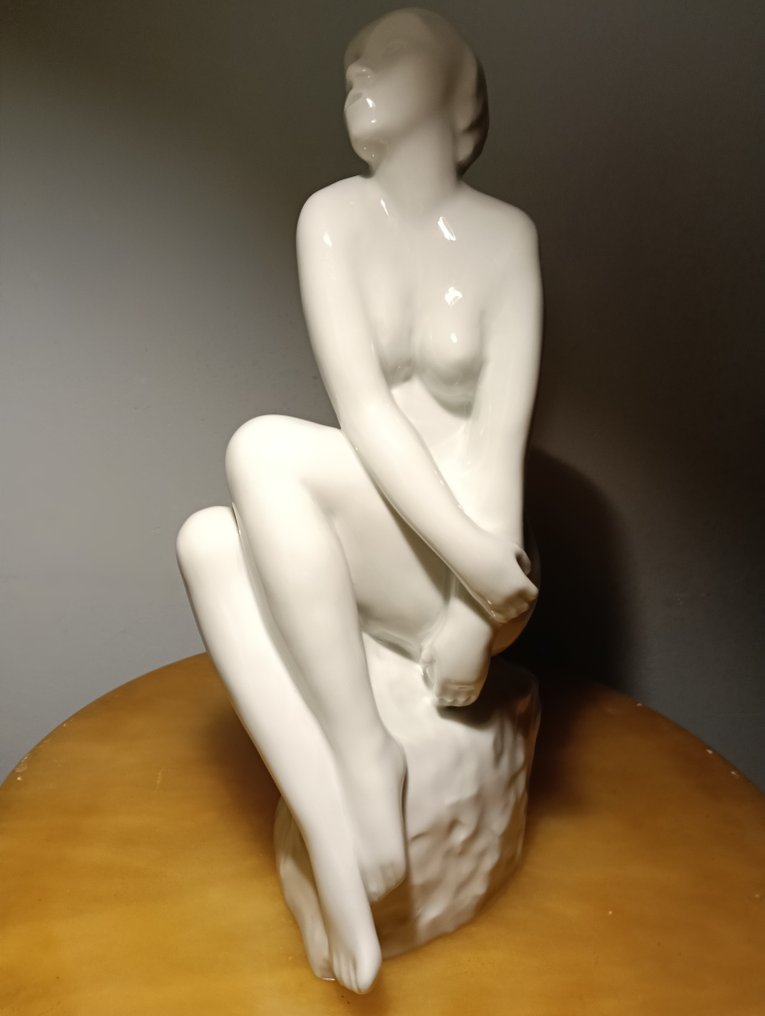
Rosenthal - Milly Steger (1881-1948) - Statue, "Donna Contemplativa" - 35 cm - Porcelain


06
days
09
hours
19
minutes
52
seconds
Current bid
€ 158
Reserve price not met

Expert
Selected by Michel Karis
Art historian with extensive experience working at various auction houses in antiques.
Estimate € 500 - € 550
15 other people are watching this object
 Bidder 2983 Bidder 2983 | €158 | |
|---|---|---|
 Bidder 7603 Bidder 7603 | €148 | |
| Bidder 7603 | €138 | |
Catawiki Buyer Protection
Your payment’s safe with us until you receive your object.View details
Trustpilot 4.4 | 122529 reviews
Rated Excellent on Trustpilot.
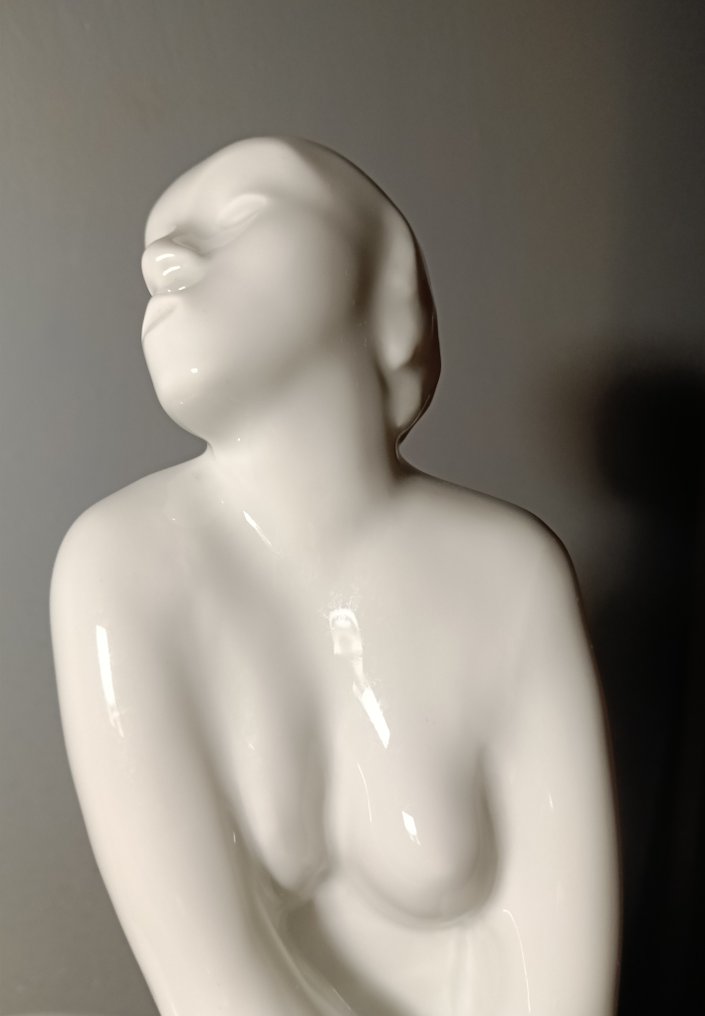
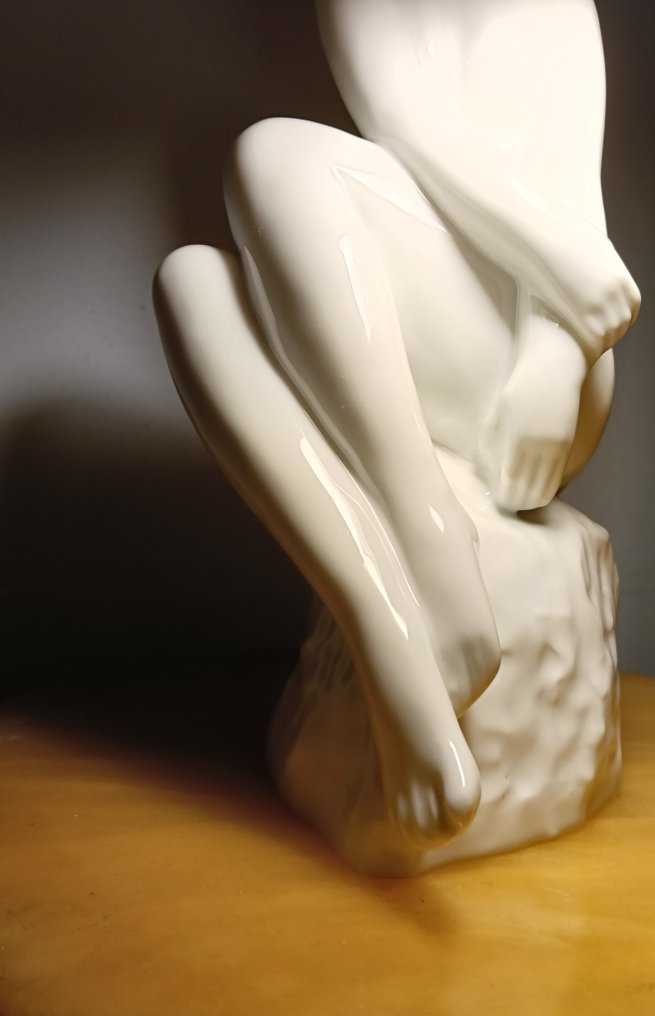
Rare Art Deco porcelain statue by Milly Steger, titled 'Donna Contemplativa', dating to 1924, in excellent condition, with dimensions 35 cm high, 12 cm wide and 17 cm deep, signed and made in Germany.
AI-assisted summary
Description from the seller
Rarest Art Deco Statue by Milly Steger
(June 15, 1881 – October 31, 1948).
Title:
"Contemplative woman" made of porcelain, this is not a copy but an original from the 1920s.
Year of completion: 1924
In this work, there is the embodiment of all femininity and the inner life of the female figure, a perfect example of the former.
Art Deco
In perfect condition without any breakage or damage.
The dimensions are:
height 35 cm
Depth 17 cm
width 12 cm
Biography
Milly Steger spent her childhood in Elberfeld, where her father was appointed judge. After completing her general education, she took language and etiquette lessons at a college in London. She also took drawing lessons from a London painter and decided to become an artist. She then attended a course for stuccators and sculptors at the local School of Applied Arts in Elberfeld.
Around 1903 to 1906, it was formed in Karl Janssen's private studio in Düsseldorf.
As a woman, she was not allowed to study with Janssen at the Düsseldorf Academy of Art. During a study trip to Florence, she met Georg Kolbe, whose work impressed her so much that she later considered herself his pupil, although she was never officially one. In 1908, she moved to Berlin and taught at the women's academy of the Berlin Artists' Association. During her travels, she admired the works of Auguste Rodin and Aristide Maillol in Paris. In 1909, she visited the Belgian sculptor George Minne.
When the patron Karl Ernst Osthaus invited her to Hagen in 1910, she moved to the industrial city of Westphalia, on the Ruhr, and created her first large-scale architectural sculpture: four female statues larger than life, commissioned by the city for the facade of the Hagen Theatre. These sculptures caused a scandal, but at the same time made Milly Steger famous in Germany. She was part of Osthaus's circle of artists and established contacts, among others, with sculptors Moissey Kogan and Will Lammert, painter Christian Rohlfs, and stained glass artist Johan Thorn-Prikker. Steger lived in a house in the artist colony 'Am Kragen' in Hohenhagen, which she decorated with a caryatid.
The caryatid on Milly Steger's house in Hagen dates from 1912-1917. For the tenth anniversary of the Folkwang Museum in Hagen, in 1912, Milly Steger donated a female head in sandstone above the museum's portal; in the following three years, she designed reliefs for the Hagen town hall. With Osthaus's support, she participated in the Sonderbund exhibitions (1910 in Düsseldorf and 1912 in Cologne) and at the German Werkbund Exhibition in Cologne in 1914.
Her financial situation worsened to such an extent during the First World War that she could no longer afford the rent for her studio in Hagen regularly. In 1917, she returned to Berlin, where she remained until her death. In 1916, Else Lasker-Schüler praised her in an expressionist poem, describing her as 'a buffalo with launching power.'
Steger signed the Workers' Council for Art program; in 1919, his responses to a questionnaire were published, in which he primarily advocated for the admission of women to art academies.
From 1927 to 1942, she taught sculpture and life drawing at the educational institute of the Association of Artists of Berlin, where she was also a member of the board. From 1932 onwards, she worked in Georg Kolbe's former studio, which was destroyed in November 1943. As a result, the artist lost much of her work. In 1937, two sculptures by Milly Steger were confiscated as 'degenerate art.' However, her works were not included in the various 'degenerate art' exhibitions.
After the Second World War, Milly Steger resumed working in a new studio in Berlin. Her works were exhibited at the 'German General Art Exhibition' in Dresden, established as reparation for the victims of Nazi artistic policies.
In 1948, she was appointed honorary president of the League of Democratic Women of Germany.
Accurate worldwide shipping with UPS, DHL, or FedEx courier.
Rarest Art Deco Statue by Milly Steger
(June 15, 1881 – October 31, 1948).
Title:
"Contemplative woman" made of porcelain, this is not a copy but an original from the 1920s.
Year of completion: 1924
In this work, there is the embodiment of all femininity and the inner life of the female figure, a perfect example of the former.
Art Deco
In perfect condition without any breakage or damage.
The dimensions are:
height 35 cm
Depth 17 cm
width 12 cm
Biography
Milly Steger spent her childhood in Elberfeld, where her father was appointed judge. After completing her general education, she took language and etiquette lessons at a college in London. She also took drawing lessons from a London painter and decided to become an artist. She then attended a course for stuccators and sculptors at the local School of Applied Arts in Elberfeld.
Around 1903 to 1906, it was formed in Karl Janssen's private studio in Düsseldorf.
As a woman, she was not allowed to study with Janssen at the Düsseldorf Academy of Art. During a study trip to Florence, she met Georg Kolbe, whose work impressed her so much that she later considered herself his pupil, although she was never officially one. In 1908, she moved to Berlin and taught at the women's academy of the Berlin Artists' Association. During her travels, she admired the works of Auguste Rodin and Aristide Maillol in Paris. In 1909, she visited the Belgian sculptor George Minne.
When the patron Karl Ernst Osthaus invited her to Hagen in 1910, she moved to the industrial city of Westphalia, on the Ruhr, and created her first large-scale architectural sculpture: four female statues larger than life, commissioned by the city for the facade of the Hagen Theatre. These sculptures caused a scandal, but at the same time made Milly Steger famous in Germany. She was part of Osthaus's circle of artists and established contacts, among others, with sculptors Moissey Kogan and Will Lammert, painter Christian Rohlfs, and stained glass artist Johan Thorn-Prikker. Steger lived in a house in the artist colony 'Am Kragen' in Hohenhagen, which she decorated with a caryatid.
The caryatid on Milly Steger's house in Hagen dates from 1912-1917. For the tenth anniversary of the Folkwang Museum in Hagen, in 1912, Milly Steger donated a female head in sandstone above the museum's portal; in the following three years, she designed reliefs for the Hagen town hall. With Osthaus's support, she participated in the Sonderbund exhibitions (1910 in Düsseldorf and 1912 in Cologne) and at the German Werkbund Exhibition in Cologne in 1914.
Her financial situation worsened to such an extent during the First World War that she could no longer afford the rent for her studio in Hagen regularly. In 1917, she returned to Berlin, where she remained until her death. In 1916, Else Lasker-Schüler praised her in an expressionist poem, describing her as 'a buffalo with launching power.'
Steger signed the Workers' Council for Art program; in 1919, his responses to a questionnaire were published, in which he primarily advocated for the admission of women to art academies.
From 1927 to 1942, she taught sculpture and life drawing at the educational institute of the Association of Artists of Berlin, where she was also a member of the board. From 1932 onwards, she worked in Georg Kolbe's former studio, which was destroyed in November 1943. As a result, the artist lost much of her work. In 1937, two sculptures by Milly Steger were confiscated as 'degenerate art.' However, her works were not included in the various 'degenerate art' exhibitions.
After the Second World War, Milly Steger resumed working in a new studio in Berlin. Her works were exhibited at the 'German General Art Exhibition' in Dresden, established as reparation for the victims of Nazi artistic policies.
In 1948, she was appointed honorary president of the League of Democratic Women of Germany.
Accurate worldwide shipping with UPS, DHL, or FedEx courier.
Details
Era
1900-2000
Manufacturer/ Brand
Rosenthal
Country of Origin
Germany
Style
Art Deco
Material
Porcelain
Artist
Milly Steger (1881-1948)
Title of artwork
"Donna Contemplativa"
Signature
Signed
Condition
Excellent condition
Height
35 cm
Width
12 cm
Depth
17 cm
Sold by