British India. George V. 1 Rupee 1919 MS61 (No reserve price)


07
days
00
hours
17
minutes
08
seconds

5 other people are watching this object
 Bidder 1233 Bidder 1233 | €1 |
|---|
Catawiki Buyer Protection
Your payment’s safe with us until you receive your object.View details
Trustpilot 4.4 | 122529 reviews
Rated Excellent on Trustpilot.
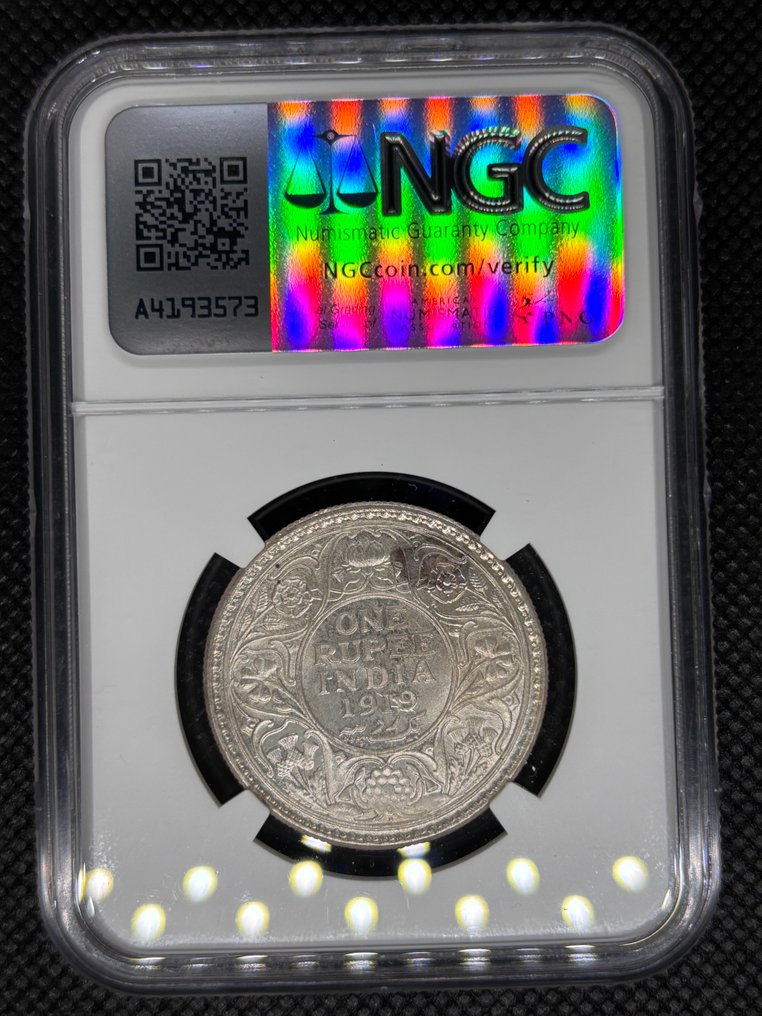
1919 British India 1 Rupee silver coin featuring George V, graded MS61 by NGC (certification 8603054-001).
AI-assisted summary
Description from the seller
1919 B British India King George V 1 Rupee Silver Coin NGC MS61
Highlights:
1. Issued in a pivotal year after World War I, this coin witnesses key events in British colonial India, symbolizing the link between imperialism and India's independence struggle, offering collectors profound cultural and historical value.
2. NGC MS61 uncirculated condition is really rare, preserving original mint luster and details, far superior to common circulated examples, enhancing its uniqueness and appeal.
3. With a market estimate of about $50-80, it offers great value for money, ideal for beginners or those specializing in British India coins, and holds steady appreciation potential as the Asian historical coin market grows.
Coin Story:
This coin was issued during the British India period, under King George V (reigned 1910-1936).
1919 was a pivotal year, right after the end of World War I, when Indian nationalism was surging. That year saw the infamous Jallianwala Bagh Massacre, where British authorities suppressed Indian protesters, resulting in hundreds of deaths. This event sparked Gandhi's Non-Cooperation Movement and accelerated India's path to independence.
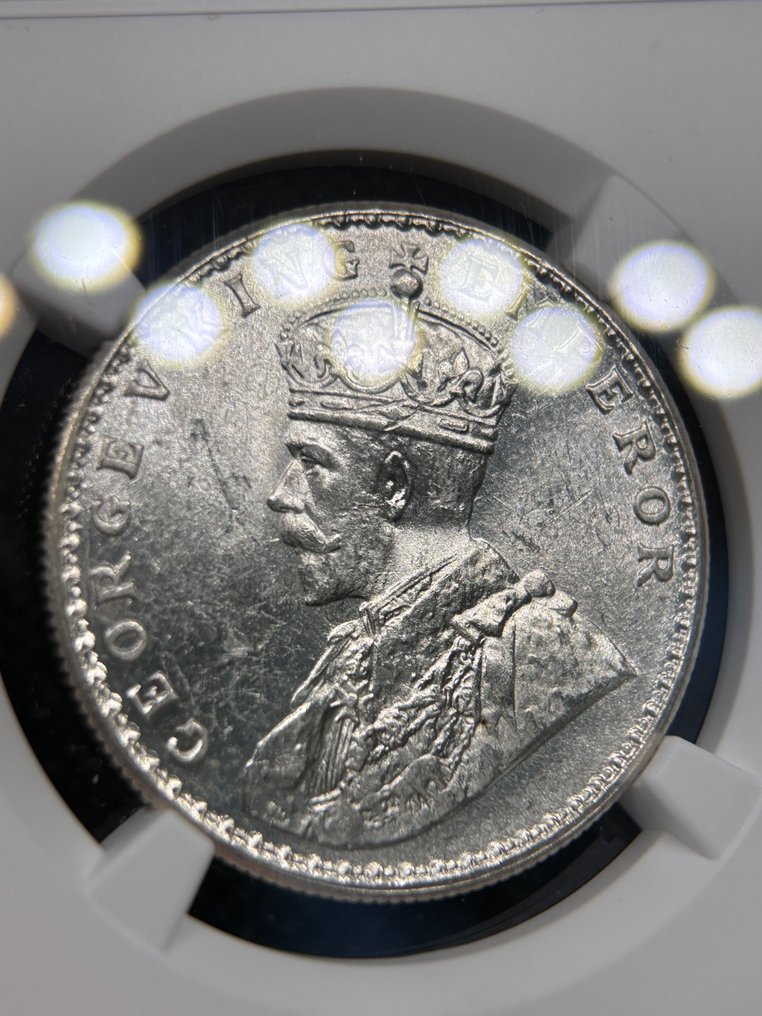
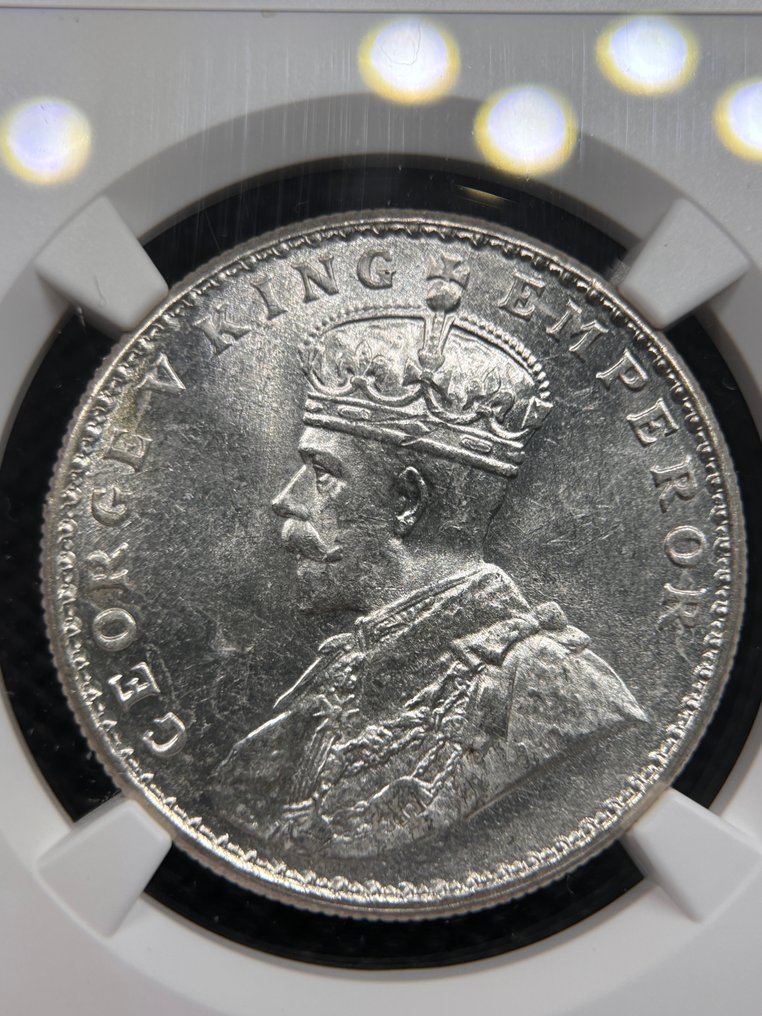
As a circulating currency at the time, this 1 Rupee silver coin symbolizes the British Empire's economic control and colonial rule over India. The obverse features George V's crowned bust with the inscription "GEORGE V KING EMPEROR," while the reverse shows the denomination and a lotus design, reflecting Britain's influence on India's monetary system. Additionally, with rising silver prices in 1919, Britain began introducing cupronickel alloys to replace some silver coins, making this silver 1 Rupee a representation of the transitional period's final glory.
For collectors, it's more than just metal—it's a witness to colonial history, linking imperialism with India's independence struggle. Its collectible value lies in being a classic representative of the British India series, suitable for beginners or those focused on colonial coins. Long-term, with growth in the Indian historical coin market.
1919 B British India King George V 1 Rupee Silver Coin NGC MS61
Highlights:
1. Issued in a pivotal year after World War I, this coin witnesses key events in British colonial India, symbolizing the link between imperialism and India's independence struggle, offering collectors profound cultural and historical value.
2. NGC MS61 uncirculated condition is really rare, preserving original mint luster and details, far superior to common circulated examples, enhancing its uniqueness and appeal.
3. With a market estimate of about $50-80, it offers great value for money, ideal for beginners or those specializing in British India coins, and holds steady appreciation potential as the Asian historical coin market grows.
Coin Story:
This coin was issued during the British India period, under King George V (reigned 1910-1936).
1919 was a pivotal year, right after the end of World War I, when Indian nationalism was surging. That year saw the infamous Jallianwala Bagh Massacre, where British authorities suppressed Indian protesters, resulting in hundreds of deaths. This event sparked Gandhi's Non-Cooperation Movement and accelerated India's path to independence.
As a circulating currency at the time, this 1 Rupee silver coin symbolizes the British Empire's economic control and colonial rule over India. The obverse features George V's crowned bust with the inscription "GEORGE V KING EMPEROR," while the reverse shows the denomination and a lotus design, reflecting Britain's influence on India's monetary system. Additionally, with rising silver prices in 1919, Britain began introducing cupronickel alloys to replace some silver coins, making this silver 1 Rupee a representation of the transitional period's final glory.
For collectors, it's more than just metal—it's a witness to colonial history, linking imperialism with India's independence struggle. Its collectible value lies in being a classic representative of the British India series, suitable for beginners or those focused on colonial coins. Long-term, with growth in the Indian historical coin market.
Details
Era
1900-2000
Country/province
British India
Year/Period and Variation
1919 MS61
Ruler
George V
Denomination
1 Rupee
Precious metal
Silver
Condition
Graded by NGC
Certification number
8603054-001
Certified
NGC
Number of items
1
Theme
History
Coin type
World Coins (non Euro coins pre-2000)
Sold by