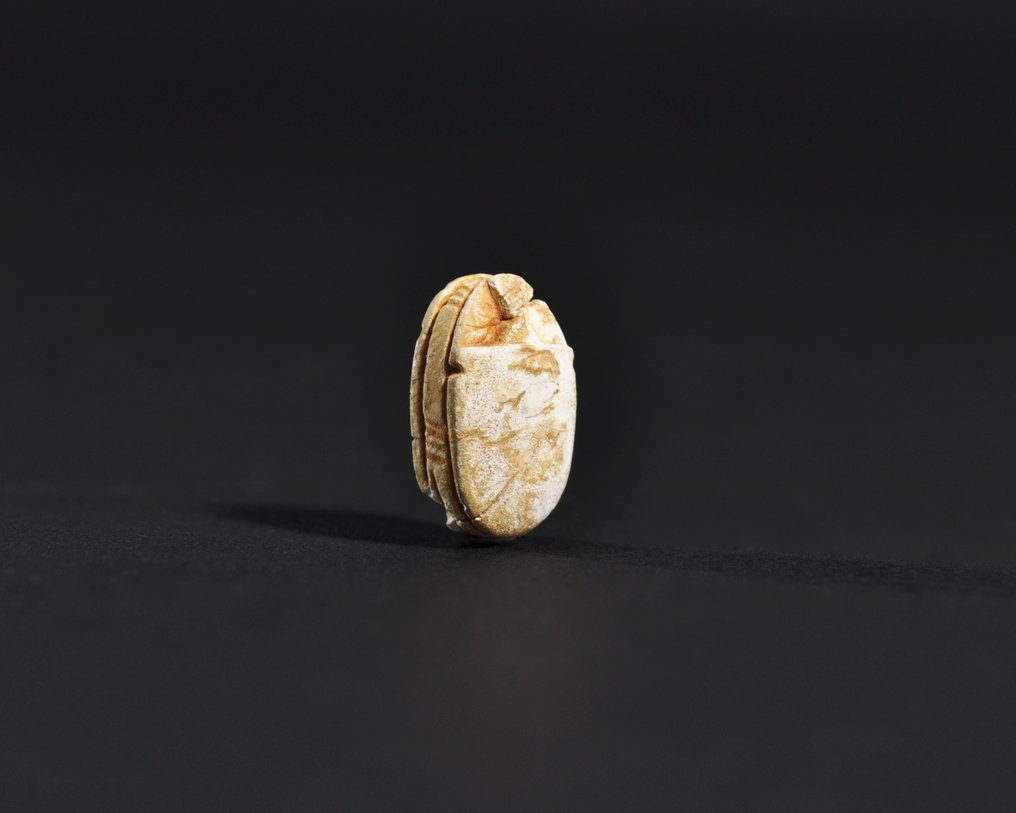
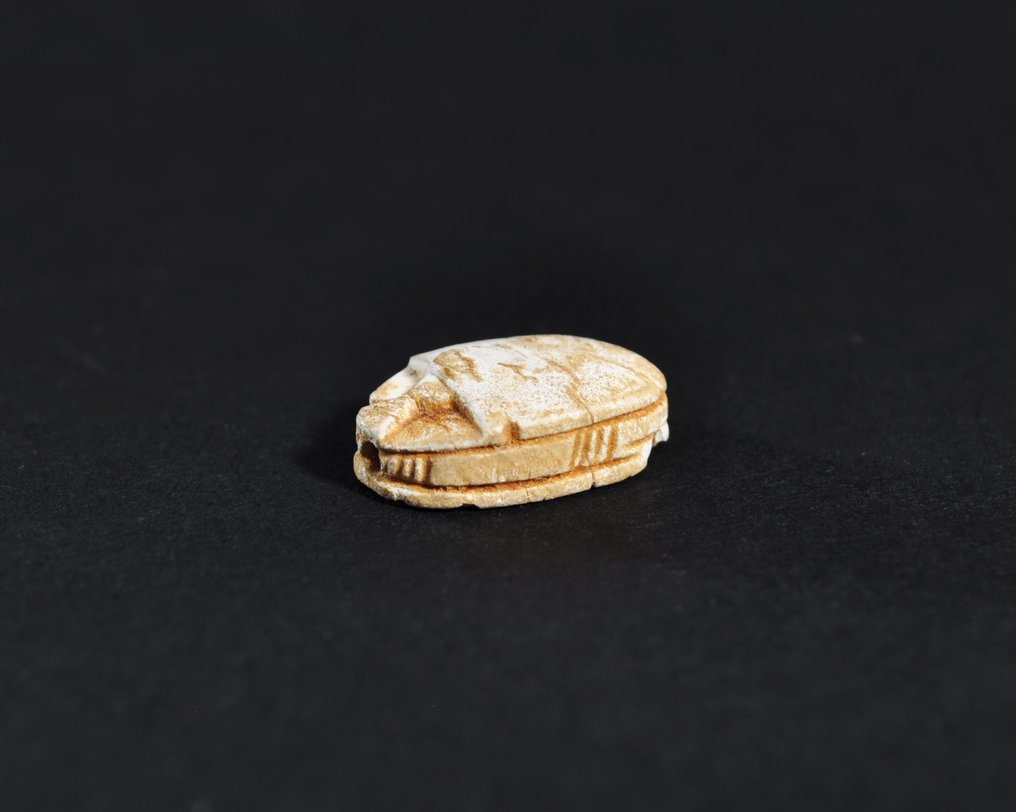
Ancient Egypt, Second Intermediate Period Faience Scarab - 1.6 cm (No reserve price)


07
days
21
hours
00
minutes
05
seconds
Starting bid
€ 1
No reserve price

Expert
Selected by Ruth Garrido Vila
Directed the Ifergan Collection Museum, specialising in Phoenician and Mediterranean archaeology.
Estimate € 400 - € 500
No bids placed
Catawiki Buyer Protection
Your payment’s safe with us until you receive your object.View details
Trustpilot 4.4 | 122713 reviews
Rated Excellent on Trustpilot.
Ancient Egyptian faience scarab amulet from the Second Intermediate Period (1640–1550 BC), 1.6 cm long, fragmented and restored, with cartouche inscriptions, acquired from a gallery/antique dealer in the United Kingdom in 2020 from the Ex Mustaki Collection, in good condition.
AI-assisted summary
Description from the seller
Scarab. Egypt. Second Intermediate Period. Scarab (1640-1550 BC)
The Second Intermediate Period of ancient Egypt (1640-1550 B.C.) is best known as the time when the Hyksos people of West Asia made their appearance in Egypt, whose rule constituted the 15th Dynasty. It was a period when power was not centralized under a single pharaoh.
Scarabs served as popular amulets and impression seals in ancient Egypt. They survive in large numbers and, through their inscriptions and typology, provide an important source of information for archaeologists and historians of the ancient world. The Egyptian god Khepri, Ra in his form as the rising sun, was often depicted as a scarab beetle or as a man with a scarab beetle’s head. The ancient Egyptians believed that Khepri renewed the sun each day before rolling it above the horizon, then carried it through the underworld after sunset, only to renew it again the next morning.
This scarab amulet, featuring inscriptions within a cartouche, dates from the Second Intermediate Period (1640-1550 BC). It is made of faience and measures 1.6 cm in length. The scarab is fragmented and restored, which enhances its historical significance.
Provenance: Ex Mustaki Collection (United Kingdom; 2000).
The Supplier warrants that he obtained this lot legally. Provenance statement seen by Catawiki. Important information. The seller guarantees that he is entitled to ship this lot. The seller will take care that any necessary permits will be arranged. The seller will inform the buyer about this if this takes more than a few days.
Important: For destinations out of Spanish territory: all our objects will be shipped after obtaining CERTIFICATE OF EXPORTATION by Ministry of Culture of Spain. We inform our clients that it may take between 4-8 weeks.
Scarab. Egypt. Second Intermediate Period. Scarab (1640-1550 BC)
The Second Intermediate Period of ancient Egypt (1640-1550 B.C.) is best known as the time when the Hyksos people of West Asia made their appearance in Egypt, whose rule constituted the 15th Dynasty. It was a period when power was not centralized under a single pharaoh.
Scarabs served as popular amulets and impression seals in ancient Egypt. They survive in large numbers and, through their inscriptions and typology, provide an important source of information for archaeologists and historians of the ancient world. The Egyptian god Khepri, Ra in his form as the rising sun, was often depicted as a scarab beetle or as a man with a scarab beetle’s head. The ancient Egyptians believed that Khepri renewed the sun each day before rolling it above the horizon, then carried it through the underworld after sunset, only to renew it again the next morning.
This scarab amulet, featuring inscriptions within a cartouche, dates from the Second Intermediate Period (1640-1550 BC). It is made of faience and measures 1.6 cm in length. The scarab is fragmented and restored, which enhances its historical significance.
Provenance: Ex Mustaki Collection (United Kingdom; 2000).
The Supplier warrants that he obtained this lot legally. Provenance statement seen by Catawiki. Important information. The seller guarantees that he is entitled to ship this lot. The seller will take care that any necessary permits will be arranged. The seller will inform the buyer about this if this takes more than a few days.
Important: For destinations out of Spanish territory: all our objects will be shipped after obtaining CERTIFICATE OF EXPORTATION by Ministry of Culture of Spain. We inform our clients that it may take between 4-8 weeks.
Details
Culture
Ancient Egypt, Second Intermediate Period
Century/ Timeframe
1640-1550 BC
Name of object
Scarab
Acquired from
Gallery / Antique dealer
Year acquired
2020
Material
Faience
Country acquired from
United Kingdom
Condition
Good
Previous owner acquired from
Private collection
Height
1.6 cm
Previous owner - year acquired
2000
Previous owner - country acquired from
United Kingdom
I verify that I have obtained this object legally and that I am allowed to sell it
Yes
Sold by
