Stavelot-Malmedy. Christoph von Manderscheid (1546–1576). 1/2 Rijksdaalder 1569 – Maximilian II - Very Rare - Delmonte 512 (R2)


07
days
17
hours
22
minutes
41
seconds
Current bid
€ 497
Reserve price not met

Expert
Selected by Yunheng Deng
Has over 30 years of experience collecting coins, with extensive professional contacts in Asia. Passionate about the stories behind contemporary coins.
Estimate € 1,100 - € 1,250
5 other people are watching this object
 Bidder 4471 Bidder 4471 | €497 |
|---|
Catawiki Buyer Protection
Your payment’s safe with us until you receive your object.View details
Trustpilot 4.4 | 122473 reviews
Rated Excellent on Trustpilot.
A silver 1/2 Rijksdaalder from 1569 struck at Poulseur under Christoph von Manderscheid for Stavelot-Malmedy, featuring Maximilian II on the obverse and the abbey’s arms on the reverse; weight 14.35 g, Delmonte 512 (R2), very rare.
AI-assisted summary
Description from the seller
Stavelot-Malmedy – Christoph von Manderscheid (1546–1576)
1/2 Rijksdaalder 1569 – Maximilian II
Silver – 14.35 g – Delmonte 512 (R2) – very rare
Obverse:
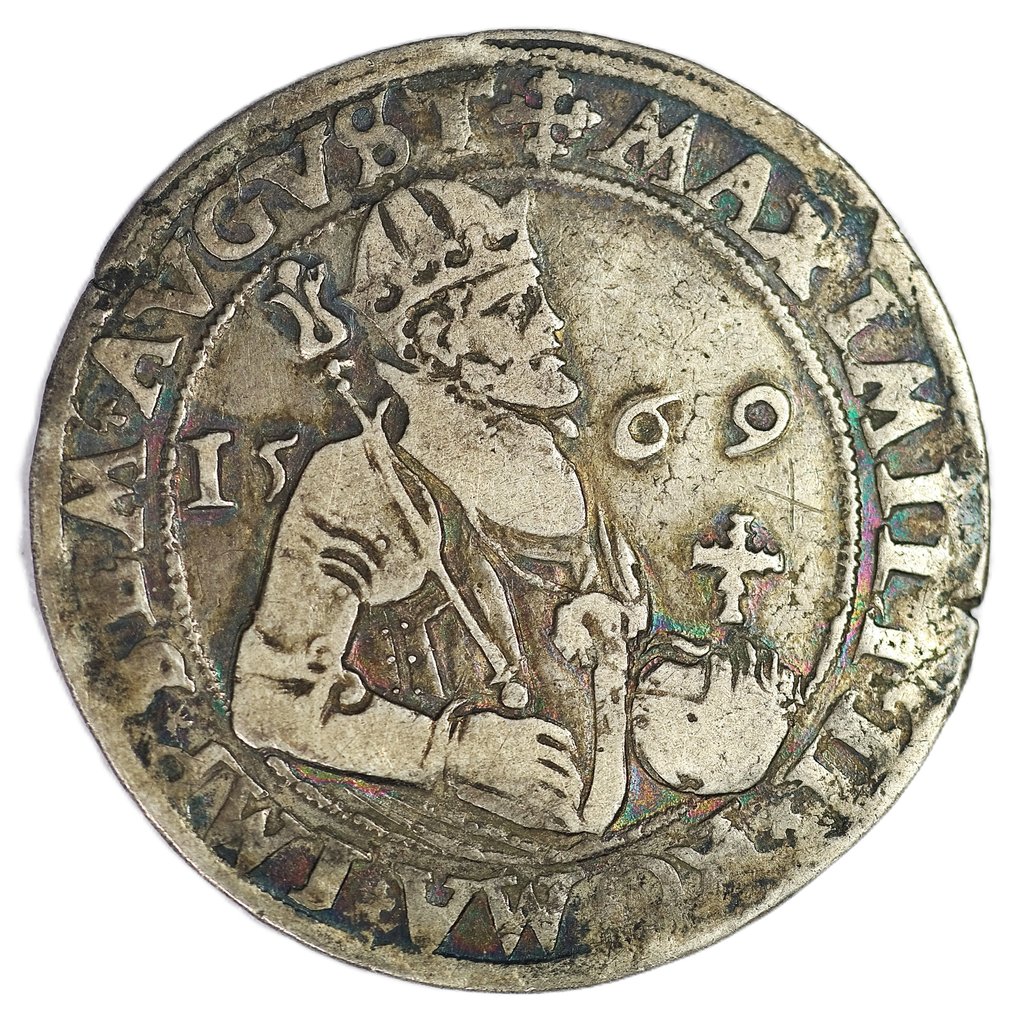
Crowned half-length bust of Emperor Maximilian II facing right, holding a sceptre in his right hand and an orb (globus cruciger) in his left. The date 15 – 69 appears beside the portrait. Surrounding inscription with the imperial titles of Maximilian II.
Reverse:
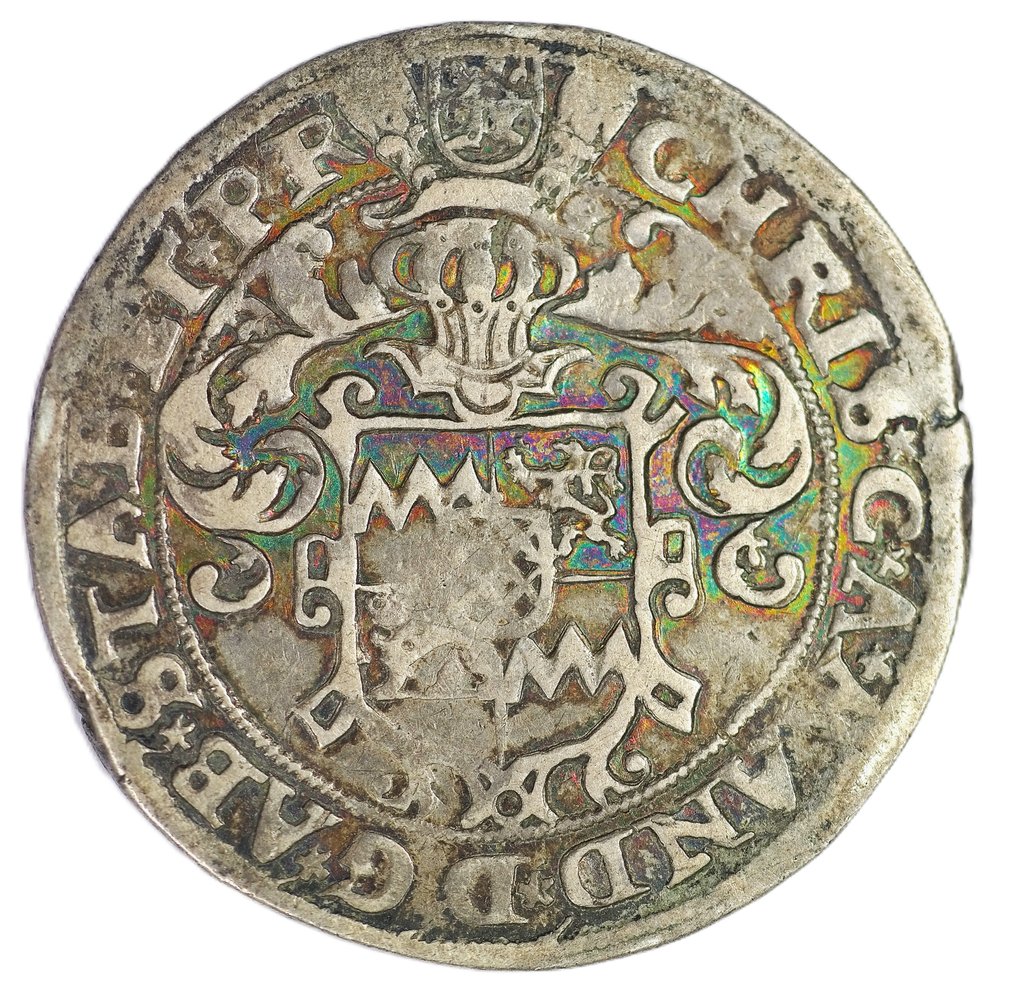
Armorial shield of the Imperial Abbey of Stavelot-Malmedy beneath a helmet with elaborate mantling, set within an ornate cartouche. Inscription naming Prince-Abbot Christoph von Manderscheid.
Issuing Authority & Mint
Struck under Christoph von Manderscheid, Prince-Abbot of Stavelot-Malmedy and Abbot of Prüm. The mint used for this issue was Poulseur, active in the 16th century for the abbey’s coinage.
Historical Background
The Imperial Abbey of Stavelot-Malmedy was an ecclesiastical principality of the Holy Roman Empire, situated within the region historically known as the Southern Netherlands. The prince-abbot possessed full minting rights and issued rijksdaalders, double rijksdaalders, and half rijksdaalders in limited quantities, typically featuring the reigning emperor on the obverse and the abbey’s arms on the reverse.
Emperor Maximilian II reigned from 1564 to 1576 and is known for his moderate approach to religious tensions during the Reformation. The date 1569 places this coin in the early years of the Eighty Years’ War (1568–1648). The proximity of the abbey to the Habsburg Netherlands explains why these issues are traditionally included in Dutch numismatic catalogues.
Rarity
Listed by Delmonte as 512, with rarity R2. Half rijksdaalders of 1569 issued under Christoph von Manderscheid are seldom encountered and classified as very rare.
Specifications
Denomination: 1/2 Rijksdaalder
Year: 1569
Mint: Poulseur
Lord: Christoph von Manderscheid, Prince-Abbot of Stavelot-Malmedy
Obverse portrait: Emperor Maximilian II
Metal: Silver
Weight: 14.35 g
Reference: Delmonte 512 (R2)
Please note: modern coins are more than simple pieces of metal – each carries its own history, design, and individuality. While they are struck with greater uniformity than ancient coins, differences in minting, handling, and preservation over the years give every coin a unique character. Professional photographs can never fully capture the brilliance of the surfaces, the luster, and the subtle play of light that appear when viewed in hand. That’s why I strongly recommend looking carefully at all the photos, from different angles and under varying light. This will give you the best possible impression of the quality, charm, and craftsmanship of the coin.
The photos form an integral part of the description of this coin. They provide a complete and honest view of the condition, details, and appearance of the item offered. Please examine the images carefully for a full overview of any features, wear, or special characteristics. What you see is exactly what you will receive.
Stavelot-Malmedy – Christoph von Manderscheid (1546–1576)
1/2 Rijksdaalder 1569 – Maximilian II
Silver – 14.35 g – Delmonte 512 (R2) – very rare
Obverse:
Crowned half-length bust of Emperor Maximilian II facing right, holding a sceptre in his right hand and an orb (globus cruciger) in his left. The date 15 – 69 appears beside the portrait. Surrounding inscription with the imperial titles of Maximilian II.
Reverse:
Armorial shield of the Imperial Abbey of Stavelot-Malmedy beneath a helmet with elaborate mantling, set within an ornate cartouche. Inscription naming Prince-Abbot Christoph von Manderscheid.
Issuing Authority & Mint
Struck under Christoph von Manderscheid, Prince-Abbot of Stavelot-Malmedy and Abbot of Prüm. The mint used for this issue was Poulseur, active in the 16th century for the abbey’s coinage.
Historical Background
The Imperial Abbey of Stavelot-Malmedy was an ecclesiastical principality of the Holy Roman Empire, situated within the region historically known as the Southern Netherlands. The prince-abbot possessed full minting rights and issued rijksdaalders, double rijksdaalders, and half rijksdaalders in limited quantities, typically featuring the reigning emperor on the obverse and the abbey’s arms on the reverse.
Emperor Maximilian II reigned from 1564 to 1576 and is known for his moderate approach to religious tensions during the Reformation. The date 1569 places this coin in the early years of the Eighty Years’ War (1568–1648). The proximity of the abbey to the Habsburg Netherlands explains why these issues are traditionally included in Dutch numismatic catalogues.
Rarity
Listed by Delmonte as 512, with rarity R2. Half rijksdaalders of 1569 issued under Christoph von Manderscheid are seldom encountered and classified as very rare.
Specifications
Denomination: 1/2 Rijksdaalder
Year: 1569
Mint: Poulseur
Lord: Christoph von Manderscheid, Prince-Abbot of Stavelot-Malmedy
Obverse portrait: Emperor Maximilian II
Metal: Silver
Weight: 14.35 g
Reference: Delmonte 512 (R2)
Please note: modern coins are more than simple pieces of metal – each carries its own history, design, and individuality. While they are struck with greater uniformity than ancient coins, differences in minting, handling, and preservation over the years give every coin a unique character. Professional photographs can never fully capture the brilliance of the surfaces, the luster, and the subtle play of light that appear when viewed in hand. That’s why I strongly recommend looking carefully at all the photos, from different angles and under varying light. This will give you the best possible impression of the quality, charm, and craftsmanship of the coin.
The photos form an integral part of the description of this coin. They provide a complete and honest view of the condition, details, and appearance of the item offered. Please examine the images carefully for a full overview of any features, wear, or special characteristics. What you see is exactly what you will receive.
Details
Era
1400-1900
Over 200 years old
No
Country/province
Stavelot-Malmedy
Year/Period and Variation
1569 – Maximilian II - Very Rare - Delmonte 512 (R2)
Ruler
Christoph von Manderscheid (1546–1576)
Denomination
1/2 Rijksdaalder
Precious metal
Silver
Condition
Ungraded
Theme
History
Sold by