Lumière Eljy Super 1938-39 | Subminiature camera




06
days
17
hours
35
minutes
57
seconds
Starting bid
€ 1
Reserve price not met

Expert
Selected by Thorsten Pöllath
Has 40 years of experience in photography and 25 years of collecting expertise, specialising in M42 lens mounts.
Estimate € 150 - € 200
No bids placed
Catawiki Buyer Protection
Your payment’s safe with us until you receive your object.View details
Trustpilot 4.4 | 123113 reviews
Rated Excellent on Trustpilot.
Lumière Eljy Super 1938-39 camera in very good condition, not tested, with Lypar Anastigmat f/3.5‑f/20 lens and 24x30 cm film format.
AI-assisted summary
Description from the seller
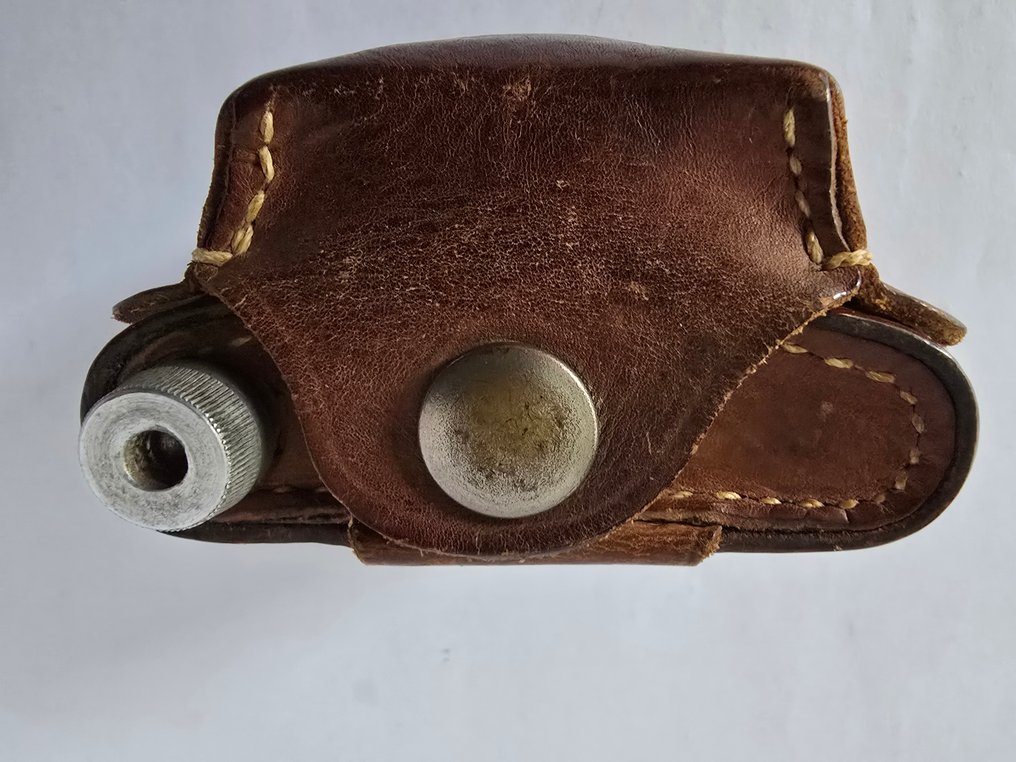
Sub miniature Camera Lumiere Eljy with original leather case, a paper-backed 30 mm film roll included.
Sub miniature cameras are distinguished by their use of original film formats smaller than 35mm.
The camera is in very good condition, making it an excellent sub miniature camera for collectors.
This model is the Super ELJY (1938-39 Super f/3.5) made around 1939, with a top speed of 1/125 sec. It was called Super Eljy in advertisements and was sold together with the previous model. Shutter speeds include T, B, 25, 50, 100, 125. It features a connection for cable release and a tripod socket. The Lypar Anastigmat f/3.5-f/20 lens has a black rim. There is a sliding cover for the red window. Early versions still have the large viewfinder; later, it was changed to a smaller window, still with a black viewfinder cover.
Description
To design a small camera, most inventors first reduce the film size. Lumière and CIE from Lyon, France, chose a large film format and built the smallest cameras around it. Their logic is impeccable. Small formats need to be enlarged with the resulting grain, while a large format can even produce an acceptable print with a medium-sized lens. The slightly larger camera is easier to assemble and cheaper to produce.
From Eljy van Lumière, the name derived from the Lumière brothers (Auguste and Louis), pioneers of French cinema from Lyon, and the Jougla company from Paris (1911), which joined forces to produce cameras. In 1937, the company launched the first French 24x36 mm camera. The basic Nouveau design, with rounded corners, evolved until it was replaced in 1951 by the Eljy Club.
Measuring 76x50x45 mm, the Eljy is smaller than the original German Photavit despite having a larger negative. The lens slides out on a tube and clicks into place. The back is locked and slides down to reveal the paper back of 30 mm film. The Galileo-type finder appears on hinges. The shutter, located in the lens cylinder, allows for speeds: 1/10, 1/25, 1/50, 1/100, and B. T was added to type 3, and the fastest shutter was extended to 1/125. Type 4 changed the fastest aperture to 1/150, and Type 5 to 1/200. The Lypar f/3.5 lens has a variable focus from 0.5m to infinity (20 inches on the imperial version).
See the description of the variants of the Eljy cameras below.
1937 f/3.5 ($120)
Everset shutter with a choice of T and I, but with a full diaphragm range and a sharp Lumiere Lypar f/3.5 lens. Black dial without chrome edges. Shutter speeds B, 25, 50, 100. No cable release and no tripod provision.
1938 F3.5 ($120)
Black dial with chrome edges and openings; similar to the 1937 model. Shutter speeds B, 25, 50, 100. No cable release. No tripod socket. Lumiere Lypar f3.5/50mm lens marked with 'Sie G'.
1939 f/4.5 ($120)
If the model is from 1938 but with a Lumiere Lypar f/4.5 lens. Shutter speeds B, 25, 50, 100. No cable release. No tripod socket.
1939-40 Second Bureau
Flat black, an early version of the Super Eljy, fully covered with flat black enamel for the French secret service. It still has a large viewfinder window like the 1937-39 types, but with 'Super' features of the new shutter up to 1/125th and a threaded release.
1938-39 Super f/3.5 ($90)
Named Super Eljy in the advertisement and sold together with the previous model. Shutter times of T, B, 25, 50, 100, 125. Connection for cable release. Tripod bus. Lypar Anastigmat f/3.5-f/20 lens with black edge. Sliding cover at the back for red window. Early versions still have the large viewfinder; later changed to a smaller window, still with a black viewfinder.
1944 f/3.5 1/150s ($90)
The speed is increased to 1/150, and then the shutter gets a separate release lever, with the viewfinder having a chrome rim, which is the most common version. Shutter speeds are 10, 25, 50, 100, 150, B, T. Lypar f3.5 lens. Aperture scale to f/20. Focus set at 0.5 m. Black or chrome lens rim. Wollensak Velostigmat f/3.5 lens 25-100, B, T. Wollensak Deltax shutter.
1945 f/3.5 1/200s ($90)
Shutter speeds 10, 25, 50, 100, 200, B, T. Coated lens. The diaphragm now indicates f/3.5 to f/16. Not synchronized. Later version features a new style of lettering and chrome lens rim.
1948-49 f/3.5 synchronized ($90)
'Eljy' and 'Lumiere' on the side of the lens. Shutter speeds of B, 10, 25, 50, 100, 200, B, T. synchronized. Coated lens. 1950 (white face $90). White shutter face with black type. Speeds T, B, 200, 100, 50, 25, 10. f/3.5-16, 20 inches to infinity. Synchronized. Speeds and apertures visible from above.
Club 1951-60 ($150, colored coverings $300)
Updated in styling and with 24x36mm exposures on special 35mm film. The Eljy Club was a modernized version of the Super Eljy with a superior lens and shutter. Measuring 82x50x52 mm, the camera contains a 40 mm Lypar f/3.5 lens with a minimum focusing distance of 50 cm, equipped with an Atos or Atos 2 shutter ranging from 1 to 1/300 second plus B. The chrome top housing features an optical viewfinder and a light meter. Upon closer inspection, there are letters spelling 'LUMIERE' that light up with a serrated wheel at the top, set to the same letter, combined with the French words for sun, cloudy, haze, etc., which determine the shutter and aperture settings. The similar Photavit has a smaller 24x24mm negative. Unfortunately, the camera uses paper-backed 35mm film, unlike the Kodak 828 (used in the Photavit 828 model), making it more difficult to use today. In addition to the standard black covering, the Eljy Club was available in early styles with blue, green, yellow, red, brown, or white coverings.
See photos for cosmetics. All photos are of the actual item. What you see is what you will receive. The camera itself has not been tested by me.
For your information, in the coming months I will be selling a multitude of sub miniature cameras from my collection. So if you are a collector, follow my account so you can keep up with the other items I will be selling in the upcoming months.
Thank you for your offer.
Sub miniature Camera Lumiere Eljy with original leather case, a paper-backed 30 mm film roll included.
Sub miniature cameras are distinguished by their use of original film formats smaller than 35mm.
The camera is in very good condition, making it an excellent sub miniature camera for collectors.
This model is the Super ELJY (1938-39 Super f/3.5) made around 1939, with a top speed of 1/125 sec. It was called Super Eljy in advertisements and was sold together with the previous model. Shutter speeds include T, B, 25, 50, 100, 125. It features a connection for cable release and a tripod socket. The Lypar Anastigmat f/3.5-f/20 lens has a black rim. There is a sliding cover for the red window. Early versions still have the large viewfinder; later, it was changed to a smaller window, still with a black viewfinder cover.
Description
To design a small camera, most inventors first reduce the film size. Lumière and CIE from Lyon, France, chose a large film format and built the smallest cameras around it. Their logic is impeccable. Small formats need to be enlarged with the resulting grain, while a large format can even produce an acceptable print with a medium-sized lens. The slightly larger camera is easier to assemble and cheaper to produce.
From Eljy van Lumière, the name derived from the Lumière brothers (Auguste and Louis), pioneers of French cinema from Lyon, and the Jougla company from Paris (1911), which joined forces to produce cameras. In 1937, the company launched the first French 24x36 mm camera. The basic Nouveau design, with rounded corners, evolved until it was replaced in 1951 by the Eljy Club.
Measuring 76x50x45 mm, the Eljy is smaller than the original German Photavit despite having a larger negative. The lens slides out on a tube and clicks into place. The back is locked and slides down to reveal the paper back of 30 mm film. The Galileo-type finder appears on hinges. The shutter, located in the lens cylinder, allows for speeds: 1/10, 1/25, 1/50, 1/100, and B. T was added to type 3, and the fastest shutter was extended to 1/125. Type 4 changed the fastest aperture to 1/150, and Type 5 to 1/200. The Lypar f/3.5 lens has a variable focus from 0.5m to infinity (20 inches on the imperial version).
See the description of the variants of the Eljy cameras below.
1937 f/3.5 ($120)
Everset shutter with a choice of T and I, but with a full diaphragm range and a sharp Lumiere Lypar f/3.5 lens. Black dial without chrome edges. Shutter speeds B, 25, 50, 100. No cable release and no tripod provision.
1938 F3.5 ($120)
Black dial with chrome edges and openings; similar to the 1937 model. Shutter speeds B, 25, 50, 100. No cable release. No tripod socket. Lumiere Lypar f3.5/50mm lens marked with 'Sie G'.
1939 f/4.5 ($120)
If the model is from 1938 but with a Lumiere Lypar f/4.5 lens. Shutter speeds B, 25, 50, 100. No cable release. No tripod socket.
1939-40 Second Bureau
Flat black, an early version of the Super Eljy, fully covered with flat black enamel for the French secret service. It still has a large viewfinder window like the 1937-39 types, but with 'Super' features of the new shutter up to 1/125th and a threaded release.
1938-39 Super f/3.5 ($90)
Named Super Eljy in the advertisement and sold together with the previous model. Shutter times of T, B, 25, 50, 100, 125. Connection for cable release. Tripod bus. Lypar Anastigmat f/3.5-f/20 lens with black edge. Sliding cover at the back for red window. Early versions still have the large viewfinder; later changed to a smaller window, still with a black viewfinder.
1944 f/3.5 1/150s ($90)
The speed is increased to 1/150, and then the shutter gets a separate release lever, with the viewfinder having a chrome rim, which is the most common version. Shutter speeds are 10, 25, 50, 100, 150, B, T. Lypar f3.5 lens. Aperture scale to f/20. Focus set at 0.5 m. Black or chrome lens rim. Wollensak Velostigmat f/3.5 lens 25-100, B, T. Wollensak Deltax shutter.
1945 f/3.5 1/200s ($90)
Shutter speeds 10, 25, 50, 100, 200, B, T. Coated lens. The diaphragm now indicates f/3.5 to f/16. Not synchronized. Later version features a new style of lettering and chrome lens rim.
1948-49 f/3.5 synchronized ($90)
'Eljy' and 'Lumiere' on the side of the lens. Shutter speeds of B, 10, 25, 50, 100, 200, B, T. synchronized. Coated lens. 1950 (white face $90). White shutter face with black type. Speeds T, B, 200, 100, 50, 25, 10. f/3.5-16, 20 inches to infinity. Synchronized. Speeds and apertures visible from above.
Club 1951-60 ($150, colored coverings $300)
Updated in styling and with 24x36mm exposures on special 35mm film. The Eljy Club was a modernized version of the Super Eljy with a superior lens and shutter. Measuring 82x50x52 mm, the camera contains a 40 mm Lypar f/3.5 lens with a minimum focusing distance of 50 cm, equipped with an Atos or Atos 2 shutter ranging from 1 to 1/300 second plus B. The chrome top housing features an optical viewfinder and a light meter. Upon closer inspection, there are letters spelling 'LUMIERE' that light up with a serrated wheel at the top, set to the same letter, combined with the French words for sun, cloudy, haze, etc., which determine the shutter and aperture settings. The similar Photavit has a smaller 24x24mm negative. Unfortunately, the camera uses paper-backed 35mm film, unlike the Kodak 828 (used in the Photavit 828 model), making it more difficult to use today. In addition to the standard black covering, the Eljy Club was available in early styles with blue, green, yellow, red, brown, or white coverings.
See photos for cosmetics. All photos are of the actual item. What you see is what you will receive. The camera itself has not been tested by me.
For your information, in the coming months I will be selling a multitude of sub miniature cameras from my collection. So if you are a collector, follow my account so you can keep up with the other items I will be selling in the upcoming months.
Thank you for your offer.
Details
Era
1900-2000
Brand
Lumière
Model/ type nr
Eljy Super 1938-39 |
Physical condition
Very good
Functional condition
Not tested
Designer/Artist/Maker
Gebroeders Auguste en Louis Lumiere Lyon Frankrijk
Lens Mount Type
Lypar Anastigmat f/3.5-f/20
Film type
24x30 cm
Estimated Period
1938-1938
Sold by