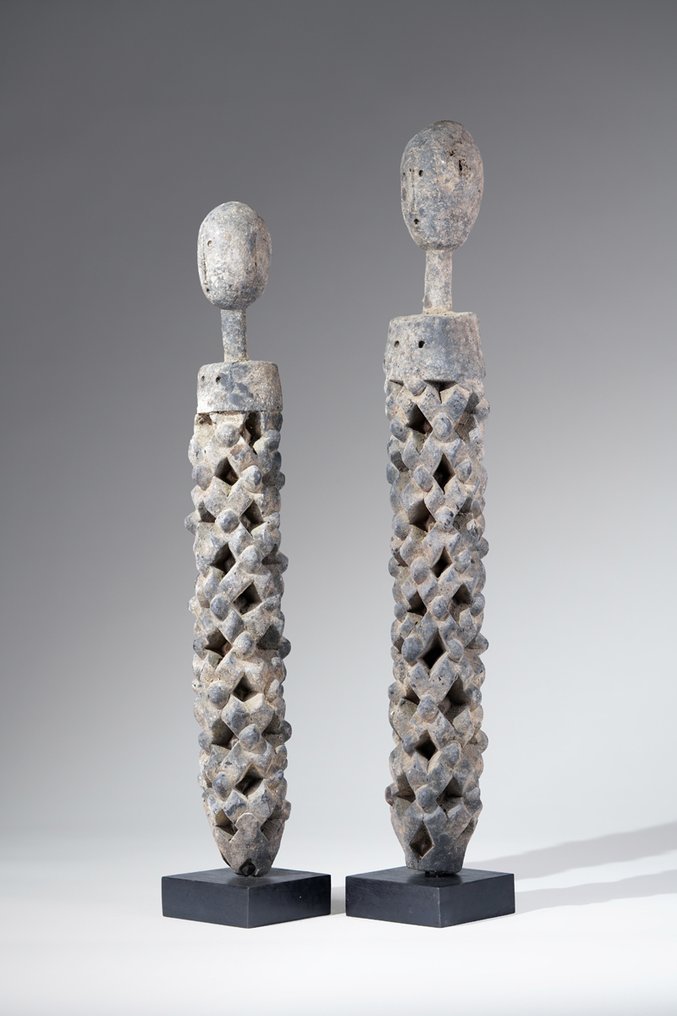
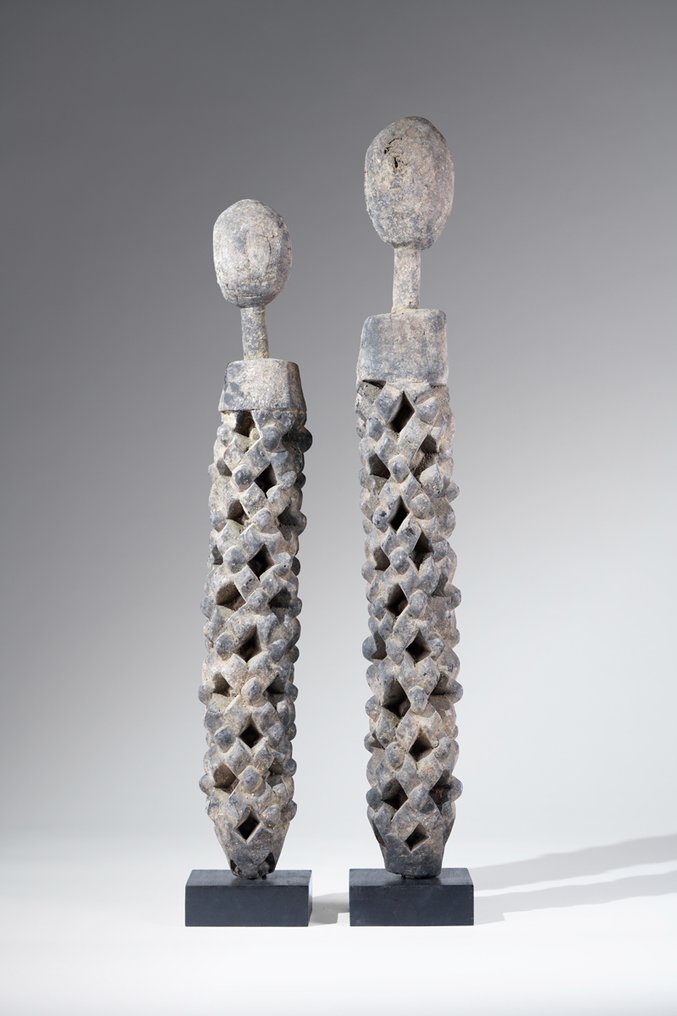
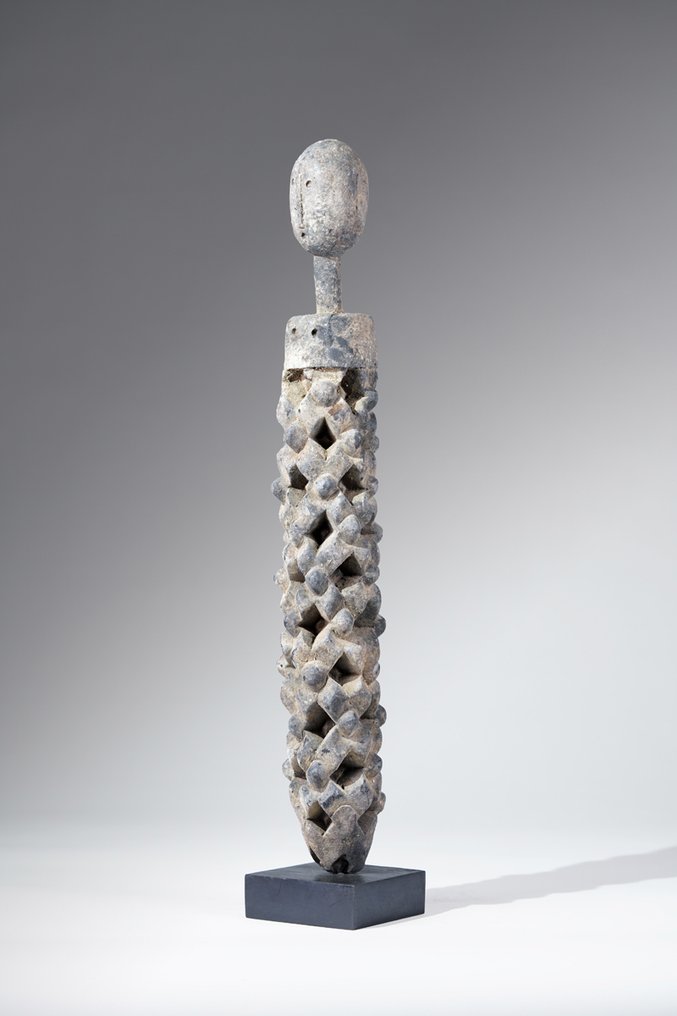
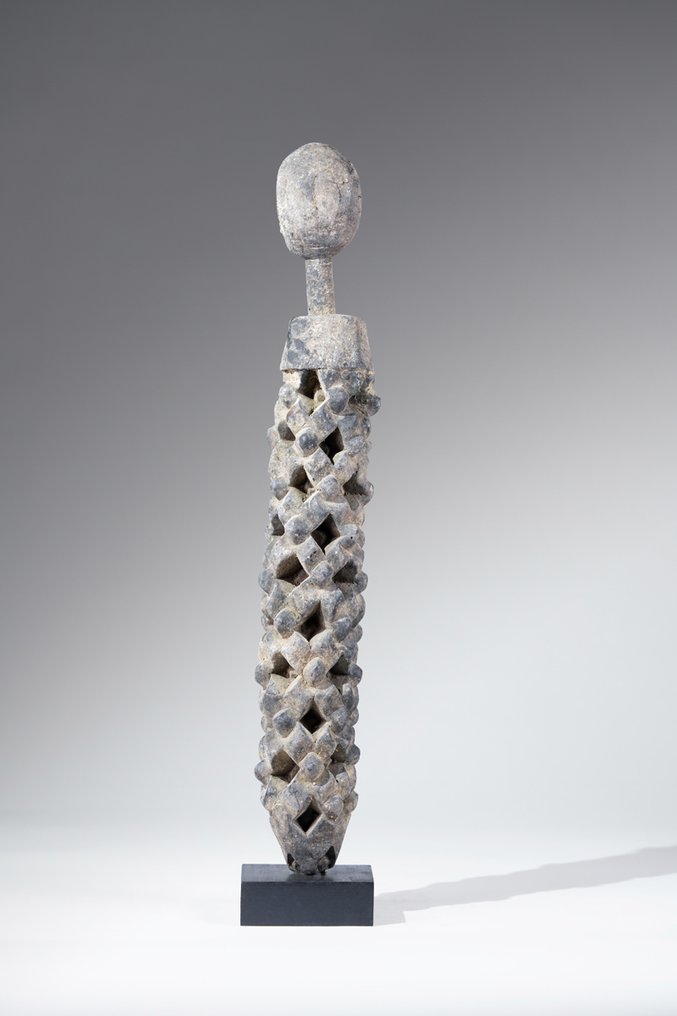
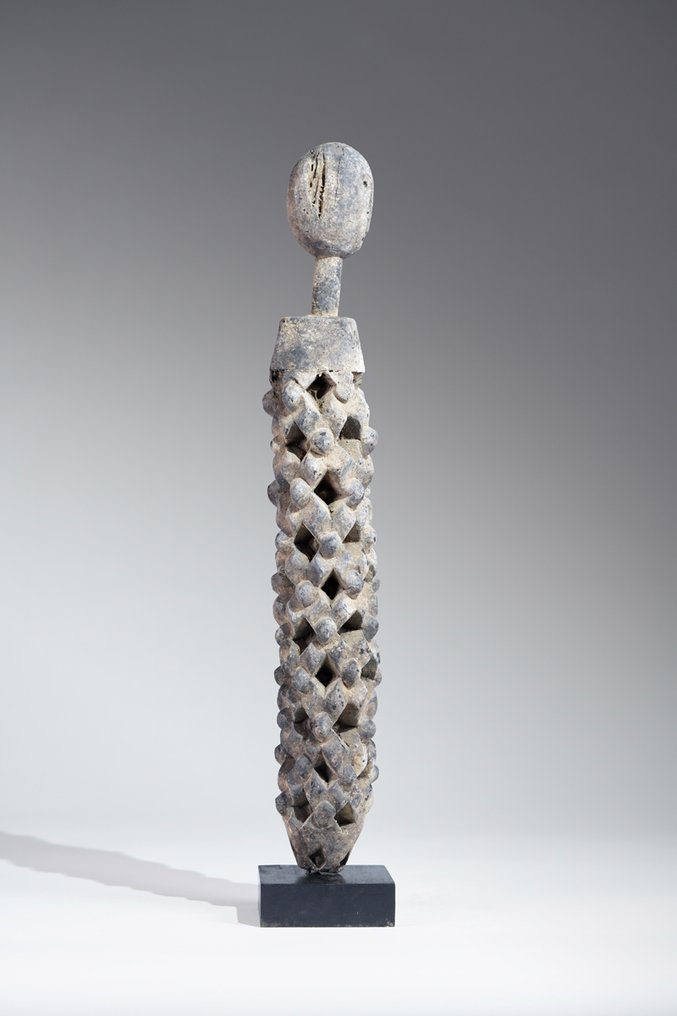
A wooden sculpture - Prampram - Ghana
07
days
00
hours
36
minutes
19
seconds
Current bid
€ 120
Reserve price not met

Expert
Selected by Dimitri André
Holds a postgraduate degree in African studies and 15 years experience in African art.
Estimate € 1,200 - € 1,400
16 other people are watching this object
 Bidder 7912 Bidder 7912 | €120 | |
|---|---|---|
 Bidder 8617 Bidder 8617 | €17 |
Catawiki Buyer Protection
Your payment’s safe with us until you receive your object.View details
Trustpilot 4.4 | 122473 reviews
Rated Excellent on Trustpilot.
A wooden Prampram pair sculpture from Ghana, about 80 cm high and 4.1 kg, in fair condition, sold without a stand.
AI-assisted summary
Description from the seller
A pair of unique PramPram sculptures, South central Ghana. Signs of age.
Prampram couple sculptures are a rare and highly localized sculptural form associated with the Ga-Adangbe people of southeastern Ghana, particularly the coastal town of Prampram. These figures, most commonly carved as male-female pairs, are thought to function within the complex funerary and ancestral traditions of the Ga-Adangbe, though the precise ritual contexts in which they were used remain partially obscure due to limited field documentation and a scarcity of surviving examples.
The sculptures are typically rendered in wood and exhibit a distinctive stylistic profile: the figures stand upright, often in symmetrical poses, with frontal orientation and arms carved close to the body. Faces are marked by prominent features, including large, almond-shaped eyes, flattened noses, and broad mouths, often rendered with a deliberate sense of abstraction. The heads may appear oversized in relation to the body, a proportional strategy common in West African sculpture to emphasize wisdom, power, or identity. Scarification marks and coiffure details may also be present, reflecting local aesthetic preferences and social markers.
These paired figures are understood to represent idealized ancestors or spiritual doubles, and their pairing is believed to symbolize harmony, fertility, and continuity between generations. The presence of both male and female figures underscores the importance of gender complementarity in Ga cosmology and kinship structure. In some interpretations, the figures may act as commemorative portraits of the deceased, though stylization suggests a symbolic rather than naturalistic intent. Their inclusion in funerary contexts possibly served to ensure the safe passage of the deceased into the ancestral realm or to maintain equilibrium between the living and the dead.
Although these sculptures are sometimes linked with the more widely known Ga funeral traditions, including elaborate coffins and commemorative objects, the Prampram figures are exceptional for their sculptural refinement and metaphysical function. Some examples bear traces of pigment or surface treatments, indicating their placement in domestic or shrine settings where they may have received offerings or libations.
Because so few Prampram sculptures have entered public collections, their classification has often relied on oral histories and stylistic comparison with related traditions among neighboring coastal groups, including the Ewe and Dangme. Attribution is further complicated by the historic movement of artists and ideas across southern Ghana, particularly during the colonial and early postcolonial periods.
The academic treatment of these sculptures remains limited, though their presence in select museum collections and occasional references in Ghanaian ethnographies affirm their cultural and historical value. As physical testaments to Ga-Adangbe ancestral belief systems, Prampram couple sculptures offer a unique lens into localized expressions of gender, memory, and ritual.
References:
Cole, Herbert M. and Doran H. Ross. The Arts of Ghana. Museum of Cultural History, University of California, Los Angeles, 1977.
Arhin, Kwame. “The Political and Cultural History of the Ga People.” Transactions of the Historical Society of Ghana, vol. 15, 1974, pp. 1–24.
Nooter, Mary H. and Allen F. Roberts. Memory: Luba Art and the Making of History. Museum for African Art, 1996.
Height: 73 cm / 80 cm
Weight: 1,9 kg / 2,2 kg
Seller's Story
I have been collecting for 25 years and dealing in African art for 20 years. I was inspired by my father's passion for collecting, who left us a collection of "German Colonies". I studied ethnology, art history and comparative law at the Freie Universität Berlin without graduating. After extensive travels through Cameroon, Mali, Ivory Coast, Burkina Faso, Togo and Ghana, I lived in Bamako and Segou for 10 years. In Segou I managed the gallery "Tribalartforum", which had to close in 2012 because of the war in Mali. Then I settled in Lomé Togo, where we have a branch. 16 years ago, Jaenicke-Njoya GmbH was founded, and I have been its managing partner ever since. In 2018 we opened a gallery in Berlin Charlottenburg opposite the Charlottenburg Palace and near the Picasso Museum Berggruen. Our team consists of 6 employees. An archaeologist, an art historian, a photographer, a financial controller, a permanent representative for our branch in Lomé, Togo, and an acting director in Berlin / Togo. You can find us on the web at wolfgang-jaenicke or Galerie Wolfgang Jaenicke, Klausenerplatz 7, 14059 Berlin, Germany.
A pair of unique PramPram sculptures, South central Ghana. Signs of age.
Prampram couple sculptures are a rare and highly localized sculptural form associated with the Ga-Adangbe people of southeastern Ghana, particularly the coastal town of Prampram. These figures, most commonly carved as male-female pairs, are thought to function within the complex funerary and ancestral traditions of the Ga-Adangbe, though the precise ritual contexts in which they were used remain partially obscure due to limited field documentation and a scarcity of surviving examples.
The sculptures are typically rendered in wood and exhibit a distinctive stylistic profile: the figures stand upright, often in symmetrical poses, with frontal orientation and arms carved close to the body. Faces are marked by prominent features, including large, almond-shaped eyes, flattened noses, and broad mouths, often rendered with a deliberate sense of abstraction. The heads may appear oversized in relation to the body, a proportional strategy common in West African sculpture to emphasize wisdom, power, or identity. Scarification marks and coiffure details may also be present, reflecting local aesthetic preferences and social markers.
These paired figures are understood to represent idealized ancestors or spiritual doubles, and their pairing is believed to symbolize harmony, fertility, and continuity between generations. The presence of both male and female figures underscores the importance of gender complementarity in Ga cosmology and kinship structure. In some interpretations, the figures may act as commemorative portraits of the deceased, though stylization suggests a symbolic rather than naturalistic intent. Their inclusion in funerary contexts possibly served to ensure the safe passage of the deceased into the ancestral realm or to maintain equilibrium between the living and the dead.
Although these sculptures are sometimes linked with the more widely known Ga funeral traditions, including elaborate coffins and commemorative objects, the Prampram figures are exceptional for their sculptural refinement and metaphysical function. Some examples bear traces of pigment or surface treatments, indicating their placement in domestic or shrine settings where they may have received offerings or libations.
Because so few Prampram sculptures have entered public collections, their classification has often relied on oral histories and stylistic comparison with related traditions among neighboring coastal groups, including the Ewe and Dangme. Attribution is further complicated by the historic movement of artists and ideas across southern Ghana, particularly during the colonial and early postcolonial periods.
The academic treatment of these sculptures remains limited, though their presence in select museum collections and occasional references in Ghanaian ethnographies affirm their cultural and historical value. As physical testaments to Ga-Adangbe ancestral belief systems, Prampram couple sculptures offer a unique lens into localized expressions of gender, memory, and ritual.
References:
Cole, Herbert M. and Doran H. Ross. The Arts of Ghana. Museum of Cultural History, University of California, Los Angeles, 1977.
Arhin, Kwame. “The Political and Cultural History of the Ga People.” Transactions of the Historical Society of Ghana, vol. 15, 1974, pp. 1–24.
Nooter, Mary H. and Allen F. Roberts. Memory: Luba Art and the Making of History. Museum for African Art, 1996.
Height: 73 cm / 80 cm
Weight: 1,9 kg / 2,2 kg
Seller's Story
I have been collecting for 25 years and dealing in African art for 20 years. I was inspired by my father's passion for collecting, who left us a collection of "German Colonies". I studied ethnology, art history and comparative law at the Freie Universität Berlin without graduating. After extensive travels through Cameroon, Mali, Ivory Coast, Burkina Faso, Togo and Ghana, I lived in Bamako and Segou for 10 years. In Segou I managed the gallery "Tribalartforum", which had to close in 2012 because of the war in Mali. Then I settled in Lomé Togo, where we have a branch. 16 years ago, Jaenicke-Njoya GmbH was founded, and I have been its managing partner ever since. In 2018 we opened a gallery in Berlin Charlottenburg opposite the Charlottenburg Palace and near the Picasso Museum Berggruen. Our team consists of 6 employees. An archaeologist, an art historian, a photographer, a financial controller, a permanent representative for our branch in Lomé, Togo, and an acting director in Berlin / Togo. You can find us on the web at wolfgang-jaenicke or Galerie Wolfgang Jaenicke, Klausenerplatz 7, 14059 Berlin, Germany.
Details
Ethnic group/ culture
Prampram
Country of Origin
Ghana
Material
Wood
Sold with stand
No
Condition
Fair condition
Title of artwork
A wooden sculpture
Height
80 cm
Weight
4.1 kg
Sold by
GermanyVerified
protop
Rechtliche Informationen des Verkäufers
- Unternehmen:
- Jaenicke Njoya GmbH
- Repräsentant:
- Wolfgang Jaenicke
- Adresse:
- Jaenicke Njoya GmbH
Klausenerplatz 7
14059 Berlin
GERMANY - Telefonnummer:
- +493033951033
- Email:
- w.jaenicke@jaenicke-njoya.com
- USt-IdNr.:
- DE241193499
AGB
AGB des Verkäufers. Mit einem Gebot auf dieses Los akzeptieren Sie ebenfalls die AGB des Verkäufers.
Widerrufsbelehrung
- Frist: 14 Tage sowie gemäß den hier angegebenen Bedingungen
- Rücksendkosten: Käufer trägt die unmittelbaren Kosten der Rücksendung der Ware
- Vollständige Widerrufsbelehrung
