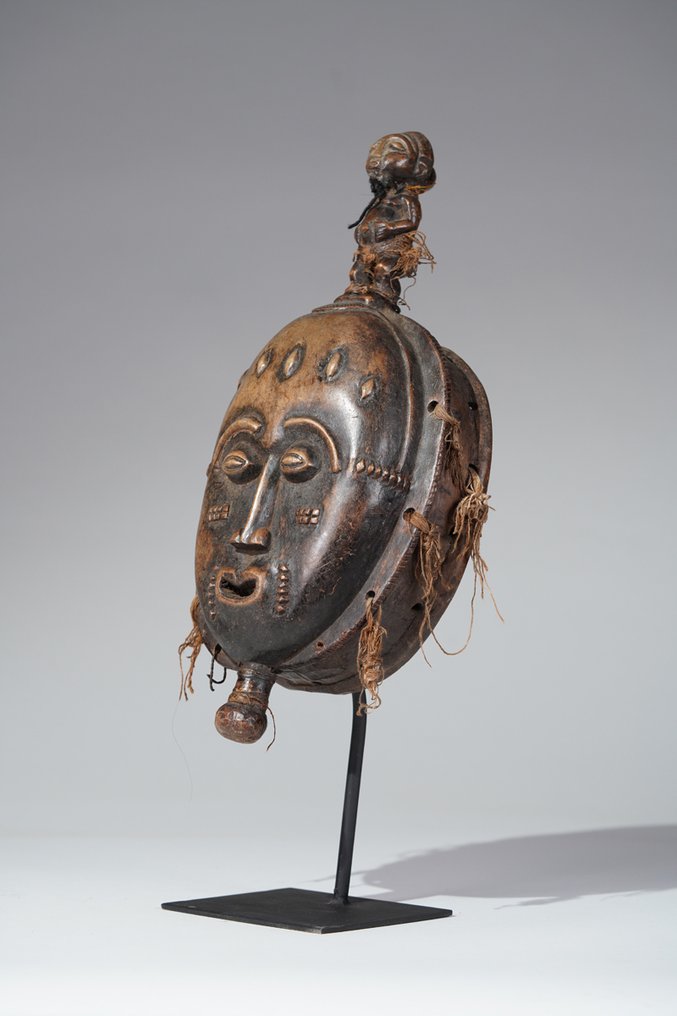
A wooden mask - Baule - Côte d'Ivoire (No reserve price)
03
days
23
hours
26
minutes
17
seconds
Current bid
€ 15
No reserve price

Expert
Selected by Dimitri André
Holds a postgraduate degree in African studies and 15 years experience in African art.
Estimate € 550 - € 700
20 other people are watching this object
 Bidder 0328 Bidder 0328 | €15 | |
|---|---|---|
 Bidder 3000 Bidder 3000 | €10 | |
| Bidder 0328 | €9 | |
Catawiki Buyer Protection
Your payment’s safe with us until you receive your object.View details
Trustpilot 4.4 | 122630 reviews
Rated Excellent on Trustpilot.
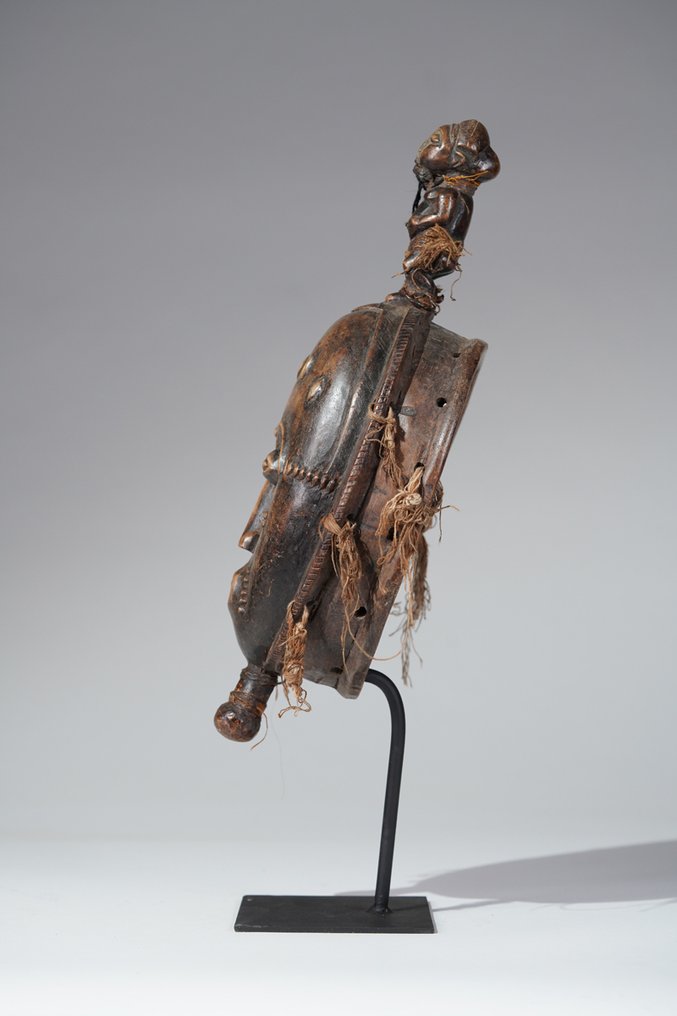
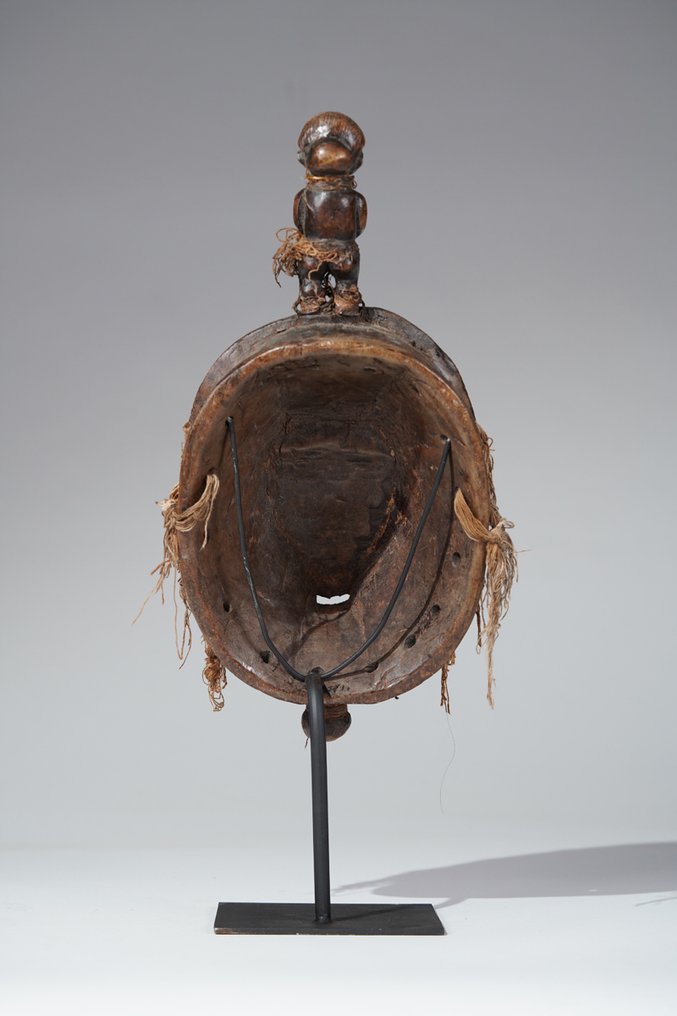
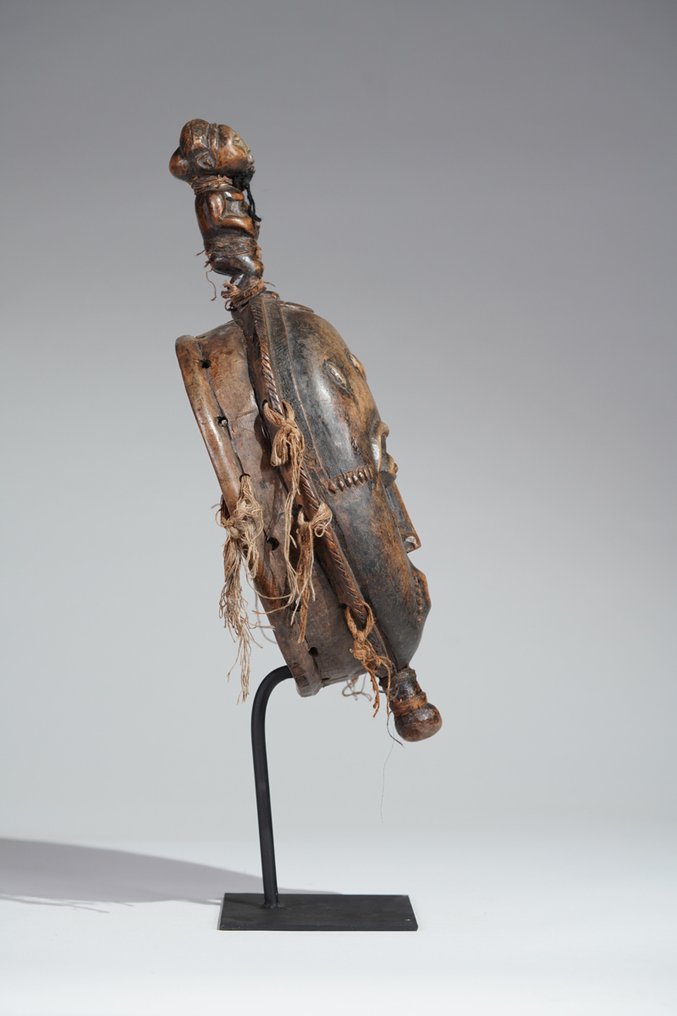
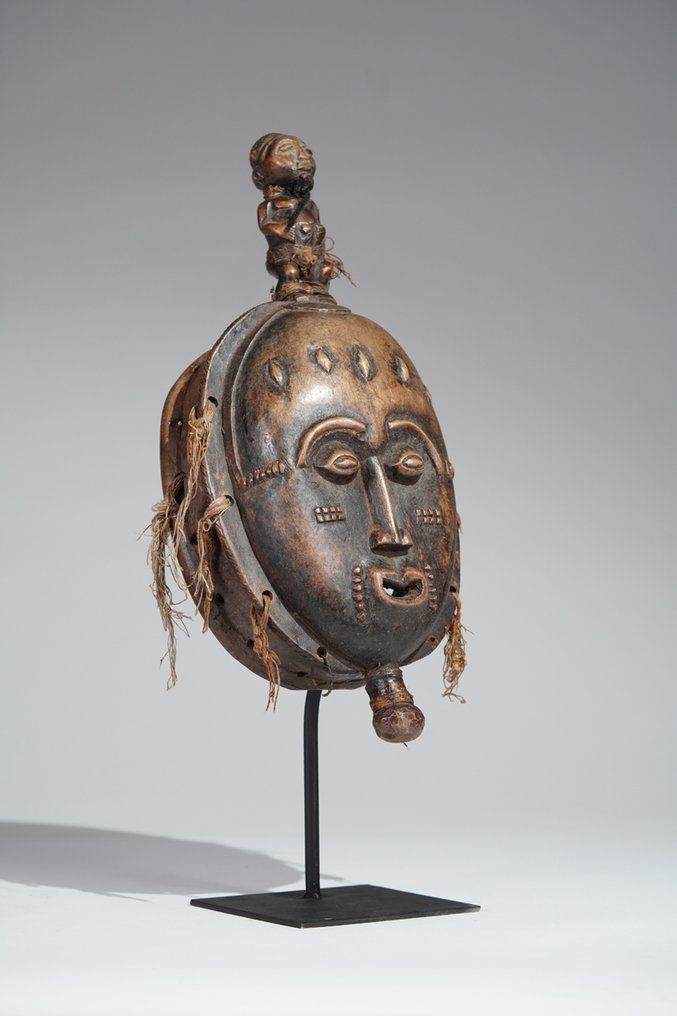
A Baule royal wooden mask from Côte d’Ivoire, provenance Didieville region, titled “A wooden mask,” in fair condition, 42 cm high, made of wood and sold with a stand.
AI-assisted summary
Description from the seller
A Baule Royal mask collected in the Didieville region, Ivory Coast with a male figure created on top. Signs of ritual use and age. Incl stand.
Baule royal masks from Côte d’Ivoire are central to the ceremonial, spiritual, and aesthetic life of the Baule people. These masks fall into different categories, reflecting their use in distinct ritual and performative contexts. Among the most significant are the sacred bo nun amuin masks and the portrait face masks known as ndoma. While each type serves different purposes and operates in different ritual settings, both express core Baule ideals of beauty, power, moral order, and social harmony.
The bo nun amuin mask represents powerful and protective bush spirits that safeguard the village and enforce spiritual order. These masks are often large, imposing, and aggressive in appearance. They typically feature horned or animal-like elements—such as protruding tusks, open jaws with carved teeth, and wide, staring eyes—designed to provoke fear and respect. The masks are carved from wood and often coated with layers of sacrificial materials—blood, oil, or clay—giving them a dark, crusted surface. Their performance is restricted to initiated men; they are considered dangerous and are kept hidden in secluded bush shrines. They emerge only for serious ritual occasions, such as funerals of elders or mask dancers, or when the village is under spiritual threat. The dancer wearing the bo nun amuin mask often also dons a full-body costume made of raffia and other organic materials, creating an overwhelming and supernatural presence.
By contrast, ndoma masks are portrait masks used in entertainment and commemorative masquerades known as mblo or gbagba. These masks are not sacred in the same way as the bo nun amuin, and they are performed more publicly, often during festivities or ceremonies that honor individuals within the community. A ndoma mask portrays a specific person—usually someone known for wisdom, beauty, or community service—and captures an idealized version of their facial features. These masks are characterized by smooth, polished surfaces, downcast almond-shaped eyes, delicately carved scarification marks, and elaborate coiffures reflecting real Baule hairstyles. Despite their commemorative function, they are not naturalistic portraits; they instead translate social and moral virtues into visual form. The person honored by the mask may be present at the performance, watching as their idealized likeness is celebrated by dancers, musicians, and the broader community.
The aesthetic principles underlying both types of masks are deeply rooted in Baule culture. Formal beauty—defined by balance, symmetry, restraint, and clarity—is never separated from ethical value. A mask that is “beautiful” is one that manifests the right character: composed, honorable, socially responsible. In this sense, Baule masks are not simply art objects or tools of performance; they are visual articulations of social philosophy. They express not only how people should look, but how they should act and how they should be remembered.
Historically, Baule royal and sacred masks were part of a broader complex of ritual arts that included sculptures, dance, music, and oral performance. The masks functioned within networks of belief involving the ancestors, the bush spirits, and the community’s moral order. In colonial and postcolonial periods, many Baule masks were collected and sold, often removed from their original ritual context. Nevertheless, their design, craftsmanship, and symbolism have continued to influence both local practices and international perceptions of African art. The portrait masks in particular became highly sought-after by early 20th-century European artists and collectors, who were drawn to their serenity and abstraction.
Today, Baule masks are held in museum collections around the world, where they are studied not only as artistic masterpieces but as windows into a highly developed cultural system. Yet within Baule communities themselves, the deeper meanings of these objects persist—as reminders of ancestral power, community ethics, and the enduring role of performance in shaping identity.
References:
Susan Mullin Vogel, Baule: African Art – Western Eyes, Yale University Press, 1997.
Susan Mullin Vogel, Art of the Baule: African Art from Côte d'Ivoire, Museum for African Art, 1990.
Alfred Métraux, “Les masques Baoulé,” Journal de la Société des Africanistes, 1935.
Bernard Dadié, La légende baoulé, Présence Africaine, 1972.
The Metropolitan Museum of Art, African Art Collection – Baule Masks.
Museum Rietberg Zürich, Baule mask catalogue entries.
Art Institute of Chicago, “Female Face Mask (Ndoma), Baule People”.
CAB17874
Height: 42 cm without stand
Seller's Story
For over twenty-five years, Wolfgang Jaenicke has been active as a collector and, for the past two decades, as a specialist dealer in African art, with a particular focus on material often subsumed under the term “Tribal Art”. His early engagement with cultural history was shaped by his father’s extensive archive on the former “German Colonies”, a collection of documents, publications and artefacts that introduced him to the evidentiary and historical significance of objects at a young age.
Jaenicke pursued studies in ethnology, art history and comparative law at the Freie Universität Berlin. Motivated by an interest in cultural dynamics beyond the limitations of academic formalism, he left the university to undertake extended research and travel in West and Central Africa. His fieldwork and professional activities took him through Cameroon, Mali, Côte d’Ivoire, Burkina Faso, Togo and Ghana, establishing long-term relationships with artists, collectors, researchers and local institutions.
From 2002 to 2012 he lived primarily in Mali, based in Bamako and Ségou. During this period he directed Tribalartforum, a gallery housed in a historic colonial building overlooking the Ségou harbour. The gallery became a notable site for contemporary and historical cultural production, hosting exhibitions of Bamana sculpture and ceramics, as well as photographic works including those of Malick Sidibé, whose images of the 1970s youth culture in Mali remain internationally influential. The outbreak of the war in Mali in 2012 necessitated the closure of the gallery.
Following his departure from Mali, Jaenicke established his base of operations in Lomé, Togo, where he and his partners maintain a permanent branch. The Jaenicke-Njoya GmbH, founded sixteen years earlier, serves as the organisational and legal framework for these activities. In 2018, the Galerie Wolfgang Jaenicke opened its Berlin location opposite Charlottenburg Palace, operating today with a team of approximately twelve specialists.
A significant focus of the gallery’s curatorial and research work lies in West African bronzes and terracotta. As part of ongoing efforts toward transparency and precise cultural documentation, Jaenicke collaborated with the Technische Universität Berlin’s “Translocation Project”, contributing insight into the circulation of archaeological and ethnographic objects within the international art trade in Lomé. The gallery maintains continuous dialogue with national museums across West Africa and regularly publishes updates on its activities in Lomé and Berlin via its website: wolfgang-jaenicke
Jaenicke’s practice combines long-term field engagement with a commitment to provenance research, museum-level documentation, and the ethical stewardship of cultural heritage. His work continues to bridge local knowledge networks and international scholarly discourse.
A Baule Royal mask collected in the Didieville region, Ivory Coast with a male figure created on top. Signs of ritual use and age. Incl stand.
Baule royal masks from Côte d’Ivoire are central to the ceremonial, spiritual, and aesthetic life of the Baule people. These masks fall into different categories, reflecting their use in distinct ritual and performative contexts. Among the most significant are the sacred bo nun amuin masks and the portrait face masks known as ndoma. While each type serves different purposes and operates in different ritual settings, both express core Baule ideals of beauty, power, moral order, and social harmony.
The bo nun amuin mask represents powerful and protective bush spirits that safeguard the village and enforce spiritual order. These masks are often large, imposing, and aggressive in appearance. They typically feature horned or animal-like elements—such as protruding tusks, open jaws with carved teeth, and wide, staring eyes—designed to provoke fear and respect. The masks are carved from wood and often coated with layers of sacrificial materials—blood, oil, or clay—giving them a dark, crusted surface. Their performance is restricted to initiated men; they are considered dangerous and are kept hidden in secluded bush shrines. They emerge only for serious ritual occasions, such as funerals of elders or mask dancers, or when the village is under spiritual threat. The dancer wearing the bo nun amuin mask often also dons a full-body costume made of raffia and other organic materials, creating an overwhelming and supernatural presence.
By contrast, ndoma masks are portrait masks used in entertainment and commemorative masquerades known as mblo or gbagba. These masks are not sacred in the same way as the bo nun amuin, and they are performed more publicly, often during festivities or ceremonies that honor individuals within the community. A ndoma mask portrays a specific person—usually someone known for wisdom, beauty, or community service—and captures an idealized version of their facial features. These masks are characterized by smooth, polished surfaces, downcast almond-shaped eyes, delicately carved scarification marks, and elaborate coiffures reflecting real Baule hairstyles. Despite their commemorative function, they are not naturalistic portraits; they instead translate social and moral virtues into visual form. The person honored by the mask may be present at the performance, watching as their idealized likeness is celebrated by dancers, musicians, and the broader community.
The aesthetic principles underlying both types of masks are deeply rooted in Baule culture. Formal beauty—defined by balance, symmetry, restraint, and clarity—is never separated from ethical value. A mask that is “beautiful” is one that manifests the right character: composed, honorable, socially responsible. In this sense, Baule masks are not simply art objects or tools of performance; they are visual articulations of social philosophy. They express not only how people should look, but how they should act and how they should be remembered.
Historically, Baule royal and sacred masks were part of a broader complex of ritual arts that included sculptures, dance, music, and oral performance. The masks functioned within networks of belief involving the ancestors, the bush spirits, and the community’s moral order. In colonial and postcolonial periods, many Baule masks were collected and sold, often removed from their original ritual context. Nevertheless, their design, craftsmanship, and symbolism have continued to influence both local practices and international perceptions of African art. The portrait masks in particular became highly sought-after by early 20th-century European artists and collectors, who were drawn to their serenity and abstraction.
Today, Baule masks are held in museum collections around the world, where they are studied not only as artistic masterpieces but as windows into a highly developed cultural system. Yet within Baule communities themselves, the deeper meanings of these objects persist—as reminders of ancestral power, community ethics, and the enduring role of performance in shaping identity.
References:
Susan Mullin Vogel, Baule: African Art – Western Eyes, Yale University Press, 1997.
Susan Mullin Vogel, Art of the Baule: African Art from Côte d'Ivoire, Museum for African Art, 1990.
Alfred Métraux, “Les masques Baoulé,” Journal de la Société des Africanistes, 1935.
Bernard Dadié, La légende baoulé, Présence Africaine, 1972.
The Metropolitan Museum of Art, African Art Collection – Baule Masks.
Museum Rietberg Zürich, Baule mask catalogue entries.
Art Institute of Chicago, “Female Face Mask (Ndoma), Baule People”.
CAB17874
Height: 42 cm without stand
Seller's Story
For over twenty-five years, Wolfgang Jaenicke has been active as a collector and, for the past two decades, as a specialist dealer in African art, with a particular focus on material often subsumed under the term “Tribal Art”. His early engagement with cultural history was shaped by his father’s extensive archive on the former “German Colonies”, a collection of documents, publications and artefacts that introduced him to the evidentiary and historical significance of objects at a young age.
Jaenicke pursued studies in ethnology, art history and comparative law at the Freie Universität Berlin. Motivated by an interest in cultural dynamics beyond the limitations of academic formalism, he left the university to undertake extended research and travel in West and Central Africa. His fieldwork and professional activities took him through Cameroon, Mali, Côte d’Ivoire, Burkina Faso, Togo and Ghana, establishing long-term relationships with artists, collectors, researchers and local institutions.
From 2002 to 2012 he lived primarily in Mali, based in Bamako and Ségou. During this period he directed Tribalartforum, a gallery housed in a historic colonial building overlooking the Ségou harbour. The gallery became a notable site for contemporary and historical cultural production, hosting exhibitions of Bamana sculpture and ceramics, as well as photographic works including those of Malick Sidibé, whose images of the 1970s youth culture in Mali remain internationally influential. The outbreak of the war in Mali in 2012 necessitated the closure of the gallery.
Following his departure from Mali, Jaenicke established his base of operations in Lomé, Togo, where he and his partners maintain a permanent branch. The Jaenicke-Njoya GmbH, founded sixteen years earlier, serves as the organisational and legal framework for these activities. In 2018, the Galerie Wolfgang Jaenicke opened its Berlin location opposite Charlottenburg Palace, operating today with a team of approximately twelve specialists.
A significant focus of the gallery’s curatorial and research work lies in West African bronzes and terracotta. As part of ongoing efforts toward transparency and precise cultural documentation, Jaenicke collaborated with the Technische Universität Berlin’s “Translocation Project”, contributing insight into the circulation of archaeological and ethnographic objects within the international art trade in Lomé. The gallery maintains continuous dialogue with national museums across West Africa and regularly publishes updates on its activities in Lomé and Berlin via its website: wolfgang-jaenicke
Jaenicke’s practice combines long-term field engagement with a commitment to provenance research, museum-level documentation, and the ethical stewardship of cultural heritage. His work continues to bridge local knowledge networks and international scholarly discourse.
Details
Ethnic group/ culture
Baule
Country of Origin
Côte d'Ivoire
Material
Wood
Sold with stand
Yes
Condition
Fair condition
Title of artwork
A wooden mask
Height
42 cm
Weight
1.6 kg
Sold by
GermanyVerified
protop
Rechtliche Informationen des Verkäufers
- Unternehmen:
- Jaenicke Njoya GmbH
- Repräsentant:
- Wolfgang Jaenicke
- Adresse:
- Jaenicke Njoya GmbH
Klausenerplatz 7
14059 Berlin
GERMANY - Telefonnummer:
- +493033951033
- Email:
- w.jaenicke@jaenicke-njoya.com
- USt-IdNr.:
- DE241193499
AGB
AGB des Verkäufers. Mit einem Gebot auf dieses Los akzeptieren Sie ebenfalls die AGB des Verkäufers.
Widerrufsbelehrung
- Frist: 14 Tage sowie gemäß den hier angegebenen Bedingungen
- Rücksendkosten: Käufer trägt die unmittelbaren Kosten der Rücksendung der Ware
- Vollständige Widerrufsbelehrung
