Netherlands - Overijssel. Silver Duit 1770 - 'New Year’s Type' - CNM 2.38.118 - Very Rare

05
days
07
hours
17
minutes
57
seconds
Current bid
€ 500
Reserve price met

Expert
Selected by Yunheng Deng
Has over 30 years of experience collecting coins, with extensive professional contacts in Asia. Passionate about the stories behind contemporary coins.
Estimate € 550 - € 630
10 other people are watching this object
 Bidder 3912 Bidder 3912 | €500 | |
|---|---|---|
| Bidder 5177 | €480 | |
| Bidder 5177 | €440 | |
Catawiki Buyer Protection
Your payment’s safe with us until you receive your object.View details
Trustpilot 4.4 | 122630 reviews
Rated Excellent on Trustpilot.
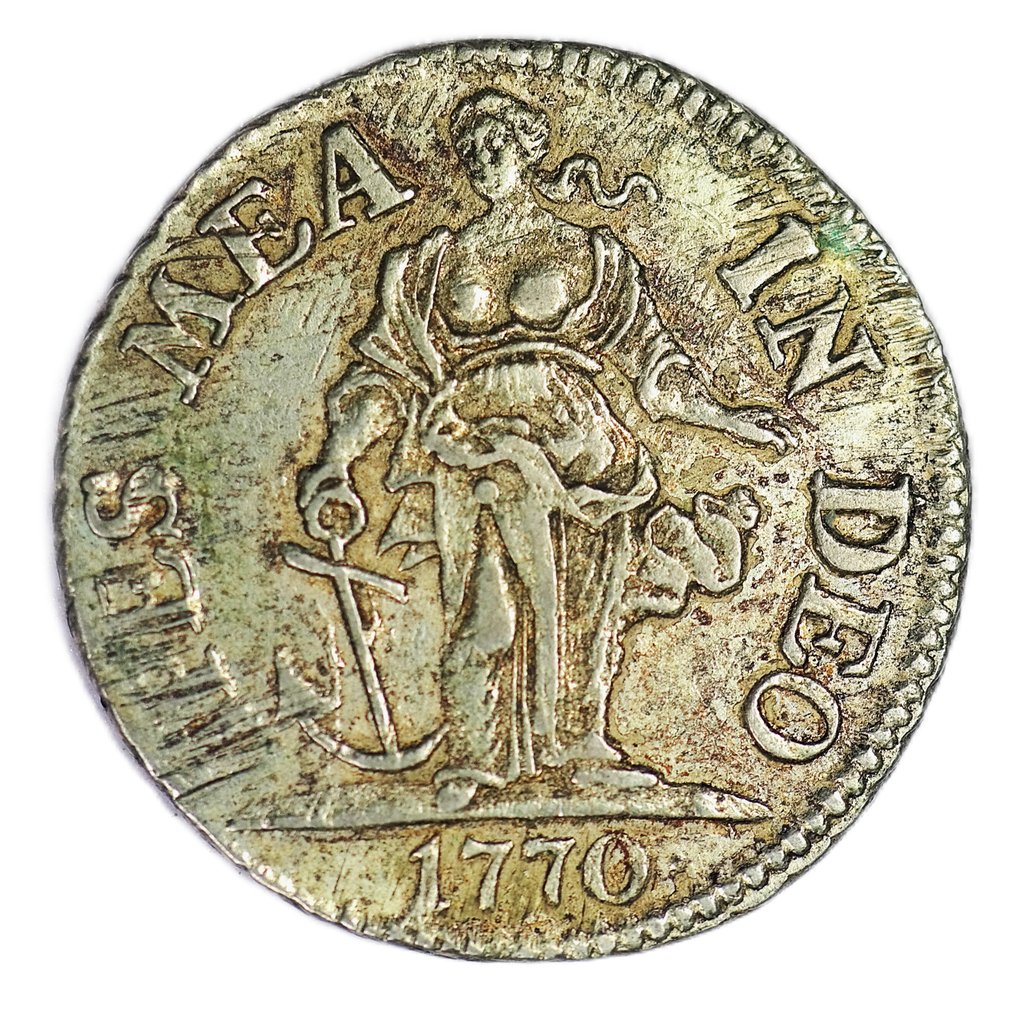
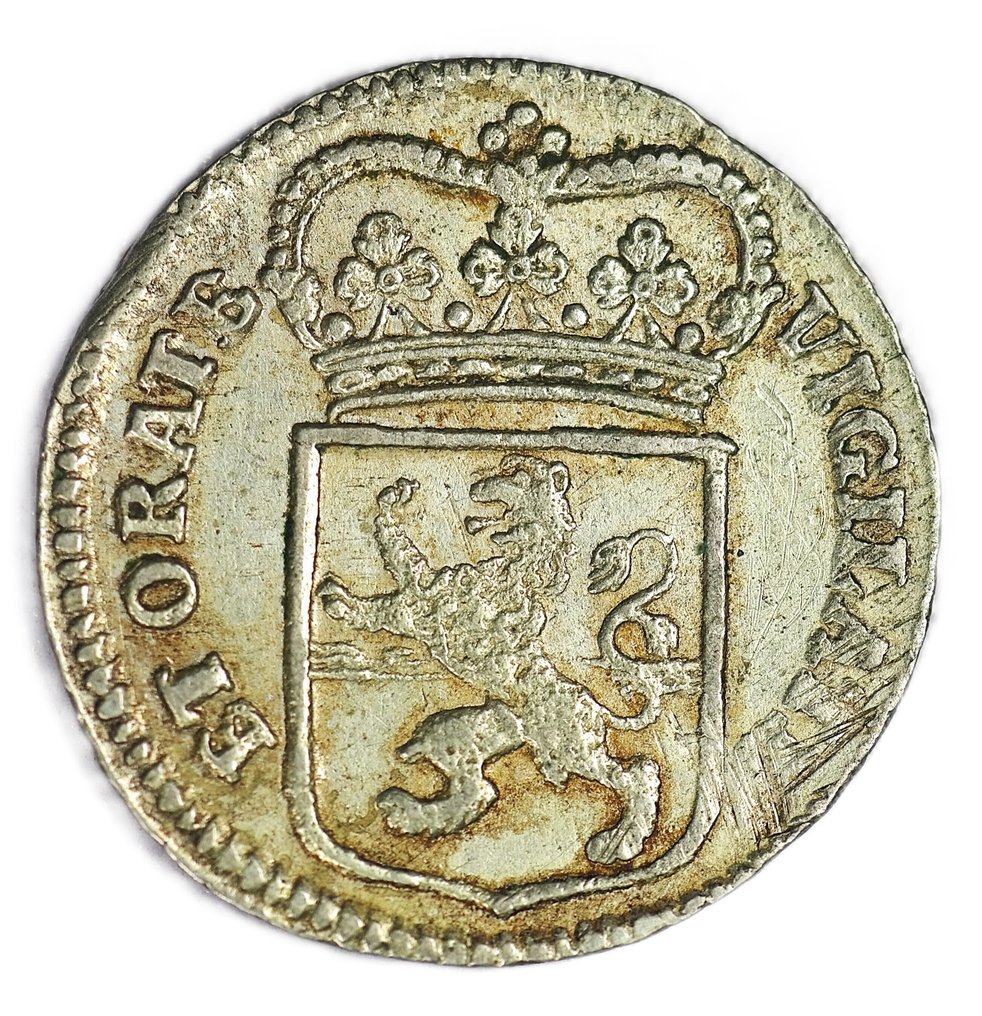
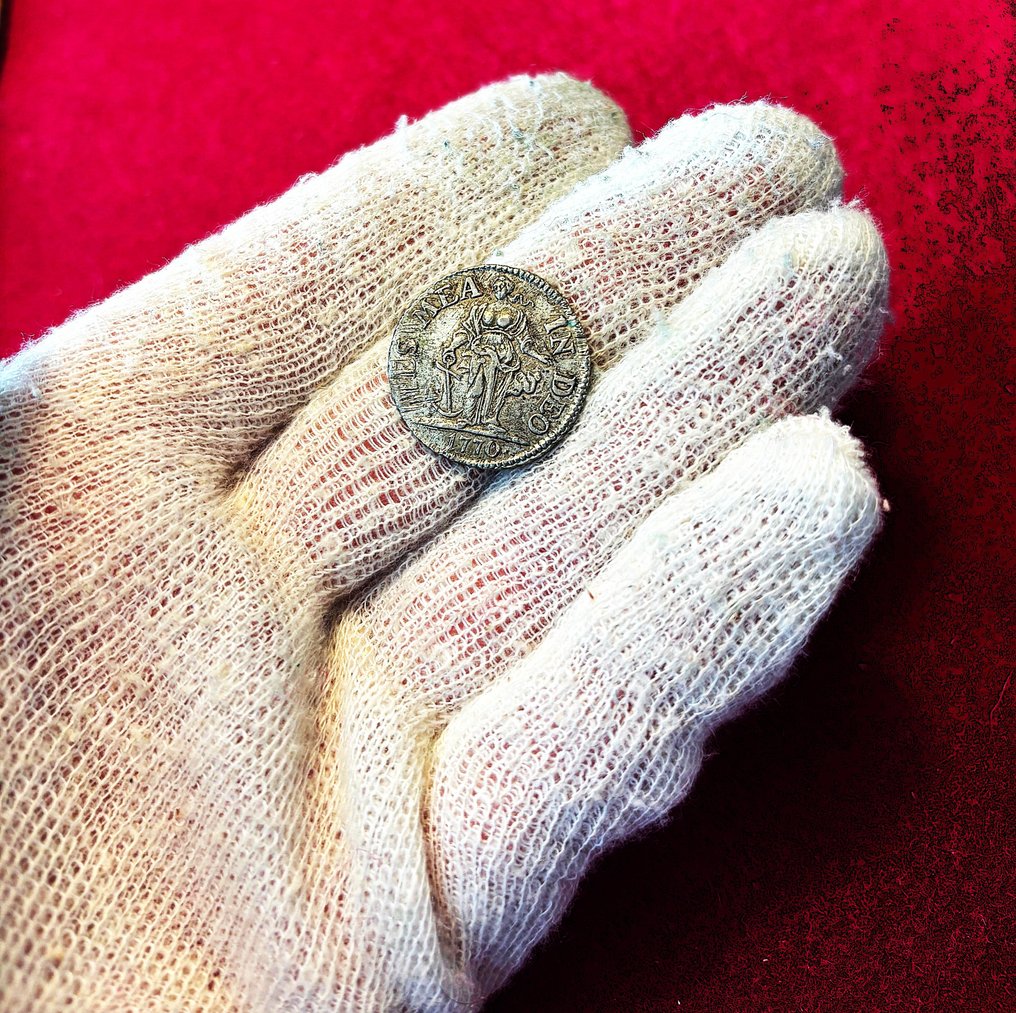
1770 Overijssel silver off‑metal strike duit token, weighing 3.28 g with a reeded edge, featuring the crowned provincial arms and the motto Vigilate et orate on the obverse and a draped allegory with an anchor and the inscription IN DEO SPES MEA on the reverse; described as a very rare New Year’s token.
AI-assisted summary
Description from the seller
Overijssel – silver duit type 1770, crowned provincial arms / allegory with anchor – CNM 2.38.118, HPM OV75, PW 7012.1 – Very Rare
Description
Silver off-metal strike of the 1770 duit of the province of Overijssel, struck with a reeded edge. In the standard literature this piece is classified as a silver presentation striking or New Year’s token. The regular issues of this type were struck in copper; the silver pieces form a separate, very rare group and are consistently treated as such in auction catalogues.
Obverse
Crowned coat of arms of the province of Overijssel (lion within shield), legend “VIGILATE ET ORATE”. This Latin motto means “Watch and pray”, referring to the biblical verse Vigilate et orate, ut non intretis in tentationem (Matthew 26:41).
Reverse
Standing female allegorical figure in draped clothing, holding an anchor; the date 1770 in the exergue. Legend “IN DEO – SPES MEA”, meaning “My hope is in God”. In auction literature the figure is described as an allegory of joy or confidence, fitting the hopeful character of the motto.
Historical context
During the 18th century, each province of the Dutch Republic minted its own small coinage. Overijssel issued large quantities of duiten (copper pieces) for daily use. In 1770 and 1771, the provincial authorities released ordinances to withdraw older duiten from circulation because the sheer volume of small change caused monetary problems. Against this background, a very small number of silver off-metal strikes were produced as presentation pieces, commonly interpreted as New Year’s tokens. The combination of the provincial arms with the moral-religious inscriptions “VIGILATE ET ORATE” and “IN DEO SPES MEA” is typical for contemporary patriotic and devotional medallic issues of the Dutch Republic.
Silver examples of this 1770 type are rated as very rare.
Specifications of the offered piece:
Issuing authority: Province of Overijssel, Dutch Republic
Year: 1770
Type: Silver off-metal strike / New Year’s token based on the duit design
Metal: Silver
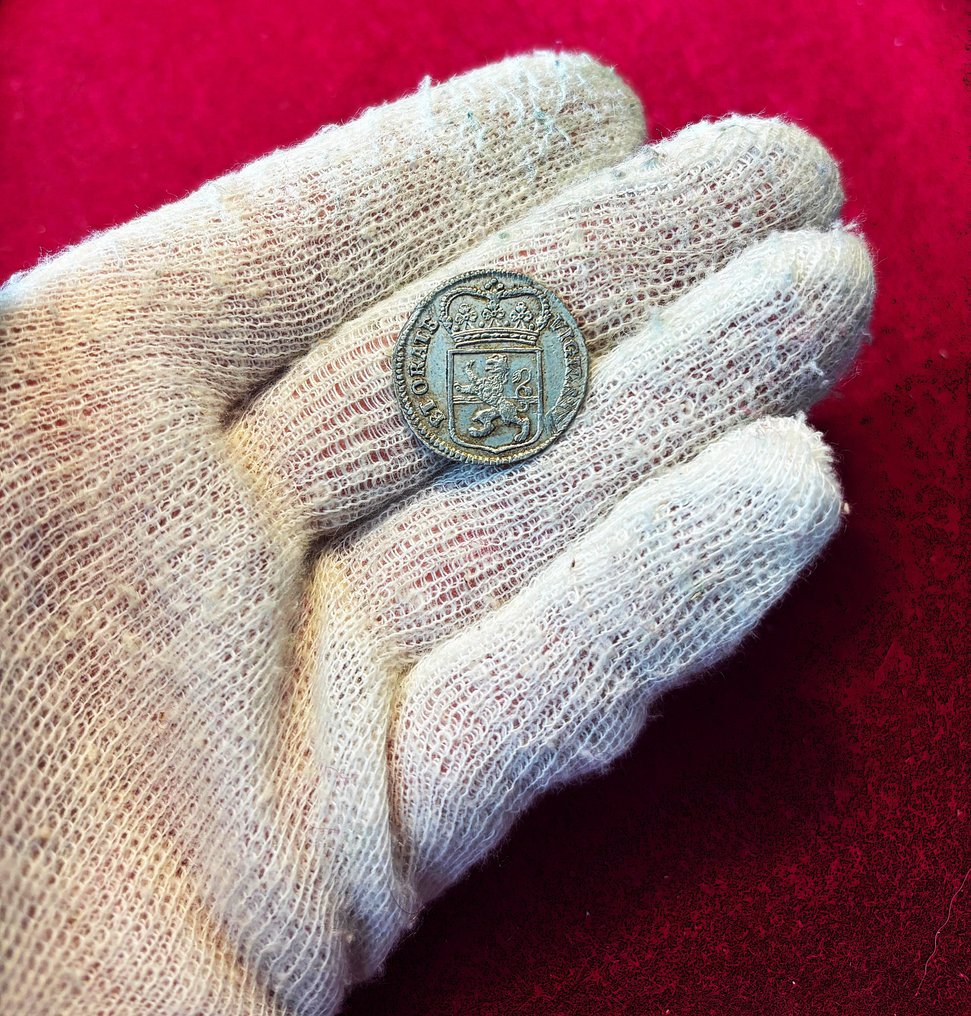
Weight: 3.28 g
Edge: Reeded
References: CNM 2.38.118 – HPM OV75 – PW 7012.1
Please note: modern coins are more than simple pieces of metal – each carries its own history, design, and individuality. While they are struck with greater uniformity than ancient coins, differences in minting, handling, and preservation over the years give every coin a unique character. Professional photographs can never fully capture the brilliance of the surfaces, the luster, and the subtle play of light that appear when viewed in hand. That’s why I strongly recommend looking carefully at all the photos, from different angles and under varying light. This will give you the best possible impression of the quality, charm, and craftsmanship of the coin.
The photos form an integral part of the description of this coin. They provide a complete and honest view of the condition, details, and appearance of the item offered. Please examine the images carefully for a full overview of any features, wear, or special characteristics. What you see is exactly what you will receive.
Overijssel – silver duit type 1770, crowned provincial arms / allegory with anchor – CNM 2.38.118, HPM OV75, PW 7012.1 – Very Rare
Description
Silver off-metal strike of the 1770 duit of the province of Overijssel, struck with a reeded edge. In the standard literature this piece is classified as a silver presentation striking or New Year’s token. The regular issues of this type were struck in copper; the silver pieces form a separate, very rare group and are consistently treated as such in auction catalogues.
Obverse
Crowned coat of arms of the province of Overijssel (lion within shield), legend “VIGILATE ET ORATE”. This Latin motto means “Watch and pray”, referring to the biblical verse Vigilate et orate, ut non intretis in tentationem (Matthew 26:41).
Reverse
Standing female allegorical figure in draped clothing, holding an anchor; the date 1770 in the exergue. Legend “IN DEO – SPES MEA”, meaning “My hope is in God”. In auction literature the figure is described as an allegory of joy or confidence, fitting the hopeful character of the motto.
Historical context
During the 18th century, each province of the Dutch Republic minted its own small coinage. Overijssel issued large quantities of duiten (copper pieces) for daily use. In 1770 and 1771, the provincial authorities released ordinances to withdraw older duiten from circulation because the sheer volume of small change caused monetary problems. Against this background, a very small number of silver off-metal strikes were produced as presentation pieces, commonly interpreted as New Year’s tokens. The combination of the provincial arms with the moral-religious inscriptions “VIGILATE ET ORATE” and “IN DEO SPES MEA” is typical for contemporary patriotic and devotional medallic issues of the Dutch Republic.
Silver examples of this 1770 type are rated as very rare.
Specifications of the offered piece:
Issuing authority: Province of Overijssel, Dutch Republic
Year: 1770
Type: Silver off-metal strike / New Year’s token based on the duit design
Metal: Silver
Weight: 3.28 g
Edge: Reeded
References: CNM 2.38.118 – HPM OV75 – PW 7012.1
Please note: modern coins are more than simple pieces of metal – each carries its own history, design, and individuality. While they are struck with greater uniformity than ancient coins, differences in minting, handling, and preservation over the years give every coin a unique character. Professional photographs can never fully capture the brilliance of the surfaces, the luster, and the subtle play of light that appear when viewed in hand. That’s why I strongly recommend looking carefully at all the photos, from different angles and under varying light. This will give you the best possible impression of the quality, charm, and craftsmanship of the coin.
The photos form an integral part of the description of this coin. They provide a complete and honest view of the condition, details, and appearance of the item offered. Please examine the images carefully for a full overview of any features, wear, or special characteristics. What you see is exactly what you will receive.
Details
Era
1400-1900
Over 200 years old
No
Country/province
Netherlands - Overijssel
Year/Period and Variation
1770 - 'New Year’s Type' - CNM 2.38.118 - Very Rare
Denomination
Silver Duit
Precious metal
Silver
Condition
Ungraded
Sold by