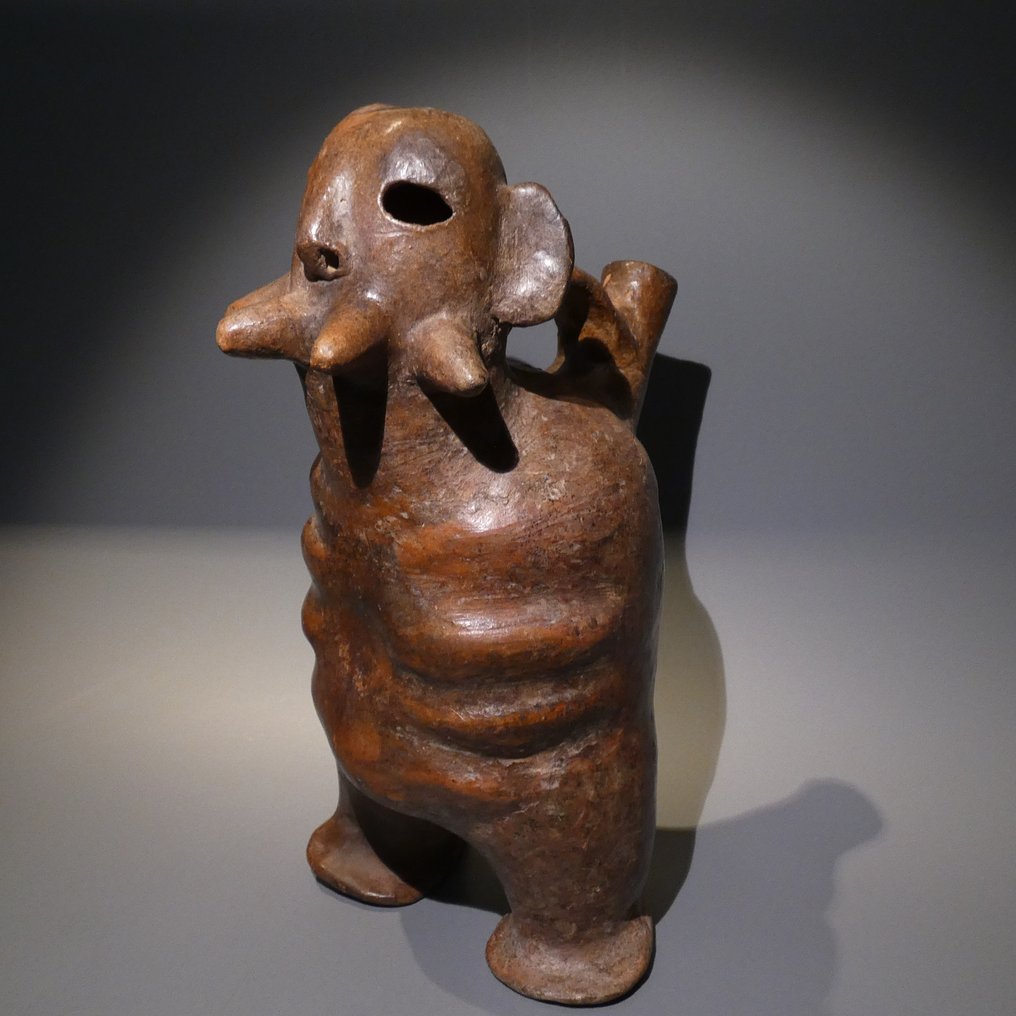
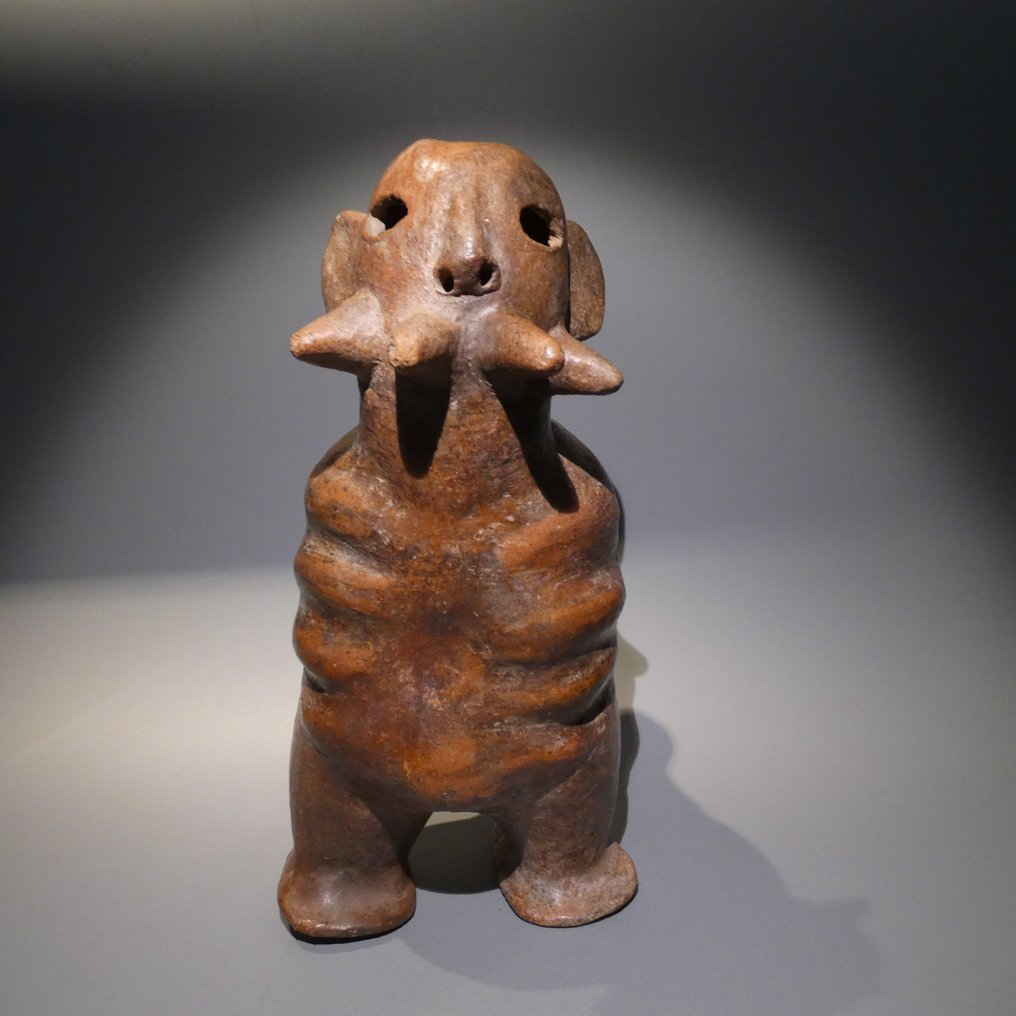
Vicus, Peru Terracotta Figurative vessel with handle. PUBLISHED. 25 cm H. 500 BC - 400 AD. Spanish Export License

Opens 15 December
Starting bid
€ 1
Add to your favourites to get an alert when the auction starts.

Expert
Selected by Ruth Garrido Vila
Directed the Ifergan Collection Museum, specialising in Phoenician and Mediterranean archaeology.
Estimate € 2,200 - € 2,500
Catawiki Buyer Protection
Your payment’s safe with us until you receive your object.View details
Trustpilot 4.4 | 122290 reviews
Rated Excellent on Trustpilot.
Description from the seller
Figurative vessel with handle
- PUBLISHED -
Vicus, Peru, 500 BC - 400 AD
Terracotta
25 cm height
Provenance:
- Private collection, France.
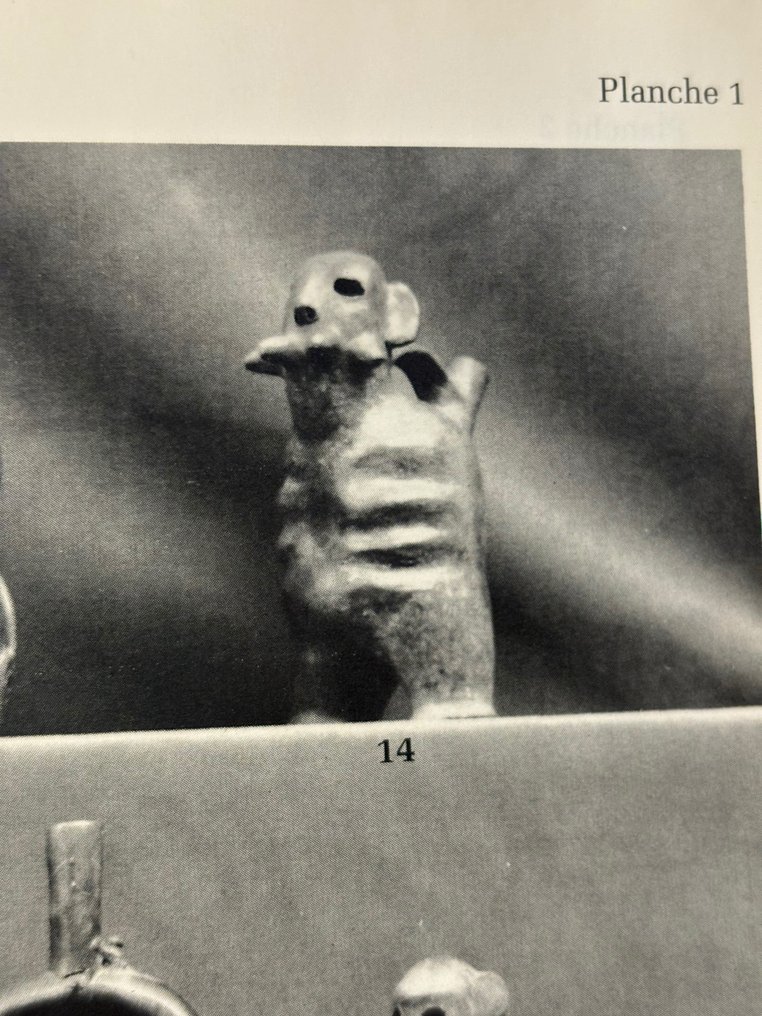
- Loudmer Comissaires Priseurs S.C.P., Art Precolombien Collection d'un Amateur. Paris Drouot, 18 March 1995. Lot 14.
- Private collection, J. R. (1928 - 2013) Barcelona, formed since 1950 until 2000. Thence by descendent.
PUBLISHED:
- Catalogue; Loudmer Comissaires Priseurs S.C.P., Art Precolombien Collection d'un Amateur. Paris Drouot, 18 March 1995. Lot 14.
DOCUMENTS:
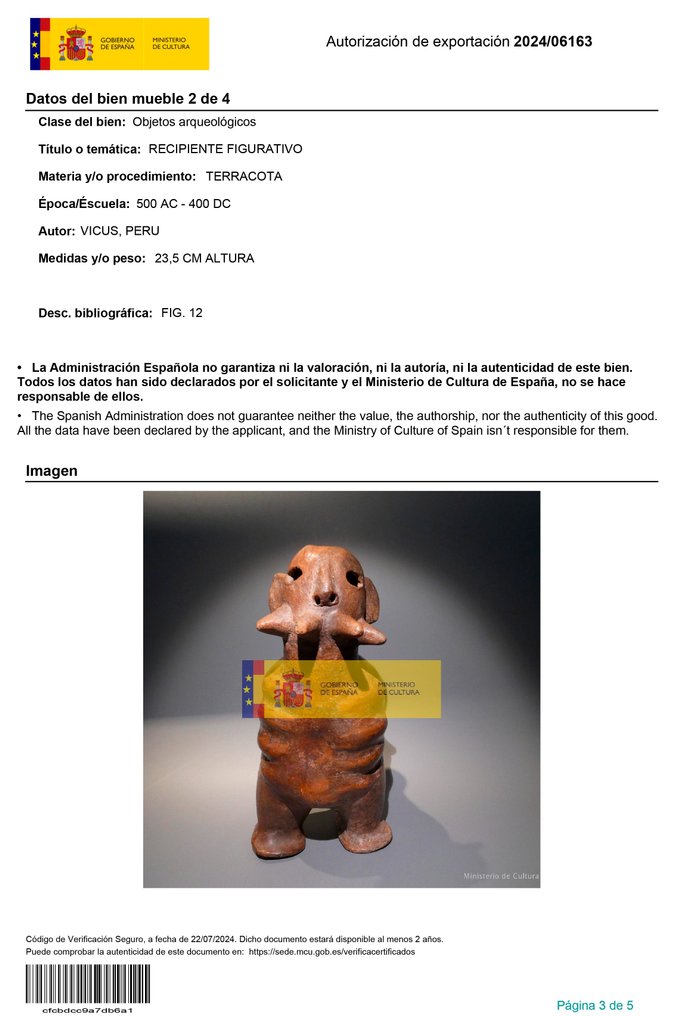
- Spanish Export License.
Condition: Good condition, see photos.
The Vicús culture arose in what is now the Peruvian region of Piura, mainly in the pre-Andean highlands, although they also had links to coastal and mountain groups. It is a desert zone, but a few rivers and lakes supply the water that made human settlement and agriculture possible, along with large areas of arable land. The area also features plentiful grassland for livestock and woodland for hunting.
The Vicús were skilled metalworkers, fashioning many personal adornments such as earpieces, masks, nosepieces, necklace beads, metal leaf, crowns, and headdresses with spangles and feathers that made sounds as the wearer moved, as well as rattles. Many of these artifacts were decorated with anthropomorphic, zoomorphic, geometric, or hybrid motifs. The most notable feature of Vicús ceramics is their use of modeled decorations, which represented different aspects of their way of life. Many Vicús motifs depict local wildlife such as deer, rodents, felines, monkeys, ducks, parrots, owls, iguanas, and snakes. Some images blend two or more kinds of animal, suggesting mythical beasts. Many other ceramic vessels depict humans in different poses or engaged in different activities, including warriors, weavers, and people with unusual garments that have been interpreted as priests. The Vicús are also known for their erotic ceramics, which may reflect a concern with fertility.
Music played a key role in Vicús ritual life and was expressed in different areas of their culture, particularly in funeral rites. Grave goods often feature a preponderance of musical instruments including ceramic drums, flutes, and whistling bottles. In ceramic decoration, musicians playing antaras (pan pipes) are one of the most common motifs, often appearing in contexts that suggest funeral rites. Vicús graves are tubular or often boat shaped pits with a chamber at the bottom. Bodies were deposited there, often cremated, along with an array of grave goods that varied in richness with the deceased’s social rank.
Notes:
- The piece includes authenticity certificate.
- The piece includes Spanish Export License (Passport for European Union). NOT TAXES.
- According to Spanish legislation, items sent outside the European Union are subject to export taxes and will be added to the invoice, at the buyer's expense. These export fees are fixed on the final auction price and the tax rate is not applied directly on the total value of the item to be exported, but rather the different percentages by sections are applied to it:
- Up to 6,000 euros: 5%.
- From 6,001 to 60,000 euros: 10%.
This export permit application process can take between 1-2 months maximum.
- The seller guarantees that he acquired this piece according to all national and international laws related to the ownership of cultural property. Provenance statement seen by Catawiki.
#ExclusiveCabinetofCuriosities
Seller's Story
IMPORTANT NOTES:
-We are a professional seller.
- All items sold will come with their professional invoice.
- All items sold will come with their own Certificate of Authenticity (warranty document), including the description, image and provenance of the item.
- All items will be shipped via private courier with insurance (DHL express, CORREOS of Spain, or other similar with tracking number).
- All items when shipped (if required) will be declared as antiques over 100 years old and their price valued.
- For shipping outside of EU: Delivery time subject to customs clearance. Liability and Customs Regulations or Import Requirements applicable in the destination country are the sole responsibility of the buyer. We are not responsible for delays caused by customs procedures. Import taxes and vat are not included in the shipping costs. The import tax or VAT payable depends on the country of destination. Payments of any taxes or any disputes with the Customs Authorities are the sole responsibility of the buyer.
- For some of the items offered, for shipment outside the European Union it is necessary to obtain an Export Permit which will detail the payment by the buyer of Export Fees according to Spanish legislation. If it is necessary it will be mentioned in the description of the article, BECAUSE NOT IN ALL THE CASES IT IS LIKE THAT. These fees will be added to the invoice, at the buyer's expense. These export fees are fixed on the final auction price and the tax rate is not applied directly on the total value of the item to be exported, but rather the different percentages by sections are applied to it: Up to 6,000 euros: 5%. From 6,001 to 60,000 euros: 10%.
This export permit application process can take between 1-2 months maximum.
- We guarantee that he acquired this piece according to all national and international laws related to the ownership of cultural property.
Translated by Google TranslateFigurative vessel with handle
- PUBLISHED -
Vicus, Peru, 500 BC - 400 AD
Terracotta
25 cm height
Provenance:
- Private collection, France.
- Loudmer Comissaires Priseurs S.C.P., Art Precolombien Collection d'un Amateur. Paris Drouot, 18 March 1995. Lot 14.
- Private collection, J. R. (1928 - 2013) Barcelona, formed since 1950 until 2000. Thence by descendent.
PUBLISHED:
- Catalogue; Loudmer Comissaires Priseurs S.C.P., Art Precolombien Collection d'un Amateur. Paris Drouot, 18 March 1995. Lot 14.
DOCUMENTS:
- Spanish Export License.
Condition: Good condition, see photos.
The Vicús culture arose in what is now the Peruvian region of Piura, mainly in the pre-Andean highlands, although they also had links to coastal and mountain groups. It is a desert zone, but a few rivers and lakes supply the water that made human settlement and agriculture possible, along with large areas of arable land. The area also features plentiful grassland for livestock and woodland for hunting.
The Vicús were skilled metalworkers, fashioning many personal adornments such as earpieces, masks, nosepieces, necklace beads, metal leaf, crowns, and headdresses with spangles and feathers that made sounds as the wearer moved, as well as rattles. Many of these artifacts were decorated with anthropomorphic, zoomorphic, geometric, or hybrid motifs. The most notable feature of Vicús ceramics is their use of modeled decorations, which represented different aspects of their way of life. Many Vicús motifs depict local wildlife such as deer, rodents, felines, monkeys, ducks, parrots, owls, iguanas, and snakes. Some images blend two or more kinds of animal, suggesting mythical beasts. Many other ceramic vessels depict humans in different poses or engaged in different activities, including warriors, weavers, and people with unusual garments that have been interpreted as priests. The Vicús are also known for their erotic ceramics, which may reflect a concern with fertility.
Music played a key role in Vicús ritual life and was expressed in different areas of their culture, particularly in funeral rites. Grave goods often feature a preponderance of musical instruments including ceramic drums, flutes, and whistling bottles. In ceramic decoration, musicians playing antaras (pan pipes) are one of the most common motifs, often appearing in contexts that suggest funeral rites. Vicús graves are tubular or often boat shaped pits with a chamber at the bottom. Bodies were deposited there, often cremated, along with an array of grave goods that varied in richness with the deceased’s social rank.
Notes:
- The piece includes authenticity certificate.
- The piece includes Spanish Export License (Passport for European Union). NOT TAXES.
- According to Spanish legislation, items sent outside the European Union are subject to export taxes and will be added to the invoice, at the buyer's expense. These export fees are fixed on the final auction price and the tax rate is not applied directly on the total value of the item to be exported, but rather the different percentages by sections are applied to it:
- Up to 6,000 euros: 5%.
- From 6,001 to 60,000 euros: 10%.
This export permit application process can take between 1-2 months maximum.
- The seller guarantees that he acquired this piece according to all national and international laws related to the ownership of cultural property. Provenance statement seen by Catawiki.
#ExclusiveCabinetofCuriosities
Seller's Story
IMPORTANT NOTES:
-We are a professional seller.
- All items sold will come with their professional invoice.
- All items sold will come with their own Certificate of Authenticity (warranty document), including the description, image and provenance of the item.
- All items will be shipped via private courier with insurance (DHL express, CORREOS of Spain, or other similar with tracking number).
- All items when shipped (if required) will be declared as antiques over 100 years old and their price valued.
- For shipping outside of EU: Delivery time subject to customs clearance. Liability and Customs Regulations or Import Requirements applicable in the destination country are the sole responsibility of the buyer. We are not responsible for delays caused by customs procedures. Import taxes and vat are not included in the shipping costs. The import tax or VAT payable depends on the country of destination. Payments of any taxes or any disputes with the Customs Authorities are the sole responsibility of the buyer.
- For some of the items offered, for shipment outside the European Union it is necessary to obtain an Export Permit which will detail the payment by the buyer of Export Fees according to Spanish legislation. If it is necessary it will be mentioned in the description of the article, BECAUSE NOT IN ALL THE CASES IT IS LIKE THAT. These fees will be added to the invoice, at the buyer's expense. These export fees are fixed on the final auction price and the tax rate is not applied directly on the total value of the item to be exported, but rather the different percentages by sections are applied to it: Up to 6,000 euros: 5%. From 6,001 to 60,000 euros: 10%.
This export permit application process can take between 1-2 months maximum.
- We guarantee that he acquired this piece according to all national and international laws related to the ownership of cultural property.
Translated by Google TranslateDetails
Culture
Vicus, Peru
Century/ Timeframe
500 BC - 400 AD
Name of object
Figurative vessel with handle. PUBLISHED. 25 cm H. 500 BC - 400 AD. Spanish Export License
Acquired from
Private collection
Material
Terracotta
Condition
Good
Disclaimer
The seller was informed by Catawiki about documentation requirements and guarantees the following: - the object was legally obtained, - the seller has the right to sell and/or export the object, as relevant, - the seller will provide the necessary provenance information and arrange required documentation and permits/licenses, as applicable and as per local laws, - the seller will notify the buyer of any delays in obtaining permits/licenses. By bidding, you acknowledge that import documentation may be required depending on your country of residence and that obtaining permits/licenses may cause delays in the delivery of your object.
The seller was informed by Catawiki about documentation requirements and guarantees the following: - the object was legally obtained, - the seller has the right to sell and/or export the object, as relevant, - the seller will provide the necessary provenance information and arrange required documentation and permits/licenses, as applicable and as per local laws, - the seller will notify the buyer of any delays in obtaining permits/licenses. By bidding, you acknowledge that import documentation may be required depending on your country of residence and that obtaining permits/licenses may cause delays in the delivery of your object.
