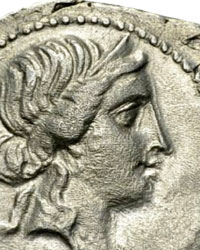
Indo-Greek Kingdom. Menander I Soter. Drachm ca. 155–130 BC


04
days
05
hours
48
minutes
11
seconds
Current bid
€ 100
Reserve price not met

Expert
Selected by Carmen Vera Gutiérrez
Experienced antique appraiser specialising in Spanish coins with deep knowledge of ancient currency.
Estimate € 150 - € 200
14 other people are watching this object
 Bidder 7167 Bidder 7167 | €100 | |
|---|---|---|
| Bidder 7167 | €65 | |
 Bidder 9494 Bidder 9494 | €7 | |
Catawiki Buyer Protection
Your payment’s safe with us until you receive your object.View details
Trustpilot 4.4 | 122553 reviews
Rated Excellent on Trustpilot.
AR drachm of Menander I Soter (ca. 155–130 BC) from the Indo-Greek Kingdom, struck at Pushkalavati; 2.47 g, 17.5 mm, About Extremely Fine with a dark patina; obverse: diademed bust of Menander I right, Greek legend; reverse: Athena standing left with spear and shield; shipping within the EU only.
AI-assisted summary
Description from the seller
Indo-Greek Kingdom
AR Drachm of Menander I Soter (ca. 155–130 BC)
Struck in Pushkalavati (modern-day Charsadda, Pakistan).
2.47 g / 17.5 mm – About Extremely Fine, dark patina.
Ref: Mitchiner 215f; ACW 1769–70; Bopearachchi Series 130.
Obv.: Diademed bust of Menander I facing right; Greek legend
ΒΑΣΙΛΕΩΣ ΣΩΤΗΡΟΣ ΜΕΝΑΝΔΡΟΥ
Rev.: Athena standing left, holding spear and shield; monogram to right.
⸻
Historical Context:
Menander I Soter is regarded as the most influential ruler of the Indo-Greek Kingdom, expanding Greek authority deep into the Indian subcontinent. His reign represents the height of Hellenistic influence in ancient India, with bilingual inscriptions and hybrid iconography expressing both Greek and local identities.
The obverse legend proclaims Menander as “Soter” (“Saviour”), reflecting his reputation as a stabilizing and expansionist monarch. The reverse depiction of Athena—protector of cities and emblem of Greek power—symbolizes both military prowess and divine sanction.
Coins of Menander circulated widely across Gandhara and northern India, illustrating the region’s unique fusion of Greek, Central Asian, and Indian cultural traditions. They remain among the most historically significant issues of the Indo-Greek period.
⸻
Shipping & Packaging:
Items are packed securely and shipped with Track & Trace. Shipping only within the European Union. No shipping to the USA due to tariffs.
Indo-Greek Kingdom
AR Drachm of Menander I Soter (ca. 155–130 BC)
Struck in Pushkalavati (modern-day Charsadda, Pakistan).
2.47 g / 17.5 mm – About Extremely Fine, dark patina.
Ref: Mitchiner 215f; ACW 1769–70; Bopearachchi Series 130.
Obv.: Diademed bust of Menander I facing right; Greek legend
ΒΑΣΙΛΕΩΣ ΣΩΤΗΡΟΣ ΜΕΝΑΝΔΡΟΥ
Rev.: Athena standing left, holding spear and shield; monogram to right.
⸻
Historical Context:
Menander I Soter is regarded as the most influential ruler of the Indo-Greek Kingdom, expanding Greek authority deep into the Indian subcontinent. His reign represents the height of Hellenistic influence in ancient India, with bilingual inscriptions and hybrid iconography expressing both Greek and local identities.
The obverse legend proclaims Menander as “Soter” (“Saviour”), reflecting his reputation as a stabilizing and expansionist monarch. The reverse depiction of Athena—protector of cities and emblem of Greek power—symbolizes both military prowess and divine sanction.
Coins of Menander circulated widely across Gandhara and northern India, illustrating the region’s unique fusion of Greek, Central Asian, and Indian cultural traditions. They remain among the most historically significant issues of the Indo-Greek period.
⸻
Shipping & Packaging:
Items are packed securely and shipped with Track & Trace. Shipping only within the European Union. No shipping to the USA due to tariffs.
Details
Era
Before 1400
Culture/region
Indo-Greek Kingdom
Year/Period and Variation
ca. 155–130 BC
Ruler
Menander I Soter
Denomination
Drachm
Metal
AR
Condition
Ungraded
Weight
2.47 g
Number of items
1
Theme
History
Sold by