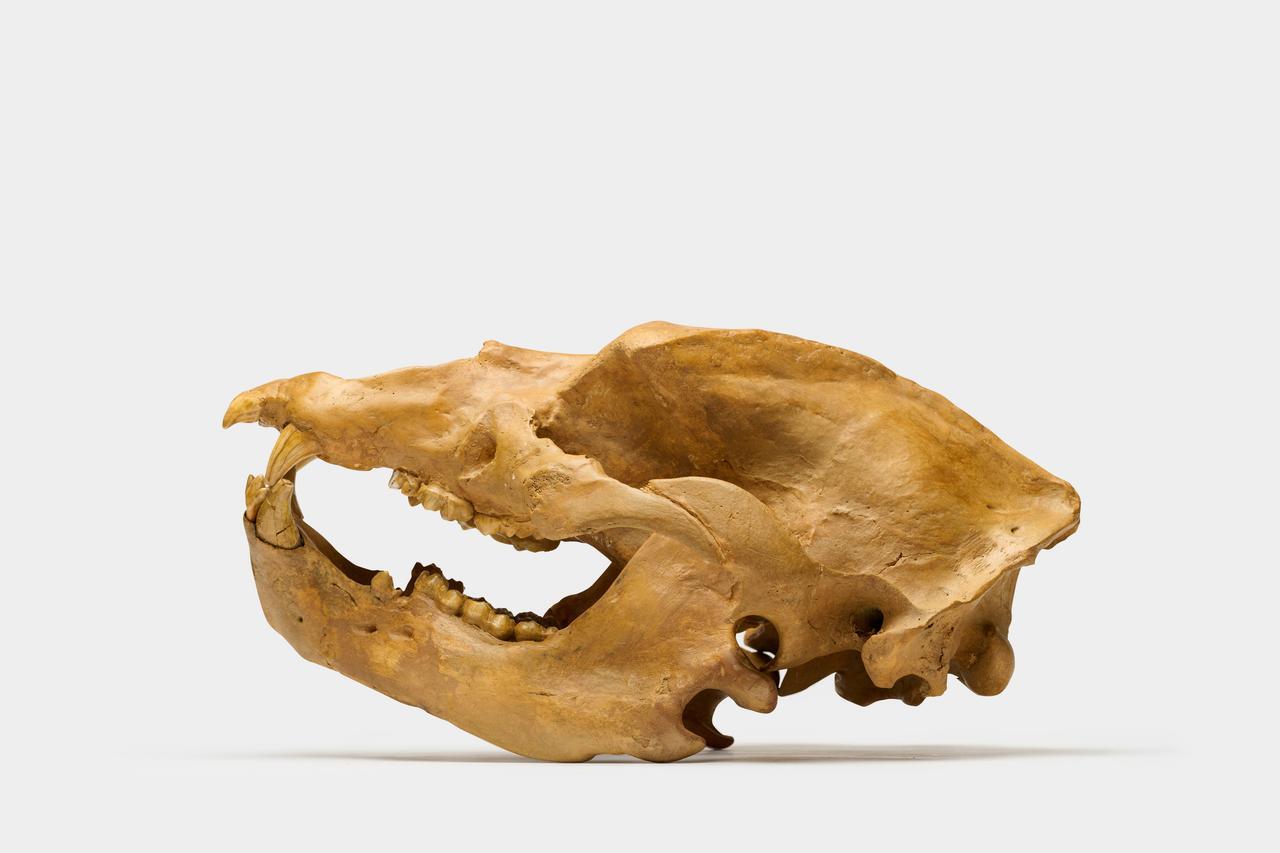
Sinomegaceros sp. - Fossile maxilla bone - 59 mm - 112 mm


02
days
19
hours
02
minutes
53
seconds

13 other people are watching this object
 Bidder 7478 Bidder 7478 | €75 |
|---|
Catawiki Buyer Protection
Your payment’s safe with us until you receive your object.View details
Trustpilot 4.4 | 122529 reviews
Rated Excellent on Trustpilot.
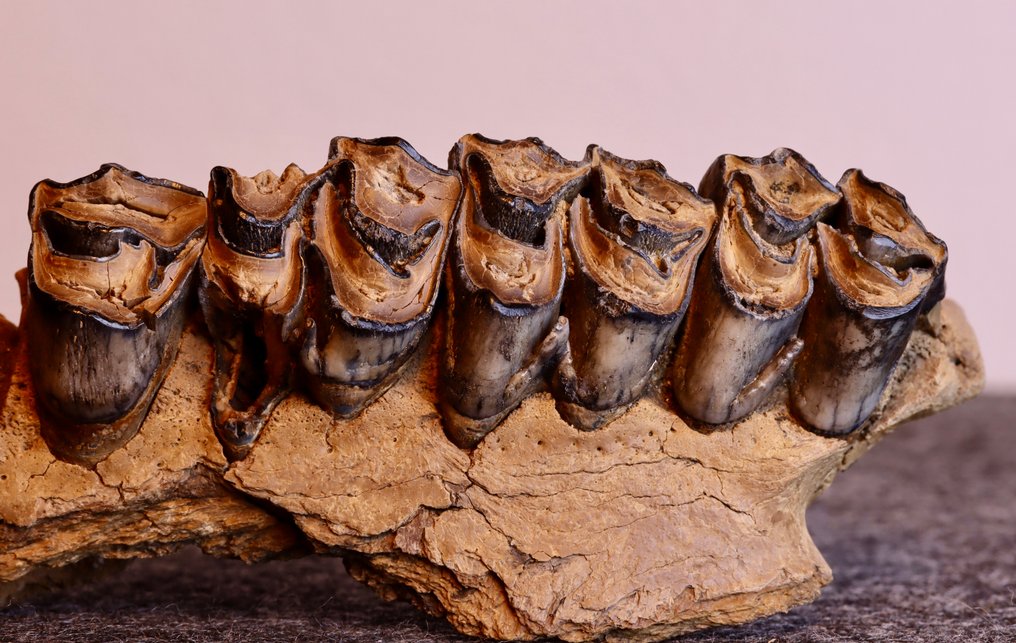
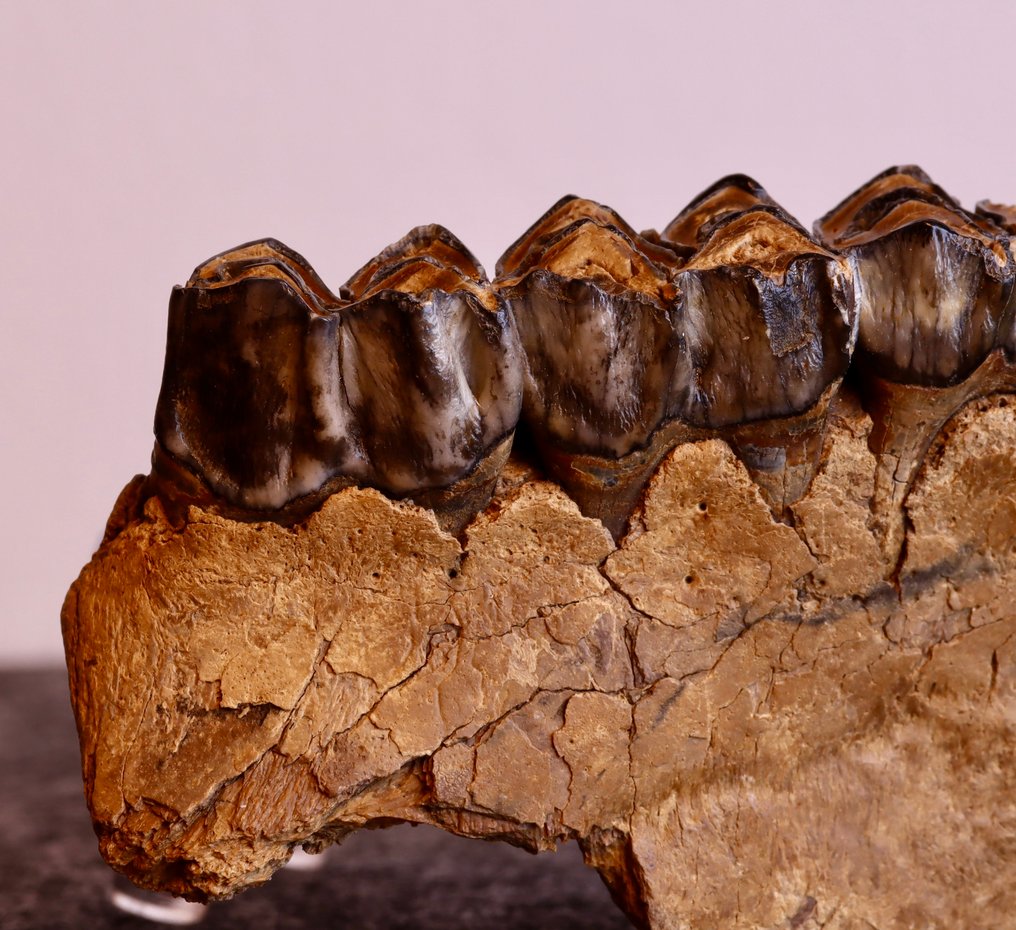
Sinomegaceros sp. partial maxilla with four preserved molars (P4, M1–M3) from the Quaternary Pleistocene, in natural condition, measuring 59 mm high, 112 mm wide and 58 mm deep.
AI-assisted summary
Description from the seller
Exceptional Pleistocene Fossil — Sinomegaceros sp. partial maxilla with four preserved molars (P4, M1 - M3).
Recovered from Quaternary deposits along the Amur River basin, this specimen represents a rarely available cranial element of the giant deer Sinomegaceros, a lineage renowned for its highly derived and elaborately patterned antler morphology. Closely related to the European Megaloceros, Sinomegaceros occupied a pivotal evolutionary position among the Late Pleistocene cervids of Northeast Asia.
The preserved maxillary fragment retains four well-defined molars, exhibiting diagnostic occlusal features valuable for comparative or display purposes. Fossils of this genus seldom enter private collections, making this an unusual opportunity to acquire material from one of the most striking and scientifically significant giant deer of the Pleistocene.
A distinguished and scarce addition for collectors specializing in Quaternary faunas, cervid evolution, or Amur River paleontology.
Exceptional Pleistocene Fossil — Sinomegaceros sp. partial maxilla with four preserved molars (P4, M1 - M3).
Recovered from Quaternary deposits along the Amur River basin, this specimen represents a rarely available cranial element of the giant deer Sinomegaceros, a lineage renowned for its highly derived and elaborately patterned antler morphology. Closely related to the European Megaloceros, Sinomegaceros occupied a pivotal evolutionary position among the Late Pleistocene cervids of Northeast Asia.
The preserved maxillary fragment retains four well-defined molars, exhibiting diagnostic occlusal features valuable for comparative or display purposes. Fossils of this genus seldom enter private collections, making this an unusual opportunity to acquire material from one of the most striking and scientifically significant giant deer of the Pleistocene.
A distinguished and scarce addition for collectors specializing in Quaternary faunas, cervid evolution, or Amur River paleontology.
Details
Number of items
1
Specimen
Sinomegaceros sp.
Geological Period
Quaternary, Pleistocene (2.58 - 0.0117 million years)
Condition
Natural
Height
59 mm
Width
112 mm
Depth
58 mm
Sold by