Ancient Egyptian Faience Inscribed Turquoise Faience Ushabti – Late Period (664–332 BC) - 11 cm



Opens Sunday
Starting bid
€ 1
Add to your favourites to get an alert when the auction starts.

Expert
Selected by Ruth Garrido Vila
Directed the Ifergan Collection Museum, specialising in Phoenician and Mediterranean archaeology.
Estimate € 750 - € 900
Catawiki Buyer Protection
Your payment’s safe with us until you receive your object.View details
Trustpilot 4.4 | 122910 reviews
Rated Excellent on Trustpilot.
Description from the seller
Egyptian Oushebti inscribed in turquoise frit – Late Period (664–332 BC).
DESCRIPTION :
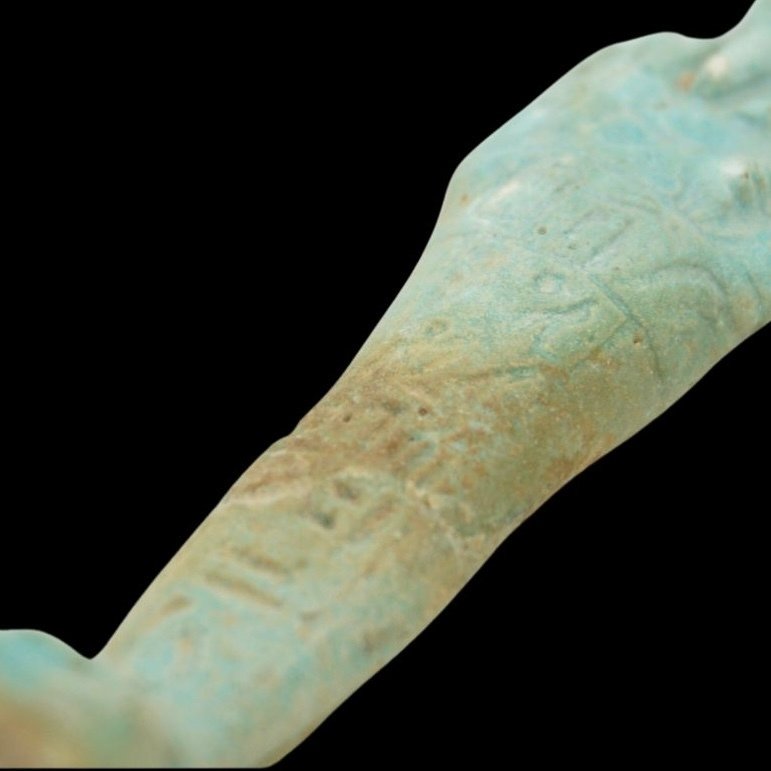
Very beautiful Egyptian ushabti in turquoise frit, finely modeled and covered with a typical blue-green glaze. The figurine adopts the canonical mummy posture, arms crossed over the chest, holding the farming tools symbolically representing the work in the afterlife. The face features gentle, serene traits, slightly softened by time.
A hieroglyphic inscription column is engraved on the front of the body. Although partially erased, it clearly corresponds to a portion of the formula from chapter VI of the Book of the Dead, a text intended to activate the ushabti to serve the deceased in the afterlife. The surface retains its original turquoise glaze, with traces of wear, iridescence, and soil deposits related to its burial.
Dating: Late Period, 26th–30th Dynasties (664–332 BC).
⸻
Historical interest and rarity
Essential witness of pharaonic funeral practices, intended to take the place of the deceased for agricultural work in the afterlife.
Beautiful craftsmanship in turquoise frit, a symbolic color of rebirth, light, and protection.
The presence of a hieroglyphic inscription, even partial, is a key criterion in the value of an ushabti and guarantees a personalized funerary use.
A typical example of specialized funeral production from active workshops during the Late Period, a time of intense cultic and votive activity.
⸻
Condition of Preservation
Complete object, retaining much of its original turquoise glaze. Light wear, small glaze chips, and earthy encrustations related to its funerary context. Very good overall condition for a piece from this period.
Provenance: from the renowned house of Maître Lydie Brioult, previously from a private French collection assembled in the mid-20th century.
Egyptian Oushebti inscribed in turquoise frit – Late Period (664–332 BC).
DESCRIPTION :
Very beautiful Egyptian ushabti in turquoise frit, finely modeled and covered with a typical blue-green glaze. The figurine adopts the canonical mummy posture, arms crossed over the chest, holding the farming tools symbolically representing the work in the afterlife. The face features gentle, serene traits, slightly softened by time.
A hieroglyphic inscription column is engraved on the front of the body. Although partially erased, it clearly corresponds to a portion of the formula from chapter VI of the Book of the Dead, a text intended to activate the ushabti to serve the deceased in the afterlife. The surface retains its original turquoise glaze, with traces of wear, iridescence, and soil deposits related to its burial.
Dating: Late Period, 26th–30th Dynasties (664–332 BC).
⸻
Historical interest and rarity
Essential witness of pharaonic funeral practices, intended to take the place of the deceased for agricultural work in the afterlife.
Beautiful craftsmanship in turquoise frit, a symbolic color of rebirth, light, and protection.
The presence of a hieroglyphic inscription, even partial, is a key criterion in the value of an ushabti and guarantees a personalized funerary use.
A typical example of specialized funeral production from active workshops during the Late Period, a time of intense cultic and votive activity.
⸻
Condition of Preservation
Complete object, retaining much of its original turquoise glaze. Light wear, small glaze chips, and earthy encrustations related to its funerary context. Very good overall condition for a piece from this period.
Provenance: from the renowned house of Maître Lydie Brioult, previously from a private French collection assembled in the mid-20th century.
Details
Culture
Ancient Egyptian
Century/ Timeframe
664–332 BC
Name of object
Inscribed Turquoise Faience Ushabti – Late Period (664–332 BC)
Acquired from
Auction house
Year acquired
2025
Material
Faience
Country acquired from
France
Condition
Good
Previous owner acquired from
Private collection
Height
11 cm
Previous owner - year acquired
1950
Previous owner - country acquired from
France
I verify that I have obtained this object legally and that I am allowed to sell it
Yes
Sold by
Disclaimer
The seller was informed by Catawiki about documentation requirements and guarantees the following: - the object was legally obtained, - the seller has the right to sell and/or export the object, as relevant, - the seller will provide the necessary provenance information and arrange required documentation and permits/licenses, as applicable and as per local laws, - the seller will notify the buyer of any delays in obtaining permits/licenses. By bidding, you acknowledge that import documentation may be required depending on your country of residence and that obtaining permits/licenses may cause delays in the delivery of your object.
The seller was informed by Catawiki about documentation requirements and guarantees the following: - the object was legally obtained, - the seller has the right to sell and/or export the object, as relevant, - the seller will provide the necessary provenance information and arrange required documentation and permits/licenses, as applicable and as per local laws, - the seller will notify the buyer of any delays in obtaining permits/licenses. By bidding, you acknowledge that import documentation may be required depending on your country of residence and that obtaining permits/licenses may cause delays in the delivery of your object.
