Ancient Egyptian Taweret (Thoeris) circa 664–332 BC. Amulet



08
days
02
hours
44
minutes
29
seconds
Current bid
€ 90
Reserve price not met

Expert
Selected by Peter Reynaers
Has nearly 30 years’ experience and moderated multiple online art research groups.
Estimate € 280 - € 350
4 other people are watching this object
 Bidder 4011 Bidder 4011 | €90 | |
|---|---|---|
| Bidder 4011 | €70 | |
| Bidder 4011 | €30 |
Catawiki Buyer Protection
Your payment’s safe with us until you receive your object.View details
Trustpilot 4.4 | 122986 reviews
Rated Excellent on Trustpilot.
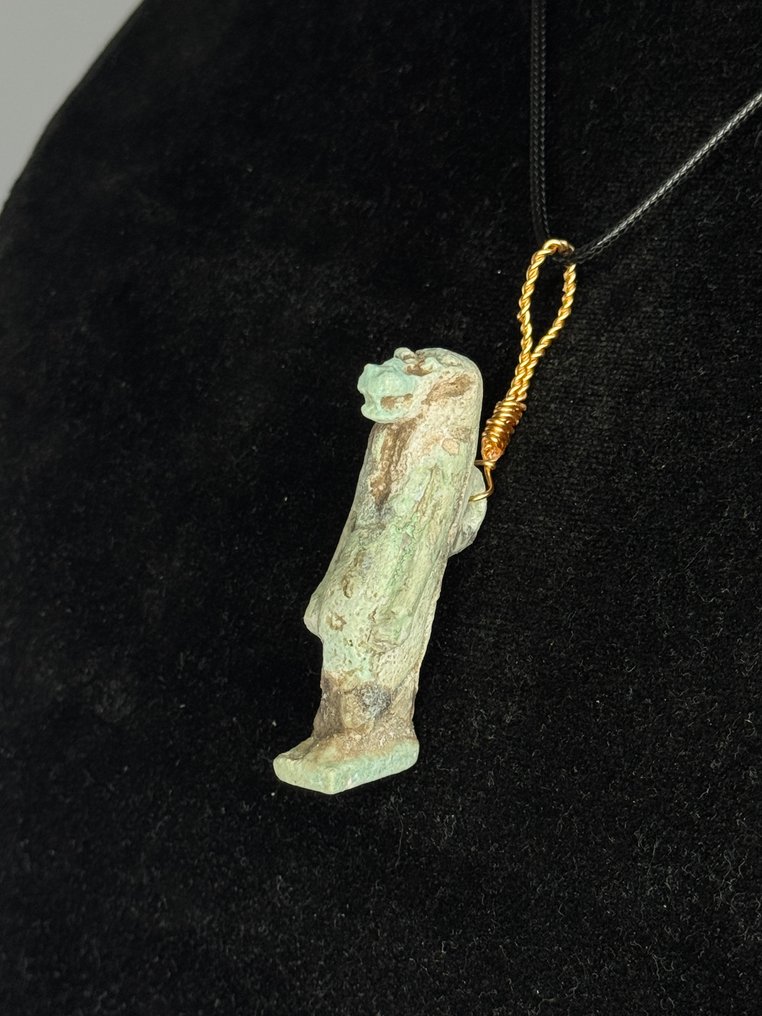
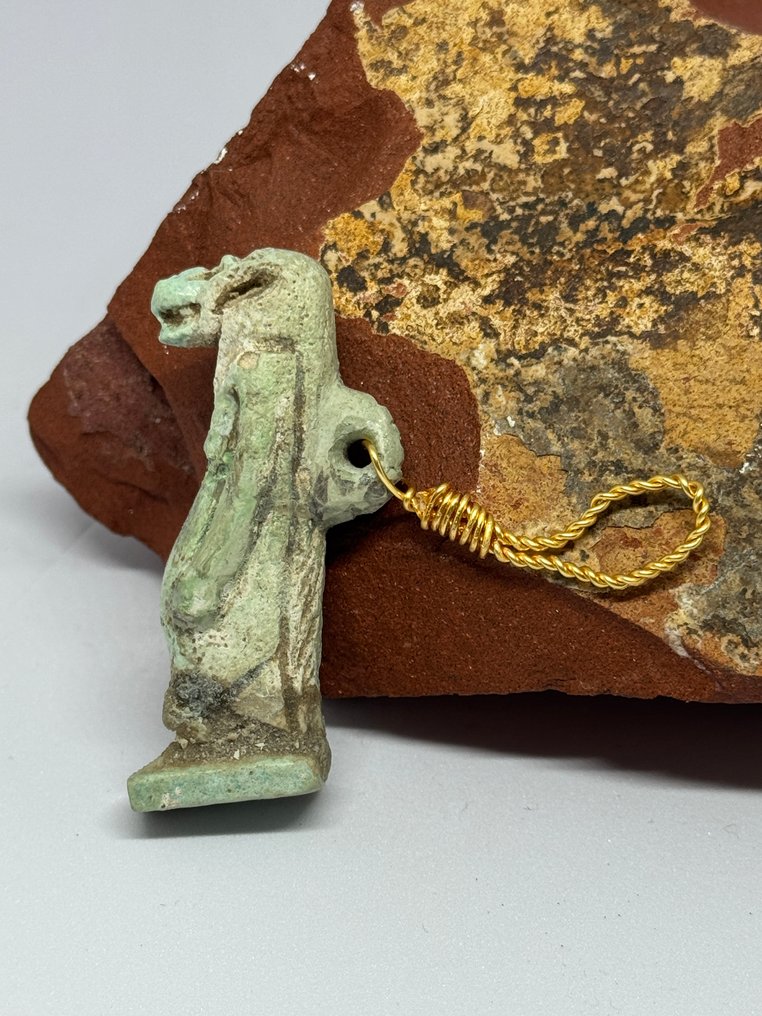
Ancient Egyptian faience amulet of Taweret, Late Period (c. 664–332 BC), about 54 mm high and 12 g, in vintage condition with wear, dimensions 3 cm by 2.5 cm, acquired from an auction house in the United Kingdom in 2021 from a private European collection.
AI-assisted summary
Description from the seller
Ancient Egyptian Faience Amulet of Taweret (Thoeris)
Late Period, circa 664–332 BC
Material: Faience
Dimensions: Approx. 54 mm height
Weight: Approx. 12 g
Description:
An ancient Egyptian faience amulet depicting an anthropomorphic crocodile-headed deity, identifiable as Sobek, the god associated with the Nile, fertility, protection, and royal power. The figure is shown standing upright on a rectangular base, with a stylised human body and a projecting crocodile head with elongated snout. Incised lines indicate garment folds, typical of Late Period amuletic production.
The amulet is executed in pale green faience, the surface now displaying natural wear, mineral accretions, and areas of glaze loss consistent with age. A lateral perforation indicates the piece was originally intended to be worn as a pendant or suspended, in keeping with its protective function.
Amulets of Sobek were widely worn for protection, regeneration, and divine safeguarding, particularly in relation to water, fertility, and physical strength. Such pieces are especially associated with the Faiyum region, where the cult of Sobek flourished during the Late Period.
Dating:
Late Period, circa 664–332 BC. The form, material, and style are consistent with mass-produced faience amulets of this period.
Condition:
Good archaeological condition. Surface wear and minor losses consistent with age. The amulet has undergone professional conservation, limited to careful surface cleaning and stabilisation, with no reconstruction and no alteration to the original ancient material. Mounted with a modern gold-coloured wire for display purposes only.
Provenance:
From a private European collection. (35)
*** Orders shipped outside the EU may apply customs fee ***
Ancient Egyptian Faience Amulet of Taweret (Thoeris)
Late Period, circa 664–332 BC
Material: Faience
Dimensions: Approx. 54 mm height
Weight: Approx. 12 g
Description:
An ancient Egyptian faience amulet depicting an anthropomorphic crocodile-headed deity, identifiable as Sobek, the god associated with the Nile, fertility, protection, and royal power. The figure is shown standing upright on a rectangular base, with a stylised human body and a projecting crocodile head with elongated snout. Incised lines indicate garment folds, typical of Late Period amuletic production.
The amulet is executed in pale green faience, the surface now displaying natural wear, mineral accretions, and areas of glaze loss consistent with age. A lateral perforation indicates the piece was originally intended to be worn as a pendant or suspended, in keeping with its protective function.
Amulets of Sobek were widely worn for protection, regeneration, and divine safeguarding, particularly in relation to water, fertility, and physical strength. Such pieces are especially associated with the Faiyum region, where the cult of Sobek flourished during the Late Period.
Dating:
Late Period, circa 664–332 BC. The form, material, and style are consistent with mass-produced faience amulets of this period.
Condition:
Good archaeological condition. Surface wear and minor losses consistent with age. The amulet has undergone professional conservation, limited to careful surface cleaning and stabilisation, with no reconstruction and no alteration to the original ancient material. Mounted with a modern gold-coloured wire for display purposes only.
Provenance:
From a private European collection. (35)
*** Orders shipped outside the EU may apply customs fee ***
Details
Era
Before 1400
Culture
Ancient Egyptian
Metal
Taweret (Thoeris) circa 664–332 BC.
Century/ Timeframe
Late Period, circa 664–332 BC
Acquired from
Auction house
Total weight
12.2 g
Year acquired
2021
Condition
Vintage - used with visible signs of wear
Country acquired from
United Kingdom
Previous owner acquired from
Private collection
Previous owner - year acquired
1990
Previous owner - country acquired from
United Kingdom
I verify that I have obtained this object legally and that I am allowed to sell it
Yes
Width
2.5 cm
Length
3 cm
Sold by
Disclaimer
The seller was informed by Catawiki about documentation requirements and guarantees the following: - the object was legally obtained, - the seller has the right to sell and/or export the object, as relevant, - the seller will provide the necessary provenance information and arrange required documentation and permits/licenses, as applicable and as per local laws, - the seller will notify the buyer of any delays in obtaining permits/licenses. By bidding, you acknowledge that import documentation may be required depending on your country of residence and that obtaining permits/licenses may cause delays in the delivery of your object.
The seller was informed by Catawiki about documentation requirements and guarantees the following: - the object was legally obtained, - the seller has the right to sell and/or export the object, as relevant, - the seller will provide the necessary provenance information and arrange required documentation and permits/licenses, as applicable and as per local laws, - the seller will notify the buyer of any delays in obtaining permits/licenses. By bidding, you acknowledge that import documentation may be required depending on your country of residence and that obtaining permits/licenses may cause delays in the delivery of your object.
