N.º 101099137

Ya no está disponible
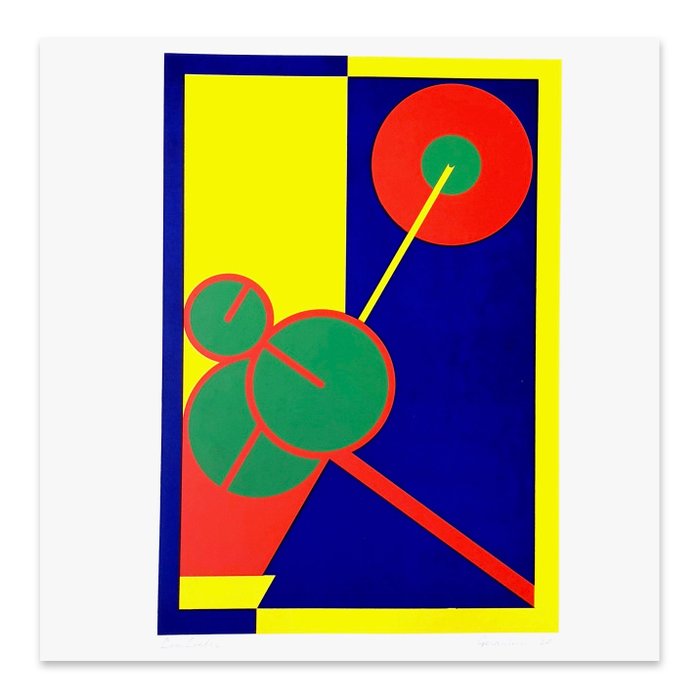
Lou Loeber (1894-1983) - Geranium / De Stijl
Pujas cerradas
Hace 2 semanas

Lou Loeber (1894-1983) - Geranium / De Stijl

Lou Loeber (1890-1973) Geranium from La Lune en Rodage III Medium: Silkscreen Print Material: Paper Dimensions: 30 x 30 cm Editor: Edition Panderma, Basel Year: 1928 / published 1977 Edition: This is an unnumbered copy of 230 editions Signature: Signed and dated/titled „Geranium“ in pencil Provenance: Edition Panderma, Carl Laszlo, Basel Galerie von Bartha, Basel Private Collection, Basel Condition / Restauration: Good, fixed on grey 32 x 32 cm cardboard. Further Information: A rare limited edition of the portable collection of post-war and contemporary art La Lune en Rodage III. This is an unnumbered copy of 230 editions (65 hors commerce were unnumbered) and part of the third serie of the La Lune en Rodage books. La Lune en Rodage was published in three volumes in 1960, 1965 and 1977 containing a total of approximately 180 art pieces which provide an account of the artistic avant-garde scene between the 1950s and 1970s. The art works were gathered by Carl Laslzo and included the greatest artists of the time who contributed with important pieces, often marking a turning point in their production and carriers: Enrico Castellani’s work for example is his first documented graphic work and Piero Manzoni's multiple Achrome is the only one produced by the artist. Biography Louise Marie Loeber (Lou Loeber) was an Amsterdam born Dutch artist. In addition to being a painter, she was a glass painter, illustrater and etcher that worked mostly non-figuratively, abstract-geometrically and abstract-figuratively. Loeber attended the State Academy of Fine Arts in Amsterdam from 1915 until 1918. She left the academy prematurely for she considered it too conservative. In 1919, she met Toon Verhoef, a painter that introduced her to Socialism, De Stijl, Cubism and modernism. Inspired by Albert Gleizes, Le Corbusier and Mondriaan, her work became more sober and clean. Shortly after, Loeber began to further investigate the link between modern art and Socialism, whereafter she decided to multiply her works and keep her prices low. She married the artist Dirk Koning in 1931 who, like Loeber, was a pacifist, progressive painter, vegan and socialist. She preferred industrial and technological subjects that she translated to lines and shapes. Nevertheless, Loeber considered fully abstract art elitist and always referred to reality in her earlier works. Post-war, Lou moderated her Socialist points of view and started working mostly non-figuratively.

N.º 101099137

Ya no está disponible
Lou Loeber (1894-1983) - Geranium / De Stijl

Lou Loeber (1894-1983) - Geranium / De Stijl

Lou Loeber (1890-1973) Geranium from La Lune en Rodage III

Medium: Silkscreen Print
Material: Paper
Dimensions: 30 x 30 cm
Editor: Edition Panderma, Basel
Year: 1928 / published 1977
Edition: This is an unnumbered copy of 230 editions
Signature: Signed and dated/titled „Geranium“ in pencil

Provenance:
Edition Panderma, Carl Laszlo, Basel
Galerie von Bartha, Basel
Private Collection, Basel

Condition / Restauration:
Good, fixed on grey 32 x 32 cm cardboard.

Further Information:
A rare limited edition of the portable collection of post-war and contemporary art La Lune en Rodage III. This is an unnumbered copy of 230 editions (65 hors commerce were unnumbered) and part of the third serie of the La Lune en Rodage books. La Lune en Rodage was published in three volumes in 1960, 1965 and 1977 containing a total of approximately 180 art pieces which provide an account of the artistic avant-garde scene between the 1950s and 1970s. The art works were gathered by Carl Laslzo and included the greatest artists of the time who contributed with important pieces, often marking a turning point in their production and carriers: Enrico Castellani’s work for example is his first documented graphic work and Piero Manzoni's multiple Achrome is the only one produced by the artist.

Biography
Louise Marie Loeber (Lou Loeber) was an Amsterdam born Dutch artist. In addition to being a painter, she was a glass painter, illustrater and etcher that worked mostly non-figuratively, abstract-geometrically and abstract-figuratively. Loeber attended the State Academy of Fine Arts in Amsterdam from 1915 until 1918. She left the academy prematurely for she considered it too conservative. In 1919, she met Toon Verhoef, a painter that introduced her to Socialism, De Stijl, Cubism and modernism. Inspired by Albert Gleizes, Le Corbusier and Mondriaan, her work became more sober and clean. Shortly after, Loeber began to further investigate the link between modern art and Socialism, whereafter she decided to multiply her works and keep her prices low. She married the artist Dirk Koning in 1931 who, like Loeber, was a pacifist, progressive painter, vegan and socialist. She preferred industrial and technological subjects that she translated to lines and shapes. Nevertheless, Loeber considered fully abstract art elitist and always referred to reality in her earlier works. Post-war, Lou moderated her Socialist points of view and started working mostly non-figuratively.

Pujas cerradas
Sylvia Kellermann
Experto
Estimación  € 300 - € 400

Objetos similares

Para ti en

Obra gráfica y múltiples

Configura una alerta de búsqueda
Configura una alerta de búsqueda para recibir notificaciones cuando haya nuevas coincidencias disponibles.

Este objeto apareció en


Cómo comprar en Catawiki

Más información sobre nuestra Protección del Comprador

      1. Descubre algo especial

      Explora miles de objetos especiales seleccionados por expertos. Mira las fotos, los detalles y el valor estimado de cada objeto especial. 

      2. Haz la puja más alta

      Encuentra algo especial y haz la puja más alta. Puedes seguir la subasta hasta el final o dejar que nuestro sistema puje por ti. Todo lo que tienes que hacer es fijar una puja máxima con la cantidad máxima que quieres pagar. 

      3. Paga de manera segura

      Paga tu objeto especial y nosotros retendremos el pago hasta que el objeto te llegue en perfecto estado. Utilizamos un sistema de pago de confianza para gestionar las transacciones. 

¿Tienes algo similar para vender?

Tanto si las subastas online son algo nuevo para ti como si vendes profesionalmente, podemos ayudarte a ganar más por tus objetos especiales.

Vender objeto