Cáliz - Plata - A Christening Shell


Especializada en plata española y portuguesa con más de 10 años en galerías y subastas.
Protección del Comprador de Catawiki
Tu pago está protegido con nosotros hasta que recibas tu objeto.Ver detalles
Trustpilot 4.4 | 128151 valoraciones
Valoración Excelente en Trustpilot.
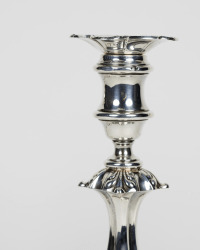
Concha de bautismo de plata fabricada en Portugal en los años 1940–1950, en excelente estado, 11 × 11 × 3 cm y 50,62 g, con forma de concha y decoración neobarroca y pomo en espiral.
Descripción del vendedor
This magnificent Portuguese baptismal shell, crafted in silver around the mid-20th century, is an eloquent example of the Neo-Baroque style, which sought to recapture the sumptuousness and dynamism of 17th-century models through a technique of refined precision. The piece is structured around the organic form of a scallop shell, remarkable for its balance between liturgical tradition and the exuberance of its symbolic ornamentation.
The main body features the characteristic morphology of a scalloped shell, whose radial ribs converge in a highly sculptural articulation. The interior of the piece displays a burnished and smooth surface that contrasts with the profusion of decoration on the exterior, where the chiseling recreates a repertoire of rocaille, volutes, and vegetal motifs. This area is lavishly decorated with elements that evoke the life and purity of sacramental water, executed in relief that generates the characteristic interplay of light and shadow typical of historically inspired metalwork.
The handle of the scallop shell is finished with an elegant volute or architectural finial, a Baroque-inspired element that lends the shell a miniature monumentality and facilitates its handling during the baptismal rite. The base of the handle typically features a smooth transition into the body of the scallop shell, maintaining the necessary sturdiness for administering the sacrament without sacrificing the visual lightness of the design.
Provenance: Private collection, Madrid.
Dimensions: 11 x 11 x 3 cm; Weight: 50.62 g
Condition: Good condition.
Shipping: The piece will be professionally packed and shipped. Please note that the shipping costs indicated are estimates; the final amount may vary depending on market rates and specific packaging requirements for shipping both pieces separately.
El vendedor y su historia
This magnificent Portuguese baptismal shell, crafted in silver around the mid-20th century, is an eloquent example of the Neo-Baroque style, which sought to recapture the sumptuousness and dynamism of 17th-century models through a technique of refined precision. The piece is structured around the organic form of a scallop shell, remarkable for its balance between liturgical tradition and the exuberance of its symbolic ornamentation.
The main body features the characteristic morphology of a scalloped shell, whose radial ribs converge in a highly sculptural articulation. The interior of the piece displays a burnished and smooth surface that contrasts with the profusion of decoration on the exterior, where the chiseling recreates a repertoire of rocaille, volutes, and vegetal motifs. This area is lavishly decorated with elements that evoke the life and purity of sacramental water, executed in relief that generates the characteristic interplay of light and shadow typical of historically inspired metalwork.
The handle of the scallop shell is finished with an elegant volute or architectural finial, a Baroque-inspired element that lends the shell a miniature monumentality and facilitates its handling during the baptismal rite. The base of the handle typically features a smooth transition into the body of the scallop shell, maintaining the necessary sturdiness for administering the sacrament without sacrificing the visual lightness of the design.
Provenance: Private collection, Madrid.
Dimensions: 11 x 11 x 3 cm; Weight: 50.62 g
Condition: Good condition.
Shipping: The piece will be professionally packed and shipped. Please note that the shipping costs indicated are estimates; the final amount may vary depending on market rates and specific packaging requirements for shipping both pieces separately.