N.º 102410399

Ya no está disponible
Jarrón  - Vidrio - Vidrio moldeado Art Déco
Pujas cerradas
Hace 11 semanas

Jarrón - Vidrio - Vidrio moldeado Art Déco

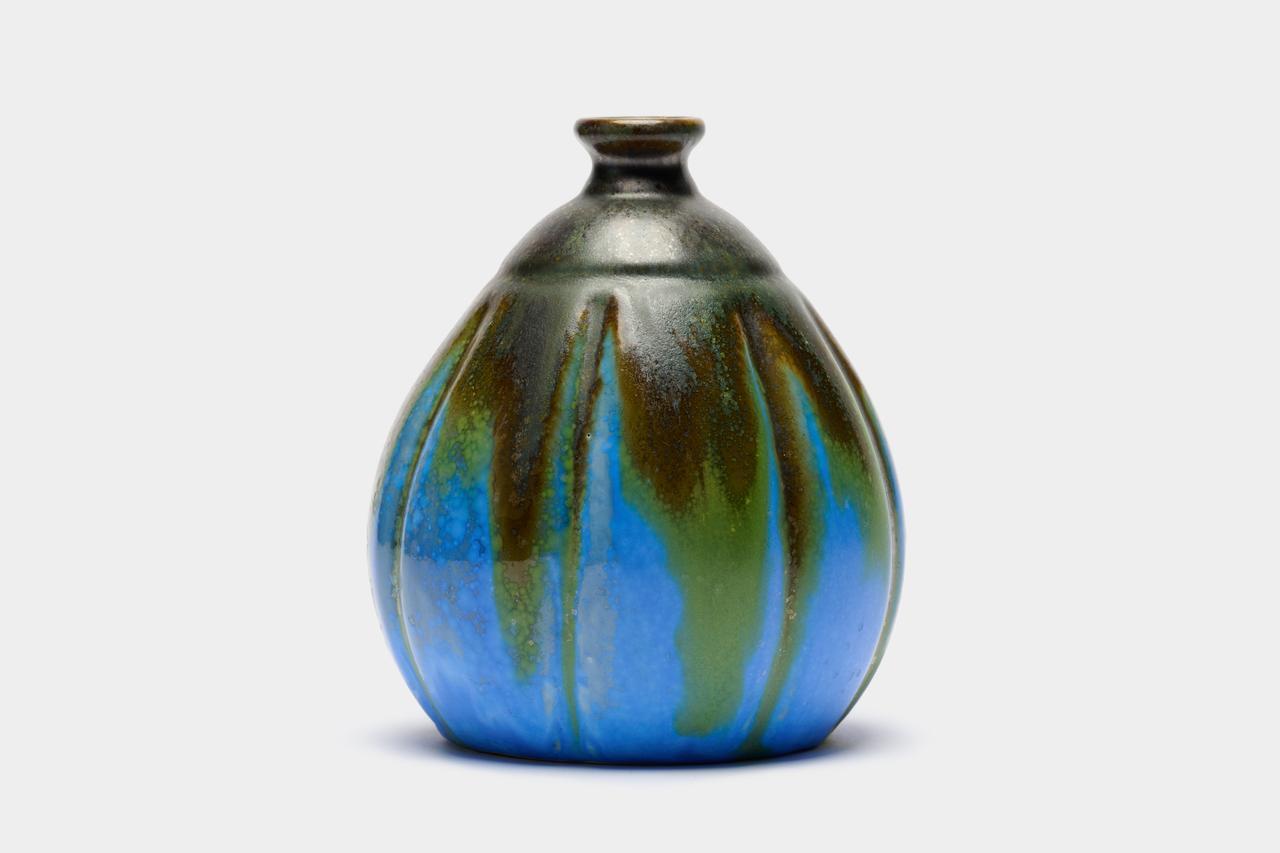
This is an unsigned Art Deco molded opalescent/frosted glass vase, c. 1925–1935, produced in Continental Europe (most likely Czechoslovakia/Bohemia or a French commercial workshop in the style of Verlys, Pierre d’Avesn, Etling/Sabino, or direct Lalique imitators). •  Bulbous body with short tapered neck and flat rim; •  All-over high-relief pattern of vertical overlapping stylized leaves/fronds (fern/palm-like); •  Thick heavy construction (1,408 g/28 cm is typical for these substantial pieces); •  Frosted white opalescent glass with blue patina/staining rubbed into the recesses for dramatic contrast. These were popular, affordable alternatives to Lalique during the Art Deco boom. Czechoslovakian factories (e.g., Inwald, Barolac, or anonymous mold-makers) mass-produced near-identical designs using the same pressed-molding technique and blue staining. French versions (Verlys, d’Avesn, etc.) exist but are usually signed in relief; many generic examples remain unmarked. The pattern strongly echoes Lalique’s “Milan” or fern motifs but with softer edges and less crisp definition. Possible attribution to Josef Inwald/Barolac (Czechoslovakia, 1930s). Barolac was Inwald’s famous frosted/satin glass line: thick pressed-molded opalescent pieces with high-relief stylized foliage patterns, often finished with blue or ice-blue patina rubbed into the recesses — exactly the technique, colour, weight (heavy 1.4 kg construction), and period of this vase. Many Barolac vases are unsigned (or only faintly marked “Czechoslovakia” or a model number in the base) and commercial/export examples frequently have no visible mark at all — which matches the base perfectly. Closest patterns from Inwald/Barolac: •  Birch Leaves (and similar foliage/leaf-garland series): vertical overlapping stylized leaves/fronds with catkins or swirling detail — the closest documented match to this all-over vertical fern-like motif. •  Leaf garlands, palm fronds, and other foliage reliefs: high-relief, bulbous forms, blue-green or ice-blue washes. •  They also produced Lalique-inspired designs (this vase’s pattern is similar to René Lalique’s “Milan” fern vase from 1929 — Inwald and other Czech factories made affordable pressed-glass versions of these popular motifs). This is a lovely, authentic 1930s piece with real period character — whether exactly Inwald/Barolac or a close Bohemian contemporary, it’s a strong example of the style that made Czech glass famous worldwide. Condition is excellent: no chips, cracks, or repairs visible; even patina and good colour depth. Please examine the photos carefully.

N.º 102410399

Ya no está disponible
Jarrón  - Vidrio - Vidrio moldeado Art Déco

Jarrón - Vidrio - Vidrio moldeado Art Déco

This is an unsigned Art Deco molded opalescent/frosted glass vase, c. 1925–1935, produced in Continental Europe (most likely Czechoslovakia/Bohemia or a French commercial workshop in the style of Verlys, Pierre d’Avesn, Etling/Sabino, or direct Lalique imitators).

•  Bulbous body with short tapered neck and flat rim;
•  All-over high-relief pattern of vertical overlapping stylized leaves/fronds (fern/palm-like);
•  Thick heavy construction (1,408 g/28 cm is typical for these substantial pieces);
•  Frosted white opalescent glass with blue patina/staining rubbed into the recesses for dramatic contrast.

These were popular, affordable alternatives to Lalique during the Art Deco boom. Czechoslovakian factories (e.g., Inwald, Barolac, or anonymous mold-makers) mass-produced near-identical designs using the same pressed-molding technique and blue staining. French versions (Verlys, d’Avesn, etc.) exist but are usually signed in relief; many generic examples remain unmarked.

The pattern strongly echoes Lalique’s “Milan” or fern motifs but with softer edges and less crisp definition.

Possible attribution to Josef Inwald/Barolac (Czechoslovakia, 1930s). Barolac was Inwald’s famous frosted/satin glass line: thick pressed-molded opalescent pieces with high-relief stylized foliage patterns, often finished with blue or ice-blue patina rubbed into the recesses — exactly the technique, colour, weight (heavy 1.4 kg construction), and period of this vase.

Many Barolac vases are unsigned (or only faintly marked “Czechoslovakia” or a model number in the base) and commercial/export examples frequently have no visible mark at all — which matches the base perfectly.

Closest patterns from Inwald/Barolac:

•  Birch Leaves (and similar foliage/leaf-garland series): vertical overlapping stylized leaves/fronds with catkins or swirling detail — the closest documented match to this all-over vertical fern-like motif.
•  Leaf garlands, palm fronds, and other foliage reliefs: high-relief, bulbous forms, blue-green or ice-blue washes.
•  They also produced Lalique-inspired designs (this vase’s pattern is similar to René Lalique’s “Milan” fern vase from 1929 — Inwald and other Czech factories made affordable pressed-glass versions of these popular motifs).

This is a lovely, authentic 1930s piece with real period character — whether exactly Inwald/Barolac or a close Bohemian contemporary, it’s a strong example of the style that made Czech glass famous worldwide.

Condition is excellent: no chips, cracks, or repairs visible; even patina and good colour depth. Please examine the photos carefully.

Pujas cerradas
Michel Karis
Experto
Estimación  € 170 - € 200

Objetos similares

Para ti en

Cerámica y vidrio

Configura una alerta de búsqueda
Configura una alerta de búsqueda para recibir notificaciones cuando haya nuevas coincidencias disponibles.

Este objeto apareció en


Cómo comprar en Catawiki

Más información sobre nuestra Protección del Comprador

      1. Descubre algo especial

      Explora miles de objetos especiales seleccionados por expertos. Mira las fotos, los detalles y el valor estimado de cada objeto especial. 

      2. Haz la puja más alta

      Encuentra algo especial y haz la puja más alta. Puedes seguir la subasta hasta el final o dejar que nuestro sistema puje por ti. Todo lo que tienes que hacer es fijar una puja máxima con la cantidad máxima que quieres pagar. 

      3. Paga de manera segura

      Paga tu objeto especial y nosotros retendremos el pago hasta que el objeto te llegue en perfecto estado. Utilizamos un sistema de pago de confianza para gestionar las transacciones. 

¿Tienes algo similar para vender?

Tanto si las subastas online son algo nuevo para ti como si vendes profesionalmente, podemos ayudarte a ganar más por tus objetos especiales.

Vender objeto