N.º 106752016

Ya no está disponible
Imperio seléucida. Civic issue. AE14 Circa 150–145 BC (Seemingly unpublished in the standard references)
Pujas cerradas
Hace 5 días

Imperio seléucida. Civic issue. AE14 Circa 150–145 BC (Seemingly unpublished in the standard references)

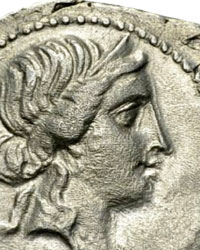
UNIQUE/EXCESSIVELY RARE ANCIENT GREECE. SELEUKIS AND PIERIA, SELEUKEIA AND ANTIOCH. Bronze AE14, circa 150-145 BC. Adelphoi Demi issue. Obv: jugate bearded heads of the Demoi of Seleukeia and Antioch right, wearing tainiai. Rev: thunderbolt, АДЕЛФ above, AHMON and uncertain monogram below; all within wreath. In secure plastic holder, graded NGC Graded AU Strike: 4/5, Surface: 4/5 Fine Style, certification number 2164075-001. Unique: unpublished in the standard references and no other examples on CoinArchives. A fascinating issue, the Adelphoi Demi coins have sparked a great deal of debate, largely centred on who exactly these 'brother peoples' were who were responsible for their minting. The traditional view, that these coins were issued jointly from a tetrarchy of the cities of Antioch on the Orontes, Apameia on the Orontes, Laodikeia ad Mare and Seleukeia Pieria, followed from Strabo's statement that these cities 'were called sisters (adelphai) because of the concord (homonoia) between them' (16.2.4). The consensus now, however, is that this issue was released by the cities of Antioch and Seleukeia only, in alliance: examples of this coinage have been found only in these two cities; for the most part, the 'typology of the series is entirely drawn from the regular numismatic iconography' of the two 'brother peoples' conjoined rather than four. This series is interesting for a number of other reasons. It contains one of the earliest personifications of the Demos (the 'People') in the numismatic record; it looks forward to the Roman Imperial period, when such 'alliance' (homonoia) coinages between cities were common, particularly in the Greek East; and it speaks to the strength and rulership of the Seleukid kings, in particular Alexander I Balas, under whose reign this issue was produced - for example, there has been debate as to whether the existence of city-based alliances within the Kingdom implies that the relative power of the Seleukid overlords was waning which combines the heads of the Demoi with the thunderbolt motif usually found only in conjunction with the head of Zeus (HGC 9-1396). Reference: Unpublished in the standard references: BMC-; HGC-; SNG Copenhagen-; Mionnet-; for obv., cf. HGC 6-1395; for rev., cf. HGC 6-1396. Weight: 8.24 g. Shipping Restrictions Worldwide free shipping is offered. Sorry, but I am unable to ship to the following countries: Russia, Belarus, Ukraine, China, India, Turkey, Brazil and Mexico. Thank you for your understanding.

N.º 106752016

Ya no está disponible
Imperio seléucida. Civic issue. AE14 Circa 150–145 BC (Seemingly unpublished in the standard references)

Imperio seléucida. Civic issue. AE14 Circa 150–145 BC (Seemingly unpublished in the standard references)

UNIQUE/EXCESSIVELY RARE ANCIENT GREECE.
SELEUKIS AND PIERIA, SELEUKEIA AND ANTIOCH.
Bronze AE14, circa 150-145 BC.
Adelphoi Demi issue. Obv: jugate bearded heads of the Demoi of Seleukeia and Antioch right, wearing tainiai.
Rev: thunderbolt, АДЕЛФ above, AHMON and uncertain monogram below; all within wreath.
In secure plastic holder, graded NGC Graded AU Strike:
4/5, Surface:
4/5 Fine Style, certification number 2164075-001.
Unique: unpublished in the standard references and no other examples on CoinArchives.
A fascinating issue, the Adelphoi Demi coins have sparked a great deal of debate, largely centred on who exactly these 'brother peoples' were who were responsible for their minting. The traditional view, that these coins were issued jointly from a tetrarchy of the cities of Antioch on the Orontes, Apameia on the Orontes, Laodikeia ad Mare and Seleukeia Pieria, followed from Strabo's statement that these cities 'were called sisters (adelphai) because of the concord (homonoia) between them' (16.2.4). The consensus now, however, is that this issue was released by the cities of Antioch and Seleukeia only, in alliance: examples of this coinage have been found only in these two cities; for the most part, the 'typology of the series is entirely drawn from the regular numismatic iconography' of the two

'brother peoples' conjoined rather than four.
This series is interesting for a number of other reasons. It contains one of the earliest personifications of the Demos (the 'People') in the numismatic record; it looks forward to the Roman Imperial period, when such
'alliance' (homonoia) coinages between cities were common, particularly in the Greek East; and it speaks to the strength and rulership of the Seleukid kings, in particular Alexander I Balas, under whose reign this issue was produced - for example, there has been debate as to whether the existence of city-based alliances within the Kingdom implies that the relative power of the Seleukid overlords was waning
which combines the heads of the Demoi with the thunderbolt motif usually found only in conjunction with the head of Zeus (HGC 9-1396).
Reference: Unpublished in the standard references:
BMC-; HGC-; SNG Copenhagen-; Mionnet-; for obv., cf.
HGC 6-1395; for rev., cf. HGC 6-1396.
Weight: 8.24 g.

Shipping Restrictions

Worldwide free shipping is offered.
Sorry, but I am unable to ship to the following countries:

Russia, Belarus, Ukraine, China, India, Turkey, Brazil and Mexico.

Thank you for your understanding.

Pujas cerradas
Carmen Vera Gutiérrez
Experto
Estimación  € 2.800 - € 3.500

Objetos similares

  • ​
    ​
    ​
  • ​
    ​
    ​
  • ​
    ​
    ​
  • ​
    ​
    ​
  • ​
    ​
    ​
  • ​
    ​
    ​
  • ​
    ​
    ​
  • ​
    ​
    ​
  • ​
    ​
    ​
  • ​
    ​
    ​

Para ti en

Monedas antiguas

  • ​
    ​
    ​
  • ​
    ​
    ​
  • ​
    ​
    ​
  • ​
    ​
    ​
  • ​
    ​
    ​
  • ​
    ​
    ​
  • ​
    ​
    ​
  • ​
    ​
    ​
  • ​
    ​
    ​
  • ​
    ​
    ​
Configura una alerta de búsqueda
Configura una alerta de búsqueda para recibir notificaciones cuando haya nuevas coincidencias disponibles.

Este objeto apareció en


Cómo comprar en Catawiki

Más información sobre nuestra Protección del Comprador

      1. Descubre algo especial

      Explora miles de objetos especiales seleccionados por expertos. Mira las fotos, los detalles y el valor estimado de cada objeto especial. 

      2. Haz la puja más alta

      Encuentra algo especial y haz la puja más alta. Puedes seguir la subasta hasta el final o dejar que nuestro sistema puje por ti. Todo lo que tienes que hacer es fijar una puja máxima con la cantidad máxima que quieres pagar. 

      3. Paga de manera segura

      Paga tu objeto especial y nosotros retendremos el pago hasta que el objeto te llegue en perfecto estado. Utilizamos un sistema de pago de confianza para gestionar las transacciones. 

¿Tienes algo similar para vender?

Tanto si las subastas online son algo nuevo para ti como si vendes profesionalmente, podemos ayudarte a ganar más por tus objetos especiales.

Vender objeto