101101328

Plus disponible
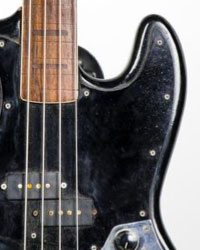
Gibson - L6-S Custom -  - Guitare électrique - États-Unis - 1973
Offres terminées
Il y a 2 jours

Gibson - L6-S Custom - - Guitare électrique - États-Unis - 1973

The guitar is in excellent condition, with some minor undeep buckle rash. The finish is glorious, you can't tell that she is a 52- years old lady. You almost never see this finish, and even if you do, it is never that preserved! She sounds marvelous, versatile and easy to play! Collectors grade! The Gibson L6S (usually Gibson L6-S, or L6 solid) launched in 1973 as the companies first all-maple solid body electric guitar. It also featured a 24 fret two-octave neck. It shipped throughout the 1970s and into the early 1980s, with a little over 18000 instruments produced in total; certainly one of the most successful of Gibson's seventies guitars. The L6-S was the epitome of Norlin-era Gibson output. The use of maple bodies, necks and fret boards, usually with just a simple clear coat finish, made for an instrument quite distinct from earlier guitars, both visually and tonally. A real contrast to the mahogany and rosewood guitars of the fifties and sixties, with their Sunburst, Cherry or Walnut finishes. Around a third of L6-S (Custom) guitars were black with an ebony fret board, still with a maple body and neck. Other finishes did exist (including a very fetching Cherry Sunburst) but were produced in vastly lower numbers. Early L6-S examples were built at Gibson's famous Kalamazoo plant, though by the mid 1970s, the L6S was being produced at Gibson's second plant, the newly opened facility at Nashville. Initially the guitar was simply designated L6-S, though with the addition of two new models (1974s Midnight Special and 1975s L6-S Deluxe) the original L6-S became the L6-S Custom. The Midnight Special and L6-S Deluxe were aimed at a lower price point, using alder as a body wood, slightly simpler electronics and (in the case of the Midnight Special) a bolt-on neck. Neither were anything like as successful (commercially) as the L6-S The Gibson L6-S was designed in 1972 by then Gibson employee Bill Lawrence. The remit was to create a guitar with as varied an array of sounds as possible, without overly-complicated electronics, and something that could compete with Fenders six string range. Bill Lawrence explains: "In 1972, I was asked to design a multi-sound system for the SG Standard. This didn't make any sense to me, and after several meetings with marketing, I convinced them to introduce a completely new solid-body that offered a wide variety of different sounds. I was given a free hand as long as I observed a set production cost limit. In order to stay within that limit, I had to make use of their existing hardware, including pickup covers, and the champfered body contours I wanted were not in the budget either. Given a mere $25 more to work with, I could have made the guitar to my specs. Also, I had designed a beautiful three post lightweight bridge made of hardened stainless steel that could be converted into a trem and a two 3 position toggle switches for nine different sounds. The first 3 position switch was a pickup selector while the second was a sound selector -- position one was for Les Paul , position two for Strat, and position three for Tele sound. Well, I had to stay within the budget, and we ended up with a six-position rotary switch, pickups with large humbucker covers, a stock Schaller bridge with a "stop" tailpiece, and a clumsy-looking body. My original prototype had a beautiful, elegantly-shaped pickguard, but somebody changed that too. Even with these changes, the early production L6-S was still an excellent performer. When the new ownership took over, there were even more changes, and by 1976, the L6-S had become just another Les Paul-style Gibson solid-body. All that remained of my original design was the thin, lightweight body with its large cutaway for easy access to all 24 frets." Read the rest of this article at the Bill Lawrence website The L6-S (or the L6-S Custom, as it would ultimately be known) was launched in 1973 at the summer NAMM show in Chicago, very much as a more affordable version of the Gibson L-5S. It retained the L-5S body shape, still had maple body / neck (although the L-5S was curly maple, rather than close grain) and an (optional) ebony fingerboard. Solid bodies had traditionally been mahogany up to this point, but for reasons of economics, and fashion, the seventies saw a range of maple Gibsons, and L6-S was one of them. Electrically it differed from the L-5S though, with its six-position phase switch, or "Q System" - two incredibly hot Super Humbucking pickups wired for series, parallel or single performance - with treble roll-off and midrange controls. The idea was to offer new sounds and as much versatility as possible: “from country "chicken pickin'" to the most abstract jazz riffs”. To this end, the L6-S also had a two octave, 24 fret neck - the first Gibson to have this. Gibson L6-S specifications L6-S Custom Available 1973-81 (possibly later) Pickups Two chrome-covered super humbuckers (parts 13682, front; 13683, back) Scale 24 3/4" Body Maple. 13 1/2" wide (lower bout), 16 1/2" long, 1 1/4" thick Neck Set maple neck, with maple, rosewood, or ebony fingerboard. 24 frets. Dot markers (a few early examples have block markers) Width at nut 1 9/16" Hardware Volume, midrange and 'treble roll-off' controls. 6 position pickup selector switch. Wide-travel tune-o-matic bridge, with stop-bar tailpiece. Finishes Cherry Sunburst, Natural Maple Gloss, Black, Cherry, Wine Red, Tobacco Sunburst, from 1980 Silverburst Notes By far the most popular of the series, outselling the Deluxe 4:1, and the Midnight Special

101101328

Plus disponible
Gibson - L6-S Custom -  - Guitare électrique - États-Unis - 1973

Gibson - L6-S Custom - - Guitare électrique - États-Unis - 1973

The guitar is in excellent condition, with some minor undeep buckle rash. The finish is glorious, you can't tell that she is a 52- years old lady. You almost never see this finish, and even if you do, it is never that preserved! She sounds marvelous, versatile and easy to play! Collectors grade!

The Gibson L6S (usually Gibson L6-S, or L6 solid) launched in 1973 as the companies first all-maple solid body electric guitar. It also featured a 24 fret two-octave neck. It shipped throughout the 1970s and into the early 1980s, with a little over 18000 instruments produced in total; certainly one of the most successful of Gibson's seventies guitars. The L6-S was the epitome of Norlin-era Gibson output. The use of maple bodies, necks and fret boards, usually with just a simple clear coat finish, made for an instrument quite distinct from earlier guitars, both visually and tonally. A real contrast to the mahogany and rosewood guitars of the fifties and sixties, with their Sunburst, Cherry or Walnut finishes. Around a third of L6-S (Custom) guitars were black with an ebony fret board, still with a maple body and neck. Other finishes did exist (including a very fetching Cherry Sunburst) but were produced in vastly lower numbers.


Early L6-S examples were built at Gibson's famous Kalamazoo plant, though by the mid 1970s, the L6S was being produced at Gibson's second plant, the newly opened facility at Nashville. Initially the guitar was simply designated L6-S, though with the addition of two new models (1974s Midnight Special and 1975s L6-S Deluxe) the original L6-S became the L6-S Custom.


The Midnight Special and L6-S Deluxe were aimed at a lower price point, using alder as a body wood, slightly simpler electronics and (in the case of the Midnight Special) a bolt-on neck. Neither were anything like as successful (commercially) as the L6-S


The Gibson L6-S was designed in 1972 by then Gibson employee Bill Lawrence. The remit was to create a guitar with as varied an array of sounds as possible, without overly-complicated electronics, and something that could compete with Fenders six string range. Bill Lawrence explains:

"In 1972, I was asked to design a multi-sound system for the SG Standard. This didn't make any sense to me, and after several meetings with marketing, I convinced them to introduce a completely new solid-body that offered a wide variety of different sounds. I was given a free hand as long as I observed a set production cost limit. In order to stay within that limit, I had to make use of their existing hardware, including pickup covers, and the champfered body contours I wanted were not in the budget either. Given a mere $25 more to work with, I could have made the guitar to my specs. Also, I had designed a beautiful three post lightweight bridge made of hardened stainless steel that could be converted into a trem and a two 3 position toggle switches for nine different sounds. The first 3 position switch was a pickup selector while the second was a sound selector -- position one was for Les Paul , position two for Strat, and position three for Tele sound.


Well, I had to stay within the budget, and we ended up with a six-position rotary switch, pickups with large humbucker covers, a stock Schaller bridge with a "stop" tailpiece, and a clumsy-looking body. My original prototype had a beautiful, elegantly-shaped pickguard, but somebody changed that too. Even with these changes, the early production L6-S was still an excellent performer. When the new ownership took over, there were even more changes, and by 1976, the L6-S had become just another Les Paul-style Gibson solid-body. All that remained of my original design was the thin, lightweight body with its large cutaway for easy access to all 24 frets."

Read the rest of this article at the Bill Lawrence website

The L6-S (or the L6-S Custom, as it would ultimately be known) was launched in 1973 at the summer NAMM show in Chicago, very much as a more affordable version of the Gibson L-5S. It retained the L-5S body shape, still had maple body / neck (although the L-5S was curly maple, rather than close grain) and an (optional) ebony fingerboard. Solid bodies had traditionally been mahogany up to this point, but for reasons of economics, and fashion, the seventies saw a range of maple Gibsons, and L6-S was one of them.

Electrically it differed from the L-5S though, with its six-position phase switch, or "Q System" - two incredibly hot Super Humbucking pickups wired for series, parallel or single performance - with treble roll-off and midrange controls. The idea was to offer new sounds and as much versatility as possible: “from country "chicken pickin'" to the most abstract jazz riffs”. To this end, the L6-S also had a two octave, 24 fret neck - the first Gibson to have this.

Gibson L6-S specifications

L6-S Custom

Available 1973-81 (possibly later)

Pickups Two chrome-covered super humbuckers (parts 13682, front; 13683, back)

Scale 24 3/4"

Body Maple. 13 1/2" wide (lower bout), 16 1/2" long, 1 1/4" thick

Neck Set maple neck, with maple, rosewood, or ebony fingerboard. 24 frets. Dot markers (a few early examples have block markers)

Width at nut 1 9/16"

Hardware Volume, midrange and 'treble roll-off' controls. 6 position pickup selector switch. Wide-travel tune-o-matic bridge, with stop-bar tailpiece.

Finishes Cherry Sunburst, Natural Maple Gloss, Black, Cherry, Wine Red, Tobacco Sunburst, from 1980 Silverburst

Notes By far the most popular of the series, outselling the Deluxe 4:1, and the Midnight Special

Offres terminées
Metin Levi
Expert
Estimation  € 1 800 - € 2 000

Objets similaires

Pour vous

Instruments de musique

Définir une alerte de recherche
Définissez une alerte de recherche pour être informé lorsque de nouveaux objets correspondant à votre recherche sont disponibles.

Cet objet a été présenté dans


Comment acheter sur Catawiki ?

En savoir plus sur notre Protection des acheteurs

      1. Découvrez des objets d’exception

      Découvrez des milliers d'objets d'exception sélectionnés par nos experts. Consultez les photos, les informations détaillées et la valeur estimée de chaque objet d'exception. 

      2. Faites la meilleure offre

      Trouvez l’objet de vos rêves et faites l’offre la plus élevée. Vous pouvez suivre la vente jusqu'à sa clôture ou laisser notre système faire les offres à votre place. Il vous suffit de fixer une enchère maximale correspondant au montant que vous souhaitez payer. 

      3. Effectuez un paiement sécurisé

      Réglez votre objet d'exception et nous garderons votre paiement en toute sécurité jusqu’à ce que vous ayez bien reçu votre objet d’exception. Toutes les transactions sont effectuées par un système de paiement de confiance. 

Vous souhaitez vendre un objet similaire ?

Que vous débutiez dans les ventes en ligne ou que vous soyez vendeur professionnel, nous pouvons vous aider à gagner plus d'argent pour vos objets d'exception.

Vendez votre objet