101335096

Vendu
Chaise d'appoint (2) - Chêne, Cuir
Offre finale
€ 440
Il y a 3 semaines

Chaise d'appoint (2) - Chêne, Cuir

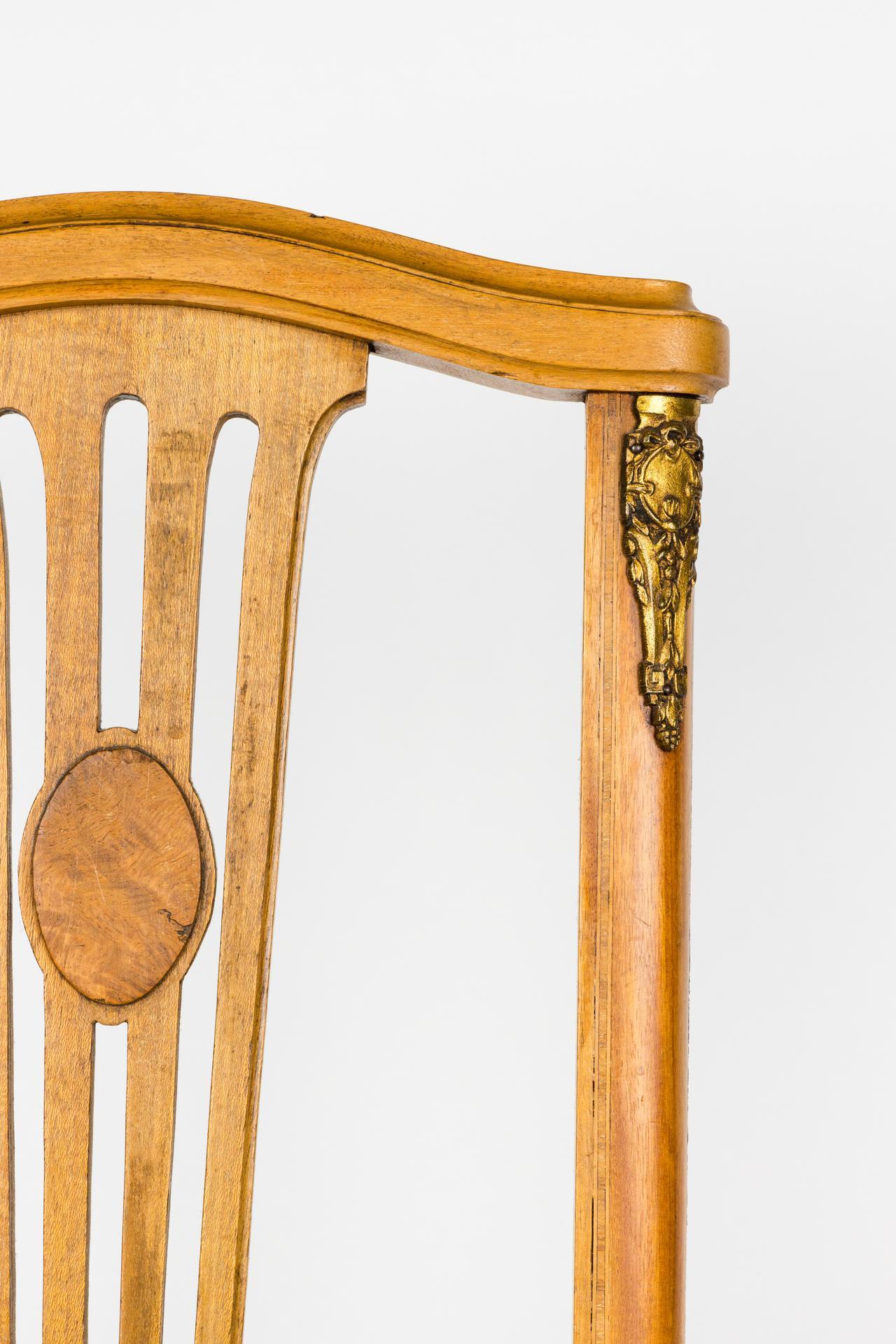
Late 17th-early 18th Century Civic / Guild Chair – Barley Twist Oak, DESCRIPTION: Object This chair is an authentic early civic chair, made for institutional rather than domestic use, dating to the mid-18th century (perhaps older). Such chairs were produced for town halls, guild chambers, council rooms, churches and early civic institutions, where durability, authority and status were required. Probable Origin: North-Western Europe, most likely England or the Southern Netherlands (Flanders). This attribution is based on several consistent construction and stylistic features: The barley twist (spiral-turned) legs and stretchers, a hallmark of English and Flemish civic furniture from the 18th century The use of solid oak, typical for public seating rather than domestic furniture The institutional proportions and restrained decoration, unlike later domestic revival furniture The presence of hand-forged copper upholstery studs, irregular in shape and spacing, indicating pre-industrial manufacture Such chairs were produced in small numbers for civic use rather than mass domestic production. Historical Use: Chairs of this type were commonly found in: Town halls / Guild chambers / Church vestries or council rooms. Early civic or administrative institutions They functioned as authority seating rather than comfort seating, explaining their robust construction and restrained design. Construction & Materials: Frame: Solid oak, hand-turned and assembled with traditional mortise-and-tenon joinery Legs & stretchers: Heavy spiral-turned (barley twist) elements front and rear Seat & back: Upholstered in thick vegetable-tanned cowhide, richly patinated. I have added additional details of the pegged joint connection. Besides the wooden pegs, the original saw marks from shortening the element are also still visible. Restorations

101335096

Vendu
Chaise d'appoint (2) - Chêne, Cuir

Chaise d'appoint (2) - Chêne, Cuir

Late 17th-early 18th Century Civic / Guild Chair – Barley Twist Oak,

DESCRIPTION:
Object
This chair is an authentic early civic chair, made for institutional rather than domestic use, dating to the mid-18th century (perhaps older). Such chairs were produced for town halls, guild chambers, council rooms, churches and early civic institutions, where durability, authority and status were required.

Probable Origin:
North-Western Europe, most likely England or the Southern Netherlands (Flanders).

This attribution is based on several consistent construction and stylistic features:
The barley twist (spiral-turned) legs and stretchers, a hallmark of English and Flemish civic furniture from the 18th century
The use of solid oak, typical for public seating rather than domestic furniture
The institutional proportions and restrained decoration, unlike later domestic revival furniture
The presence of hand-forged copper upholstery studs, irregular in shape and spacing, indicating pre-industrial manufacture
Such chairs were produced in small numbers for civic use rather than mass domestic production.

Historical Use:
Chairs of this type were commonly found in:
Town halls / Guild chambers /
Church vestries or council rooms.
Early civic or administrative institutions
They functioned as authority seating rather than comfort seating, explaining their robust construction and restrained design.

Construction & Materials:
Frame: Solid oak, hand-turned and assembled with traditional mortise-and-tenon joinery
Legs & stretchers: Heavy spiral-turned (barley twist) elements front and rear
Seat & back: Upholstered in thick vegetable-tanned cowhide, richly patinated.

I have added additional details of the pegged joint connection. Besides the wooden pegs, the original saw marks from shortening the element are also still visible.

Restorations

Offre finale
€ 440
Dési van Rhee
Expert
Estimation  € 500 - € 650

Objets similaires

Pour vous

Antiquités et meubles classiques

Définir une alerte de recherche
Définissez une alerte de recherche pour être informé lorsque de nouveaux objets correspondant à votre recherche sont disponibles.

Cet objet a été présenté dans


Comment acheter sur Catawiki ?

En savoir plus sur notre Protection des acheteurs

      1. Découvrez des objets d’exception

      Découvrez des milliers d'objets d'exception sélectionnés par nos experts. Consultez les photos, les informations détaillées et la valeur estimée de chaque objet d'exception. 

      2. Faites la meilleure offre

      Trouvez l’objet de vos rêves et faites l’offre la plus élevée. Vous pouvez suivre la vente jusqu'à sa clôture ou laisser notre système faire les offres à votre place. Il vous suffit de fixer une enchère maximale correspondant au montant que vous souhaitez payer. 

      3. Effectuez un paiement sécurisé

      Réglez votre objet d'exception et nous garderons votre paiement en toute sécurité jusqu’à ce que vous ayez bien reçu votre objet d’exception. Toutes les transactions sont effectuées par un système de paiement de confiance. 

Vous souhaitez vendre un objet similaire ?

Que vous débutiez dans les ventes en ligne ou que vous soyez vendeur professionnel, nous pouvons vous aider à gagner plus d'argent pour vos objets d'exception.

Vendez votre objet