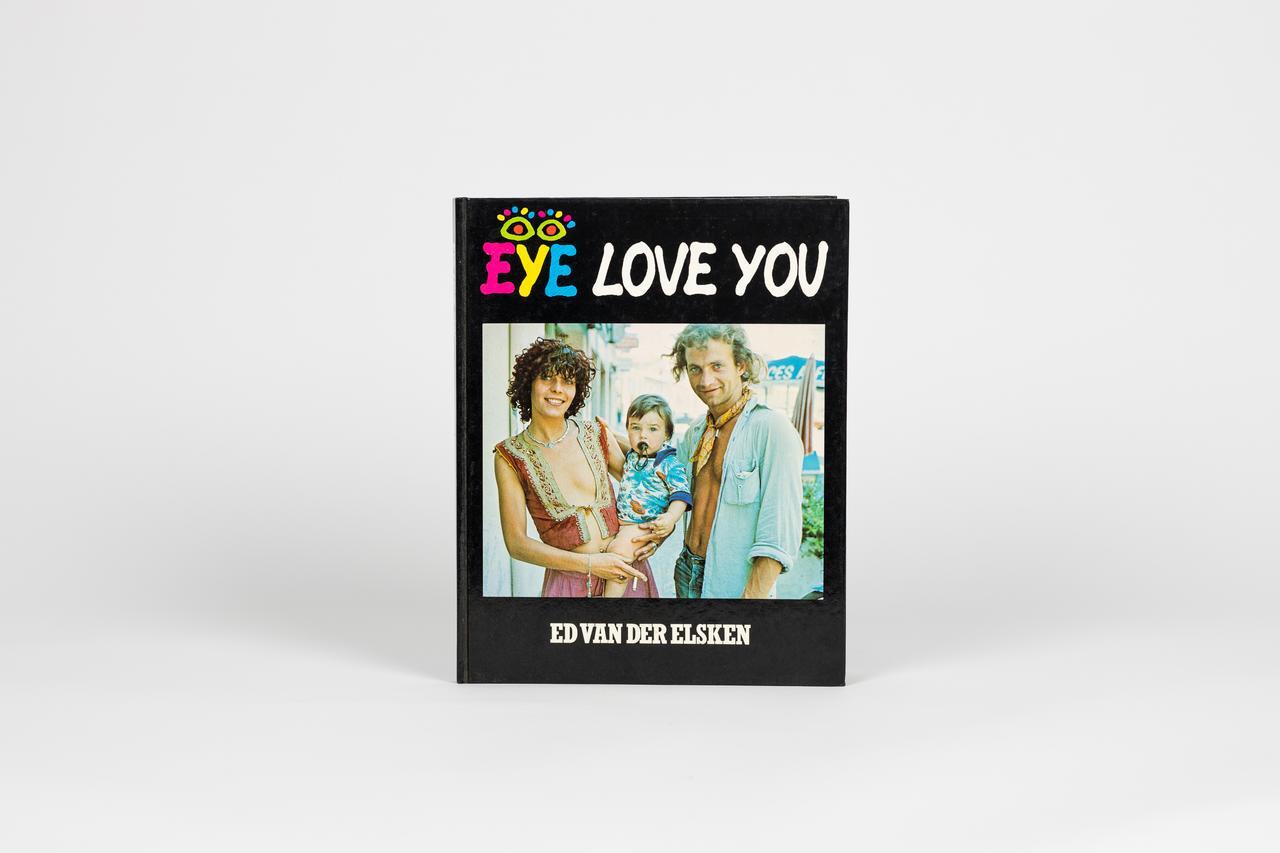
SIGNED; Lee Friedlander - Lee Friedlander (MINT CONDITION, VERY SPECIAL COPY) - 2000


Ouvre à 11:00
Offre de départ
€ 1
Ajoutez-le à vos favoris pour recevoir une notification lorsque la vente commence.

Protection des acheteurs Catawiki
Votre paiement est en sécurité chez nous jusqu’à la réception de votre objet.Voir les informations
Trustpilot 4.4 | 129859 d’avis
Noté Excellent sur Trustpilot.
Description fournie par le vendeur
This is a lot by 5Uhr30.com (Ecki Heuser, Cologne, Germany).
5Uhr30.com guarantees detailed and accurate descriptions, 100% protection,
100% insurance and combined shipping worldwide
WONDERFUL BOOK WITH SELF-PORTRAITS by great American photographer Lee Friedlander -
IN BRANDNEW CONDITION + SIGNED BY THE ARTIST.
VERY SPECIAL COPY:
Edition of 3.300 copies, of which 600 hardcover copies are signed and numbered by the artist.
This is one hardcover copy; not numbered, but signed afterwards.
I GUARANTEE THE AUTHENTICITY OF THE SIGNATURE.
Mint, new, unread; opened once for signature.
COLLECTOR'S COPY.
"Lee Friedlander has documented a lifetime in photographs, creating a thick and diverse body of work which has left an indelible imprint on the medium he helped to fortify. Among his most important subjects - once at the beginning of his career, and now thirty years later - is himself. With the photographic cornerstone of a monograph, Self-Portrait, originally published in 1970, Friedlander created an archetype for self-imaging. Three decades later Friedlander re-acquainted himself with the far side of the camera."
(from the publisher)
Friedlander is famous for fantastic photobooks like "The American Monument" (Andrew Roth, The Book of 101 Books, page 236/237. Martin Parr & Gerry Badger, The Photobook, vol 2, page 28. The Open Book, Hasselblad Center, page 310. 802 photo books of the M. + M. Auer collection, page 600), "Self Portrait" (Andrew Roth, The Book of 101 Books, page 298/299, Martin Parr & Gerry Badger, The Photobook, vol 1, page 258. The Open Book, Hasselblad Center, page 262/263. 802 photo books of the M. + M. Auer collection, page 514) or "Cray at Chippewa Falls" (Martin Parr & Gerry Badger, The Photobook, vol 2, page 199).
Fraenkel Gallery, San Francisco. 2000. First edition, first printing.
Hardcover in blue linen with embossed photo (as issued). 240 x 240 mm. 96 pages. 77 duotone plates. Photos: Lee Friedlander. Text in English.
Wonderful photobook by Lee Friedlander in perfect condition - signed by the artist.
Lee Friedlander’s exploration of one of photography’s most enduring genres began almost by chance, in the late 1970s, when a teacher colleague at Rice University in Houston lined up a regular schedule of nude models for his students. Almost immediately, Friedlander found that he preferred to photograph the models at their homes, and ingeniously deployed household objects such as bedside lamps, potted plants and sofa fabrics to play off against the angular poses of the models and the emphatic framing of the overall composition. Friedlander’s nudes show every blemish, every contour that makes each body unique, while his flash often serves to counter this realism with a softening effect that often recedes the body’s shadow right up to its outline.
"Lee Friedlander is an American photographer and artist. In the 1960s and 1970s, Friedlander evolved an influential and often imitated visual language of urban "social landscape," with many of his photographs including fragments of store-front reflections, structures framed by fences, posters and street signs. His work is characterized by its innovative use of framing and reflection, often using the natural environment or architectural elements to frame his subjects. Over the course of his career, Friedlander has been the recipient of numerous awards and his work has been exhibited in major museums and galleries worldwide (Museum of Modern Art, New York, Corcoran Gallery of Art, National Gallery of Victoria, Melbourne).
Friedlander was born in Aberdeen, Washington, on July 14, 1934 to Kaari Nurmi (of Finnish descent) and Fritz (Fred) Friedlander (a German-Jewish émigré). His mother died of cancer when he was seven years old.
Already earning pocket-money as a photographer by age 14, he went on at the age of 18 to study photography at the Art Center College of Design in Pasadena, California. In 1956, he moved to New York City, where he photographed jazz musicians for record album covers. His early work was influenced by Eugène Atget, Robert Frank and Walker Evans. Friedlander is regarded as one of Atget's heirs. In 1960, Friedlander was awarded a Guggenheim Fellowship to focus on his art, and was awarded subsequent grants in 1962 and 1977. Some of his most famous photographs appeared in the September 1985 Playboy, black and white nude photographs of Madonna from the late 1970s. A student at the time, she was paid $25 for her 1979 set. In 2009, one of the images fetched $37,500 at a Christie's Art House auction.
Working primarily with hand-held Leica 35 mm cameras and black-and-white film, Friedlander's style has focused on the "social landscape." His photographs used detached images of urban life, store-front reflections, structures framed by fences, and posters and signs all combining to capture the look of "modern life."
In 1963, Nathan Lyons, assistant director and Curator of Photography at the International Museum of Photography at George Eastman House, mounted Friedlander's first solo exhibition. Friedlander was then a key figure in curator John Szarkowski's 1967 "New Documents" exhibition, at the Museum of Modern Art in New York along with Garry Winogrand and Diane Arbus. In 1973, his work was honored at the Rencontres d'Arles festival in France with the screening "Soirée américaine : Judy Dater, Jack Welpott, Jerry Uelsmann, Lee Friedlander" presented by Jean-Claude Lemagny. In 1990, the MacArthur Foundation awarded Friedlander a MacArthur Fellowship. In 2005, the Museum of Modern Art presented a major retrospective of Friedlander's career, including nearly 400 photographs since the 1950s; it was presented again in 2008 at the San Francisco Museum of Modern Art. In 2022, contemporary photographer Joseph Maida discussed Friedlander's work from the 1970s and 80's in Maida's monograph A Third Look.
In 2023, Joel Coen curated an exhibition of 70 of Friedlander's photographs, which were shown (45 different photographs at each site) at the Fraenkel Gallery in San Francisco and in New York at Luhring Augustine.
While suffering from arthritis and housebound, he focused on photographing his surroundings. His book Stems reflects his life during the time of his knee replacement surgery. He has said that his "limbs" reminded him of plant stems.
Friedlander began photographing parks designed by Frederick Law Olmsted for a six-year commission from the Canadian Centre for Architecture in Montreal, beginning in 1988. After completing the commission he continued to photograph Olmsted-designed parks for 20 years in total. His series includes New York City's Central Park; Brooklyn's Prospect Park; Manhattan's Morningside Park; World's End in Hingham, Massachusetts; Cherokee Park in Louisville, Kentucky; and Niagara Falls State Park. On the occasion of the 150th anniversary of the design for Central Park, the Metropolitan Museum of Art held an exhibition of Friedlander's photographs of that park and a book was published, Photographs: Frederick Law Olmsted Landscapes."
Friedlander works primarily with medium format cameras, such as the Hasselblad Superwide."
(Wikipedia)
À propos du vendeur
bienvenue à 5h30.
5Uhr30 est basé à Ehrenfeld, le quartier le plus branché de Cologne - avec une boutique et une salle d'exposition pour la photographie.
5H30 propose des livres photo très rares, très beaux, très spéciaux - épuisés, modernes-antiquaires et antiquaires. nous proposons également des cartons d'invitation photo, des affiches film et photo, des catalogues photo et des tirages photo originaux.
5Uhr30 est spécialisé dans les publications photographiques allemandes,
mais propose également une gamme passionnante de livres photo de toute l'europe, du japon, de l'amérique du nord et du sud. brochures de voyage, livres pour enfants, brochures d'entreprise... tout ce qui touche à la photographie au sens étroit ou large nous inspire. s'il vous plaît visitez-nous si vous êtes à Cologne ou dans les environs. Vous ne le regretterez pas! :)
5h30 essaie toujours d'offrir les meilleures conditions.
5h30 expédie dans le monde entier, rapidement et en toute sécurité -
avec une protection à 100%, avec une assurance complète et avec un numéro de suivi.
s'il vous plaît contactez-nous par email, si vous avez des questions ou si vous cherchez quelque chose de spécial, car seule une partie de nos offres sont en ligne.
Merci de votre intérêt.
ecki heuser et son équipe
Traduit par Google TraductionThis is a lot by 5Uhr30.com (Ecki Heuser, Cologne, Germany).
5Uhr30.com guarantees detailed and accurate descriptions, 100% protection,
100% insurance and combined shipping worldwide
WONDERFUL BOOK WITH SELF-PORTRAITS by great American photographer Lee Friedlander -
IN BRANDNEW CONDITION + SIGNED BY THE ARTIST.
VERY SPECIAL COPY:
Edition of 3.300 copies, of which 600 hardcover copies are signed and numbered by the artist.
This is one hardcover copy; not numbered, but signed afterwards.
I GUARANTEE THE AUTHENTICITY OF THE SIGNATURE.
Mint, new, unread; opened once for signature.
COLLECTOR'S COPY.
"Lee Friedlander has documented a lifetime in photographs, creating a thick and diverse body of work which has left an indelible imprint on the medium he helped to fortify. Among his most important subjects - once at the beginning of his career, and now thirty years later - is himself. With the photographic cornerstone of a monograph, Self-Portrait, originally published in 1970, Friedlander created an archetype for self-imaging. Three decades later Friedlander re-acquainted himself with the far side of the camera."
(from the publisher)
Friedlander is famous for fantastic photobooks like "The American Monument" (Andrew Roth, The Book of 101 Books, page 236/237. Martin Parr & Gerry Badger, The Photobook, vol 2, page 28. The Open Book, Hasselblad Center, page 310. 802 photo books of the M. + M. Auer collection, page 600), "Self Portrait" (Andrew Roth, The Book of 101 Books, page 298/299, Martin Parr & Gerry Badger, The Photobook, vol 1, page 258. The Open Book, Hasselblad Center, page 262/263. 802 photo books of the M. + M. Auer collection, page 514) or "Cray at Chippewa Falls" (Martin Parr & Gerry Badger, The Photobook, vol 2, page 199).
Fraenkel Gallery, San Francisco. 2000. First edition, first printing.
Hardcover in blue linen with embossed photo (as issued). 240 x 240 mm. 96 pages. 77 duotone plates. Photos: Lee Friedlander. Text in English.
Wonderful photobook by Lee Friedlander in perfect condition - signed by the artist.
Lee Friedlander’s exploration of one of photography’s most enduring genres began almost by chance, in the late 1970s, when a teacher colleague at Rice University in Houston lined up a regular schedule of nude models for his students. Almost immediately, Friedlander found that he preferred to photograph the models at their homes, and ingeniously deployed household objects such as bedside lamps, potted plants and sofa fabrics to play off against the angular poses of the models and the emphatic framing of the overall composition. Friedlander’s nudes show every blemish, every contour that makes each body unique, while his flash often serves to counter this realism with a softening effect that often recedes the body’s shadow right up to its outline.
"Lee Friedlander is an American photographer and artist. In the 1960s and 1970s, Friedlander evolved an influential and often imitated visual language of urban "social landscape," with many of his photographs including fragments of store-front reflections, structures framed by fences, posters and street signs. His work is characterized by its innovative use of framing and reflection, often using the natural environment or architectural elements to frame his subjects. Over the course of his career, Friedlander has been the recipient of numerous awards and his work has been exhibited in major museums and galleries worldwide (Museum of Modern Art, New York, Corcoran Gallery of Art, National Gallery of Victoria, Melbourne).
Friedlander was born in Aberdeen, Washington, on July 14, 1934 to Kaari Nurmi (of Finnish descent) and Fritz (Fred) Friedlander (a German-Jewish émigré). His mother died of cancer when he was seven years old.
Already earning pocket-money as a photographer by age 14, he went on at the age of 18 to study photography at the Art Center College of Design in Pasadena, California. In 1956, he moved to New York City, where he photographed jazz musicians for record album covers. His early work was influenced by Eugène Atget, Robert Frank and Walker Evans. Friedlander is regarded as one of Atget's heirs. In 1960, Friedlander was awarded a Guggenheim Fellowship to focus on his art, and was awarded subsequent grants in 1962 and 1977. Some of his most famous photographs appeared in the September 1985 Playboy, black and white nude photographs of Madonna from the late 1970s. A student at the time, she was paid $25 for her 1979 set. In 2009, one of the images fetched $37,500 at a Christie's Art House auction.
Working primarily with hand-held Leica 35 mm cameras and black-and-white film, Friedlander's style has focused on the "social landscape." His photographs used detached images of urban life, store-front reflections, structures framed by fences, and posters and signs all combining to capture the look of "modern life."
In 1963, Nathan Lyons, assistant director and Curator of Photography at the International Museum of Photography at George Eastman House, mounted Friedlander's first solo exhibition. Friedlander was then a key figure in curator John Szarkowski's 1967 "New Documents" exhibition, at the Museum of Modern Art in New York along with Garry Winogrand and Diane Arbus. In 1973, his work was honored at the Rencontres d'Arles festival in France with the screening "Soirée américaine : Judy Dater, Jack Welpott, Jerry Uelsmann, Lee Friedlander" presented by Jean-Claude Lemagny. In 1990, the MacArthur Foundation awarded Friedlander a MacArthur Fellowship. In 2005, the Museum of Modern Art presented a major retrospective of Friedlander's career, including nearly 400 photographs since the 1950s; it was presented again in 2008 at the San Francisco Museum of Modern Art. In 2022, contemporary photographer Joseph Maida discussed Friedlander's work from the 1970s and 80's in Maida's monograph A Third Look.
In 2023, Joel Coen curated an exhibition of 70 of Friedlander's photographs, which were shown (45 different photographs at each site) at the Fraenkel Gallery in San Francisco and in New York at Luhring Augustine.
While suffering from arthritis and housebound, he focused on photographing his surroundings. His book Stems reflects his life during the time of his knee replacement surgery. He has said that his "limbs" reminded him of plant stems.
Friedlander began photographing parks designed by Frederick Law Olmsted for a six-year commission from the Canadian Centre for Architecture in Montreal, beginning in 1988. After completing the commission he continued to photograph Olmsted-designed parks for 20 years in total. His series includes New York City's Central Park; Brooklyn's Prospect Park; Manhattan's Morningside Park; World's End in Hingham, Massachusetts; Cherokee Park in Louisville, Kentucky; and Niagara Falls State Park. On the occasion of the 150th anniversary of the design for Central Park, the Metropolitan Museum of Art held an exhibition of Friedlander's photographs of that park and a book was published, Photographs: Frederick Law Olmsted Landscapes."
Friedlander works primarily with medium format cameras, such as the Hasselblad Superwide."
(Wikipedia)
À propos du vendeur
bienvenue à 5h30.
5Uhr30 est basé à Ehrenfeld, le quartier le plus branché de Cologne - avec une boutique et une salle d'exposition pour la photographie.
5H30 propose des livres photo très rares, très beaux, très spéciaux - épuisés, modernes-antiquaires et antiquaires. nous proposons également des cartons d'invitation photo, des affiches film et photo, des catalogues photo et des tirages photo originaux.
5Uhr30 est spécialisé dans les publications photographiques allemandes,
mais propose également une gamme passionnante de livres photo de toute l'europe, du japon, de l'amérique du nord et du sud. brochures de voyage, livres pour enfants, brochures d'entreprise... tout ce qui touche à la photographie au sens étroit ou large nous inspire. s'il vous plaît visitez-nous si vous êtes à Cologne ou dans les environs. Vous ne le regretterez pas! :)
5h30 essaie toujours d'offrir les meilleures conditions.
5h30 expédie dans le monde entier, rapidement et en toute sécurité -
avec une protection à 100%, avec une assurance complète et avec un numéro de suivi.
s'il vous plaît contactez-nous par email, si vous avez des questions ou si vous cherchez quelque chose de spécial, car seule une partie de nos offres sont en ligne.
Merci de votre intérêt.
ecki heuser et son équipe
Traduit par Google TraductionDétails
Nombre de livres
1
Sujet
Art, Photographie
Titre du livre
Lee Friedlander (MINT CONDITION, VERY SPECIAL COPY)
Auteur/ Illustrateur
SIGNED; Lee Friedlander
Condition
Comme neuf
Année de publication de l’ouvrage le plus ancien
2000
Hauteur
240 mm
Édition
1ère édition
Largeur
240 mm
Langue
Anglais
Langue originale
Oui
Éditeur
Fraenkel Gallery, San Francisco
Reliure
Couverture rigide
Extras
Signé(e)
Nombre de pages
96
Vendu par
AllemagneVérifié
protop
Rechtliche Informationen des Verkäufers
- Unternehmen:
- 5Uhr30.com
- Repräsentant:
- Ecki Heuser
- Adresse:
- 5Uhr30.com
Thebäerstr. 34
50823 Köln
GERMANY - Telefonnummer:
- +491728184000
- Email:
- photobooks@5Uhr30.com
- USt-IdNr.:
- DE154811593
AGB
AGB des Verkäufers. Mit einem Gebot auf dieses Los akzeptieren Sie ebenfalls die AGB des Verkäufers.
Widerrufsbelehrung
- Frist: 14 Tage sowie gemäß den hier angegebenen Bedingungen
- Rücksendkosten: Käufer trägt die unmittelbaren Kosten der Rücksendung der Ware
- Vollständige Widerrufsbelehrung