102748149

Plus disponible
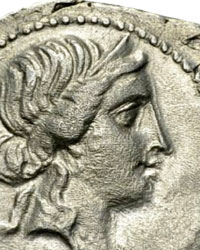
République romaine. AE Aes Grave. Uncia 3rd Century B.C
Offres terminées
Il y a 2 jours

République romaine. AE Aes Grave. Uncia 3rd Century B.C

RULER: AE AES Grave DATE: 3rd Century B.C DENOMINATION: Uncia MATERIAL: Bronze, AE SIZE & WEIGHT: 30 mm x 29 mm, 30 gr OBVERSE: Knucklebone REVERSE: Knucklebone Comes with Certificate of Authenticity The Aes Grave Uncia represents a fascinating evolutionary step in early Roman currency, dating back to the 3rd century BCE. Unlike the struck silver coins of later periods, these were heavy, cast bronze pieces that relied on their physical weight—based on the Libral standard—to establish value. The "Uncia" was a fractional unit representing one-twelfth of a Roman As. These coins are characterized by their rugged, primitive aesthetic and substantial feel in the hand, serving as a reminder of a time when Rome was still a rising Italian power transitioning from a system of raw metal chunks to standardized, circular currency. One of the most iconic and sought-after varieties of this denomination features the knucklebone (or astragalus) as its primary motif. In the ancient world, knucklebones were not merely anatomical remnants but were deeply symbolic, used widely in games of chance and for divination. On the Uncia, the knucklebone is typically rendered in high relief on both the obverse and reverse, often accompanied by a single globule or "pellet" to denote its value as one unit. The choice of the astragalus reflects the everyday cultural fabric of the Roman Republic, blending the mundane world of leisure and gaming with the formal requirements of trade and state-issued money. The casting process used to create these coins resulted in unique, organic textures that are highly prized by collectors today. Because they were poured into clay molds rather than struck with dies, no two specimens are exactly alike; many still retain the "sprue" marks where the molten bronze entered the mold. These heavy bronze pieces eventually gave way to smaller, more practical struck coinage as Rome's economy expanded across the Mediterranean, but the Knucklebone Uncia remains a definitive artifact of the Republic’s early economic identity—a literal and metaphorical heavyweight of ancient numismatics.

102748149

Plus disponible
République romaine. AE Aes Grave. Uncia 3rd Century B.C

République romaine. AE Aes Grave. Uncia 3rd Century B.C

RULER: AE AES Grave
DATE: 3rd Century B.C
DENOMINATION: Uncia
MATERIAL: Bronze, AE
SIZE & WEIGHT: 30 mm x 29 mm, 30 gr
OBVERSE: Knucklebone
REVERSE: Knucklebone

Comes with Certificate of Authenticity

The Aes Grave Uncia represents a fascinating evolutionary step in early Roman currency, dating back to the 3rd century BCE. Unlike the struck silver coins of later periods, these were heavy, cast bronze pieces that relied on their physical weight—based on the Libral standard—to establish value. The "Uncia" was a fractional unit representing one-twelfth of a Roman As. These coins are characterized by their rugged, primitive aesthetic and substantial feel in the hand, serving as a reminder of a time when Rome was still a rising Italian power transitioning from a system of raw metal chunks to standardized, circular currency.

One of the most iconic and sought-after varieties of this denomination features the knucklebone (or astragalus) as its primary motif. In the ancient world, knucklebones were not merely anatomical remnants but were deeply symbolic, used widely in games of chance and for divination. On the Uncia, the knucklebone is typically rendered in high relief on both the obverse and reverse, often accompanied by a single globule or "pellet" to denote its value as one unit. The choice of the astragalus reflects the everyday cultural fabric of the Roman Republic, blending the mundane world of leisure and gaming with the formal requirements of trade and state-issued money.

The casting process used to create these coins resulted in unique, organic textures that are highly prized by collectors today. Because they were poured into clay molds rather than struck with dies, no two specimens are exactly alike; many still retain the "sprue" marks where the molten bronze entered the mold. These heavy bronze pieces eventually gave way to smaller, more practical struck coinage as Rome's economy expanded across the Mediterranean, but the Knucklebone Uncia remains a definitive artifact of the Republic’s early economic identity—a literal and metaphorical heavyweight of ancient numismatics.

Offres terminées
Carmen Vera Gutiérrez
Expert
Estimation  € 350 - € 400

Objets similaires

Pour vous

Monnaies antiques

Définir une alerte de recherche
Définissez une alerte de recherche pour être informé lorsque de nouveaux objets correspondant à votre recherche sont disponibles.

Cet objet a été présenté dans


Comment acheter sur Catawiki ?

En savoir plus sur notre Protection des acheteurs

      1. Découvrez des objets d’exception

      Découvrez des milliers d'objets d'exception sélectionnés par nos experts. Consultez les photos, les informations détaillées et la valeur estimée de chaque objet d'exception. 

      2. Faites la meilleure offre

      Trouvez l’objet de vos rêves et faites l’offre la plus élevée. Vous pouvez suivre la vente jusqu'à sa clôture ou laisser notre système faire les offres à votre place. Il vous suffit de fixer une enchère maximale correspondant au montant que vous souhaitez payer. 

      3. Effectuez un paiement sécurisé

      Réglez votre objet d'exception et nous garderons votre paiement en toute sécurité jusqu’à ce que vous ayez bien reçu votre objet d’exception. Toutes les transactions sont effectuées par un système de paiement de confiance. 

Vous souhaitez vendre un objet similaire ?

Que vous débutiez dans les ventes en ligne ou que vous soyez vendeur professionnel, nous pouvons vous aider à gagner plus d'argent pour vos objets d'exception.

Vendez votre objet