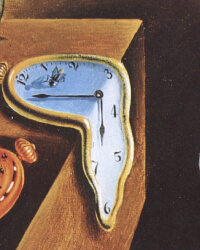
René Magritte (1898-1967), d'après - Décalcomanie


06
giorni
17
ore
47
minuti
41
secondi
Offerta attuale
€ 11
Nessun prezzo di riserva

Esperto
Selezionato da Silvia Possanza
Ha ricoperto ruolo di Senior Specialist per 12 anni, esperta in stampe moderne.
Stima € 300 - € 400
8 persone stanno guardando questo oggetto
 Offerente 5255 Offerente 5255 | 11 € |
|---|
Tutela degli acquirenti Catawiki
Il tuo pagamento è al sicuro con noi finché non ricevi il tuo oggetto.Mostra dettagli
Trustpilot 4.4 | 127726 recensioni
Valutato Eccellente su Trustpilot.
René Magritte (d’après) – Décalcomanie, litografia 44 × 30 cm, edizione limitata numerata a 300 copie, firma al piatto, in condizioni melancholiche, proveniente dal Belgio, periodo 2000–2010.
Riepilogo creato con l’aiuto dell’IA
Descrizione del venditore
René Magritte (1898-1967), d'après - hand signed in pencil by Mr. Charly Herscovici, President of the MAGRITTE Foundation
Lithograph on BFK Rives vellum.
Numbered / 300 copies, signed in print
Lithography made under the control of the Succession Magritte, authenticated by the blind seal Succession, signed on the stone bottom left and hand signed in pencil by Mr. Charly Herscovici, President of the MAGRITTE Foundation (with initial on the same side of the number)
Dimensions: 44x30 cm.
René Magritte, the renowned Belgian Surrealist, created several intriguing works that play with the themes of windows, spheres, and clouds. One notable example is his 1964 painting "Le Tombeau des Lutteurs" (The Tomb of the Wrestlers), though it's often referred to simply by its visual elements due to its striking, almost archetypal composition.
In this captivating piece, a window acts as a frame to an unexpected scene. Instead of revealing a conventional exterior landscape, the viewer is confronted with a large, perfectly spherical object, often described as a rock or a planet, that appears to be suspended directly outside the windowpane. This sphere is not resting on anything; it simply floats in the middle of the view. Above and around this enigmatic orb, stylized clouds fill the sky, rendered with Magritte's characteristic precise yet dreamlike quality.
The interplay of these elements creates a sense of both familiarity and profound strangeness. The window, typically a portal to reality, here presents an impossible vision. The sphere, an object of perfect geometric form, defies gravity and natural context. The clouds, while natural, contribute to the overall unsettling atmosphere by being part of this bizarre tableau. Magritte masterfully uses these common motifs to challenge perception, inviting the viewer to question what is real, what is imagined, and the very nature of representation.
René Magritte (1898-1967), d'après - hand signed in pencil by Mr. Charly Herscovici, President of the MAGRITTE Foundation
Lithograph on BFK Rives vellum.
Numbered / 300 copies, signed in print
Lithography made under the control of the Succession Magritte, authenticated by the blind seal Succession, signed on the stone bottom left and hand signed in pencil by Mr. Charly Herscovici, President of the MAGRITTE Foundation (with initial on the same side of the number)
Dimensions: 44x30 cm.
René Magritte, the renowned Belgian Surrealist, created several intriguing works that play with the themes of windows, spheres, and clouds. One notable example is his 1964 painting "Le Tombeau des Lutteurs" (The Tomb of the Wrestlers), though it's often referred to simply by its visual elements due to its striking, almost archetypal composition.
In this captivating piece, a window acts as a frame to an unexpected scene. Instead of revealing a conventional exterior landscape, the viewer is confronted with a large, perfectly spherical object, often described as a rock or a planet, that appears to be suspended directly outside the windowpane. This sphere is not resting on anything; it simply floats in the middle of the view. Above and around this enigmatic orb, stylized clouds fill the sky, rendered with Magritte's characteristic precise yet dreamlike quality.
The interplay of these elements creates a sense of both familiarity and profound strangeness. The window, typically a portal to reality, here presents an impossible vision. The sphere, an object of perfect geometric form, defies gravity and natural context. The clouds, while natural, contribute to the overall unsettling atmosphere by being part of this bizarre tableau. Magritte masterfully uses these common motifs to challenge perception, inviting the viewer to question what is real, what is imagined, and the very nature of representation.
Dettagli
Artista
René Magritte (1898-1967), d'après
Venduto da
Proprietario o rivenditore
Edizione
Edizione limitata
Titolo dell'opera
Décalcomanie
Tecnica
Litografia
Firma
Firmato su lastra
Paese d’origine
Belgio
Condizione
Discrete condizioni
Altezza
44 cm
Larghezza
30 cm
Raffigurazione/Tematica
Cultura pop
Stile
Surrealismo
Periodo
2000-2010
Venduto con cornice
No
Venduto da