Anonimo - Panegirico al Re Roberto D'Angiò (1340) - 2008



Opens 11:00
Starting bid
€ 1
Add to your favourites to get an alert when the auction starts.

Expert
Selected by Sebastian Hau
Founded and directed two French book fairs; nearly 20 years of experience in contemporary books.
Estimate € 1,100 - € 1,400
Catawiki Buyer Protection
Your payment’s safe with us until you receive your object.View details
Trustpilot 4.4 | 123418 reviews
Rated Excellent on Trustpilot.
Description from the seller
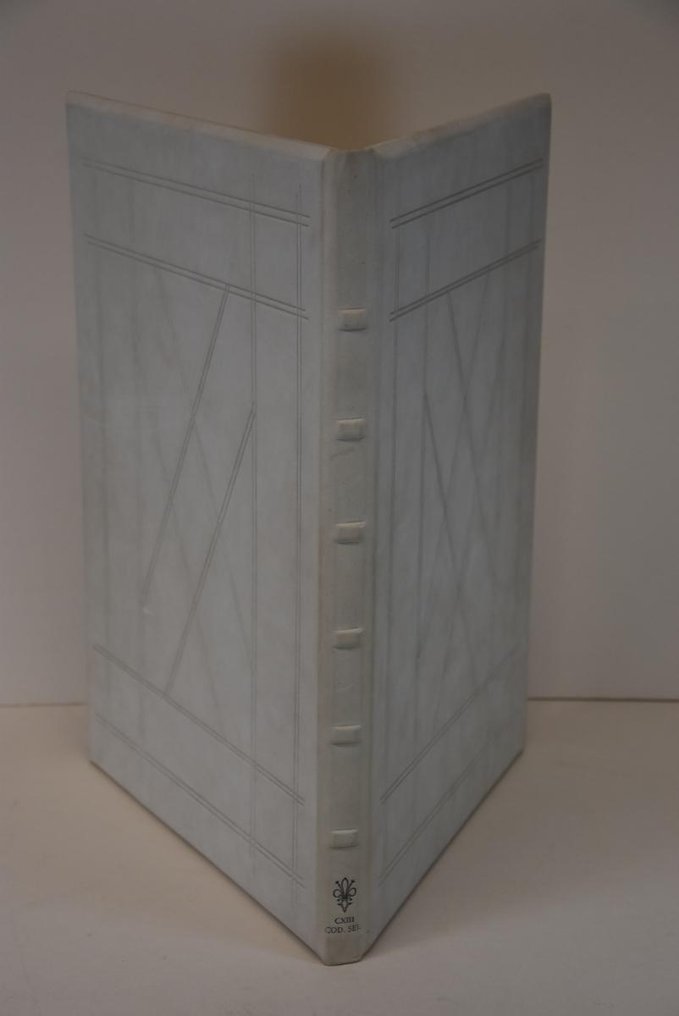
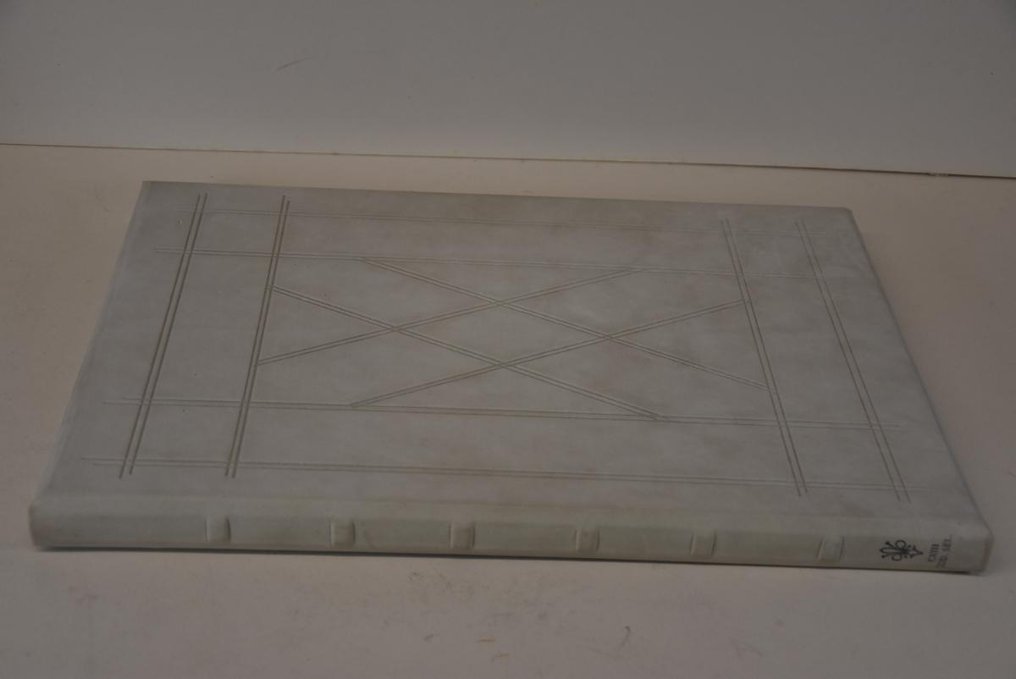
Panegyric to King Robert of Anjou (Panegiric to King Roberto D'Angiò). Codex Ser. No. 2639, National Library of Vienna. Facsimile. Graz, ADEVA, 2008. 50 x 34 cm, leather binding, 72 pages, cloth slipcase. 43 large-format miniatures, some full-page, richly decorated with gold and silver chased, along with 29 filigree initials and 8 opaque initials on gold background. Edition of 300 numbered copies (our no. 111). The two volumes of critical apparatus are missing. In excellent condition.
The manuscript, drafted around 1340 in southern Italy, was probably commissioned by Roberto d'Angiò himself, King of Naples. The panegyric to Roberto d'Angiò presents the king as the ideal ruler, the only one capable of uniting Italy under his rule. Almost the entire canon of medieval and modern knowledge is presented in a kaleidoscopic manner. Therefore, the manuscript testifies to the sumptuous intellectual and artistic effort undertaken to stage Roberto d'Angiò's kingship. Facsimile + 2 volumes of commentary. Limited edition of 300 copies. Leather with blind impressions in a silk case, the case slightly dusty. Facsimile in perfect condition and never used. Language: German Weight in grams: 0 [Attributes: hardcover]
The situation in 14th-century Italy was far from promising: the country was divided, the Pope was in Babylonian exile in distant Avignon, and the emperors of the Holy Roman Empire frequently claimed their rights over the territory. Could Roberto d'Angiò (1278-1343), King of Naples, be the man who could change the situation? The author of this panegyric was firmly convinced he could do so: Roberto, who is exuberantly praised, was the only one who could unite Italy and save the Church. The dignity and significance of this statement are underscored by the unusual format (48.5 x 34.4 cm) and the 43 monumental miniatures, which skillfully invite the viewer into an almost intimate dialogue. Although Roberto did not have the political and military success that the panegyric might suggest, he bore the epithet 'The Wise': he generously supported Giotto di Bondone, Francesco Petrarca, and Giovanni Boccaccio.
Funeral eulogy for King Robert of Anjou
With the panegyric of Roberto d'Angiò, King of Naples (1278–1343), written around 1340, the Austrian National Library houses one of the most important testimonies of the staging of power in the Middle Ages and at the same time one of the most extraordinary examples of 14th-century miniature art.
An environment worthy of a king.
A total of 43 large-format miniatures across 72 pages, richly decorated with chased gold and silver, illustrate this extraordinary codex. The miniatures, some of which are full-page, stand out due to the manuscript's monumental size (48.5 x 34.4 cm); 29 lily initials and 8 opaque initials on a gold background complete the fantastic decoration.
Almost the entire canon of medieval and modern knowledge is presented in a kaleidoscopic manner. Therefore, the manuscript testifies to the sumptuous intellectual and artistic effort undertaken to stage the royalty of Roberto d'Angiò. There is some evidence suggesting that Roberto himself commissioned the manuscript.
The content – program and heritage
The panegyric to Roberto d'Angiò presents the king as the ideal sovereign, the only one capable of uniting Italy under his rule. Italy, in fact, is torn apart: Roberto, as the future ruler, must restore order to the affairs of his time. The author laments that Italy, unlike other states, does not have a king; he also denounces the absence of the popes from Rome during their 'Babylonian' exile in Avignon (1309-1376).
Magnificent 14th-century kaleidoscope.
The code consists of two richly illustrated parts. The first, larger section includes the panegyric (royal songs) to King Roberto d'Angiò, an effusive poem in the typical style of praise for the sovereigns of the time, celebrating the recipient as the savior of the Church and the ideal king of all Italy.
43 miniature sparkling gold
The miniatures depict Roberto's 'ideal' court: allegories of Italy and Italian cities, as well as virtues that praise the king as the ideal sovereign. Thus, Italy, pleading for its homeland, or mythological figures from antiquity, appear before Roberto's throne. The king considers himself chosen by God for his task of unifying Italy. Consequently, several magnificent miniatures compare his court with the divine one.
Saint Augustine as a 'witness'
The second part supports the intention of portraying the king as the ideal sovereign: with quotations from Saint Augustine regarding Robert, on the four cardinal virtues, on Christian virtues, and on the allegories of the liberal arts. The illustrations testify to the remarkable skill of the miniators involved.
Roberto d'Angiò – Fate between royal ambition and European reality
Born in 1278, Roberto was the nephew of the great Charles of Anjou. After his father, Charles II of Naples, lost a naval battle, he spent his childhood as a hostage at the Aragonese court. In 1309, after the death of Charles II, Roberto became king of Naples and Sicily. He enjoyed papal favor, as the popes – based in Avignon since 1309 – considered him their man in Italy, capable of standing up to the empire and representing the interests of the papacy. Thus, until his death in 1343, he was in conflict with the German sovereigns, from Emperor Henry VII to Louis IV of Bavaria, who, following the tradition started by Charlemagne, considered Italy their possession. Politically, Roberto achieved little success, which makes his claim to the unification of Italy even more impressive, a goal that would not be realized for another 500 years.
Rich in color: initials in fleuronnée and matte paint.
The text is divided by decorative red and blue letters, richly decorated with lilies in contrasting colors. In the second part of the manuscript, the initials with lilies contrast with dull initials characterized by generous use of shiny gold leaf. Their three-dimensional modeling and bright colors testify to the skill of the painters who created them.
The mystery surrounding the author
The text must have been written between 1334 and 1343. It also provides clues about the still unidentified author: he identifies himself as a Prato professor who composed the poem. Scholars generally identify him as Convenevole da Prato (1270/75–1338), who was also a teacher of Francesco Petrarch (1304–1374).
Panegyric to King Robert of Anjou (Panegiric to King Roberto D'Angiò). Codex Ser. No. 2639, National Library of Vienna. Facsimile. Graz, ADEVA, 2008. 50 x 34 cm, leather binding, 72 pages, cloth slipcase. 43 large-format miniatures, some full-page, richly decorated with gold and silver chased, along with 29 filigree initials and 8 opaque initials on gold background. Edition of 300 numbered copies (our no. 111). The two volumes of critical apparatus are missing. In excellent condition.
The manuscript, drafted around 1340 in southern Italy, was probably commissioned by Roberto d'Angiò himself, King of Naples. The panegyric to Roberto d'Angiò presents the king as the ideal ruler, the only one capable of uniting Italy under his rule. Almost the entire canon of medieval and modern knowledge is presented in a kaleidoscopic manner. Therefore, the manuscript testifies to the sumptuous intellectual and artistic effort undertaken to stage Roberto d'Angiò's kingship. Facsimile + 2 volumes of commentary. Limited edition of 300 copies. Leather with blind impressions in a silk case, the case slightly dusty. Facsimile in perfect condition and never used. Language: German Weight in grams: 0 [Attributes: hardcover]
The situation in 14th-century Italy was far from promising: the country was divided, the Pope was in Babylonian exile in distant Avignon, and the emperors of the Holy Roman Empire frequently claimed their rights over the territory. Could Roberto d'Angiò (1278-1343), King of Naples, be the man who could change the situation? The author of this panegyric was firmly convinced he could do so: Roberto, who is exuberantly praised, was the only one who could unite Italy and save the Church. The dignity and significance of this statement are underscored by the unusual format (48.5 x 34.4 cm) and the 43 monumental miniatures, which skillfully invite the viewer into an almost intimate dialogue. Although Roberto did not have the political and military success that the panegyric might suggest, he bore the epithet 'The Wise': he generously supported Giotto di Bondone, Francesco Petrarca, and Giovanni Boccaccio.
Funeral eulogy for King Robert of Anjou
With the panegyric of Roberto d'Angiò, King of Naples (1278–1343), written around 1340, the Austrian National Library houses one of the most important testimonies of the staging of power in the Middle Ages and at the same time one of the most extraordinary examples of 14th-century miniature art.
An environment worthy of a king.
A total of 43 large-format miniatures across 72 pages, richly decorated with chased gold and silver, illustrate this extraordinary codex. The miniatures, some of which are full-page, stand out due to the manuscript's monumental size (48.5 x 34.4 cm); 29 lily initials and 8 opaque initials on a gold background complete the fantastic decoration.
Almost the entire canon of medieval and modern knowledge is presented in a kaleidoscopic manner. Therefore, the manuscript testifies to the sumptuous intellectual and artistic effort undertaken to stage the royalty of Roberto d'Angiò. There is some evidence suggesting that Roberto himself commissioned the manuscript.
The content – program and heritage
The panegyric to Roberto d'Angiò presents the king as the ideal sovereign, the only one capable of uniting Italy under his rule. Italy, in fact, is torn apart: Roberto, as the future ruler, must restore order to the affairs of his time. The author laments that Italy, unlike other states, does not have a king; he also denounces the absence of the popes from Rome during their 'Babylonian' exile in Avignon (1309-1376).
Magnificent 14th-century kaleidoscope.
The code consists of two richly illustrated parts. The first, larger section includes the panegyric (royal songs) to King Roberto d'Angiò, an effusive poem in the typical style of praise for the sovereigns of the time, celebrating the recipient as the savior of the Church and the ideal king of all Italy.
43 miniature sparkling gold
The miniatures depict Roberto's 'ideal' court: allegories of Italy and Italian cities, as well as virtues that praise the king as the ideal sovereign. Thus, Italy, pleading for its homeland, or mythological figures from antiquity, appear before Roberto's throne. The king considers himself chosen by God for his task of unifying Italy. Consequently, several magnificent miniatures compare his court with the divine one.
Saint Augustine as a 'witness'
The second part supports the intention of portraying the king as the ideal sovereign: with quotations from Saint Augustine regarding Robert, on the four cardinal virtues, on Christian virtues, and on the allegories of the liberal arts. The illustrations testify to the remarkable skill of the miniators involved.
Roberto d'Angiò – Fate between royal ambition and European reality
Born in 1278, Roberto was the nephew of the great Charles of Anjou. After his father, Charles II of Naples, lost a naval battle, he spent his childhood as a hostage at the Aragonese court. In 1309, after the death of Charles II, Roberto became king of Naples and Sicily. He enjoyed papal favor, as the popes – based in Avignon since 1309 – considered him their man in Italy, capable of standing up to the empire and representing the interests of the papacy. Thus, until his death in 1343, he was in conflict with the German sovereigns, from Emperor Henry VII to Louis IV of Bavaria, who, following the tradition started by Charlemagne, considered Italy their possession. Politically, Roberto achieved little success, which makes his claim to the unification of Italy even more impressive, a goal that would not be realized for another 500 years.
Rich in color: initials in fleuronnée and matte paint.
The text is divided by decorative red and blue letters, richly decorated with lilies in contrasting colors. In the second part of the manuscript, the initials with lilies contrast with dull initials characterized by generous use of shiny gold leaf. Their three-dimensional modeling and bright colors testify to the skill of the painters who created them.
The mystery surrounding the author
The text must have been written between 1334 and 1343. It also provides clues about the still unidentified author: he identifies himself as a Prato professor who composed the poem. Scholars generally identify him as Convenevole da Prato (1270/75–1338), who was also a teacher of Francesco Petrarch (1304–1374).
Details
Number of Books
1
Subject
Art, Fine Bindings, History, Illustrated
Book Title
Panegirico al Re Roberto D'Angiò (1340)
Author/ Illustrator
Anonimo
Condition
Fine
Publication year oldest item
2008
Height
50 cm
Edition
Special printing
Width
34 cm
Language
Latin
Original language
Yes
Binding/ Material
Leather
Number of pages
72
Sold by
