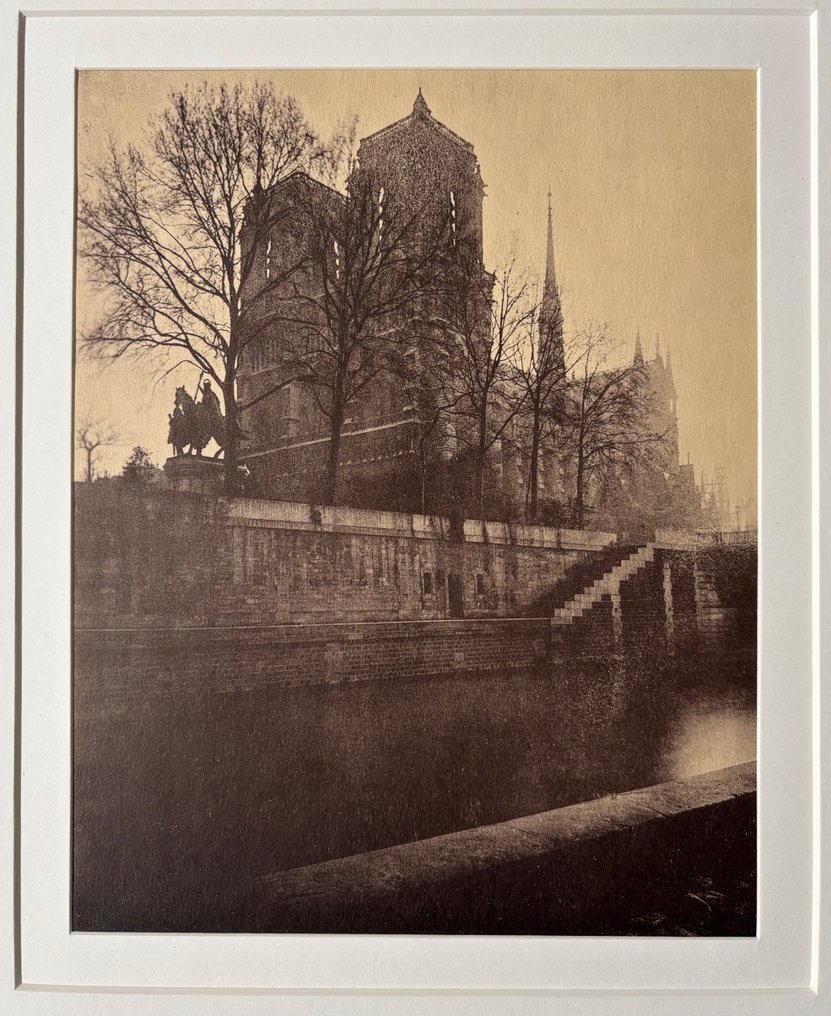
Eugène Atget (1857–1927) - Nôtre-Dame de Paris, du quai Montebello


05
days
21
hours
01
minute
02
seconds
Starting bid
€ 1
Reserve price not met

Expert
Selected by Kai Brückner
Over 35 years' experience; former gallery owner and Museum Folkwang curator.
Estimate € 800 - € 1,000
No bids placed
Catawiki Buyer Protection
Your payment’s safe with us until you receive your object.View details
Trustpilot 4.4 | 122813 reviews
Rated Excellent on Trustpilot.
Description from the seller
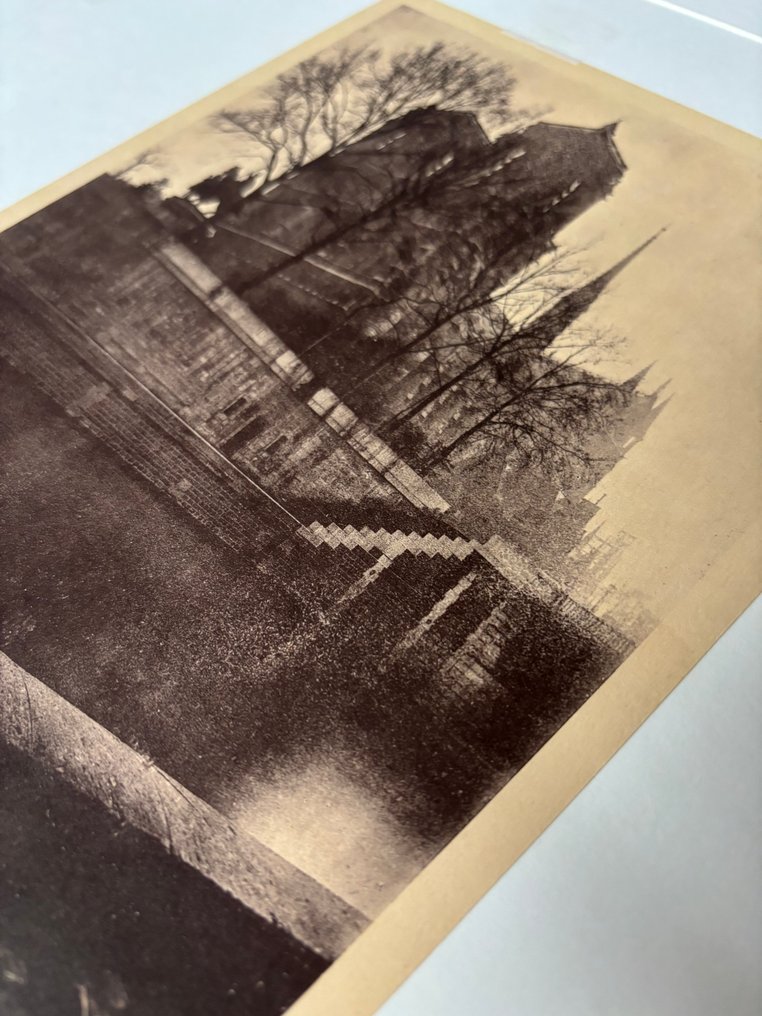
Eugène Atget (1857-1927), Notre-Dame de Paris, from quai Montebello.
Light print on chamois-colored vellum, 21 x 16.7 cm on 22.5 x 18.3 cm.
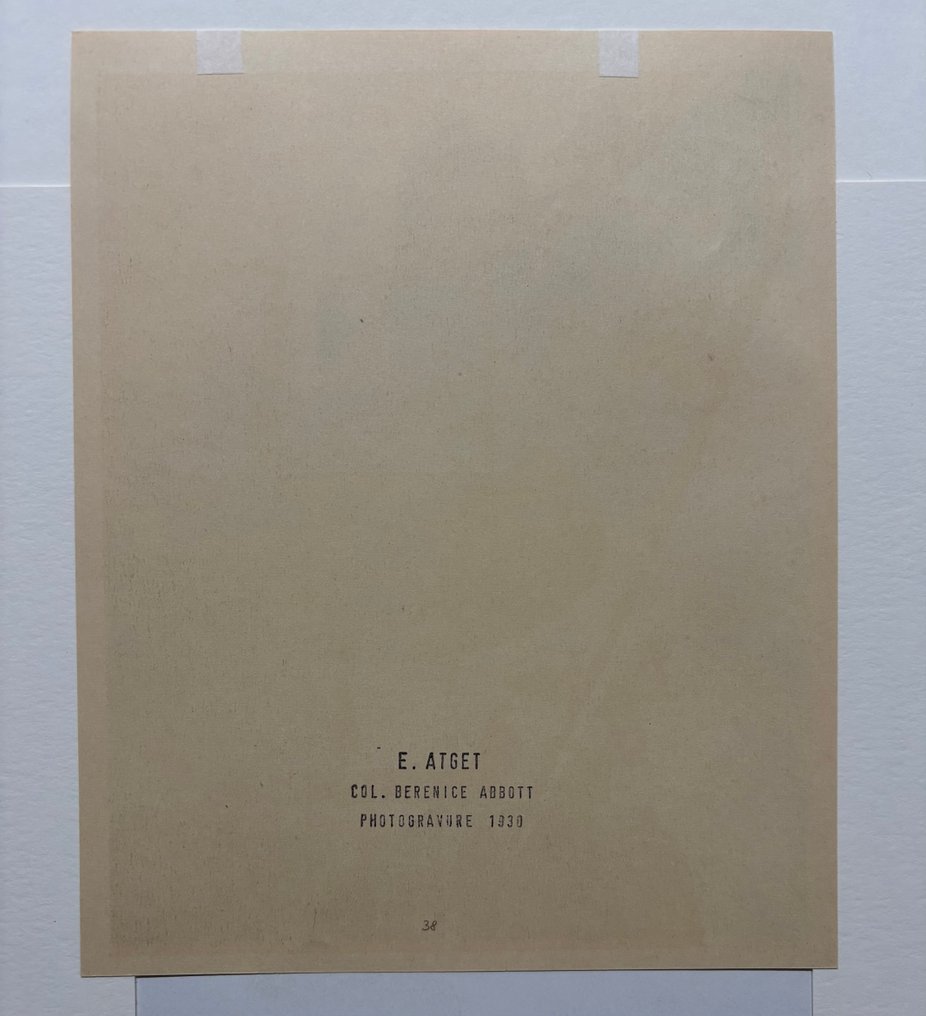
Back with the stamp 'E. ATGET / COL. BERENICE ABBOTT / PHOTOGRAVURE 1930' and marked by a foreign hand in pencil '38'.
Condition: Probably trimmed around the edges, mounted with paper collages on the verso and recto at the top edge in a passepartout. Otherwise, very good condition.
Biography
Eugène Atget was born in 1957 in Libourne, France. In 1878, he moved to Paris to pursue a career as an actor, though without much success. He began photographing in 1888. From 1890, he sold his images, captured with a large-format camera on glass negative plates, as work material to artists, designers, and architects. A large part of his extensive oeuvre, consisting of around 8,500 glass negatives, was sold by Atget in 1920 to French institutions. After his death in 1927, the young photographer Berenice Abbott, who had come to know and appreciate Atget through his friend Man Ray, acquired part of his estate and published the first overview of Atget’s work in 1930, which brought him international recognition posthumously.
Eugène Atget (1857-1927), Notre-Dame de Paris, from quai Montebello.
Light print on chamois-colored vellum, 21 x 16.7 cm on 22.5 x 18.3 cm.
Back with the stamp 'E. ATGET / COL. BERENICE ABBOTT / PHOTOGRAVURE 1930' and marked by a foreign hand in pencil '38'.
Condition: Probably trimmed around the edges, mounted with paper collages on the verso and recto at the top edge in a passepartout. Otherwise, very good condition.
Biography
Eugène Atget was born in 1957 in Libourne, France. In 1878, he moved to Paris to pursue a career as an actor, though without much success. He began photographing in 1888. From 1890, he sold his images, captured with a large-format camera on glass negative plates, as work material to artists, designers, and architects. A large part of his extensive oeuvre, consisting of around 8,500 glass negatives, was sold by Atget in 1920 to French institutions. After his death in 1927, the young photographer Berenice Abbott, who had come to know and appreciate Atget through his friend Man Ray, acquired part of his estate and published the first overview of Atget’s work in 1930, which brought him international recognition posthumously.
Details
Date of print
1930
Artist
Eugène Atget (1857–1927)
Sold by
Owner or reseller
Title of artwork
Nôtre-Dame de Paris, du quai Montebello
Condition
Good condition
Technique
Photogravure
Height
22.5 cm
Width
18.3 cm
Signature
Stamped
Genre
Architecture
Sold by