Lapis lazuli - Turquoise - Necklace - Ankh Cross & Eye of Horus - Blessing of the gods - Protects from evil - Necklace with pendant - Access to eternal life

05
days
08
hours
53
minutes
51
seconds
Starting bid
€ 1
No reserve price

Expert
Selected by Clément Floch
Has 20 years of experience trading curios, including 15 years with a leading French dealer.
Estimate € 110 - € 170
No bids placed
Catawiki Buyer Protection
Your payment’s safe with us until you receive your object.View details
Trustpilot 4.4 | 122813 reviews
Rated Excellent on Trustpilot.
Description from the seller
Turquoise and Lapis lazuli
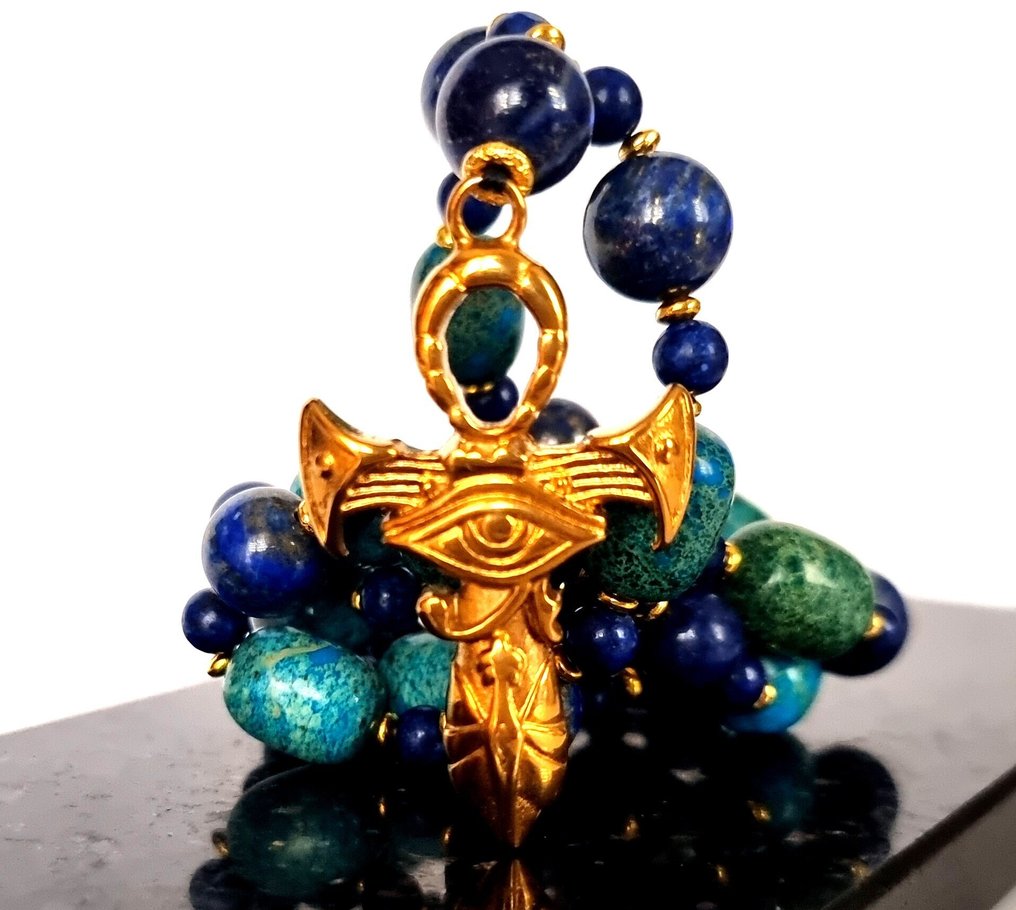
Necklace – Divine Radiance – Ornate – Pendant – Ankh Cross & Eye of Horus.
The Ankh symbolizes eternal life and the sacred union of heaven and earth, while the Eye of Horus watches over, protects, and regenerates the spirit of the wearer.
Dive into the sacred mysteries of ancient Egypt with this finely crafted spiritual necklace, blending the power of natural stones with ancestral divine symbolism.
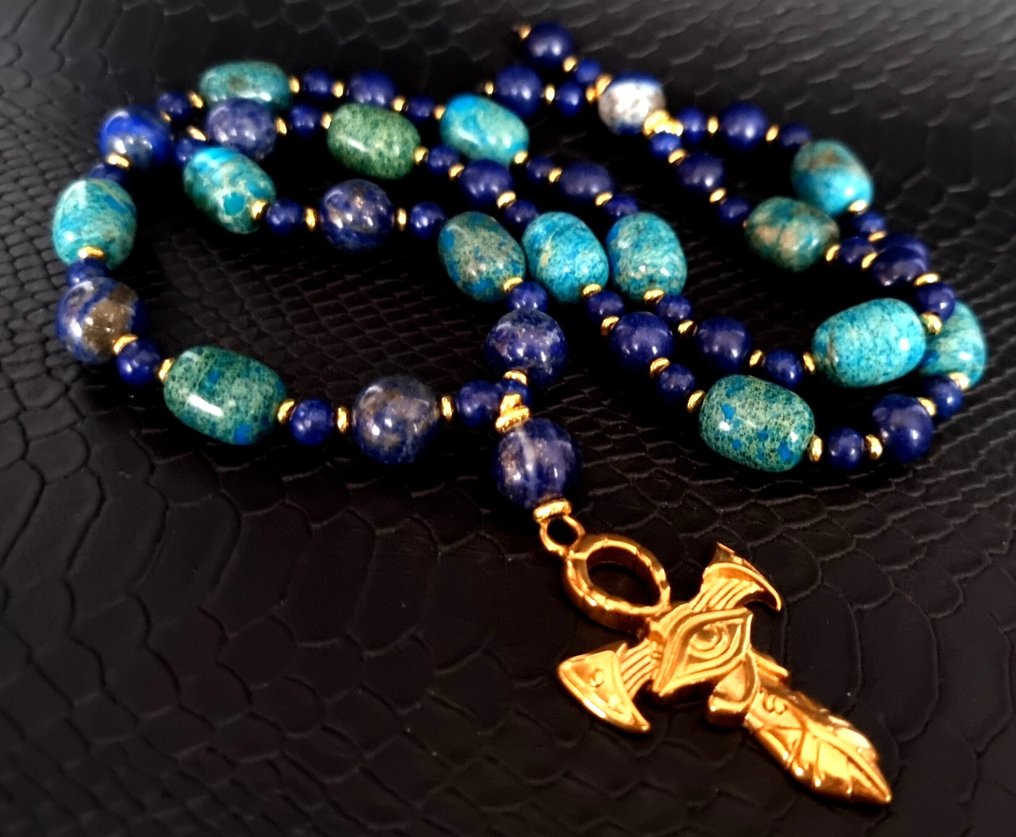
Made up of 72 carefully selected beads, in round and olive shapes, this necklace offers a subtle play of textures and shades.
Turquoise and lapis lazuli, stones revered as sacred in ancient Egypt, reveal sumptuous celestial blues, with veined and starry reflections, evoking the sky, water, and divine protection.
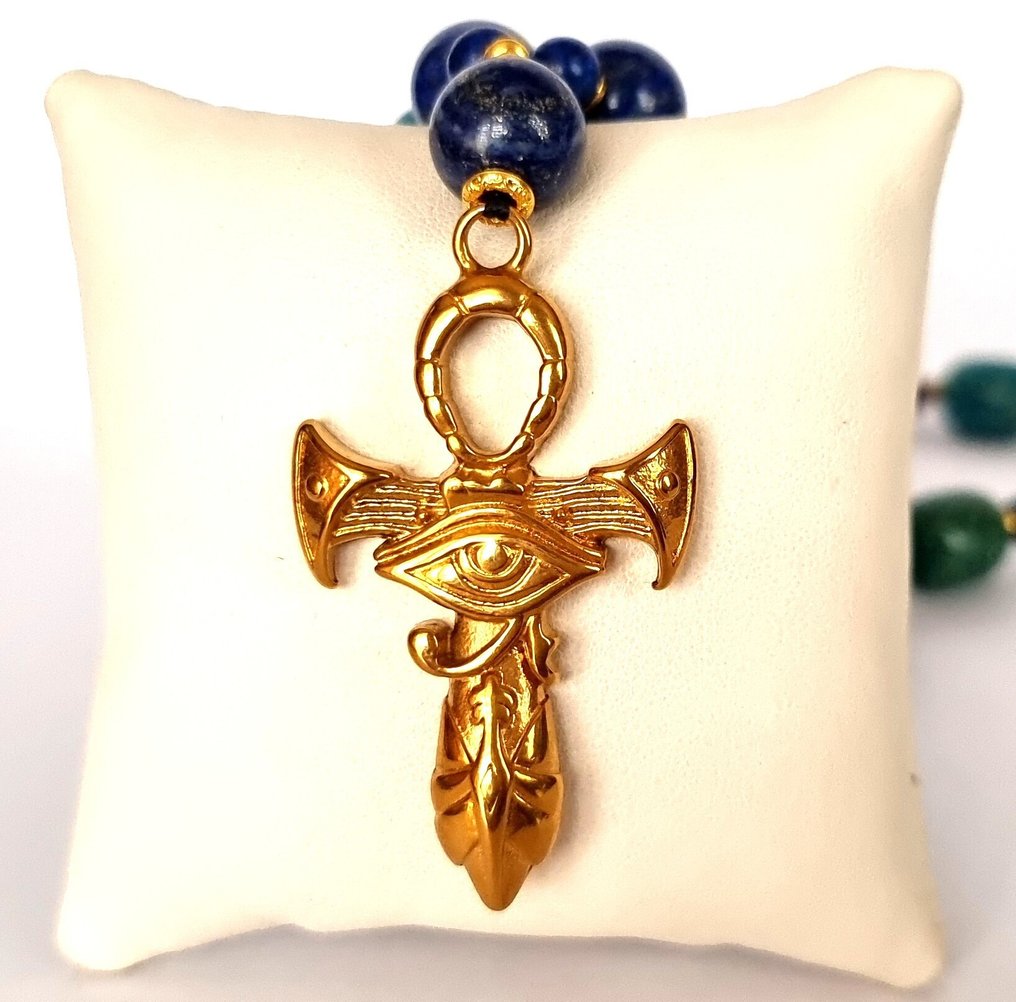
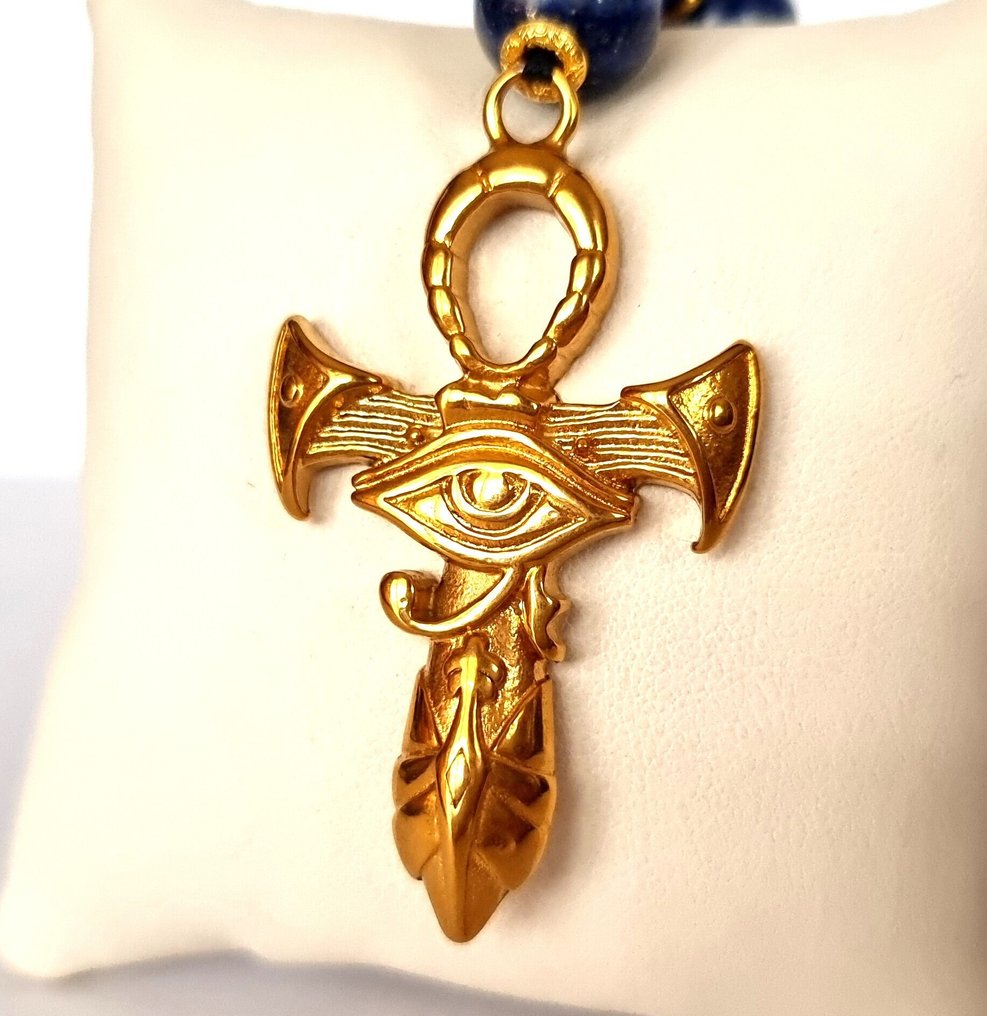
At the very end, a gilded bronze pendant depicts the Ankh cross, a major emblem of pharaonic Egypt, symbolizing vital force, eternal life, and the blessing of the gods.
Adorned with the Eye of Horus (Udjat Eye), this sacred talisman reinforces the virtues of protection, clairvoyance and spiritual healing.
In the Pharaonic tradition:
The Ankh embodies the continuity of the soul after death, the harmony between the earthly and celestial worlds, as well as divine protection.
The Eye of Horus protects against evil forces, watches over the bearer, and guides the spirit towards balance, regeneration, and wisdom.
Much more than a piece of jewelry, this necklace is a symbolic offering, a bridge between the visible and the invisible, intended for those seeking inner light, ancestral wisdom, and profound spiritual protection.
Description:
Circular length: 70 cm
Extension base: = 7 cm
Gilded bronze
1 pendant - Ankh cross, decorated with the Eye of Horus (Oudjat) - (56 x 32 x 5 mm)
Turquoise,
14 olive beads - (16 x 12 mm)
Lapis lazuli
53 round beads - (Diameter: 12, 10, and 6 mm)
Weight: 127.32 g
Including intermediate pearls that are copper-colored and gold-colored.
Handcrafted and unique.
A jewelry box and a protective pouch will be included.
namely
- The Ankh Cross – Symbol of Eternal Life and Immortality,
The Ankh, also known as the Ankh, is one of the most famous and powerful symbols of ancient Egypt. It consists of a cross topped with a loop, forming a silhouette reminiscent of a "T" topped with an oval.
In Egyptian culture, the Ankh symbolized eternal life, immortality, and regeneration. It was closely linked to vitality, continuity of existence, and the spiritual strength of the soul, both in the physical world and in the afterlife.
Considered a sacred sign of the gods, the Ankh frequently appears in representations of Osiris, Isis, and other deities, who hold it in their hand or extend it towards a mortal, thus granting them life or rebirth.
The Ankh is also a symbol of the connection between the earthly and spiritual worlds, affirming that the human soul transcends physical death. It reflects the eternal cycle of life, a sacred link between birth, death, and resurrection.
A Timeless Reach Through the Ages, the Ankh has retained its symbolic power. It is still used today as a spiritual emblem, representing life energy, protection, and awakening consciousness in many contemporary traditions.
- The Eye of Horus (Or Oudjat Eye) – Symbol of Protection, Health and Clairvoyance,
The Eye of Horus, also known as the Eye of Wedjat, is another iconic symbol of ancient Egypt. It embodies divine protection, healing, and clairvoyance. Used as an amulet, it warded off negative energies and protected against unseen forces.
In Egyptian mythology, the Eye of Horus is linked to the story of the falcon god Horus, who lost an eye in battle with Set, the god of chaos. The eye was later restored by Thoth, the god of wisdom, becoming a symbol of restoration, healing, and protective power.
Protection in Life and the Afterlife, the Eye of Wedjat was often depicted on sarcophagi, funerary jewelry, and temples, guaranteeing protection in the afterlife and guiding the deceased toward immortality.
It also served as a ritual offering, invoking the blessing of the gods and cosmic stability (Maat).
In some interpretations, the Eye of Horus merges with the Eye of Ra, the supreme sun god. It then becomes an instrument of divine justice, capable of punishing the enemies of the gods and restoring order to the universe.
The sacred Eye of Horus amulet is considered apotropaic: it repels evil and provides protection, clarity, and balance. It remains, even today, a powerful symbol worn as a talisman of light, wisdom, and inner strength.
La Turquoise
Turquoise has been a sacred gemstone since ancient times, recognized for its protective, balancing, and wise properties. Its celestial blue hue makes it a symbol of inner peace, clarity of mind, and spiritual grounding.
In ancient Egypt, it was associated with the goddess Hathor, a symbol of life, love, and renewal. Used in funerary amulets and royal jewelry, it protected souls on their journey to the afterlife and encouraged divine blessing.
A traveler's stone, it protects against negative energies, strengthens communication and helps restore balance between body, heart and mind.
Naturally porous, it can be stabilized with a clear resin to reinforce its color and solidity, while preserving its spiritual dimension.
- Lapis lazuli,
Lapis lazuli has a deep to intense blue color, sometimes dotted with golden veins of pyrite or white filaments of calcite.
In ancient Egypt, lapis lazuli was a sacred stone, associated with royalty, the afterlife, and divine wisdom.
Used for carving scarabs, funerary masks (such as that of Tutankhamun) and in magical protection rituals.
Considered a shield against negative energies and harmful influences.
Brings inner calm, mental clarity and higher vision.
Lapis lazuli, the royal stone par excellence, was revered by the pharaohs as a gateway to the divine. It symbolizes inner wisdom, mental clarity, celestial protection, and spiritual elevation. Its deep color evokes sacred skies and cosmic eternity.
Symbol of truth, spiritual elevation, and connection to the divine.
Please consider the attached detailed photos for a better impression.
It will be carefully packaged and shipped by UPS for the EU.
Shipments to France and outside the EU will be sent via Colissimo.
Consolidated shipping fees are applied in the same sale.
Turquoise and Lapis lazuli
Necklace – Divine Radiance – Ornate – Pendant – Ankh Cross & Eye of Horus.
The Ankh symbolizes eternal life and the sacred union of heaven and earth, while the Eye of Horus watches over, protects, and regenerates the spirit of the wearer.
Dive into the sacred mysteries of ancient Egypt with this finely crafted spiritual necklace, blending the power of natural stones with ancestral divine symbolism.
Made up of 72 carefully selected beads, in round and olive shapes, this necklace offers a subtle play of textures and shades.
Turquoise and lapis lazuli, stones revered as sacred in ancient Egypt, reveal sumptuous celestial blues, with veined and starry reflections, evoking the sky, water, and divine protection.
At the very end, a gilded bronze pendant depicts the Ankh cross, a major emblem of pharaonic Egypt, symbolizing vital force, eternal life, and the blessing of the gods.
Adorned with the Eye of Horus (Udjat Eye), this sacred talisman reinforces the virtues of protection, clairvoyance and spiritual healing.
In the Pharaonic tradition:
The Ankh embodies the continuity of the soul after death, the harmony between the earthly and celestial worlds, as well as divine protection.
The Eye of Horus protects against evil forces, watches over the bearer, and guides the spirit towards balance, regeneration, and wisdom.
Much more than a piece of jewelry, this necklace is a symbolic offering, a bridge between the visible and the invisible, intended for those seeking inner light, ancestral wisdom, and profound spiritual protection.
Description:
Circular length: 70 cm
Extension base: = 7 cm
Gilded bronze
1 pendant - Ankh cross, decorated with the Eye of Horus (Oudjat) - (56 x 32 x 5 mm)
Turquoise,
14 olive beads - (16 x 12 mm)
Lapis lazuli
53 round beads - (Diameter: 12, 10, and 6 mm)
Weight: 127.32 g
Including intermediate pearls that are copper-colored and gold-colored.
Handcrafted and unique.
A jewelry box and a protective pouch will be included.
namely
- The Ankh Cross – Symbol of Eternal Life and Immortality,
The Ankh, also known as the Ankh, is one of the most famous and powerful symbols of ancient Egypt. It consists of a cross topped with a loop, forming a silhouette reminiscent of a "T" topped with an oval.
In Egyptian culture, the Ankh symbolized eternal life, immortality, and regeneration. It was closely linked to vitality, continuity of existence, and the spiritual strength of the soul, both in the physical world and in the afterlife.
Considered a sacred sign of the gods, the Ankh frequently appears in representations of Osiris, Isis, and other deities, who hold it in their hand or extend it towards a mortal, thus granting them life or rebirth.
The Ankh is also a symbol of the connection between the earthly and spiritual worlds, affirming that the human soul transcends physical death. It reflects the eternal cycle of life, a sacred link between birth, death, and resurrection.
A Timeless Reach Through the Ages, the Ankh has retained its symbolic power. It is still used today as a spiritual emblem, representing life energy, protection, and awakening consciousness in many contemporary traditions.
- The Eye of Horus (Or Oudjat Eye) – Symbol of Protection, Health and Clairvoyance,
The Eye of Horus, also known as the Eye of Wedjat, is another iconic symbol of ancient Egypt. It embodies divine protection, healing, and clairvoyance. Used as an amulet, it warded off negative energies and protected against unseen forces.
In Egyptian mythology, the Eye of Horus is linked to the story of the falcon god Horus, who lost an eye in battle with Set, the god of chaos. The eye was later restored by Thoth, the god of wisdom, becoming a symbol of restoration, healing, and protective power.
Protection in Life and the Afterlife, the Eye of Wedjat was often depicted on sarcophagi, funerary jewelry, and temples, guaranteeing protection in the afterlife and guiding the deceased toward immortality.
It also served as a ritual offering, invoking the blessing of the gods and cosmic stability (Maat).
In some interpretations, the Eye of Horus merges with the Eye of Ra, the supreme sun god. It then becomes an instrument of divine justice, capable of punishing the enemies of the gods and restoring order to the universe.
The sacred Eye of Horus amulet is considered apotropaic: it repels evil and provides protection, clarity, and balance. It remains, even today, a powerful symbol worn as a talisman of light, wisdom, and inner strength.
La Turquoise
Turquoise has been a sacred gemstone since ancient times, recognized for its protective, balancing, and wise properties. Its celestial blue hue makes it a symbol of inner peace, clarity of mind, and spiritual grounding.
In ancient Egypt, it was associated with the goddess Hathor, a symbol of life, love, and renewal. Used in funerary amulets and royal jewelry, it protected souls on their journey to the afterlife and encouraged divine blessing.
A traveler's stone, it protects against negative energies, strengthens communication and helps restore balance between body, heart and mind.
Naturally porous, it can be stabilized with a clear resin to reinforce its color and solidity, while preserving its spiritual dimension.
- Lapis lazuli,
Lapis lazuli has a deep to intense blue color, sometimes dotted with golden veins of pyrite or white filaments of calcite.
In ancient Egypt, lapis lazuli was a sacred stone, associated with royalty, the afterlife, and divine wisdom.
Used for carving scarabs, funerary masks (such as that of Tutankhamun) and in magical protection rituals.
Considered a shield against negative energies and harmful influences.
Brings inner calm, mental clarity and higher vision.
Lapis lazuli, the royal stone par excellence, was revered by the pharaohs as a gateway to the divine. It symbolizes inner wisdom, mental clarity, celestial protection, and spiritual elevation. Its deep color evokes sacred skies and cosmic eternity.
Symbol of truth, spiritual elevation, and connection to the divine.
Please consider the attached detailed photos for a better impression.
It will be carefully packaged and shipped by UPS for the EU.
Shipments to France and outside the EU will be sent via Colissimo.
Consolidated shipping fees are applied in the same sale.
Details
Era
After 2000
Laboratory Report
No laboratory report
Total carat weight of all stones
770.00
Metal
Turquoise - Necklace - Ankh Cross & Eye of Horus - Blessing of the gods - Protects from evil
Brand jewellery
No
Main Stone
Lapis lazuli
Total weight
127.32 g
Surrounding Stones
Turquoise
Condition
Excellent condition - barely used with minimal signs of wear
Gender
Unisex
Title additional information
Access to eternal life
Length
70 cm
Sold by