Chair - Wood, Renaissance style of the early 1900s
07
days
06
hours
45
minutes
37
seconds

17 other people are watching this object
 Bidder 2292 Bidder 2292 | €1 |
|---|
Catawiki Buyer Protection
Your payment’s safe with us until you receive your object.View details
Trustpilot 4.4 | 123053 reviews
Rated Excellent on Trustpilot.
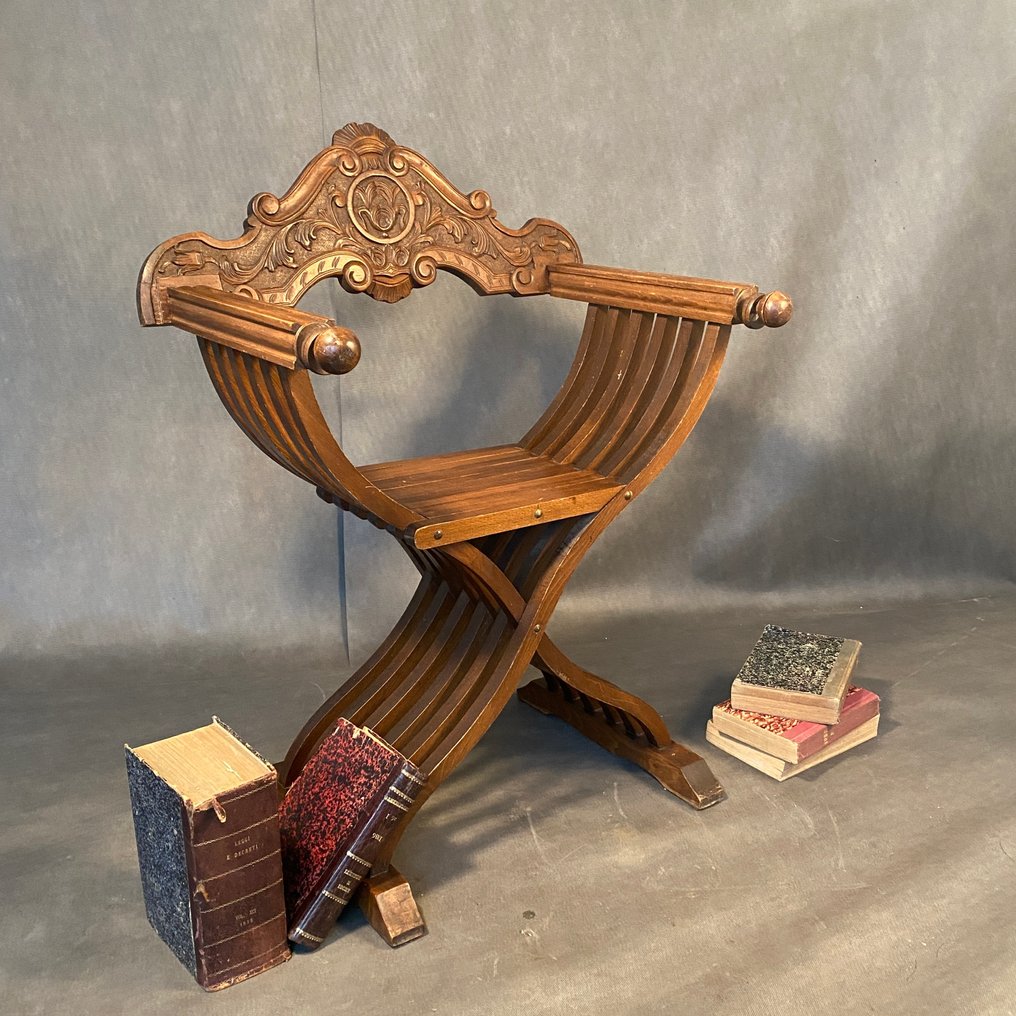
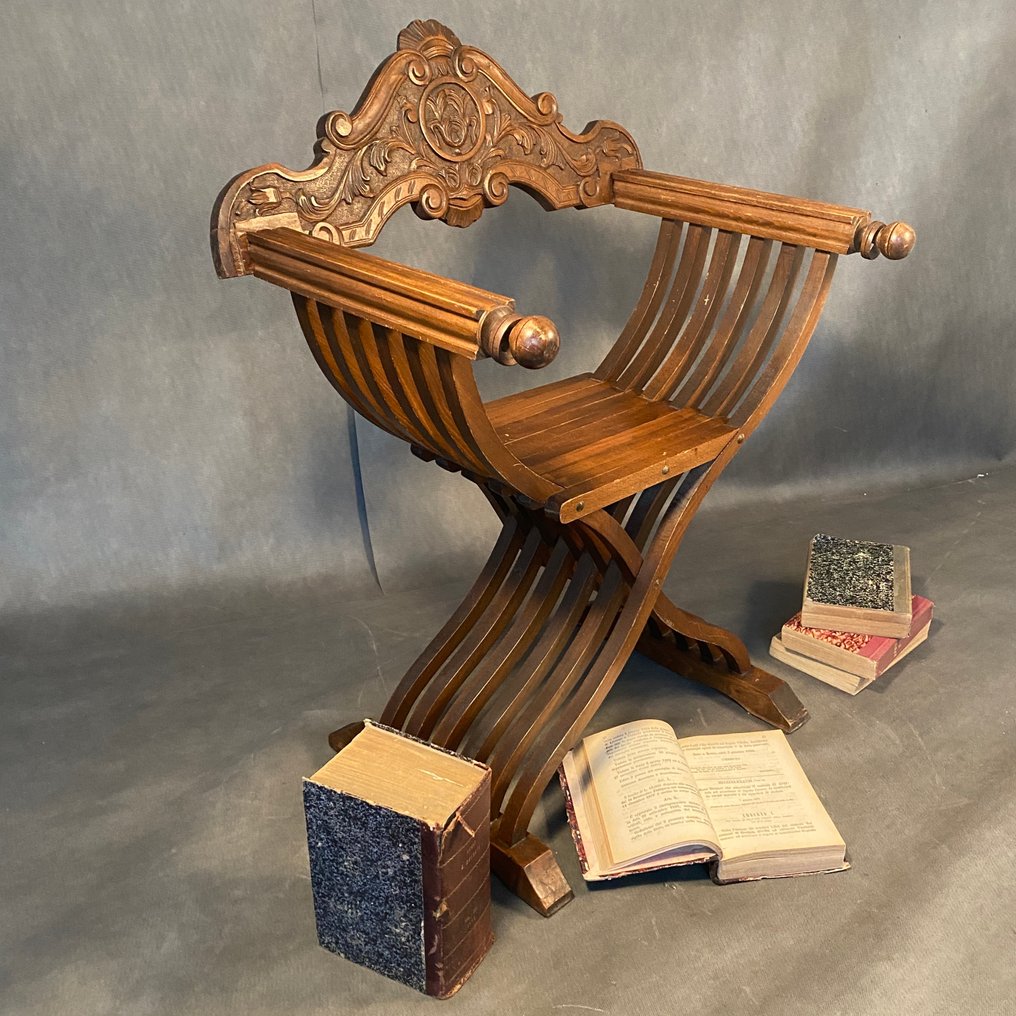
Folding Savonarola-style chair in Renaissance Italian design, dating to the early 20th century, crafted in wood, in good used condition with minor signs of age, dimensions 88 cm high by 66 cm wide by 47 cm deep.
AI-assisted summary
Description from the seller
Elegant foldable chair in Savonarola style, inspired by Italian Renaissance models and dating back to the first half of the twentieth century. A piece of furniture with a strong visual presence, capable of immediately evoking the taste and solemnity of historic interiors.
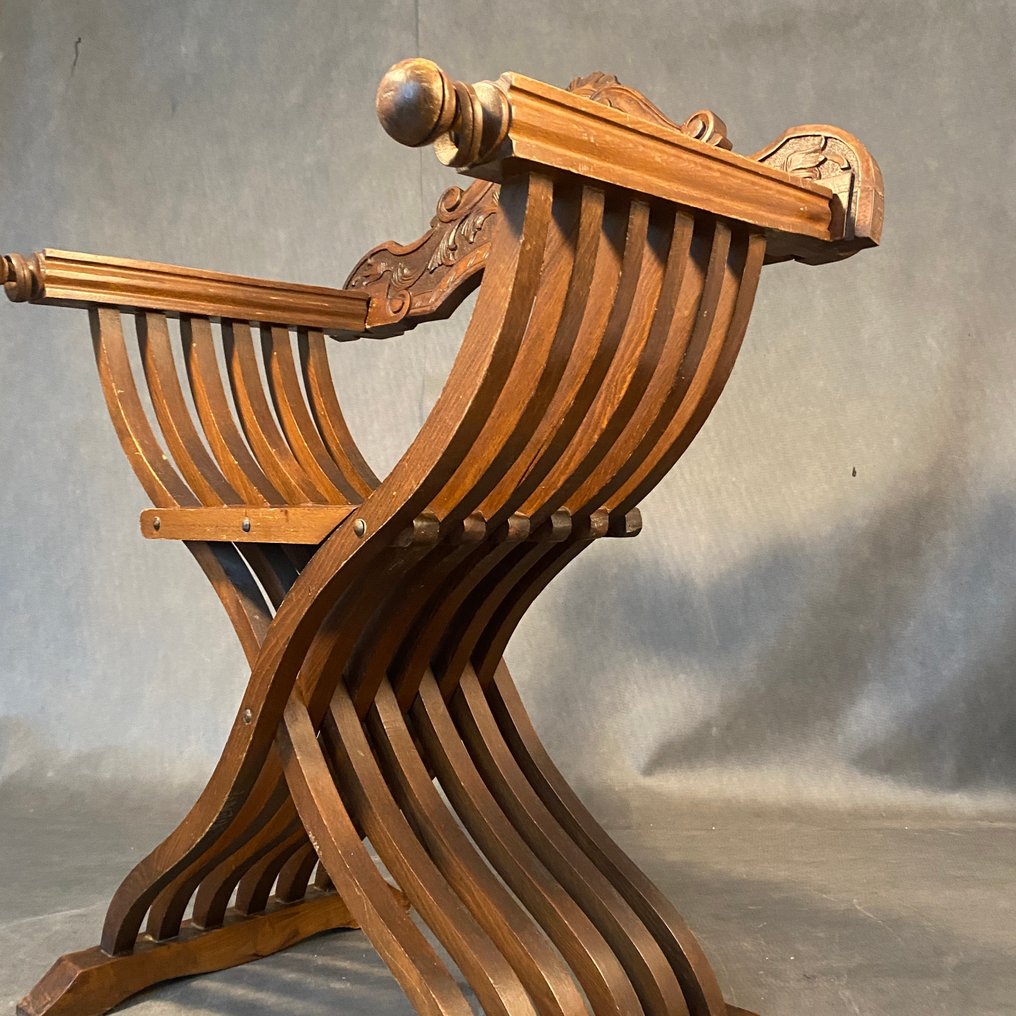
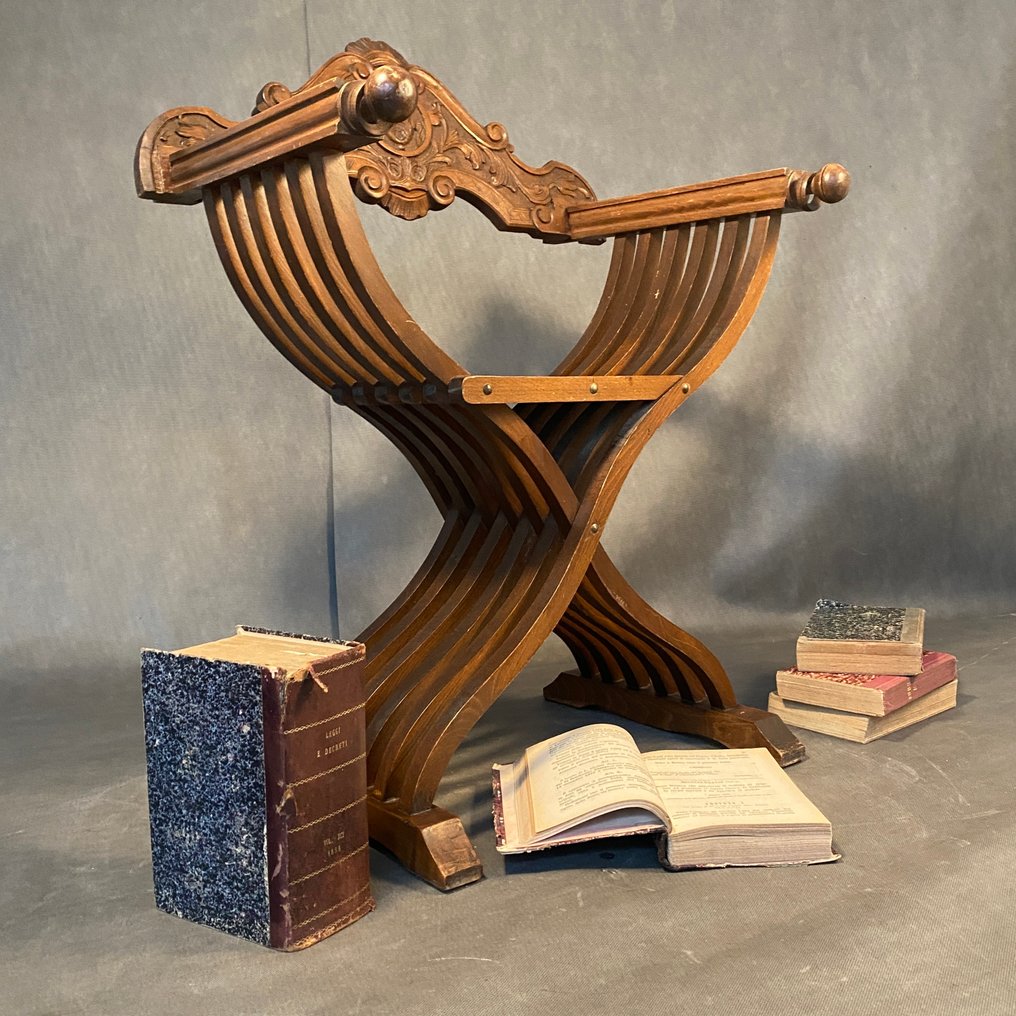
The structure is of the typical scissor type, composed of a series of curved slats that intersect harmoniously, allowing the seat to close while also providing solidity and vertical dynamism. This system, besides being functional, creates a refined play of solids and voids that adds rhythm and movement to the whole.
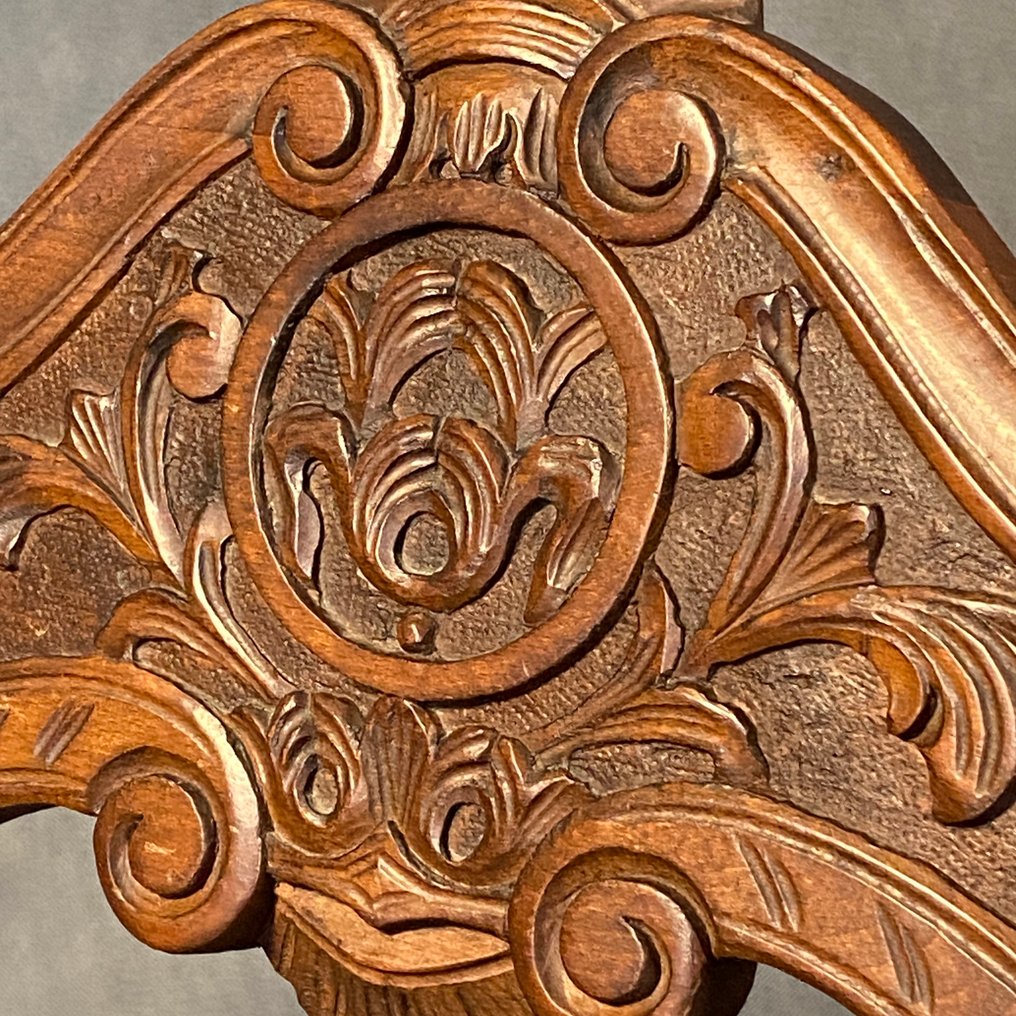
The carved backrest is the most spectacular element: a rich decorative carving in Renaissance style, with scrolls and classical motifs that evoke the historical models of ceremonial seats. The turned and shaped armrests complete the ensemble with balance, making the seat both authoritative and welcoming.
The name 'Savonarola' derives from the tradition that associates this type of seat with the famous Dominican friar Girolamo Savonarola, a central figure of late 15th-century Florence. According to 19th-century usage and historiography, this model of chair — foldable, solemn, inspired by the Roman curule seat — was considered suitable for religious and civil personalities of great moral rigor. Hence the attribution of the name, which later became conventional to refer to this Renaissance-style seat.
Over the centuries, particularly between the late 19th and early 20th centuries, the Savonarola chair was widely reintroduced in Italy as an educated piece of furniture, intended for studies, libraries, reception rooms, and noble environments, becoming a symbol of authority, culture, and classicism.
The wood features a warm and authentic patina, with signs of age that enrich its character without compromising its stability. An ideal piece for those who wish to introduce an element of strong historical identity into a space, capable of harmonizing with antique bookshelves, significant tables, or eclectic interiors with a collector's taste.
Careful packaging and tracked shipping throughout Europe.
Seller's Story
900VINTAGE, every object tells a story, made of time, journeys, and memory. Our passion is to bring to light forgotten treasures, pieces of a distant past that embody the timeless charm of craftsmanship and the style of an era. We are dedicated to the careful search for objects of bygone times, selected with care for their historical and aesthetic value.
Our commitment does not stop at simple discovery: we restore each piece with care, respecting its authenticity and the character that only the passing years can bestow. Whether it's an antique grandmother's trunk, a witness to generations, or a chest that has sailed the oceans on ships of the great migrations, our goal is to preserve the soul of the object, renewing its beauty without betraying its essence.
Every piece of furniture we offer is unique, rich in history, and capable of adding a touch of personality and originality to any space. Choosing 900VINTAGE means not just bringing home an object, but a fragment of history—a piece that will enrich your environment with a timeless soul.
At 900VINTAGE, every object tells a story, one of time, travel, and memory. Our passion is to bring forgotten treasures back to life, pieces from a distant past that embody the timeless charm of craftsmanship and the style of an era. We dedicate ourselves to the meticulous search for objects from times gone by, carefully selected for their historical and aesthetic value. Our commitment goes beyond simple discovery: we carefully restore each piece, respecting its authenticity and the character that only the passing of time can bestow. Whether it's an antique grandmother's trunk, witness to generations, or a chest that has sailed the oceans on ships of great migrations, our goal is to preserve the soul of the object, renewing its beauty without betraying its essence. Every furnishing accessory we offer is unique, rich in history, and capable of giving spaces a touch of personality and originality. By choosing 900VINTAGE, you are not just bringing home an object, but a fragment of history, a piece that will enrich your spaces with a timeless soul.
At 900VINTAGE, each object tells a story—of time, journeys, and memories. Our passion is to breathe new life into forgotten treasures, pieces from a distant past that embody the timeless charm of craftsmanship and the style of a bygone era. We dedicate ourselves to meticulous research of vintage items, carefully selected for their historical and aesthetic value. Our commitment goes beyond mere discovery: we restore each piece with care, respecting its authenticity and the character that only the passage of time can bestow. Whether it's an old trunk that belonged to a grandmother, witness to generations, or a chest that sailed the oceans during great migrations, our goal is to preserve the soul of the object, renewing its beauty without betraying its essence. Every furniture accessory we offer is unique, rich in history, and capable of adding a touch of personality and originality to any space. By choosing 900VINTAGE, you’re not just adopting an object, but a fragment of history—a piece that will enrich your space with a timeless soul.
At 900VINTAGE, every object tells a story: a story of time, journeys, and memories. Our passion is to rescue forgotten treasures, pieces from a distant past that embody the timeless charm of craftsmanship and style from a bygone era. We are dedicated to the meticulous search for vintage items, carefully selected for their historical and aesthetic value. Our commitment goes beyond mere discovery: we diligently restore each piece, respecting its authenticity and the character that only the passage of time can bestow. Whether it's an old grandmother's trunk, a witness to generations, or a chest that has sailed across oceans on ships of great migrations, our goal is to preserve the soul of the object, renewing its beauty without betraying its essence. Every decorative accessory we offer is unique, rich in history, and capable of adding personality and originality to any space. By choosing 900VINTAGE, you are not just taking home an object, but a fragment of history—a piece that will enrich your spaces with a timeless soul.
Translated by Google TranslateElegant foldable chair in Savonarola style, inspired by Italian Renaissance models and dating back to the first half of the twentieth century. A piece of furniture with a strong visual presence, capable of immediately evoking the taste and solemnity of historic interiors.
The structure is of the typical scissor type, composed of a series of curved slats that intersect harmoniously, allowing the seat to close while also providing solidity and vertical dynamism. This system, besides being functional, creates a refined play of solids and voids that adds rhythm and movement to the whole.
The carved backrest is the most spectacular element: a rich decorative carving in Renaissance style, with scrolls and classical motifs that evoke the historical models of ceremonial seats. The turned and shaped armrests complete the ensemble with balance, making the seat both authoritative and welcoming.
The name 'Savonarola' derives from the tradition that associates this type of seat with the famous Dominican friar Girolamo Savonarola, a central figure of late 15th-century Florence. According to 19th-century usage and historiography, this model of chair — foldable, solemn, inspired by the Roman curule seat — was considered suitable for religious and civil personalities of great moral rigor. Hence the attribution of the name, which later became conventional to refer to this Renaissance-style seat.
Over the centuries, particularly between the late 19th and early 20th centuries, the Savonarola chair was widely reintroduced in Italy as an educated piece of furniture, intended for studies, libraries, reception rooms, and noble environments, becoming a symbol of authority, culture, and classicism.
The wood features a warm and authentic patina, with signs of age that enrich its character without compromising its stability. An ideal piece for those who wish to introduce an element of strong historical identity into a space, capable of harmonizing with antique bookshelves, significant tables, or eclectic interiors with a collector's taste.
Careful packaging and tracked shipping throughout Europe.
Seller's Story
900VINTAGE, every object tells a story, made of time, journeys, and memory. Our passion is to bring to light forgotten treasures, pieces of a distant past that embody the timeless charm of craftsmanship and the style of an era. We are dedicated to the careful search for objects of bygone times, selected with care for their historical and aesthetic value.
Our commitment does not stop at simple discovery: we restore each piece with care, respecting its authenticity and the character that only the passing years can bestow. Whether it's an antique grandmother's trunk, a witness to generations, or a chest that has sailed the oceans on ships of the great migrations, our goal is to preserve the soul of the object, renewing its beauty without betraying its essence.
Every piece of furniture we offer is unique, rich in history, and capable of adding a touch of personality and originality to any space. Choosing 900VINTAGE means not just bringing home an object, but a fragment of history—a piece that will enrich your environment with a timeless soul.
At 900VINTAGE, every object tells a story, one of time, travel, and memory. Our passion is to bring forgotten treasures back to life, pieces from a distant past that embody the timeless charm of craftsmanship and the style of an era. We dedicate ourselves to the meticulous search for objects from times gone by, carefully selected for their historical and aesthetic value. Our commitment goes beyond simple discovery: we carefully restore each piece, respecting its authenticity and the character that only the passing of time can bestow. Whether it's an antique grandmother's trunk, witness to generations, or a chest that has sailed the oceans on ships of great migrations, our goal is to preserve the soul of the object, renewing its beauty without betraying its essence. Every furnishing accessory we offer is unique, rich in history, and capable of giving spaces a touch of personality and originality. By choosing 900VINTAGE, you are not just bringing home an object, but a fragment of history, a piece that will enrich your spaces with a timeless soul.
At 900VINTAGE, each object tells a story—of time, journeys, and memories. Our passion is to breathe new life into forgotten treasures, pieces from a distant past that embody the timeless charm of craftsmanship and the style of a bygone era. We dedicate ourselves to meticulous research of vintage items, carefully selected for their historical and aesthetic value. Our commitment goes beyond mere discovery: we restore each piece with care, respecting its authenticity and the character that only the passage of time can bestow. Whether it's an old trunk that belonged to a grandmother, witness to generations, or a chest that sailed the oceans during great migrations, our goal is to preserve the soul of the object, renewing its beauty without betraying its essence. Every furniture accessory we offer is unique, rich in history, and capable of adding a touch of personality and originality to any space. By choosing 900VINTAGE, you’re not just adopting an object, but a fragment of history—a piece that will enrich your space with a timeless soul.
At 900VINTAGE, every object tells a story: a story of time, journeys, and memories. Our passion is to rescue forgotten treasures, pieces from a distant past that embody the timeless charm of craftsmanship and style from a bygone era. We are dedicated to the meticulous search for vintage items, carefully selected for their historical and aesthetic value. Our commitment goes beyond mere discovery: we diligently restore each piece, respecting its authenticity and the character that only the passage of time can bestow. Whether it's an old grandmother's trunk, a witness to generations, or a chest that has sailed across oceans on ships of great migrations, our goal is to preserve the soul of the object, renewing its beauty without betraying its essence. Every decorative accessory we offer is unique, rich in history, and capable of adding personality and originality to any space. By choosing 900VINTAGE, you are not just taking home an object, but a fragment of history—a piece that will enrich your spaces with a timeless soul.
Translated by Google TranslateDetails
Era
1900-2000
Style subtype
Renaissance Style
Country of Origin
Italy
Material
Renaissance style of the early 1900s, Wood
Style
Antique
Condition
Good condition - used with small signs of aging & blemishes
Height
88 cm
Width
66 cm
Depth
47 cm
Estimated Period
1920-1930
Sold by
