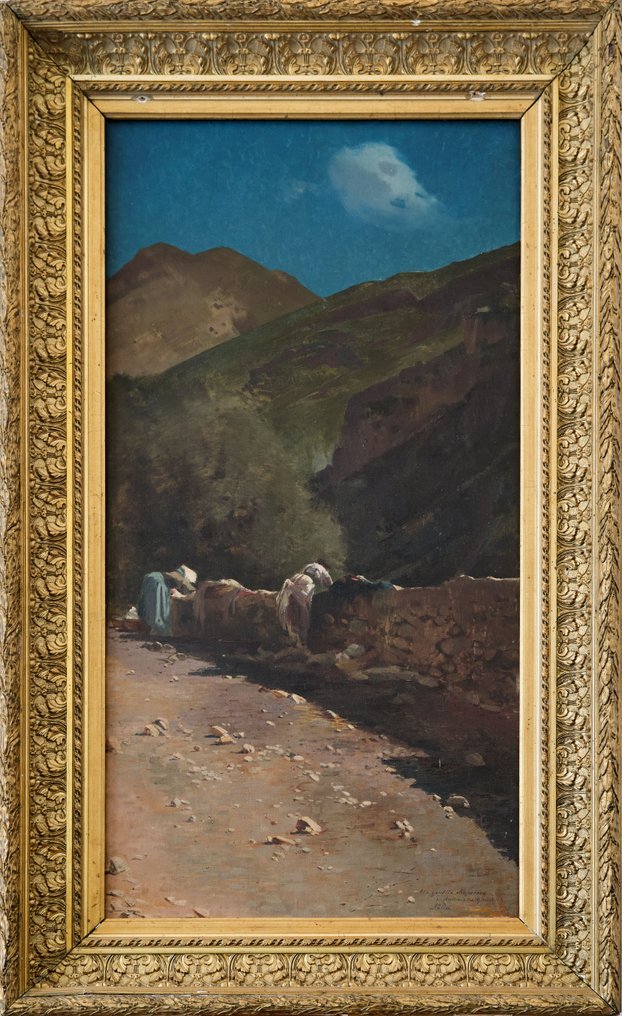
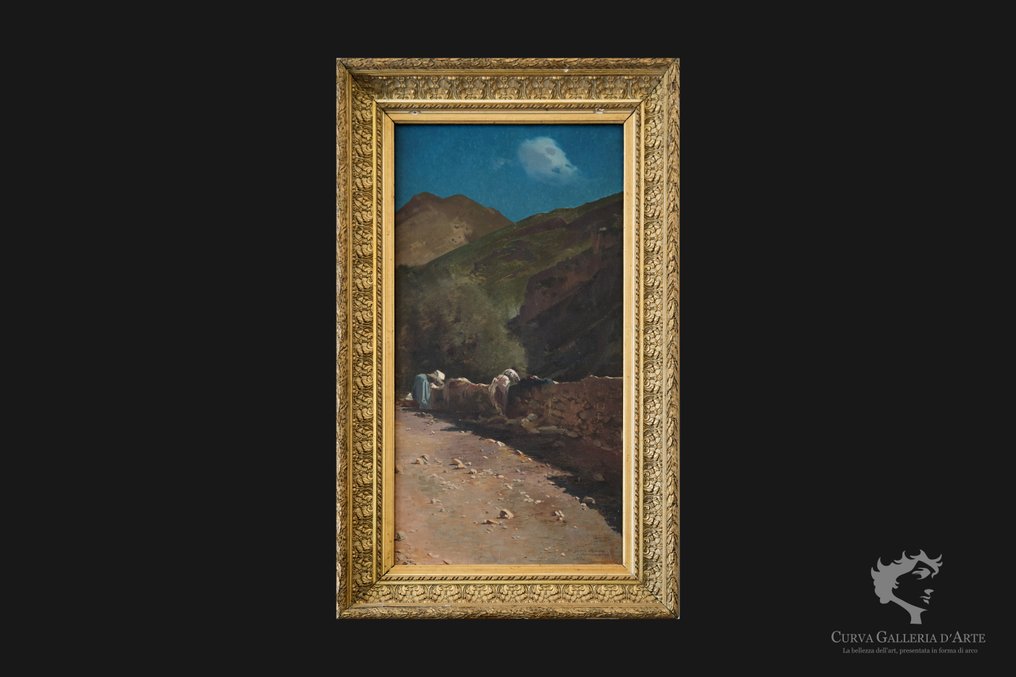
Luigi Pulini (XIX) - Paesaggio campestre con lavandaie


06
days
09
hours
20
minutes
44
seconds
Current bid
€ 110
Reserve price not met

Expert
Selected by Leo Setz
Over 30 years’ experience as art dealer, appraiser and restorer.
Estimate € 600 - € 800
10 other people are watching this object
 Bidder 3166 Bidder 3166 | €110 | |
|---|---|---|
| Bidder 8839 | €100 | |
| Bidder 8839 | €1 |
Catawiki Buyer Protection
Your payment’s safe with us until you receive your object.View details
Trustpilot 4.4 | 122986 reviews
Rated Excellent on Trustpilot.
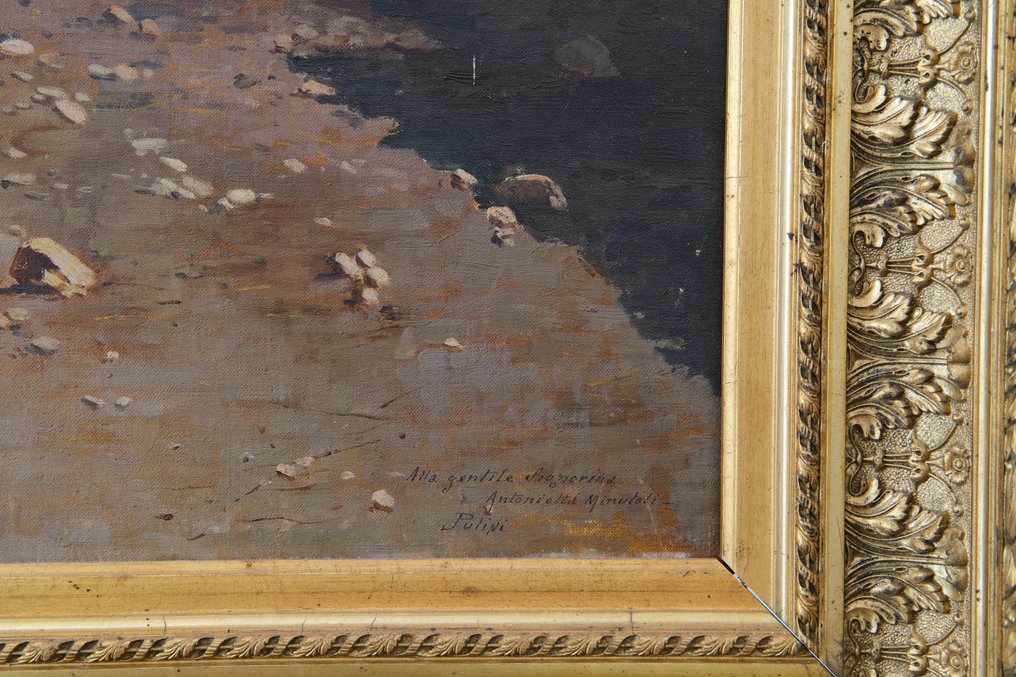
Oil painting by Luigi Pulini (1880), titled Paesaggio campestre con lavandaie, Italian 19th‑century Realism, 88 cm high by 44 cm wide, hand-signed and sold with frame.
AI-assisted summary
Description from the seller
Luigi Pulini, an Italian painter, was mainly known for his landscapes. Born in Sicily, he moved to Rome where he completed his studies. In 1883, in Rome, he exhibited two works: 'Lave sull'Etna' and 'The Tiber near Porta del Popolo in Rome'. In 1884, he participated in the National Exhibition of Turin, presenting the works: 'Prime viole', 'Road in Ciociaria', and other studies. Pulini was often present at Roman exhibitions since the 1880s, but he presented himself as coming from the Marche, while in reality he painted Sicilian landscapes around Catania. Among his most well-known Sicilian works were 'A Morning in Sicily', 'Lava of Etna', and 'Aci Castello near Catania'.
His dedication to landscape painting clearly emerges from the examples displayed at the Turin exhibition, where his paintings conveyed a free and vigorous style with bright colors layered on top, associated with the contemporary technique of 'macchia' painting.
One of the places Pulini was particularly fond of was Catania, and his works vividly depicted the beauty and majesty of Etna, the ever-active volcano that characterizes the region. The idyllic landscape portrayed in his works was a poetic source of inspiration for Mario Rapisardi, a renowned writer and poet from Catania, with whom Pulini maintained a friendly relationship. Some of the works preserved in the 'Biblioteca Museo Mario Rapisardi,' a valuable collection of art and personal objects belonging to the poet, bear affectionate dedications to him and to the 'Signora Rapisardi,' that is Giselda Fojanesi, the wife from whom the poet separated in December 1883.
The Museum Library collection is a true cultural treasure, showcasing Mario Rapisardi's relationships with the Catanese artists of his time, many of whom frequented the cultural circle hosted by the poet in his home. Pulini's works, although few and little known, hold great historical and artistic value, and together with the other pieces displayed in the collection, offer a fascinating portrait of the culture and art of that period.
Luigi Pulini, an Italian painter, was mainly known for his landscapes. Born in Sicily, he moved to Rome where he completed his studies. In 1883, in Rome, he exhibited two works: 'Lave sull'Etna' and 'The Tiber near Porta del Popolo in Rome'. In 1884, he participated in the National Exhibition of Turin, presenting the works: 'Prime viole', 'Road in Ciociaria', and other studies. Pulini was often present at Roman exhibitions since the 1880s, but he presented himself as coming from the Marche, while in reality he painted Sicilian landscapes around Catania. Among his most well-known Sicilian works were 'A Morning in Sicily', 'Lava of Etna', and 'Aci Castello near Catania'.
His dedication to landscape painting clearly emerges from the examples displayed at the Turin exhibition, where his paintings conveyed a free and vigorous style with bright colors layered on top, associated with the contemporary technique of 'macchia' painting.
One of the places Pulini was particularly fond of was Catania, and his works vividly depicted the beauty and majesty of Etna, the ever-active volcano that characterizes the region. The idyllic landscape portrayed in his works was a poetic source of inspiration for Mario Rapisardi, a renowned writer and poet from Catania, with whom Pulini maintained a friendly relationship. Some of the works preserved in the 'Biblioteca Museo Mario Rapisardi,' a valuable collection of art and personal objects belonging to the poet, bear affectionate dedications to him and to the 'Signora Rapisardi,' that is Giselda Fojanesi, the wife from whom the poet separated in December 1883.
The Museum Library collection is a true cultural treasure, showcasing Mario Rapisardi's relationships with the Catanese artists of his time, many of whom frequented the cultural circle hosted by the poet in his home. Pulini's works, although few and little known, hold great historical and artistic value, and together with the other pieces displayed in the collection, offer a fascinating portrait of the culture and art of that period.
Details
Artist
Luigi Pulini (XIX)
Sold with frame
Yes
Title of artwork
Paesaggio campestre con lavandaie
Technique
Oil painting
Signature
Hand signed
Country of Origin
Italy
Year
1880
Condition
Good condition
Height
88 cm
Width
44 cm
Style
Realism
Period
19th century
Sold by
