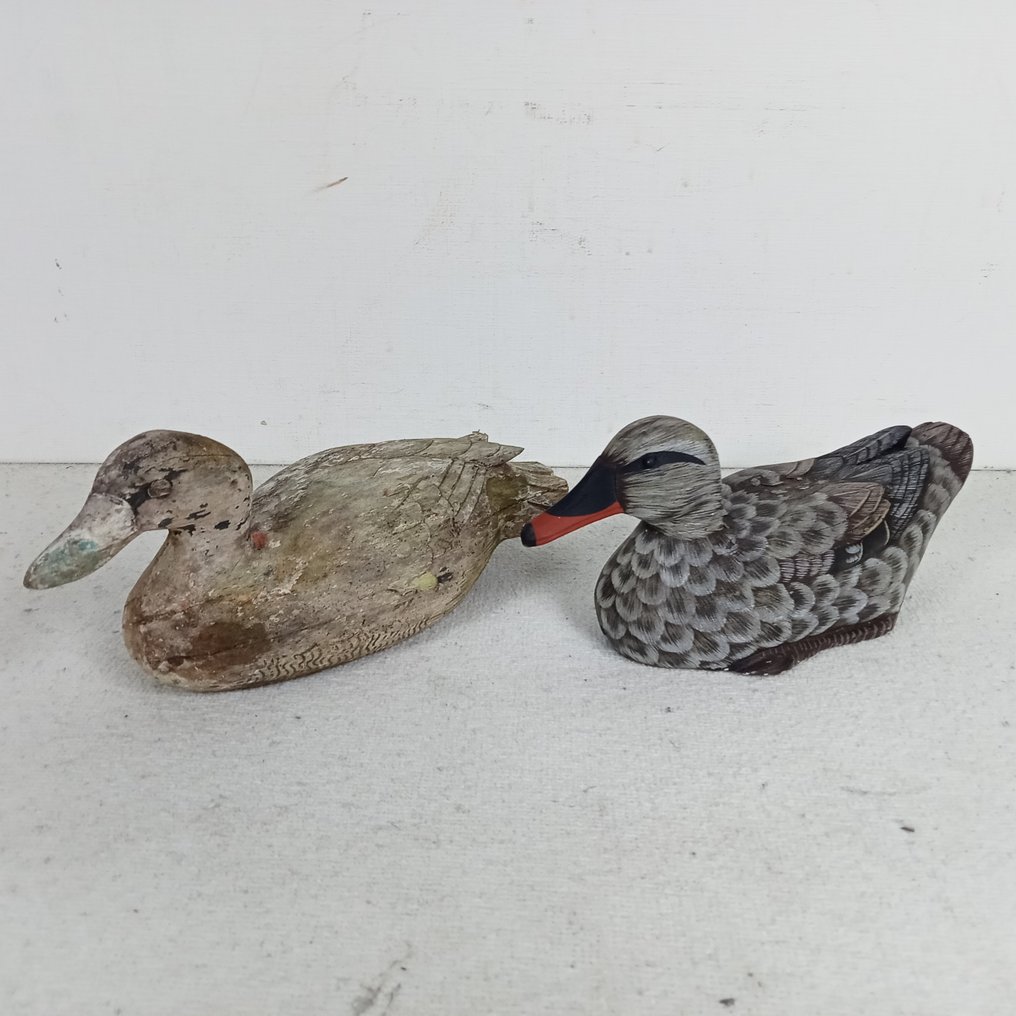
Duck decoy - Lokeend (2) - Wood, Hand-painted wood

02
days
13
hours
10
minutes
28
seconds

23 other people are watching this object
 Bidder 0855 Bidder 0855 | €10 | |
|---|---|---|
| Bidder 6513 | €7 | |
| Bidder 2293 | €6 | |
Catawiki Buyer Protection
Your payment’s safe with us until you receive your object.View details
Trustpilot 4.4 | 123113 reviews
Rated Excellent on Trustpilot.
Two solid wooden hand-painted lokeenden from the Netherlands, dating to circa 1960–1980 in a folk-art style; the larger is 12 cm high, 29 cm wide, 11 cm deep and about 500 g, the smaller 12 cm high, 27 cm wide, 11 cm deep and about 500 g, with visible wear and weathering and possibly missing small parts.
AI-assisted summary
Description from the seller
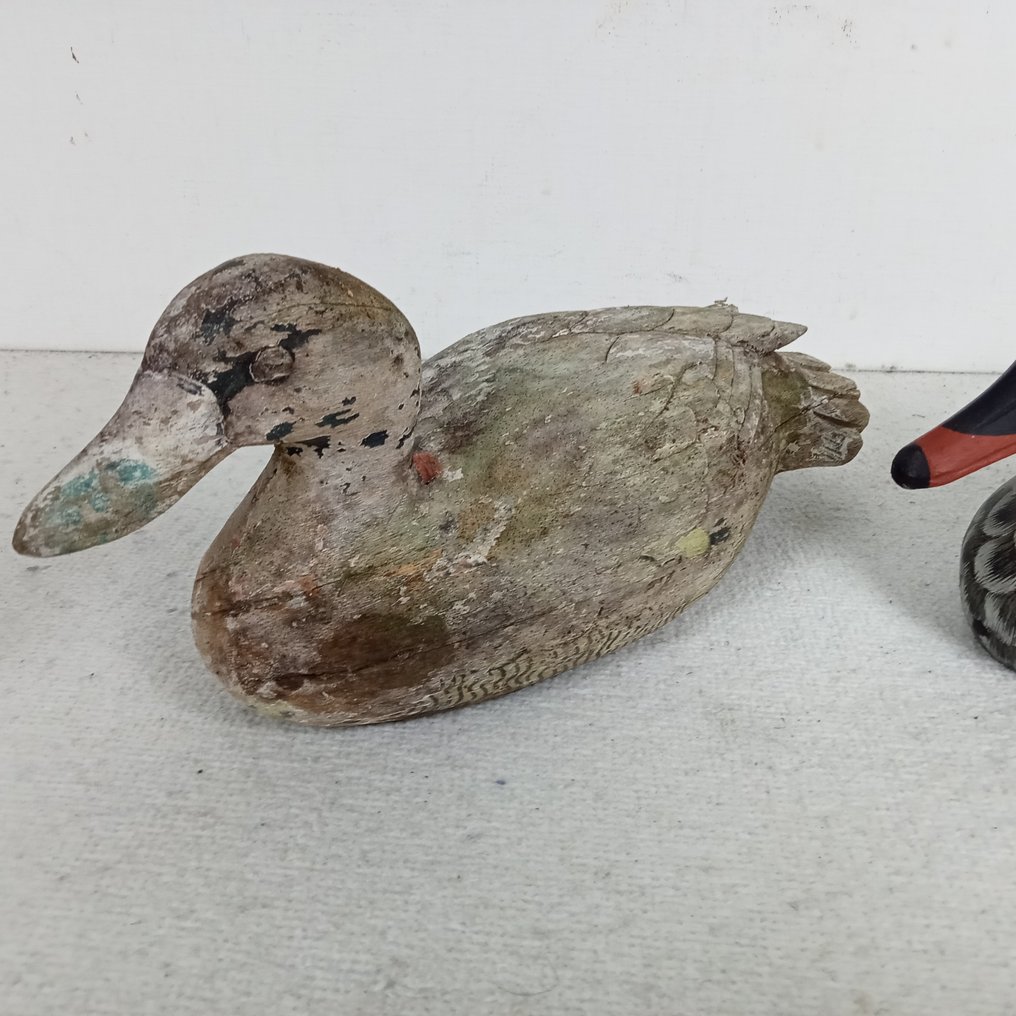
Two very decorative duck decoys, probably from the mid-20th century: The larger one is 12cm high, 11cm deep, 29cm wide, and weighs about 500g. The other is 12cm high, 27cm wide, 11cm deep, and also has a weight of approximately 500g. The ducks are carved from wood and are solid. The type of wood is difficult to determine.
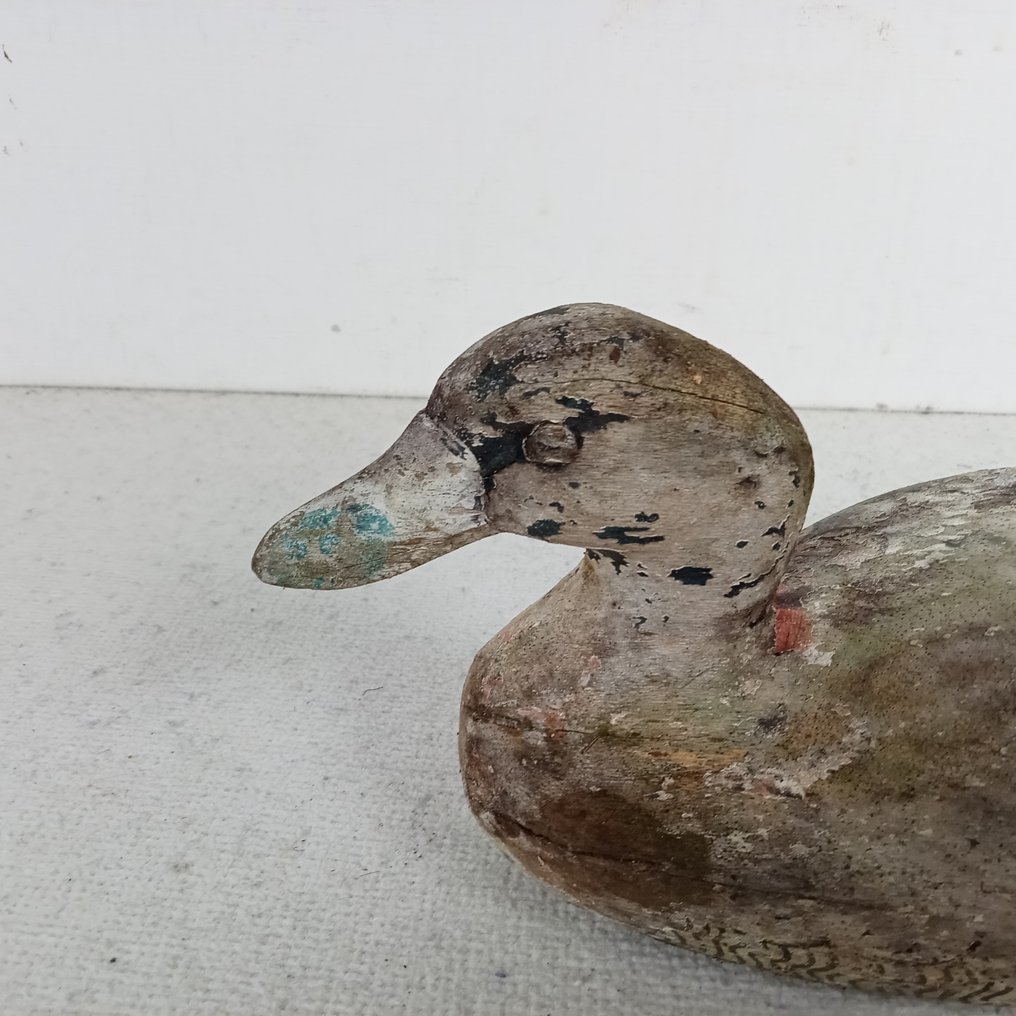
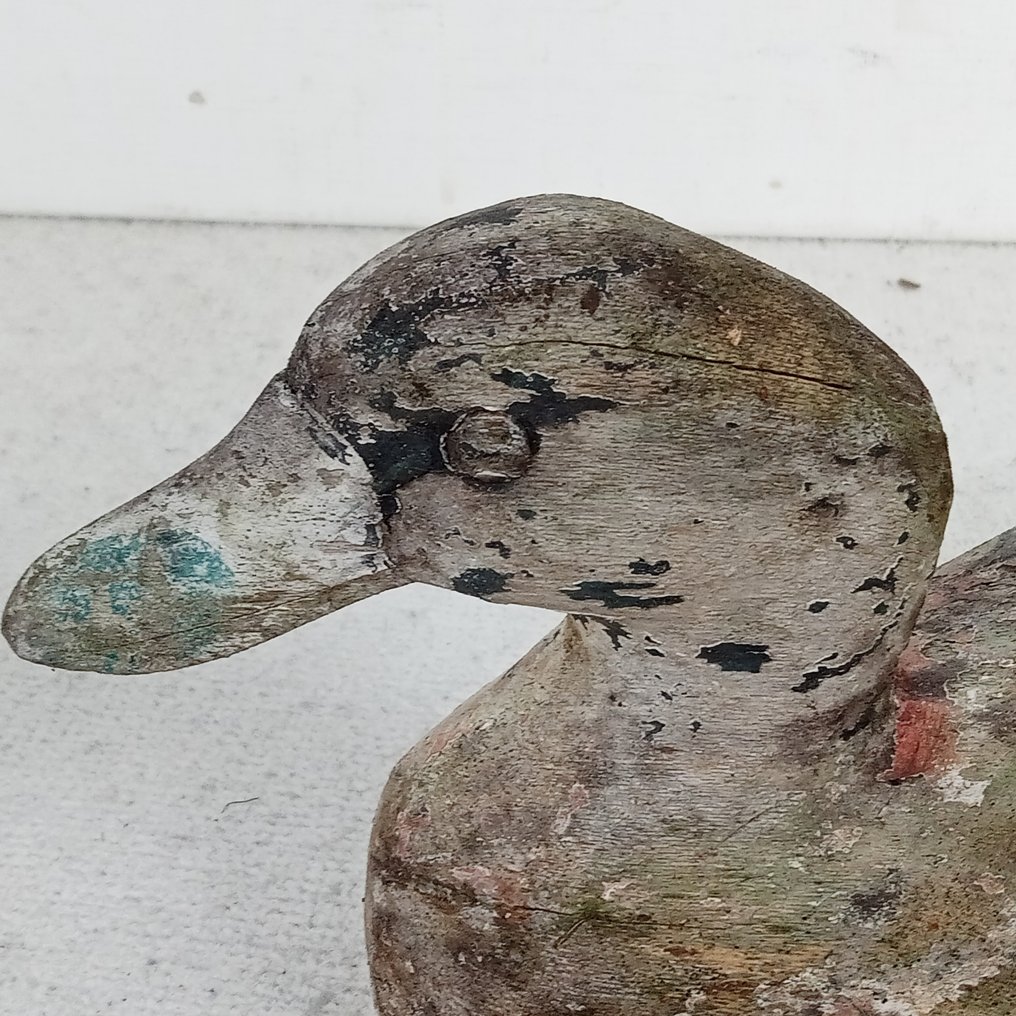
The painting is clear, but on the largest duck, it has faded due to use and weather influences (see photos). The traces of heavy use are clearly visible (photos); very decorative!
The other decoy has a somewhat gray-blue paint job and is much more impressive than the first decoy. It is clearly less used as a decoy.
At the bottom, the wood of both ducks is clearly weathered and cracked (see photos). This is because the underside of the duck was often in contact with moist ground. Due to the effects of moisture and dryness, this cracking has occurred.
These ducks are made in the Netherlands. They were designed for hunting ducks on dry land, such as a meadow. You can see this in two ways. The ducks are painted a bit darker (unlike multicolored decoys often used for water) and they have a flat bottom. The smallest duck has two holes underneath, likely for fixing it in place. Decoys made for floating usually had a slightly sloped bottom (like a boat), often with a lead weight to keep the animal stable in the water.
These ducks are a decorative element in any interior; both modern and more classical.
The decoy ducks are carefully packaged and shipped insured.
Two very decorative duck decoys, probably from the mid-20th century: The larger one is 12cm high, 11cm deep, 29cm wide, and weighs about 500g. The other is 12cm high, 27cm wide, 11cm deep, and also has a weight of approximately 500g. The ducks are carved from wood and are solid. The type of wood is difficult to determine.
The painting is clear, but on the largest duck, it has faded due to use and weather influences (see photos). The traces of heavy use are clearly visible (photos); very decorative!
The other decoy has a somewhat gray-blue paint job and is much more impressive than the first decoy. It is clearly less used as a decoy.
At the bottom, the wood of both ducks is clearly weathered and cracked (see photos). This is because the underside of the duck was often in contact with moist ground. Due to the effects of moisture and dryness, this cracking has occurred.
These ducks are made in the Netherlands. They were designed for hunting ducks on dry land, such as a meadow. You can see this in two ways. The ducks are painted a bit darker (unlike multicolored decoys often used for water) and they have a flat bottom. The smallest duck has two holes underneath, likely for fixing it in place. Decoys made for floating usually had a slightly sloped bottom (like a boat), often with a lead weight to keep the animal stable in the water.
These ducks are a decorative element in any interior; both modern and more classical.
The decoy ducks are carefully packaged and shipped insured.
Details
Era
1900-2000
Weight
500 g
No. of items
2
Style
Folk Art
Title
Lokeend
Country of Origin
Netherlands
Material
Hand-painted wood, Wood
Colour
Multicolour
Condition
Fair condition - heavily used & with possibly minor parts missing
Height
12 cm
Width
29 cm
Depth
11 cm
Estimated Period
1960 - 1980