John Locke - Du Gouvernement Civil, où l'on traitte de l'origine - 1691

11
days
20
hours
11
minutes
38
seconds
Current bid
€ 110
Reserve price not met

Expert
Selected by Volker Riepenhausen
Specialist in travel literature and pre-1600 rare prints with 28 years experience.
Estimate € 1,700 - € 2,500
10 other people are watching this object
 Bidder 3132 Bidder 3132 | €110 | |
|---|---|---|
 Bidder 2290 Bidder 2290 | €100 |
Catawiki Buyer Protection
Your payment’s safe with us until you receive your object.View details
Trustpilot 4.4 | 123113 reviews
Rated Excellent on Trustpilot.
Description from the seller
Locke, John
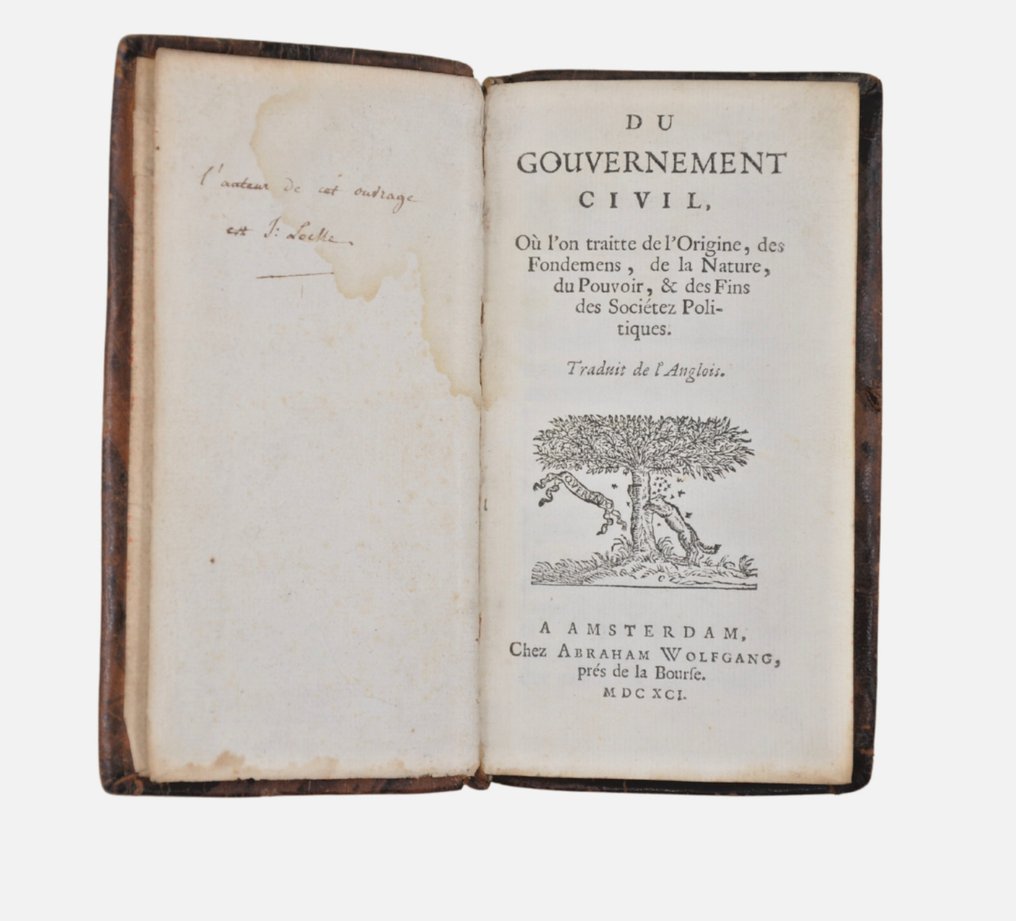
The Civil Government, which discusses the origin, foundations, nature, power, and purposes of political societies. Translated from the English.
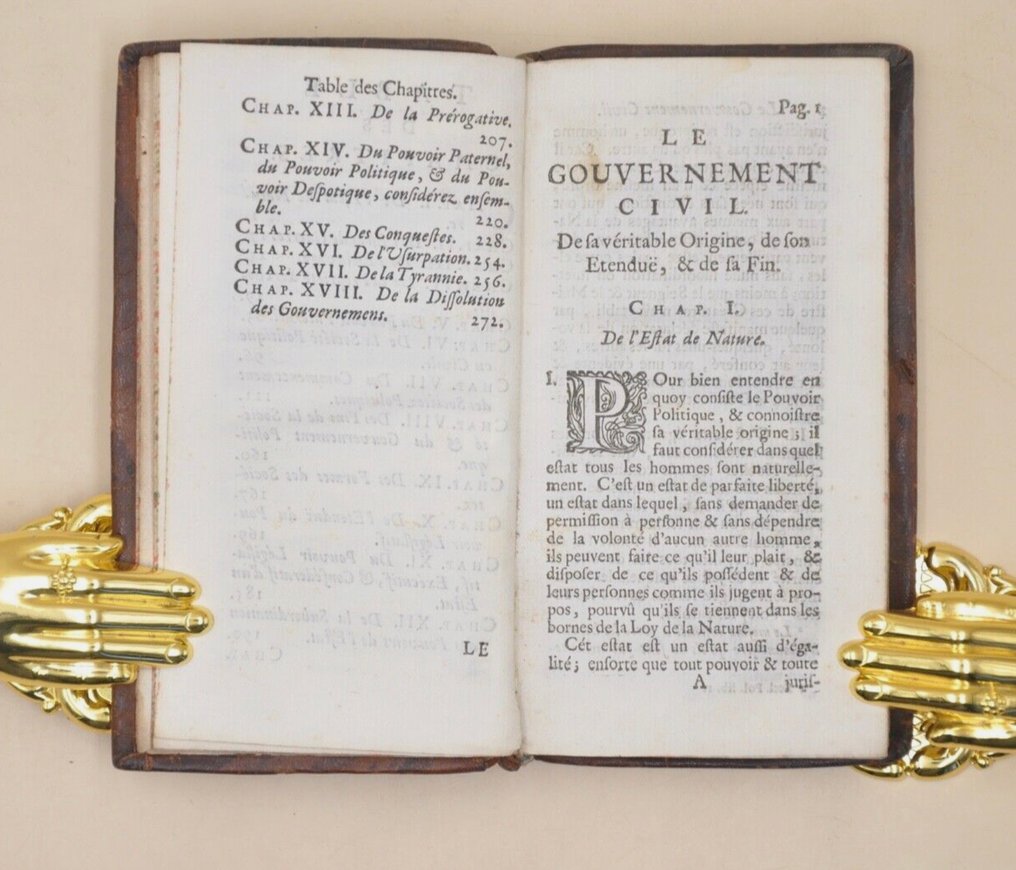
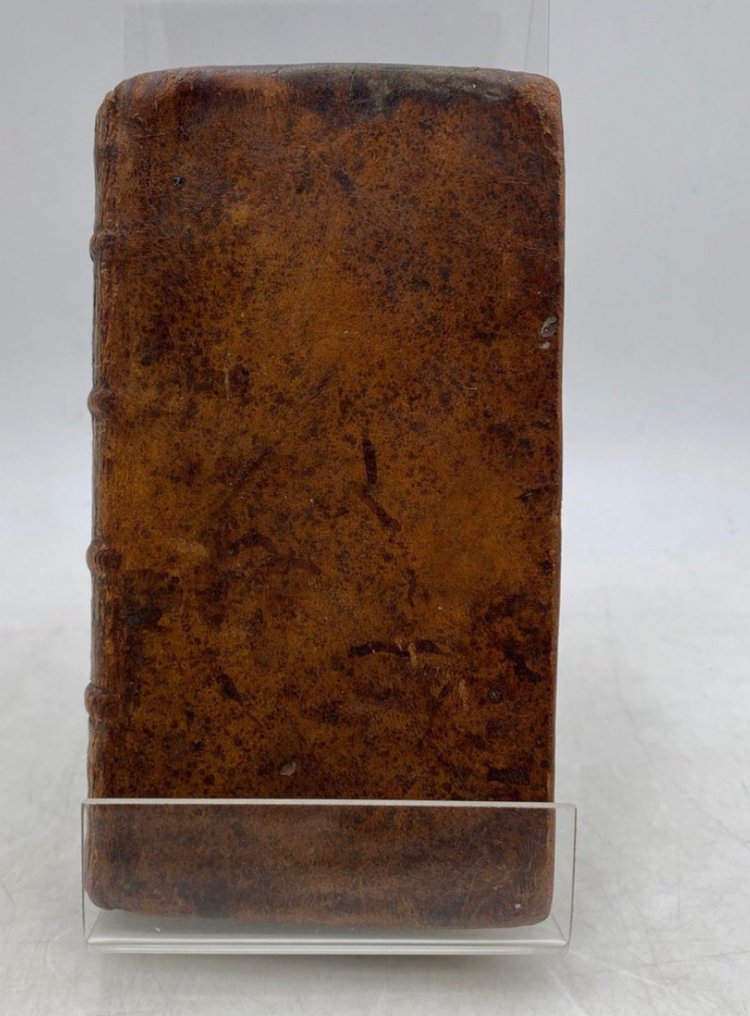
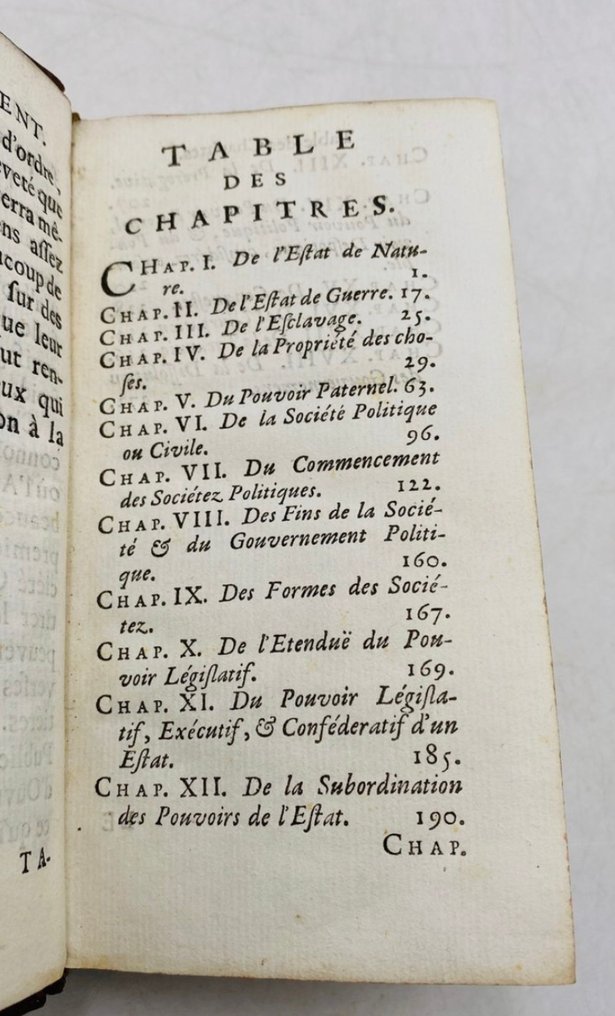
Amsterdam, Abraham Wolfgang, 1691. 12mo, pp. [xii], 321, [1 blank, and bound without the last blank leaf]; woodcut printer's device on the title, a few pages slightly browned or spotted, but very fine copy, in mottled calf of the period, with a gilt tooled spine, red morocco title piece; defective headbands, slightly worn corners; first ownership inscriptions on the title page.
First French edition of Locke's Essay concerning the true original extent and end of civil government, one of the most famous and influential works in the history of liberalism, which initially appeared the previous year as the second of the Two Treatises of Government (1690). The anonymous translator is generally considered to be David Mazel, a 'Huguenot pastor living in Holland' (Yolton); 'it is surprising to note that all translations of this work until 1800 concerned only the second treatise' (ibid.). It is largely thanks to his translation that Locke reached a broad readership on the continent. Mazel's translation provided the French-speaking audience with an anti-absoluteist critique of the French regime, and emanated from the circle of Locke's closest friends. It was through a handful of French-speaking Protestants that the continental public became acquainted with Locke's arguments and came to know him not only as a theoretical philosopher but also as a political theorist—as the author, not of the Two Treatises, but of 'Du Gouvernement' (S.-J. Savonius, 'Locke en français: Le Du Gouvernement Civil de 1691 et ses lecteurs'. The Historical Journal 47:1, March 2004).
Locke, John
The Civil Government, which discusses the origin, foundations, nature, power, and purposes of political societies. Translated from the English.
Amsterdam, Abraham Wolfgang, 1691. 12mo, pp. [xii], 321, [1 blank, and bound without the last blank leaf]; woodcut printer's device on the title, a few pages slightly browned or spotted, but very fine copy, in mottled calf of the period, with a gilt tooled spine, red morocco title piece; defective headbands, slightly worn corners; first ownership inscriptions on the title page.
First French edition of Locke's Essay concerning the true original extent and end of civil government, one of the most famous and influential works in the history of liberalism, which initially appeared the previous year as the second of the Two Treatises of Government (1690). The anonymous translator is generally considered to be David Mazel, a 'Huguenot pastor living in Holland' (Yolton); 'it is surprising to note that all translations of this work until 1800 concerned only the second treatise' (ibid.). It is largely thanks to his translation that Locke reached a broad readership on the continent. Mazel's translation provided the French-speaking audience with an anti-absoluteist critique of the French regime, and emanated from the circle of Locke's closest friends. It was through a handful of French-speaking Protestants that the continental public became acquainted with Locke's arguments and came to know him not only as a theoretical philosopher but also as a political theorist—as the author, not of the Two Treatises, but of 'Du Gouvernement' (S.-J. Savonius, 'Locke en français: Le Du Gouvernement Civil de 1691 et ses lecteurs'. The Historical Journal 47:1, March 2004).
Details
Number of Books
1
Subject
Law
Book Title
Du Gouvernement Civil, où l'on traitte de l'origine
Author/ Illustrator
John Locke
Condition
Very good
Publication year oldest item
1691
Height
13 cm
Edition
1st Edition
Width
7 cm
Language
French
Original language
Yes
Publisher
Abraham Wolfgang
Binding/ Material
Leather
Number of pages
321
Sold by
