Richard Wagner / Arthur Rackham (ill) - The Ring of the Nibelung - 1939



12
days
06
hours
02
minutes
06
seconds

No bids placed
Catawiki Buyer Protection
Your payment’s safe with us until you receive your object.View details
Trustpilot 4.4 | 122986 reviews
Rated Excellent on Trustpilot.
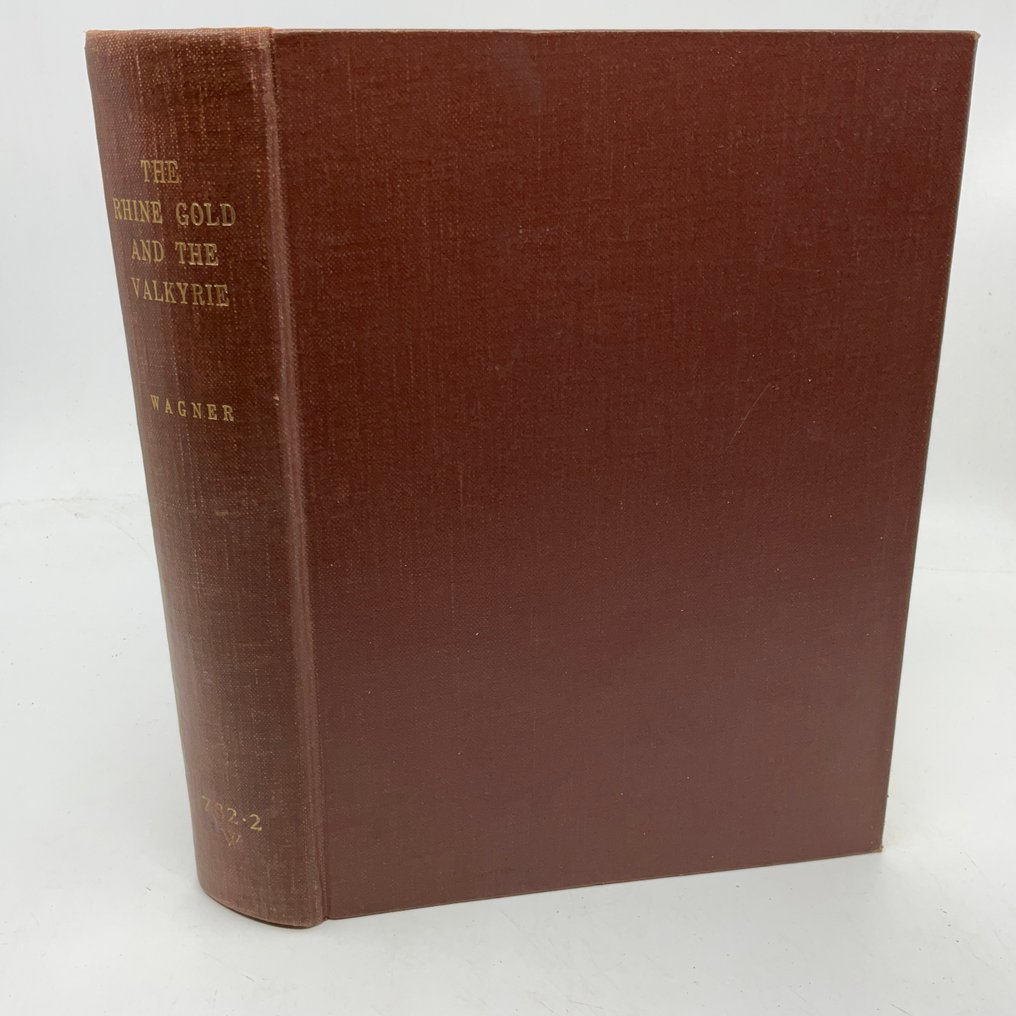
The Ring of the Nibelung: The Rhinegold & The Valkyrie, by Richard Wagner and illustrated by Arthur Rackham, 1939 first edition thus, London hardback with dust jacket, rebound in modern cloth, ex-library markings, complete with all Rackham plates.
AI-assisted summary
Description from the seller
"The Ring of the Nibelung: The Rhinegold & The Valkyrie" by Richard Wagner and illustrated by Arthur Rackham - William Heinemann, London - 1939 first combined UK edition - 25cmx18cm - condition: rebound in modern cloth, name to title page an ffep, ex-lib markings, complete with all Rackham plates.
Der Ring des Nibelungen (The Ring of the Nibelung), WWV 86, is a cycle of four German-language epic music dramas composed by Richard Wagner. The works are based loosely on characters from Germanic heroic legend, namely Norse legendary sagas and the Nibelungenlied. The composer termed the cycle a "Bühnenfestspiel" (stage festival play), structured in three days preceded by a Vorabend ("preliminary evening"). It is often referred to as the Ring cycle, Wagner's Ring, or simply The Ring.
Wagner wrote the libretto and music over the course of about twenty-six years, from 1848 to 1874. The four parts that constitute the Ring cycle are, in sequence:
Das Rheingold (The Rhinegold)
Die Walküre (The Valkyrie)
Siegfried
Götterdämmerung (Twilight of the Gods)
Individual works of the sequence are often performed separately,[1] and indeed the operas contain dialogues that mention events in the previous operas, so that a viewer could watch any of them without having watched the previous parts and still understand the plot. However, Wagner intended them to be performed in series. The first performance as a cycle opened the first Bayreuth Festival in 1876, beginning with Das Rheingold on 13 August and ending with Götterdämmerung on 17 August. Opera stage director Anthony Freud stated that Der Ring des Nibelungen "marks the high-water mark of our art form, the most massive challenge any opera company can undertake."
"The Ring of the Nibelung: The Rhinegold & The Valkyrie" by Richard Wagner and illustrated by Arthur Rackham - William Heinemann, London - 1939 first combined UK edition - 25cmx18cm - condition: rebound in modern cloth, name to title page an ffep, ex-lib markings, complete with all Rackham plates.
Der Ring des Nibelungen (The Ring of the Nibelung), WWV 86, is a cycle of four German-language epic music dramas composed by Richard Wagner. The works are based loosely on characters from Germanic heroic legend, namely Norse legendary sagas and the Nibelungenlied. The composer termed the cycle a "Bühnenfestspiel" (stage festival play), structured in three days preceded by a Vorabend ("preliminary evening"). It is often referred to as the Ring cycle, Wagner's Ring, or simply The Ring.
Wagner wrote the libretto and music over the course of about twenty-six years, from 1848 to 1874. The four parts that constitute the Ring cycle are, in sequence:
Das Rheingold (The Rhinegold)
Die Walküre (The Valkyrie)
Siegfried
Götterdämmerung (Twilight of the Gods)
Individual works of the sequence are often performed separately,[1] and indeed the operas contain dialogues that mention events in the previous operas, so that a viewer could watch any of them without having watched the previous parts and still understand the plot. However, Wagner intended them to be performed in series. The first performance as a cycle opened the first Bayreuth Festival in 1876, beginning with Das Rheingold on 13 August and ending with Götterdämmerung on 17 August. Opera stage director Anthony Freud stated that Der Ring des Nibelungen "marks the high-water mark of our art form, the most massive challenge any opera company can undertake."
Details
Number of Books
1
Subject
Children's books, Illustrated, Literature
Book Title
The Ring of the Nibelung
Author/ Illustrator
Richard Wagner / Arthur Rackham (ill)
Condition
Mixed / Multiple
Publication year oldest item
1939
Edition
1st Edition Thus
Language
English
Original language
Yes
Binding/ Material
Hardback
Extras
Dust jacket
Number of pages
0
Sold by
