Carlo Alfonso Guadagni - Specimen experimentorum naturalium quae singulis annis in illustri Pisano Lyceo. - 1779


10
days
03
hours
53
minutes
57
seconds
Starting bid
€ 1
Reserve price not met

Expert
Selected by Zena Chiara Masud
Holds a master’s degree in bibliography, with seven years of experience specialising in incunabula and Arabic manuscripts.
Estimate € 450 - € 550
No bids placed
Catawiki Buyer Protection
Your payment’s safe with us until you receive your object.View details
Trustpilot 4.4 | 122910 reviews
Rated Excellent on Trustpilot.
Description from the seller
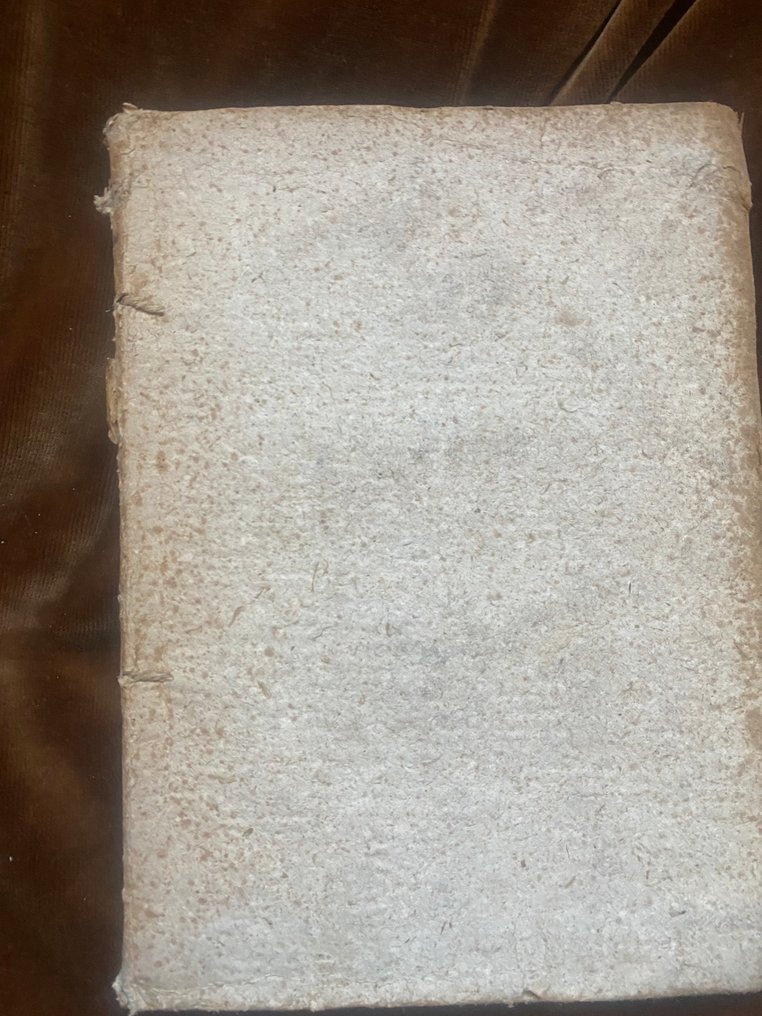
Quarto: 198 pages with nine folding plates. This is the second much augmented edition, bound in contemporary carta rusticana.
Carlo Alfonso Guadagni (1722‑1801), a prominent Italian physicist and physician at Pisa, published Specimen experimentorum naturalium in 1779 as a large collection of over two hundred experiments in natural philosophy. The title indicates that these are experiments “which are shown each year in the illustrious Pisa Lyceum,” meaning they were part of an annual routine of experimental demonstrations at the University of Pisa.
Guadagni’s purpose was pedagogical: the collection functioned as a companion to his public demonstrations, enforcing the importance of empirical observation, the consistency of results, and engagement with experimental physics in education.
There is lots of interest here, including
Experiment on sound in a vacuum
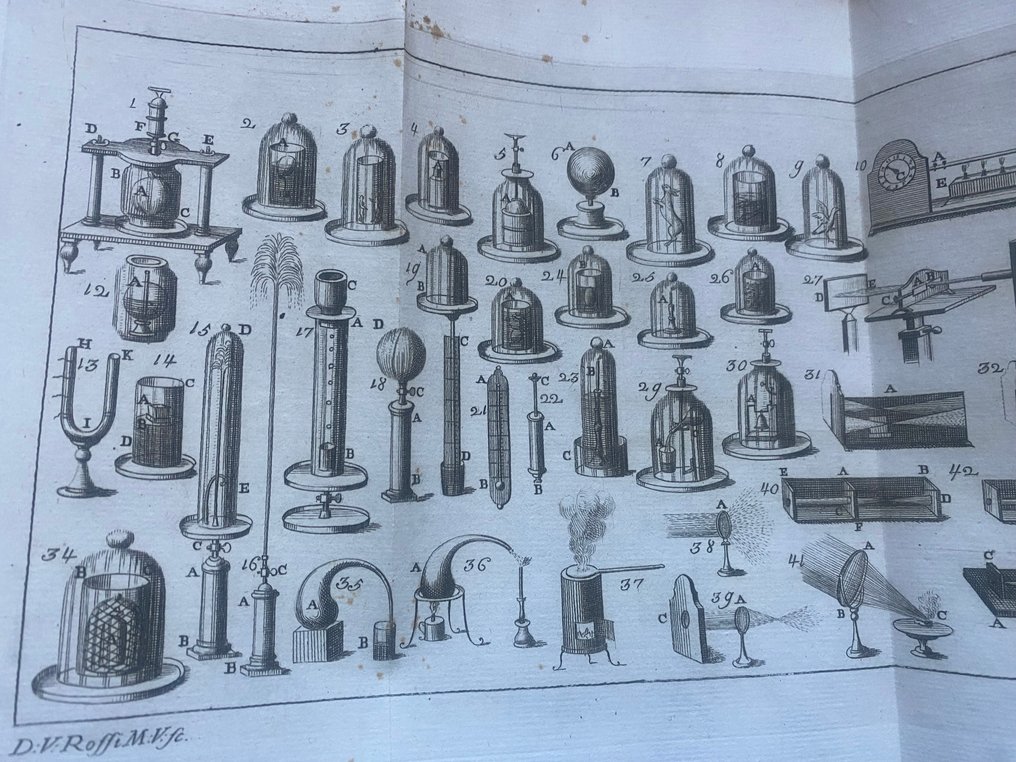
One experiment described involves a tintinnabulum (a kind of small bell) hung by a thread inside a glass globe, which is then evacuated (air pumped out to produce a partial vacuum). The question Guadagni investigates is whether the sound of the bell can still be heard, and whether the tone changes, or if it is entirely suppressed. This is a standard demonstration in classical physics: the propagation of sound requires a medium (air or other), and in a vacuum sound is greatly diminished or lost. This experiment illustrates the nature of sound transmission and is a striking way to show that air (or another medium) is necessary.
Precision and reproducibility of apparatus and method
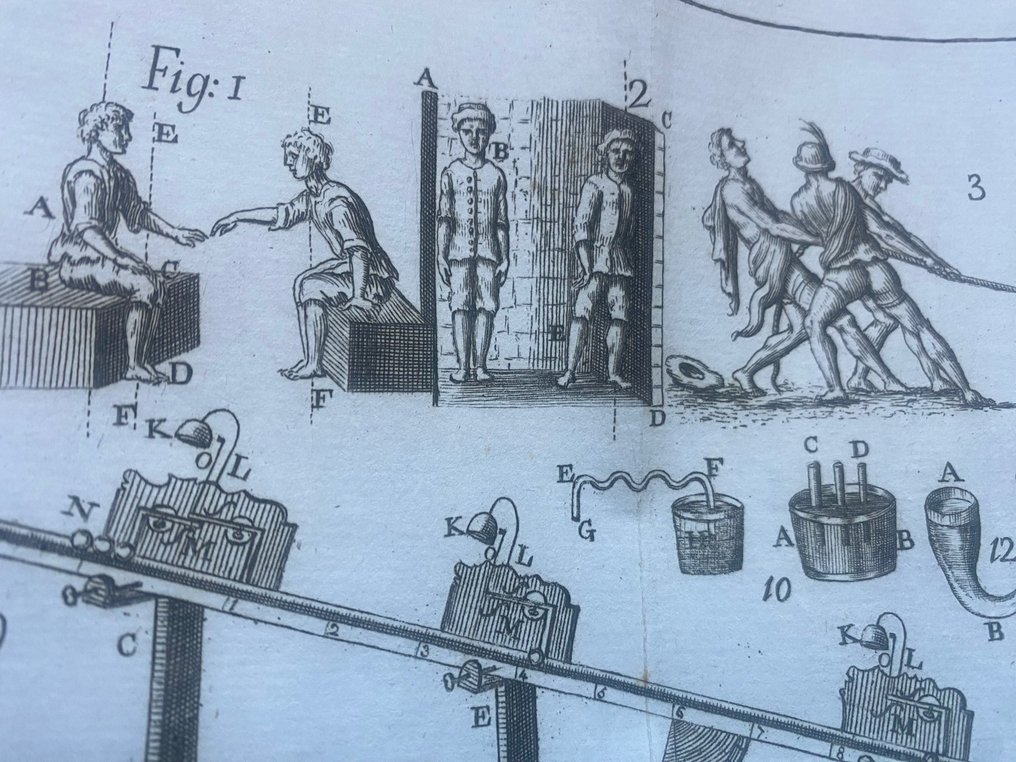
Guadagni emphasizes experiments which test the consistency of instruments and repeatability of observations. For instance, his plates show detailed apparatus; he describes devices such as barometers (including a “portable barometer” in another letter) and their behavior under variable conditions of pressure or altitude. These are less dramatic than vacuum sound, perhaps, but very important in the context of 18th‑century experimental physics.
Experiments with air pressure, vacuums, and rarefied air
Several of the experiments revolve around manipulating air, creating partial vacuums, observing the effect of rarefied air on motion, sound, or other phenomena. This includes studying how sound behaves in thinner air, how objects move, or how air resistance or pressure affects behavior. These experiments tie into the mechanistic physics of the age: what role does the atmosphere play, how do pressure differences work, etc.
An excellent copy of a lovely book, untrimmed and with wide margins.
Quarto: 198 pages with nine folding plates. This is the second much augmented edition, bound in contemporary carta rusticana.
Carlo Alfonso Guadagni (1722‑1801), a prominent Italian physicist and physician at Pisa, published Specimen experimentorum naturalium in 1779 as a large collection of over two hundred experiments in natural philosophy. The title indicates that these are experiments “which are shown each year in the illustrious Pisa Lyceum,” meaning they were part of an annual routine of experimental demonstrations at the University of Pisa.
Guadagni’s purpose was pedagogical: the collection functioned as a companion to his public demonstrations, enforcing the importance of empirical observation, the consistency of results, and engagement with experimental physics in education.
There is lots of interest here, including
Experiment on sound in a vacuum
One experiment described involves a tintinnabulum (a kind of small bell) hung by a thread inside a glass globe, which is then evacuated (air pumped out to produce a partial vacuum). The question Guadagni investigates is whether the sound of the bell can still be heard, and whether the tone changes, or if it is entirely suppressed. This is a standard demonstration in classical physics: the propagation of sound requires a medium (air or other), and in a vacuum sound is greatly diminished or lost. This experiment illustrates the nature of sound transmission and is a striking way to show that air (or another medium) is necessary.
Precision and reproducibility of apparatus and method
Guadagni emphasizes experiments which test the consistency of instruments and repeatability of observations. For instance, his plates show detailed apparatus; he describes devices such as barometers (including a “portable barometer” in another letter) and their behavior under variable conditions of pressure or altitude. These are less dramatic than vacuum sound, perhaps, but very important in the context of 18th‑century experimental physics.
Experiments with air pressure, vacuums, and rarefied air
Several of the experiments revolve around manipulating air, creating partial vacuums, observing the effect of rarefied air on motion, sound, or other phenomena. This includes studying how sound behaves in thinner air, how objects move, or how air resistance or pressure affects behavior. These experiments tie into the mechanistic physics of the age: what role does the atmosphere play, how do pressure differences work, etc.
An excellent copy of a lovely book, untrimmed and with wide margins.
Details
Number of Books
1
Subject
Physics, Science
Book Title
Specimen experimentorum naturalium quae singulis annis in illustri Pisano Lyceo.
Author/ Illustrator
Carlo Alfonso Guadagni
Condition
Fine
Publication year oldest item
1779
Height
23 cm
Edition
1st Edition Thus
Width
18 cm
Language
Latin
Original language
Yes
Publisher
Pisa: J.D. Carotti
Binding/ Material
Softback
Extras
Fold out maps or plates, Tipped in plates
Number of pages
200
Sold by
