Alfons Heyking - Problems Confronting Russia - 1918
Opens tomorrow
Starting bid
€ 1
Add to your favourites to get an alert when the auction starts.

Expert
Selected by Volker Riepenhausen
Specialist in travel literature and pre-1600 rare prints with 28 years experience.
Estimate € 150 - € 200
Catawiki Buyer Protection
Your payment’s safe with us until you receive your object.View details
Trustpilot 4.4 | 123113 reviews
Rated Excellent on Trustpilot.
Description from the seller
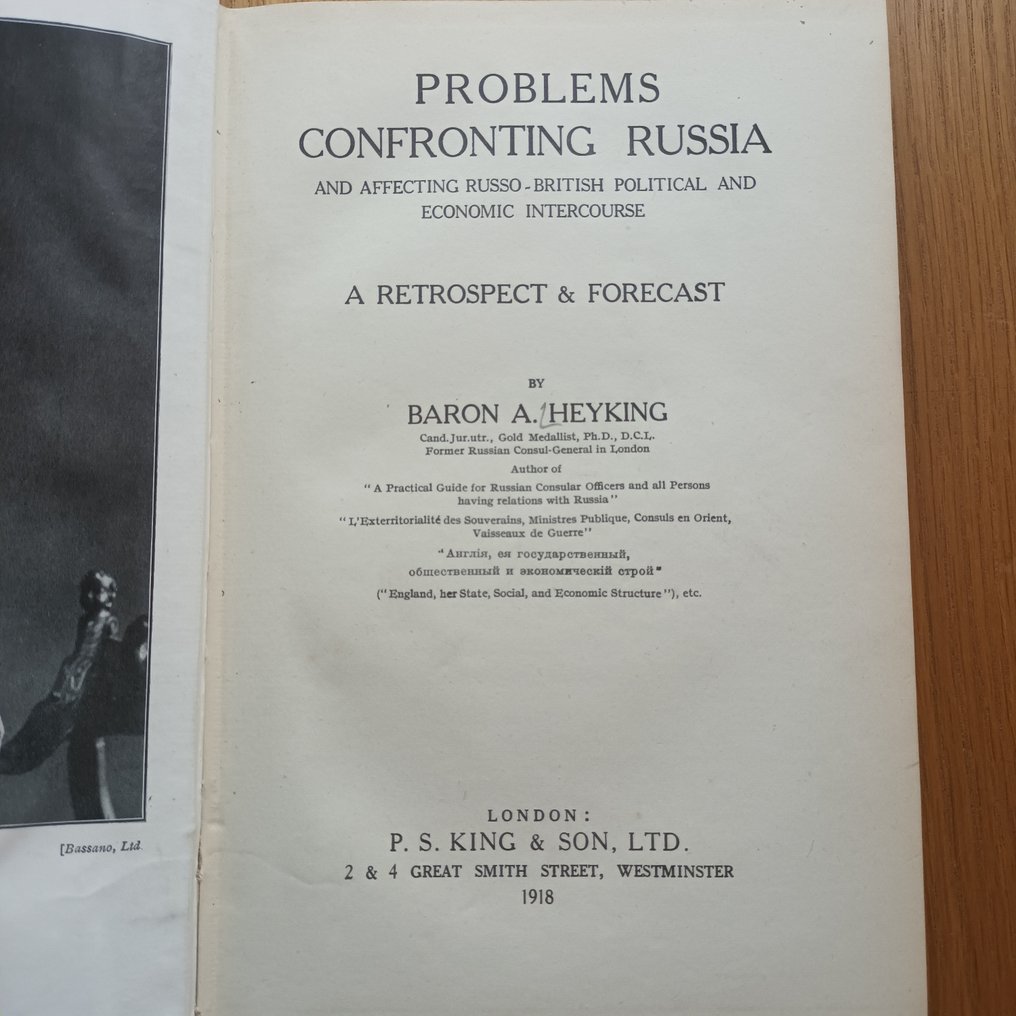
Baron Alfons von Heyking
Problems confronting Russia and affecting Russo-British political and economic intercourse; a retrospect & forecast
P.S. King & Son, London, 1918
xvi, 219 pages frontispiece (portrait) 22 cm
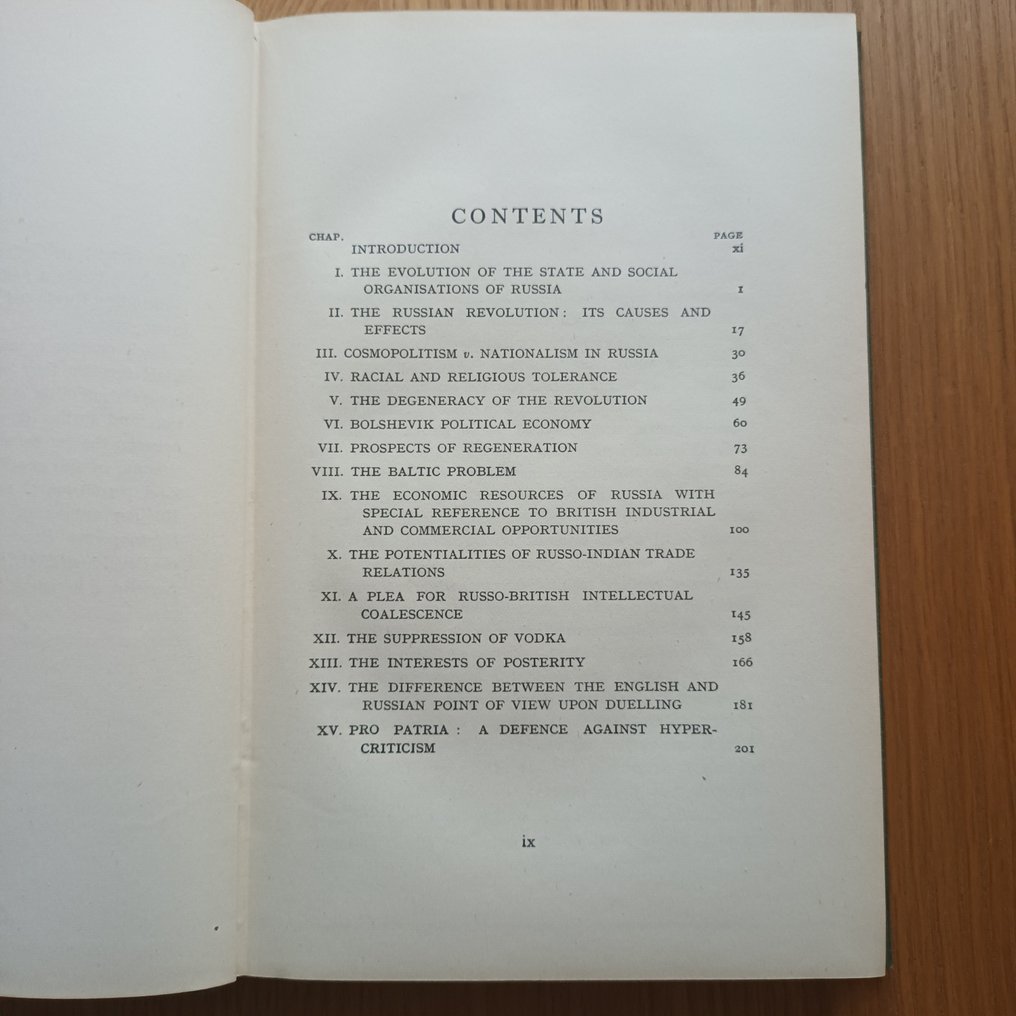
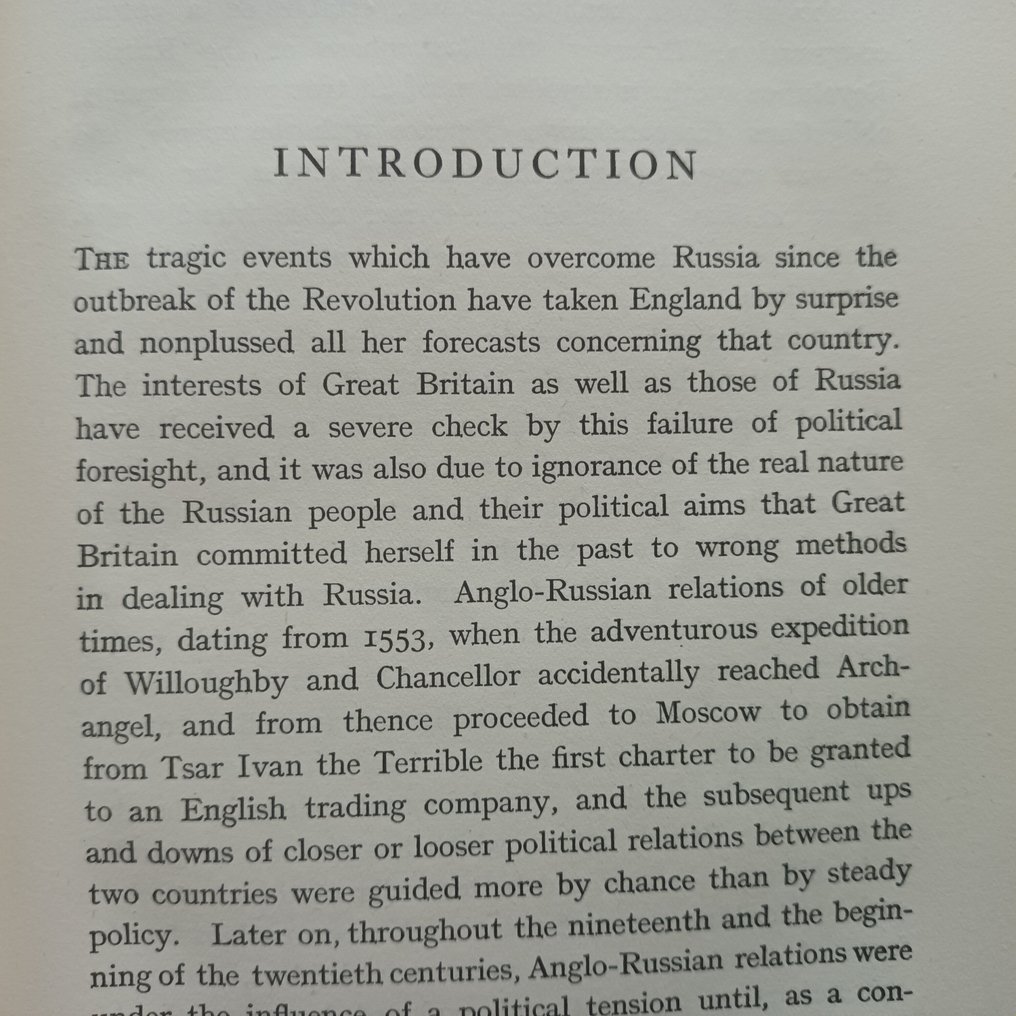
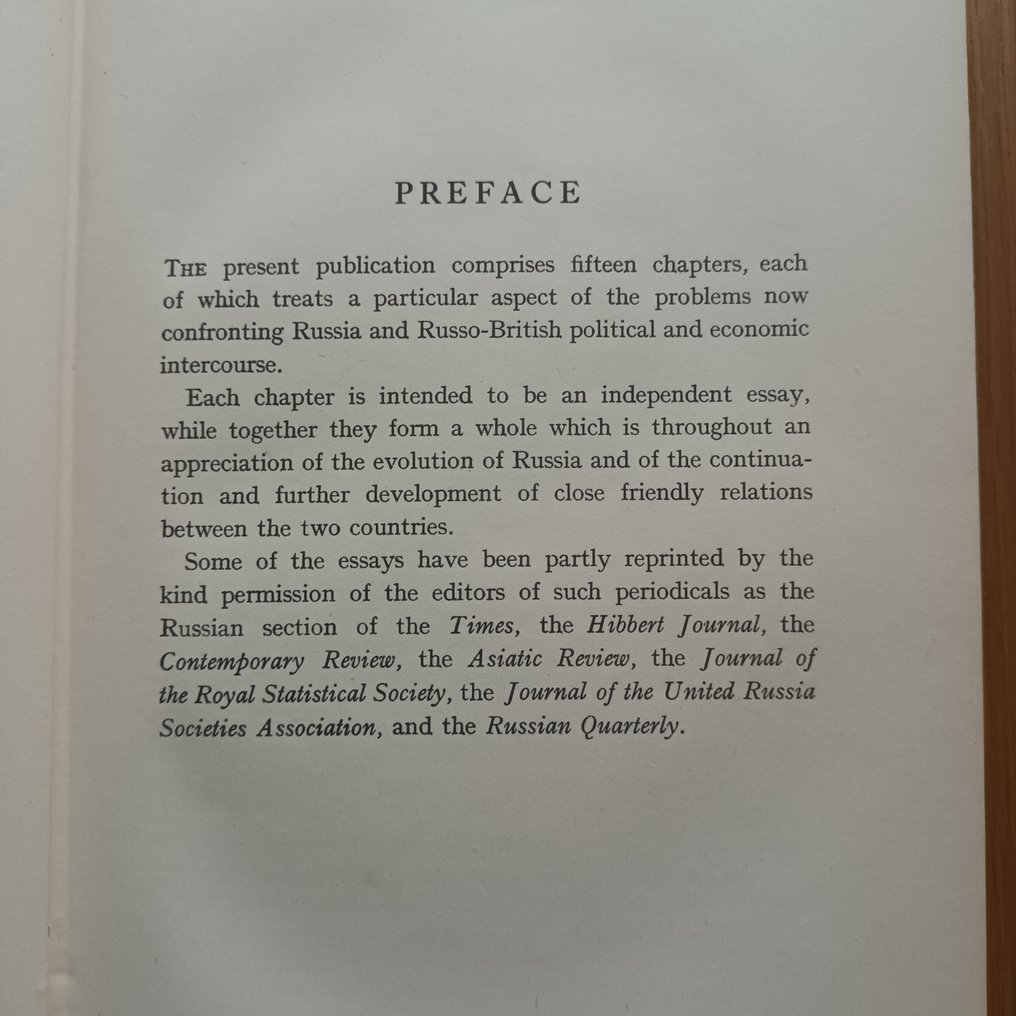
Problems Confronting Russia by Baron Alfons von Heyking is a contemporary diagnosis of Russia at a moment when the consequences of its long-ignored structural weaknesses had become impossible to overlook. Written in the immediate aftermath of the 1917 Revolution, the book seeks to explain why a vast empire endowed with immense natural and human resources collapsed so rapidly and gave way to political and social upheaval. Von Heyking presents Russia as a state fatally caught between an obsolete autocratic system and the pressures of modern economic, social, and political life, arguing that the failure to resolve this tension made revolutionary rupture unavoidable. He contends that the concentration of power in the hands of the Tsarist bureaucracy stifled initiative, encouraged corruption, and blocked meaningful reform, while rapid but uneven industrialization generated social tensions the state was unable to control. Agrarian distress, the impoverishment of the peasantry, and the absence of effective local self-government compounded these problems, producing chronic instability that finally erupted during World War I strain. Externally, Russia’s diplomatic ambitions and military posture are shown to have exceeded its administrative and economic capacity, a mismatch exposed not only by military failures but by the total collapse of authority during the war. Von Heyking’s analysis is not revolutionary in tone; rather, it is a sober, reform-minded critique that reflects the outlook of observers who believed that gradual constitutional and administrative reform might have averted catastrophe. Read today, the book stands as a revealing contemporary interpretation of how Russia’s deep-seated problems culminated in the destruction of the imperial order in 1917.
The Russian Revolution of 1917 was a two-stage upheaval that destroyed the centuries-old Tsarist system and brought the Bolsheviks to power, reshaping Russia and much of the twentieth century.
The first phase, known as the February Revolution (March 1917, New Style), began with strikes and bread riots in Petrograd. When troops refused to suppress the crowds, the regime collapsed rapidly. Tsar Nicholas II abdicated, ending the Romanov dynasty. Power passed to a Provisional Government, drawn largely from liberal and moderate socialist politicians, which promised constitutional reform, civil liberties, and elections. At the same time, grassroots councils known as soviets, representing workers and soldiers, emerged as rival centers of authority, creating a situation of “dual power.”
The Provisional Government proved unable to resolve Russia’s core problems. It kept Russia in the war, failed to carry out land reform, and struggled to control the economy or maintain order. Meanwhile, the Bolsheviks, led by Vladimir Lenin, argued that only a radical socialist revolution could deliver “peace, land, and bread.” Their influence grew throughout 1917, particularly in the soviets.
The second phase, the October Revolution (November 1917, New Style), was a relatively swift and organized seizure of power. Bolshevik forces overthrew the Provisional Government in Petrograd and proclaimed a socialist state. Soon after, the new regime withdrew from World War I, redistributed land, and began dismantling existing political institutions.
The revolution did not bring immediate stability. It was followed by a brutal civil war (1918–1921) between the Bolshevik “Reds” and various anti-Bolshevik forces, during which the foundations of the Soviet state were laid. The events of 1917 thus marked not only the end of Imperial Russia but the beginning of a new political order whose consequences would shape global history for decades.
Baron Alfons (or Alphonse) Alfonsovich Heyking (1860-1930) was a Baltic German nobleman, diplomatic and political writer associated with the late Imperial Russian world and its collapse. Born into the German-speaking elite of the Russian Empire, he was educated in both Russian and Western European intellectual traditions. His career brought him into close contact with diplomacy and state administration - he served as a consul general for Russia in London - shaping his pragmatic, insider perspective on politics. After the Revolution, he wrote for Western audiences seeking to understand Russia’s implosion. Ideologically, he stood between liberal reformism and conservative order, critical of autocracy but deeply skeptical of revolutionary solutions. His writings reflect the outlook of imperial elites displaced by 1917, grappling with the meaning of Russia’s transformation.
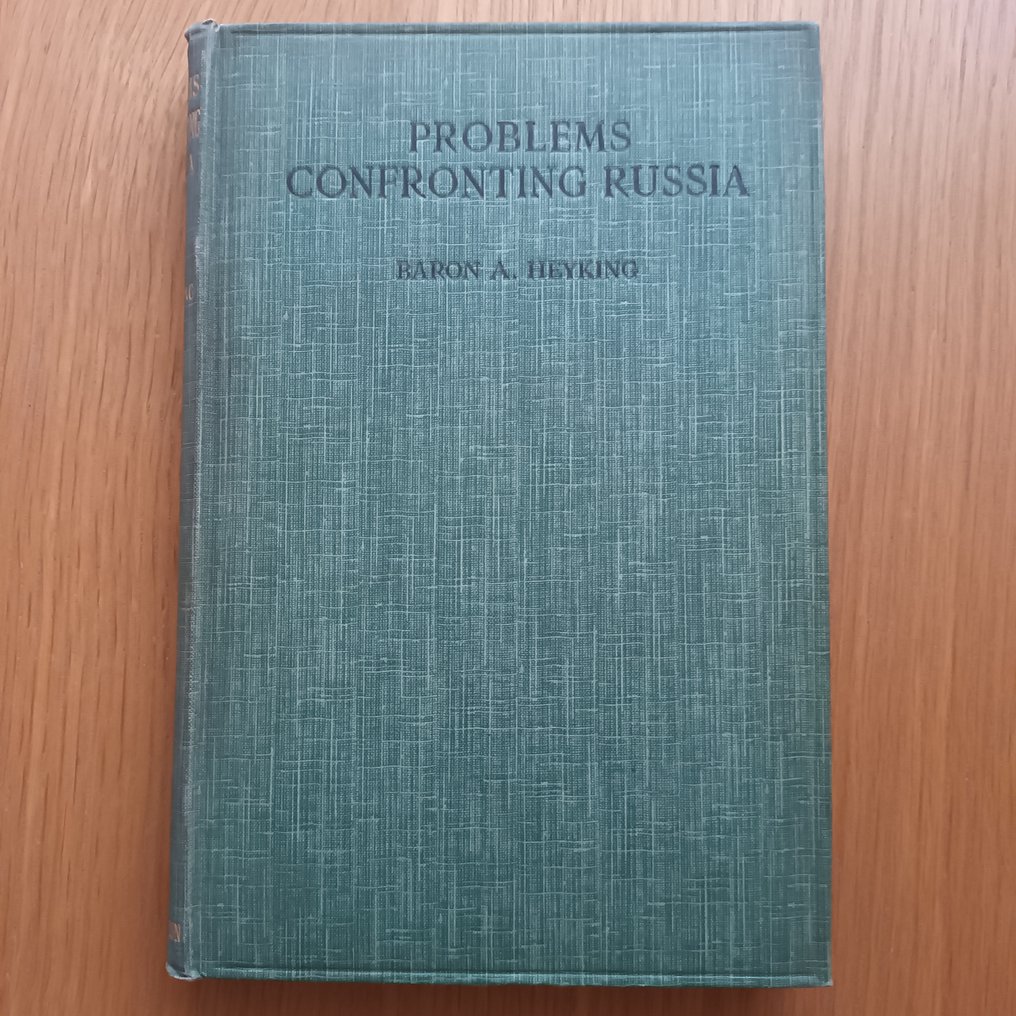
Blue hardback, gilt title on the spine and black title on the front cover. Library sticker on book pastedown (as per picture). Minimal wear, no foxing. Pages are bright and the text is clear. Author's photo facing the title page.
PS: I'll ship the book carefully packaged in bubble wrap, via An Post, the Irish Postal Service ("Registered Post, Tracking & Insurance included to protect your valuable items"). I will provide the tracking number once dispatched
Baron Alfons von Heyking
Problems confronting Russia and affecting Russo-British political and economic intercourse; a retrospect & forecast
P.S. King & Son, London, 1918
xvi, 219 pages frontispiece (portrait) 22 cm
Problems Confronting Russia by Baron Alfons von Heyking is a contemporary diagnosis of Russia at a moment when the consequences of its long-ignored structural weaknesses had become impossible to overlook. Written in the immediate aftermath of the 1917 Revolution, the book seeks to explain why a vast empire endowed with immense natural and human resources collapsed so rapidly and gave way to political and social upheaval. Von Heyking presents Russia as a state fatally caught between an obsolete autocratic system and the pressures of modern economic, social, and political life, arguing that the failure to resolve this tension made revolutionary rupture unavoidable. He contends that the concentration of power in the hands of the Tsarist bureaucracy stifled initiative, encouraged corruption, and blocked meaningful reform, while rapid but uneven industrialization generated social tensions the state was unable to control. Agrarian distress, the impoverishment of the peasantry, and the absence of effective local self-government compounded these problems, producing chronic instability that finally erupted during World War I strain. Externally, Russia’s diplomatic ambitions and military posture are shown to have exceeded its administrative and economic capacity, a mismatch exposed not only by military failures but by the total collapse of authority during the war. Von Heyking’s analysis is not revolutionary in tone; rather, it is a sober, reform-minded critique that reflects the outlook of observers who believed that gradual constitutional and administrative reform might have averted catastrophe. Read today, the book stands as a revealing contemporary interpretation of how Russia’s deep-seated problems culminated in the destruction of the imperial order in 1917.
The Russian Revolution of 1917 was a two-stage upheaval that destroyed the centuries-old Tsarist system and brought the Bolsheviks to power, reshaping Russia and much of the twentieth century.
The first phase, known as the February Revolution (March 1917, New Style), began with strikes and bread riots in Petrograd. When troops refused to suppress the crowds, the regime collapsed rapidly. Tsar Nicholas II abdicated, ending the Romanov dynasty. Power passed to a Provisional Government, drawn largely from liberal and moderate socialist politicians, which promised constitutional reform, civil liberties, and elections. At the same time, grassroots councils known as soviets, representing workers and soldiers, emerged as rival centers of authority, creating a situation of “dual power.”
The Provisional Government proved unable to resolve Russia’s core problems. It kept Russia in the war, failed to carry out land reform, and struggled to control the economy or maintain order. Meanwhile, the Bolsheviks, led by Vladimir Lenin, argued that only a radical socialist revolution could deliver “peace, land, and bread.” Their influence grew throughout 1917, particularly in the soviets.
The second phase, the October Revolution (November 1917, New Style), was a relatively swift and organized seizure of power. Bolshevik forces overthrew the Provisional Government in Petrograd and proclaimed a socialist state. Soon after, the new regime withdrew from World War I, redistributed land, and began dismantling existing political institutions.
The revolution did not bring immediate stability. It was followed by a brutal civil war (1918–1921) between the Bolshevik “Reds” and various anti-Bolshevik forces, during which the foundations of the Soviet state were laid. The events of 1917 thus marked not only the end of Imperial Russia but the beginning of a new political order whose consequences would shape global history for decades.
Baron Alfons (or Alphonse) Alfonsovich Heyking (1860-1930) was a Baltic German nobleman, diplomatic and political writer associated with the late Imperial Russian world and its collapse. Born into the German-speaking elite of the Russian Empire, he was educated in both Russian and Western European intellectual traditions. His career brought him into close contact with diplomacy and state administration - he served as a consul general for Russia in London - shaping his pragmatic, insider perspective on politics. After the Revolution, he wrote for Western audiences seeking to understand Russia’s implosion. Ideologically, he stood between liberal reformism and conservative order, critical of autocracy but deeply skeptical of revolutionary solutions. His writings reflect the outlook of imperial elites displaced by 1917, grappling with the meaning of Russia’s transformation.
Blue hardback, gilt title on the spine and black title on the front cover. Library sticker on book pastedown (as per picture). Minimal wear, no foxing. Pages are bright and the text is clear. Author's photo facing the title page.
PS: I'll ship the book carefully packaged in bubble wrap, via An Post, the Irish Postal Service ("Registered Post, Tracking & Insurance included to protect your valuable items"). I will provide the tracking number once dispatched
Details
Number of Books
1
Subject
History
Book Title
Problems Confronting Russia
Author/ Illustrator
Alfons Heyking
Condition
Very good
Publication year oldest item
1918
Height
22 cm
Edition
1st Edition
Width
13 cm
Language
English
Original language
No
Publisher
P.S. King & Son
Binding/ Material
Hardback
Number of pages
219
Sold by
