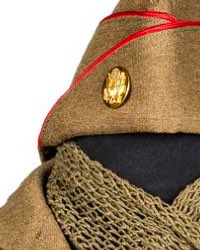
Military uniform - US Navy 'Donald Duck' type flat hat - named and served on USS Essex aircraft carrier.



06
days
07
hours
55
minutes
23
seconds

6 other people are watching this object
 Bidder 5784 Bidder 5784 | €1 |
|---|
Catawiki Buyer Protection
Your payment’s safe with us until you receive your object.View details
Trustpilot 4.4 | 122910 reviews
Rated Excellent on Trustpilot.
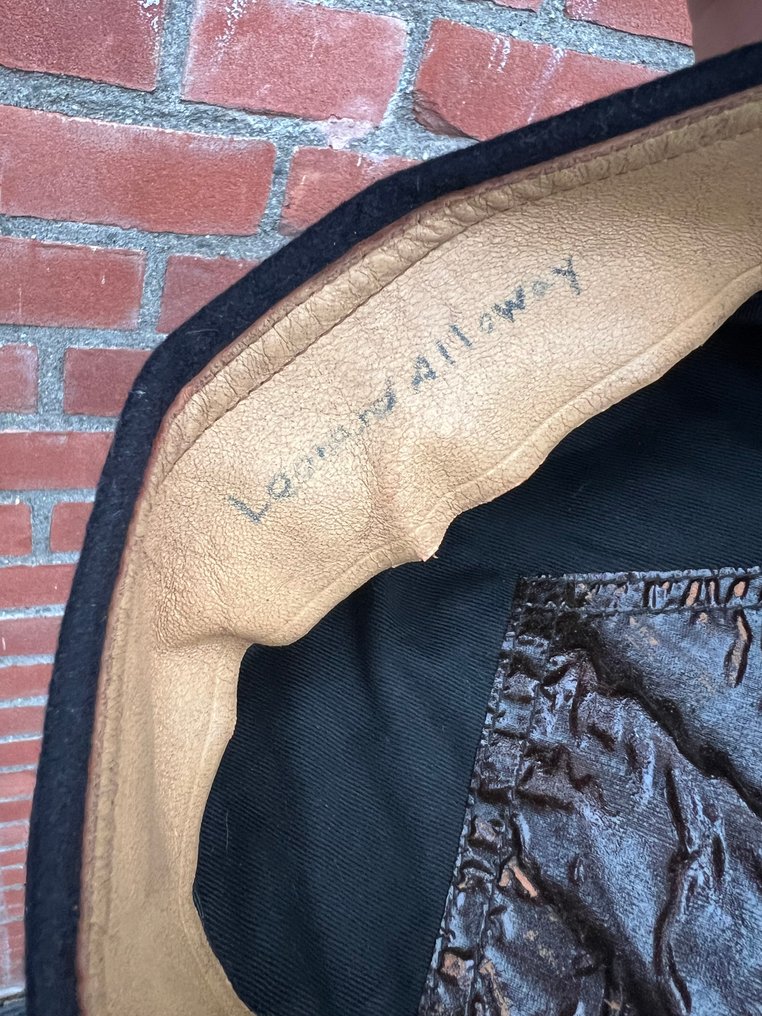
100% original US Navy Donald Duck style flat hat, named to Leonard (F) Alloway and associated with the USS Essex, in good condition.
AI-assisted summary
Description from the seller
Nice 100% original WW2 US Navy 'Donald Duck' style flat hat. The cap is in good condition with a great used patina; the stitching is neat and it has been slightly worn. This is 100% the pattern used in WW2. It is nicely named to Leonard (F) Alloway; his name and initials are written inside the cap. He enlisted in 1942 and served on the famous flight carrier USS Essex, which was hit by a kamikaze plane, among others, where at least 30 sailors were killed.
100% original RARE WW2 cap in nice, worn condition
See also our other interesting military books and items on Catawiki!
History of the USS Essex
Following her accelerated builder's trials and shakedown cruise, Essex moved to the Pacific in May 1943. Departing from Pearl Harbor, she participated with Task Force 16 (TF 16) in carrier operations against Marcus Island. On August 31, 1943, she was designated the flagship of TF 14 and struck Wake Island on October 5 and 6. On November 11, she took part in carrier operations during the Rabaul strike, alongside Bunker Hill and USS Independence. She then launched an attack with Task Group 50.3 (TG 50.3) against the Gilbert Islands, where she took part in her first amphibious assault during the Battle of Tarawa. After refueling at sea, she cruised as the flagship of TG 50.3 to attack Kwajalein on December 4. Her second amphibious assault, delivered in company with TG 50.3, was against the Marshall Islands from January 29 to February 2, 1944.
Essex, in TG 50.3, now joined with TG 58.1 and TG 58.2 to form Task Force 58, the 'Fast Carrier Task Force,' launched an attack against Truk between February 17 and 18, 1944, during which eight Japanese ships were sunk. While en route to the Mariana Islands to cut Japanese supply lines, the carrier force was detected and subjected to a prolonged aerial attack, which it successfully repelled. It then continued with the scheduled attack on Saipan, Tinian, and Guam on February 23, 1944.
After this operation, Essex proceeded to San Francisco for her single wartime overhaul, after which, Essex became the carrier for Air Group 15, the 'Fabled Fifteen' commanded by the U.S. Navy's top ace of the war, David McCampbell. She then joined carriers Wasp and San Jacinto in TG 12.1 to strike Marcus Island on 19 to 20 May 1944, and Wake, on 23 May 1944. She deployed with TF 58 to support the occupation of the Marianas from 12 June to 10 August; sortie with TG 38.3 to lead an attack against the Palau Islands from 6 to 8 September, and Mindanao from 9 to 10 September with enemy shipping as the main target, and remained in the area to support landings on Peleliu. On 2 October, she weathered a typhoon and four days later departed with Task Force 38 (TF 38) for the Ryukyus.
For the remainder of 1944, she continued her frontline action, participating in strikes against Okinawa on October 1, and Formosa from October 1 to 14, covering the Leyte landings, taking part in the Battle of Leyte Gulf from October 24 to 25, and continuing the search for enemy fleet units until October 30, when she returned to Ulithi, Caroline Islands, for replenishment. She resumed the offensive and launched attacks on Manila and the northern Philippine Islands during November. On November 25, for the first time, Essex was damaged. A kamikaze piloted by Lt. Yoshinori Yamaguchi struck the port edge of her flight deck, landing among planes fueled for takeoff, causing extensive damage, killing 15, and wounding 44.[3]
Following quick repairs, she operated with the task force off Leyte supporting the occupation of Mindoro from December 14 to 16, 1944. She endured Typhoon Cobra and conducted a special search for survivors afterward. With TG 38.3, she participated in the Lingayen Gulf operations, launched strikes against Formosa, Sakishima, Okinawa, and Luzon. Entering the South China Sea in search of enemy surface forces, the task force pounded shipping and carried out strikes on Formosa, the China coast, Hainan, and Hong Kong. Essex withstood the onslaught of the third typhoon in four months on January 20 and 21, 1945, before striking again at Formosa, Miyako-jima, and Okinawa on January 26 and 27.
For the remainder of the war, she operated with TF 58, conducting attacks against the Tokyo area on February 16 and 17. On February 25, 1945, she was deployed to neutralize the enemy's air power before the landings on Iwo Jima and to cripple the aircraft-manufacturing industry. She sent support missions against Iwo Jima and neighboring islands, but from March 23 to May 28, was employed primarily to support the conquest of Okinawa. In the closing days of the war, Essex took part in the final telling raids against the Japanese home islands from July 10 to August 15, 1945. Following Japan's surrender, she continued defensive combat air patrols until September 3, when she was ordered to Bremerton, Washington, for inactivation. She arrived at Puget Sound on September 15.
Seller's Story
We specialize in the sale of professional military regulations, academic literature, and other militaria with over 20 years of experience. With a carefully selected range, we serve collectors, historians, defense professionals, and enthusiasts of military history. Our products offer reliable and authentic information and are of high quality. We stand for expertise, reliability, and a passion for military heritage.
Translated by Google TranslateNice 100% original WW2 US Navy 'Donald Duck' style flat hat. The cap is in good condition with a great used patina; the stitching is neat and it has been slightly worn. This is 100% the pattern used in WW2. It is nicely named to Leonard (F) Alloway; his name and initials are written inside the cap. He enlisted in 1942 and served on the famous flight carrier USS Essex, which was hit by a kamikaze plane, among others, where at least 30 sailors were killed.
100% original RARE WW2 cap in nice, worn condition
See also our other interesting military books and items on Catawiki!
History of the USS Essex
Following her accelerated builder's trials and shakedown cruise, Essex moved to the Pacific in May 1943. Departing from Pearl Harbor, she participated with Task Force 16 (TF 16) in carrier operations against Marcus Island. On August 31, 1943, she was designated the flagship of TF 14 and struck Wake Island on October 5 and 6. On November 11, she took part in carrier operations during the Rabaul strike, alongside Bunker Hill and USS Independence. She then launched an attack with Task Group 50.3 (TG 50.3) against the Gilbert Islands, where she took part in her first amphibious assault during the Battle of Tarawa. After refueling at sea, she cruised as the flagship of TG 50.3 to attack Kwajalein on December 4. Her second amphibious assault, delivered in company with TG 50.3, was against the Marshall Islands from January 29 to February 2, 1944.
Essex, in TG 50.3, now joined with TG 58.1 and TG 58.2 to form Task Force 58, the 'Fast Carrier Task Force,' launched an attack against Truk between February 17 and 18, 1944, during which eight Japanese ships were sunk. While en route to the Mariana Islands to cut Japanese supply lines, the carrier force was detected and subjected to a prolonged aerial attack, which it successfully repelled. It then continued with the scheduled attack on Saipan, Tinian, and Guam on February 23, 1944.
After this operation, Essex proceeded to San Francisco for her single wartime overhaul, after which, Essex became the carrier for Air Group 15, the 'Fabled Fifteen' commanded by the U.S. Navy's top ace of the war, David McCampbell. She then joined carriers Wasp and San Jacinto in TG 12.1 to strike Marcus Island on 19 to 20 May 1944, and Wake, on 23 May 1944. She deployed with TF 58 to support the occupation of the Marianas from 12 June to 10 August; sortie with TG 38.3 to lead an attack against the Palau Islands from 6 to 8 September, and Mindanao from 9 to 10 September with enemy shipping as the main target, and remained in the area to support landings on Peleliu. On 2 October, she weathered a typhoon and four days later departed with Task Force 38 (TF 38) for the Ryukyus.
For the remainder of 1944, she continued her frontline action, participating in strikes against Okinawa on October 1, and Formosa from October 1 to 14, covering the Leyte landings, taking part in the Battle of Leyte Gulf from October 24 to 25, and continuing the search for enemy fleet units until October 30, when she returned to Ulithi, Caroline Islands, for replenishment. She resumed the offensive and launched attacks on Manila and the northern Philippine Islands during November. On November 25, for the first time, Essex was damaged. A kamikaze piloted by Lt. Yoshinori Yamaguchi struck the port edge of her flight deck, landing among planes fueled for takeoff, causing extensive damage, killing 15, and wounding 44.[3]
Following quick repairs, she operated with the task force off Leyte supporting the occupation of Mindoro from December 14 to 16, 1944. She endured Typhoon Cobra and conducted a special search for survivors afterward. With TG 38.3, she participated in the Lingayen Gulf operations, launched strikes against Formosa, Sakishima, Okinawa, and Luzon. Entering the South China Sea in search of enemy surface forces, the task force pounded shipping and carried out strikes on Formosa, the China coast, Hainan, and Hong Kong. Essex withstood the onslaught of the third typhoon in four months on January 20 and 21, 1945, before striking again at Formosa, Miyako-jima, and Okinawa on January 26 and 27.
For the remainder of the war, she operated with TF 58, conducting attacks against the Tokyo area on February 16 and 17. On February 25, 1945, she was deployed to neutralize the enemy's air power before the landings on Iwo Jima and to cripple the aircraft-manufacturing industry. She sent support missions against Iwo Jima and neighboring islands, but from March 23 to May 28, was employed primarily to support the conquest of Okinawa. In the closing days of the war, Essex took part in the final telling raids against the Japanese home islands from July 10 to August 15, 1945. Following Japan's surrender, she continued defensive combat air patrols until September 3, when she was ordered to Bremerton, Washington, for inactivation. She arrived at Puget Sound on September 15.
Seller's Story
We specialize in the sale of professional military regulations, academic literature, and other militaria with over 20 years of experience. With a carefully selected range, we serve collectors, historians, defense professionals, and enthusiasts of military history. Our products offer reliable and authentic information and are of high quality. We stand for expertise, reliability, and a passion for military heritage.
Translated by Google TranslateDetails
Era
1900-2000
Number of items
1
Object title
US Navy 'Donald Duck' type flat hat - named and served on USS Essex aircraft carrier.
Condition
Good condition
Original/ Replica
Original
Comes with certificate of authenticity
No
Sold by