Carafe - Bronze - Bronzetto, jug, replica



07
days
17
hours
17
minutes
54
seconds

No bids placed
Catawiki Buyer Protection
Your payment’s safe with us until you receive your object.View details
Trustpilot 4.4 | 123253 reviews
Rated Excellent on Trustpilot.
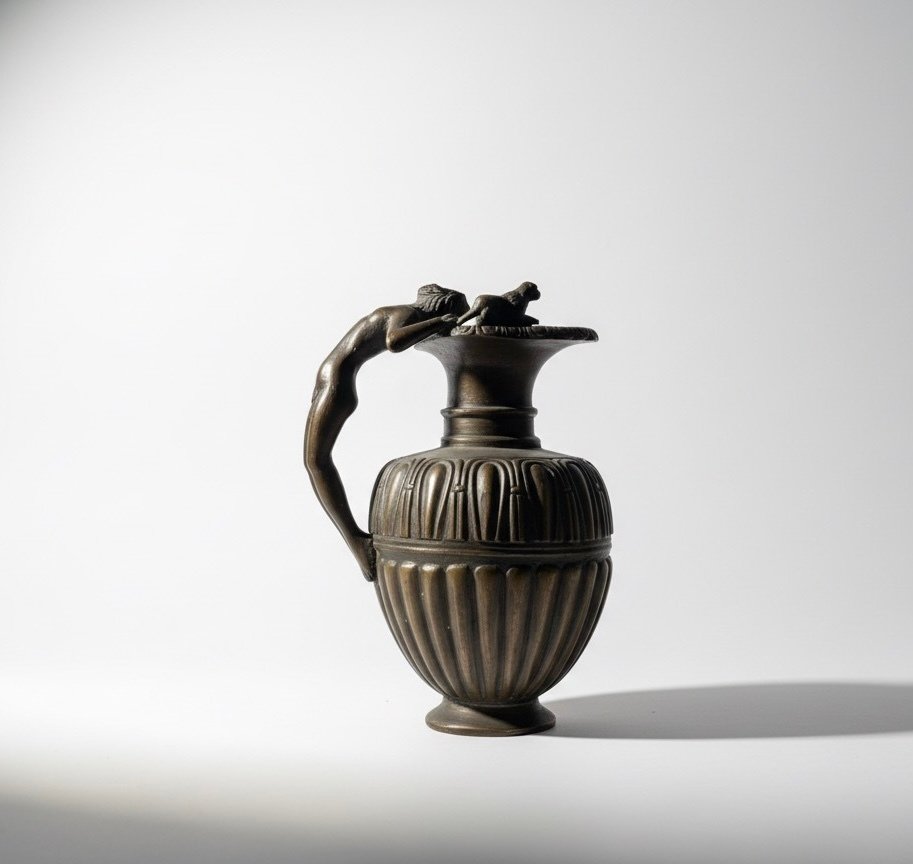
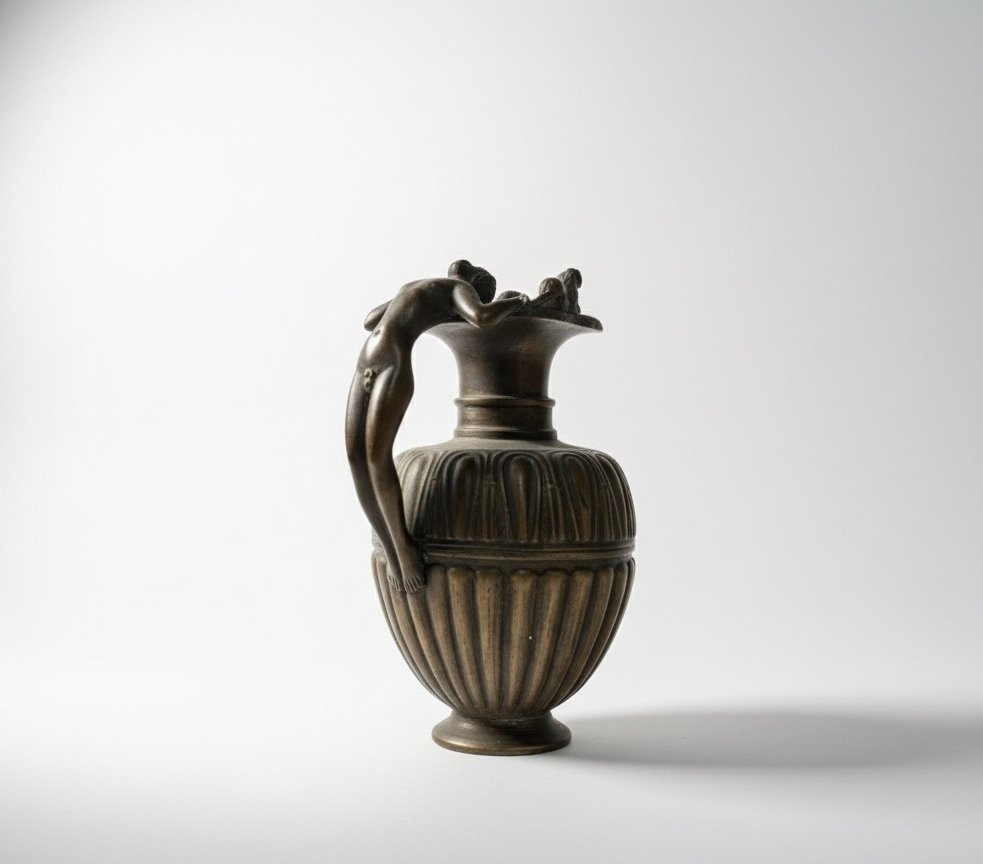
Bronze patinated carafe with an anthropomorphic handle, a neoclassical replica inspired by ancient models, made in Italy and dating to 1970–1980; dimensions approx. height 11.5 cm, width 8 cm, depth 6 cm, weight about 1 kg.
AI-assisted summary
Description from the seller
Patinated Bronze Pitcher: Archaeological Echoes of the Grand Tour
This elegant small bronze patinated jug is a fine work of neoclassical craftsmanship, inspired by archaeological models from classical antiquity, probably influenced by findings from Pompeii and Herculaneum.
Details and Composition
• Body: The shape is a smooth oval, which gives the jug a line of remarkable elegance and purity.
Handle: The highlight is the anthropomorphic handle, crafted with great refinement. It ends with a winged cherub at the base, adding a touch of mythological grace.
• Beccuccio: The beccuccio, finely fluted, is crowned by a kid (or perhaps a satyr), a motif that recalls the Dionysian and rustic iconography of ancient art.
Historical and Stylistic Context
The object fits perfectly into the renowned production from the Grand Tour, created between the late eighteenth century and the early decades of the nineteenth century. These works were intended for a clientele of wealthy and learned tourists, eager to bring home a cultured souvenir that embodied their love for classicism.
The jug stands out for its beautiful craftsmanship and splendid patina, which highlight its perceived antiquity and attest to its high-quality execution.
Patinated Bronze Pitcher: Archaeological Echoes of the Grand Tour
This elegant small bronze patinated jug is a fine work of neoclassical craftsmanship, inspired by archaeological models from classical antiquity, probably influenced by findings from Pompeii and Herculaneum.
Details and Composition
• Body: The shape is a smooth oval, which gives the jug a line of remarkable elegance and purity.
Handle: The highlight is the anthropomorphic handle, crafted with great refinement. It ends with a winged cherub at the base, adding a touch of mythological grace.
• Beccuccio: The beccuccio, finely fluted, is crowned by a kid (or perhaps a satyr), a motif that recalls the Dionysian and rustic iconography of ancient art.
Historical and Stylistic Context
The object fits perfectly into the renowned production from the Grand Tour, created between the late eighteenth century and the early decades of the nineteenth century. These works were intended for a clientele of wealthy and learned tourists, eager to bring home a cultured souvenir that embodied their love for classicism.
The jug stands out for its beautiful craftsmanship and splendid patina, which highlight its perceived antiquity and attest to its high-quality execution.
Details
Era
1900-2000
Weight
1 kg
Title additional information
Bronzetto, jug, replica
No. of items
1
Country of Origin
Italy
Material
Bronze
Condition
Good condition - used with small signs of ageing
Height
11.5 cm
Width
8 cm
Depth
6 cm
Estimated Period
1970-1980
Sold by