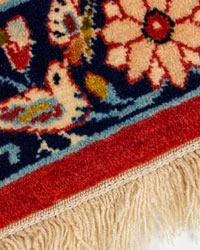
Turkman antique rug - Rug - 110 cm - 75 cm - Origin & Features


03
days
16
hours
41
minutes
06
seconds
Current bid
€ 19
Reserve price not met

Expert
Selected by Richard Ebbers
Certified appraiser at Federation TMV with 30 years' professional antiques experience.
Estimate € 220 - € 250
10 other people are watching this object
 Bidder 4562 Bidder 4562 | €19 |
|---|
Catawiki Buyer Protection
Your payment’s safe with us until you receive your object.View details
Trustpilot 4.4 | 123327 reviews
Rated Excellent on Trustpilot.
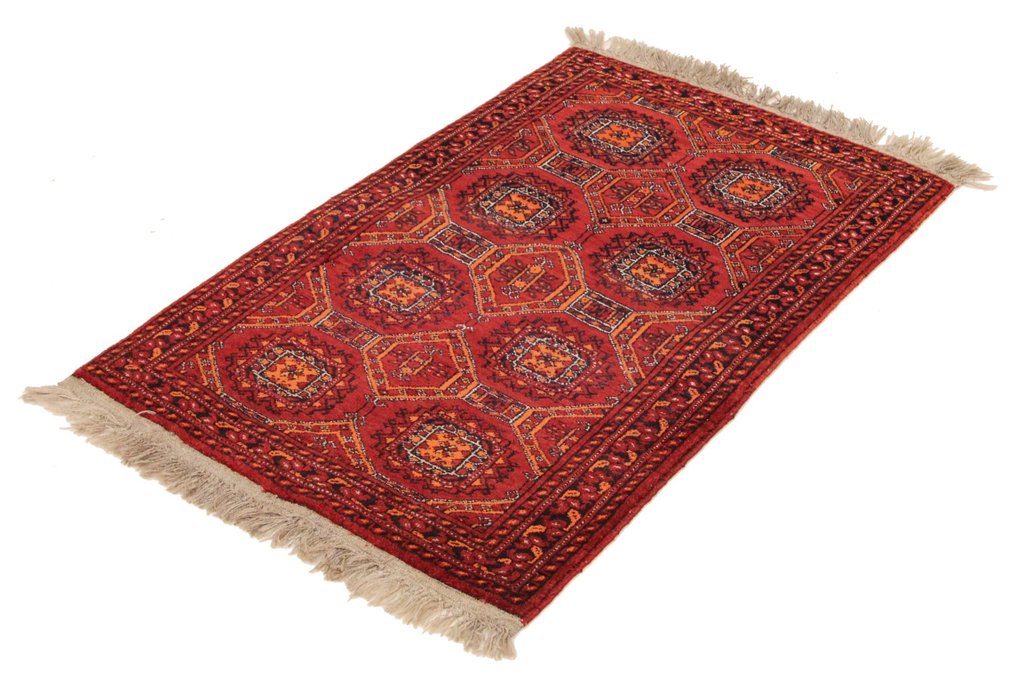
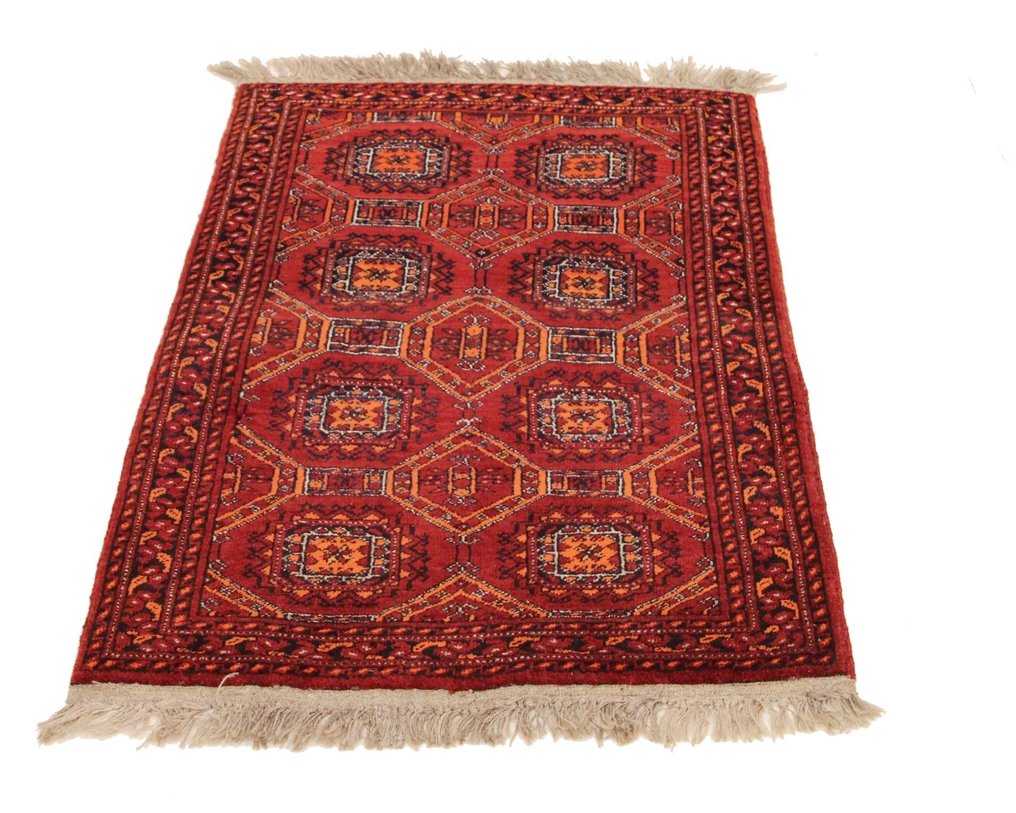
Turkmenistan origin handknotted Turkman antique rug, model Turkman Antik Teppich, size 110 cm by 75 cm, wool on cotton, red, dating to the mid-20th century, weight 6 kg, in good overall condition.
AI-assisted summary
Description from the seller
Turkman Antique Rug – Origin & Special Features
Turkmen carpets traditionally originate from the Turkmen, a Turkic-speaking nomadic people who primarily live in Turkmenistan, Afghanistan, and Uzbekistan. They are among the most famous nomadic carpets in the world and are highly sought-after collector's items due to their distinctive patterns, deep colors, and historical significance.
Characteristic features
Designs & Motifs:
The most well-known pattern is the Göl – an octagonal, repeated medallion that served as a distinguishing mark for the respective tribe (e.g. Tekke-Göl, Yomut-Göl).
Often geometric borders and fine diamond or hook ornaments.
Many carpets have a continuous repeating pattern, sometimes with a center and corners.
Colors
Dominant red tones (maddling red, wine red, rust)
Contrasting with black-brown, indigo, ivory
Natural paints made from plant and mineral pigments
Materials & Technology:
Hand-spun wool (pile and warp)
Fine knots, often Persian Senneh knot (asymmetrical)
Tightly knotted, robust yet supple
Antique specimens
Antique Turkman carpets are usually over 80–100 years old. They often show patina and signs of age, which is part of their charm. Genuine antique pieces can be identified by, among other things:
Old, slightly irregular plant dyes
Wear and tear, but no synthetic shine
Original weaving techniques without modern repairs
Name of the rug: Turkman Semi-Antique Rug – Origin & Features
Manufacture: Hand-knotted
Country of origin: Russia, Uzbekistan, Turkmenistan.
Model: Classic
Condition: see pictures
approximately 40 years
Thickness: 8 mm
Turkman Antique Rug – Origin & Special Features
Turkmen carpets traditionally originate from the Turkmen, a Turkic-speaking nomadic people who primarily live in Turkmenistan, Afghanistan, and Uzbekistan. They are among the most famous nomadic carpets in the world and are highly sought-after collector's items due to their distinctive patterns, deep colors, and historical significance.
Characteristic features
Designs & Motifs:
The most well-known pattern is the Göl – an octagonal, repeated medallion that served as a distinguishing mark for the respective tribe (e.g. Tekke-Göl, Yomut-Göl).
Often geometric borders and fine diamond or hook ornaments.
Many carpets have a continuous repeating pattern, sometimes with a center and corners.
Colors
Dominant red tones (maddling red, wine red, rust)
Contrasting with black-brown, indigo, ivory
Natural paints made from plant and mineral pigments
Materials & Technology:
Hand-spun wool (pile and warp)
Fine knots, often Persian Senneh knot (asymmetrical)
Tightly knotted, robust yet supple
Antique specimens
Antique Turkman carpets are usually over 80–100 years old. They often show patina and signs of age, which is part of their charm. Genuine antique pieces can be identified by, among other things:
Old, slightly irregular plant dyes
Wear and tear, but no synthetic shine
Original weaving techniques without modern repairs
Name of the rug: Turkman Semi-Antique Rug – Origin & Features
Manufacture: Hand-knotted
Country of origin: Russia, Uzbekistan, Turkmenistan.
Model: Classic
Condition: see pictures
approximately 40 years
Thickness: 8 mm
Details
Era
1900-2000
Title additional information
Origin & Features
Nr of items
1
Model
Turkman antique rug
Colour
Red
Length
110 cm
Width
75 cm
Material
Wool on cotton
Country of Origin
Turkmenistan
Condition
Overall in good condition
Professionally Cleaned
Yes
Manufacturing period
Mid 20th century
Weight
6 kg