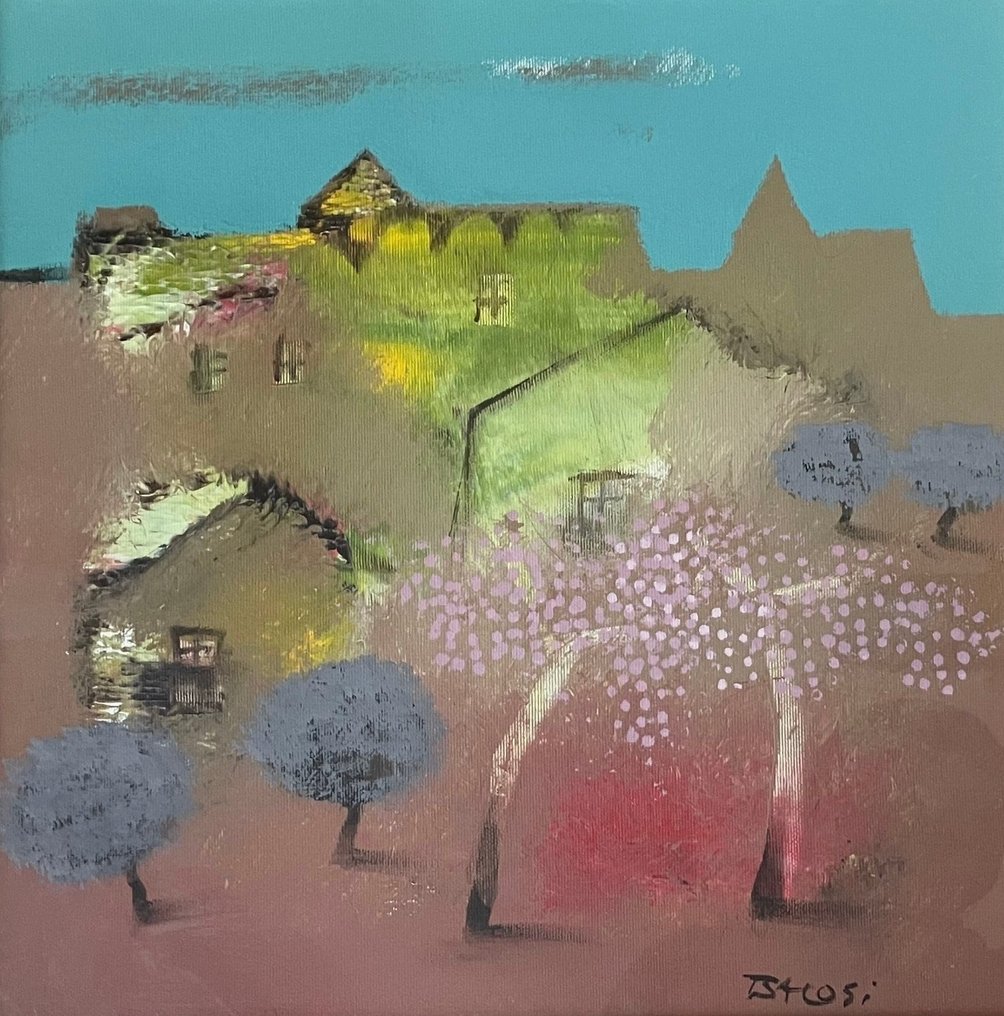
Manlio Bacosi (1921-1998) - Paesaggio umbro


01
day
10
hours
14
minutes
34
seconds
Current bid
€ 39
No reserve price

Expert
Selected by Giulia Santoro
Specialised in 17th century Old Master paintings and drawings with auction house experience.
Estimate € 300 - € 400
33 other people are watching this object
 Bidder 0979 Bidder 0979 | €39 | |
|---|---|---|
| Bidder 5900 | €34 | |
| Bidder 0066 | €29 | |
Catawiki Buyer Protection
Your payment’s safe with us until you receive your object.View details
Trustpilot 4.4 | 123332 reviews
Rated Excellent on Trustpilot.
Paesaggio umbro, oil on canvas landscape from Italy, period 1960–1970, 40 × 40 cm, with frame.
AI-assisted summary
Description from the seller
Manlio Bacosi (Perugia 1921 – 1998)
Umbrian landscape
Oil on canvas
Signed at the bottom right: BACOSI
With cornice and glass
Painting dimensions: 40x40 cm.
Frame dimensions: 60x60 cm
In excellent condition: ready to be added to a collection (see the images).
Manlio Bacosi was an Italian painter born in Perugia in 1921. Creative vitality and expressive originality are just some of the main characteristics of Manlio Bacosi, considered one of Italy's most renowned landscape painters. From painting to graphics, from ceramic decoration to sculpture, Manlio Bacosi confirms himself as one of the most prolific artists of the post-war period. He trained at the studio of sculptor Leo Ravazzi and futurist painter Gerardo Dottori. He began exhibiting in 1947 and has since held numerous solo exhibitions in Italy and abroad.
In 1951, at only thirty years old, Manlio Bacosi was invited, on the recommendation of Gerardo Dottori, to the first post-war Futurism exhibition at the Palazzo del Podestà in Bologna, in the section for young artists identified as successors of the Futurist artistic avant-garde.
During that period, Manlio Bacosi explored the abstract and the informal. However, the Umbrian landscape painting of Dottori's aeropittura season would influence the young artist so profoundly that he would dedicate himself entirely to it for the rest of his life, ultimately being considered the true successor of Umbrian landscape painting.
In the works of Manlio Bacosi, the landscape undergoes a profound process of reduction and synthesis, leading the artist to depict a minimal world, indicated by few signs on flat and uniform layers of color within a two-dimensional space. In this context, the artist intervenes with a certain gestural nature that causes him to overlay even more mysterious and hermetic painterly signs onto this reality. Besides landscapes, among his favorite themes are also still lifes, whose concept he evolves by applying it to subjects that float in colored vacuum or in simple geometries, however elaborate.
Even ceramics demonstrate new distinctive features, works born from an intense creative activity that perceives color through new, less sharp, more blurred forms.
In 1972, the city of Todi hosted an anthological exhibition in its honor at the Palazzo Comunale.
In 1975, in Recanati during the Leopardi celebrations, Manlio Bacosi presented a large collection of his works in the municipal halls. Also in 1975, the city of Montecatini organized a personal exhibition of over 50 works by him. In December of the same year, the Municipality of Rome hosted a large personal exhibition of his in the halls of Palazzo Braschi.
In March 1976, an anthology exhibition of over 80 works took place at the Municipality of Perugia.
In 1979, he was awarded the International S. Valentino d'Oro Prize for the Visual Arts. In July of the same year, a retrospective exhibition was organized by the Municipality at the San Marino museum.
In May 1982, there was a major solo exhibition with 80 works at the Salons of Molinella in Faenza, under the patronage of the Municipality. Manlio Bacosi died in Perugia in 1998.
Manlio Bacosi (Perugia 1921 – 1998)
Umbrian landscape
Oil on canvas
Signed at the bottom right: BACOSI
With cornice and glass
Painting dimensions: 40x40 cm.
Frame dimensions: 60x60 cm
In excellent condition: ready to be added to a collection (see the images).
Manlio Bacosi was an Italian painter born in Perugia in 1921. Creative vitality and expressive originality are just some of the main characteristics of Manlio Bacosi, considered one of Italy's most renowned landscape painters. From painting to graphics, from ceramic decoration to sculpture, Manlio Bacosi confirms himself as one of the most prolific artists of the post-war period. He trained at the studio of sculptor Leo Ravazzi and futurist painter Gerardo Dottori. He began exhibiting in 1947 and has since held numerous solo exhibitions in Italy and abroad.
In 1951, at only thirty years old, Manlio Bacosi was invited, on the recommendation of Gerardo Dottori, to the first post-war Futurism exhibition at the Palazzo del Podestà in Bologna, in the section for young artists identified as successors of the Futurist artistic avant-garde.
During that period, Manlio Bacosi explored the abstract and the informal. However, the Umbrian landscape painting of Dottori's aeropittura season would influence the young artist so profoundly that he would dedicate himself entirely to it for the rest of his life, ultimately being considered the true successor of Umbrian landscape painting.
In the works of Manlio Bacosi, the landscape undergoes a profound process of reduction and synthesis, leading the artist to depict a minimal world, indicated by few signs on flat and uniform layers of color within a two-dimensional space. In this context, the artist intervenes with a certain gestural nature that causes him to overlay even more mysterious and hermetic painterly signs onto this reality. Besides landscapes, among his favorite themes are also still lifes, whose concept he evolves by applying it to subjects that float in colored vacuum or in simple geometries, however elaborate.
Even ceramics demonstrate new distinctive features, works born from an intense creative activity that perceives color through new, less sharp, more blurred forms.
In 1972, the city of Todi hosted an anthological exhibition in its honor at the Palazzo Comunale.
In 1975, in Recanati during the Leopardi celebrations, Manlio Bacosi presented a large collection of his works in the municipal halls. Also in 1975, the city of Montecatini organized a personal exhibition of over 50 works by him. In December of the same year, the Municipality of Rome hosted a large personal exhibition of his in the halls of Palazzo Braschi.
In March 1976, an anthology exhibition of over 80 works took place at the Municipality of Perugia.
In 1979, he was awarded the International S. Valentino d'Oro Prize for the Visual Arts. In July of the same year, a retrospective exhibition was organized by the Municipality at the San Marino museum.
In May 1982, there was a major solo exhibition with 80 works at the Salons of Molinella in Faenza, under the patronage of the Municipality. Manlio Bacosi died in Perugia in 1998.
Details
Artist
Manlio Bacosi (1921-1998)
Sold with frame
Yes
Sold by
Owner or reseller
Edition
Original
Title of artwork
Paesaggio umbro
Technique
Oil painting
Signature
Hand signed
Country of Origin
Italy
Condition
Excellent condition
Height
40 cm
Width
40 cm
Depiction/Theme
Landscape
Style
Realism
Period
1960-1970
Sold by
