Anne-Gédéon - Le diable dans un bénitier - 1784


Opens tomorrow
Starting bid
€ 1
Add to your favourites to get an alert when the auction starts.

Expert
Selected by Volker Riepenhausen
Specialist in travel literature and pre-1600 rare prints with 28 years experience.
Estimate € 150 - € 200
Catawiki Buyer Protection
Your payment’s safe with us until you receive your object.View details
Trustpilot 4.4 | 123418 reviews
Rated Excellent on Trustpilot.
Description from the seller
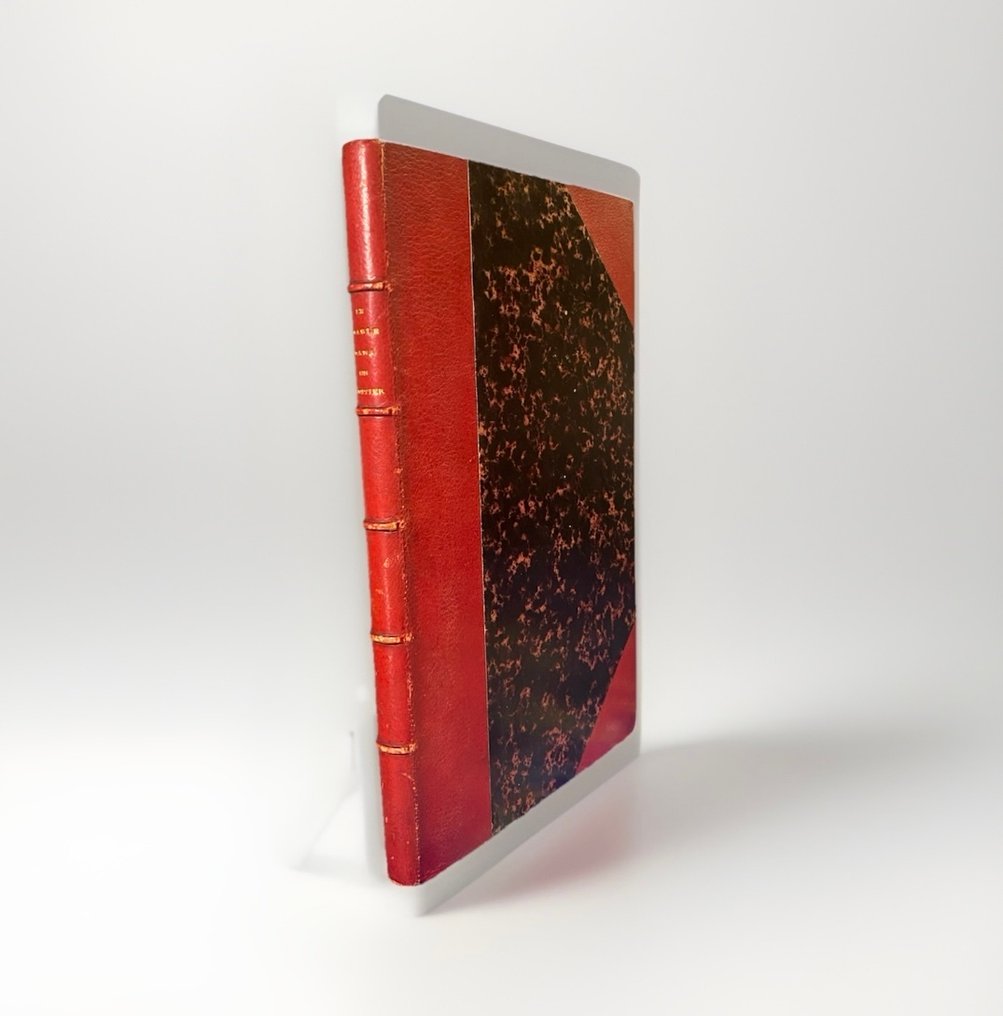
First Edition
Anne-Gédéon, Marquis de Pellepore
The devil in a holy water font
And the metamorphosis of the cuirassed gazetteer into a fly, or the attempt of Monsieur Receiver, Inspector of the Police of Paris, Knight of St. Louis; to establish in London a police force similar to that of Paris.
Dedicated to Monseigneur the Marquis de Castries; Minister & Secretary of State for the Department of the Navy, etc. etc. etc.
Reviewed, corrected, and augmented by Mr. l'Abbé Aubert, Royal Censor.
By Pierre Le Roux, Civil Engineer.
In Paris, from the Royal Printing Office, with the Approval and Privilege of the King.
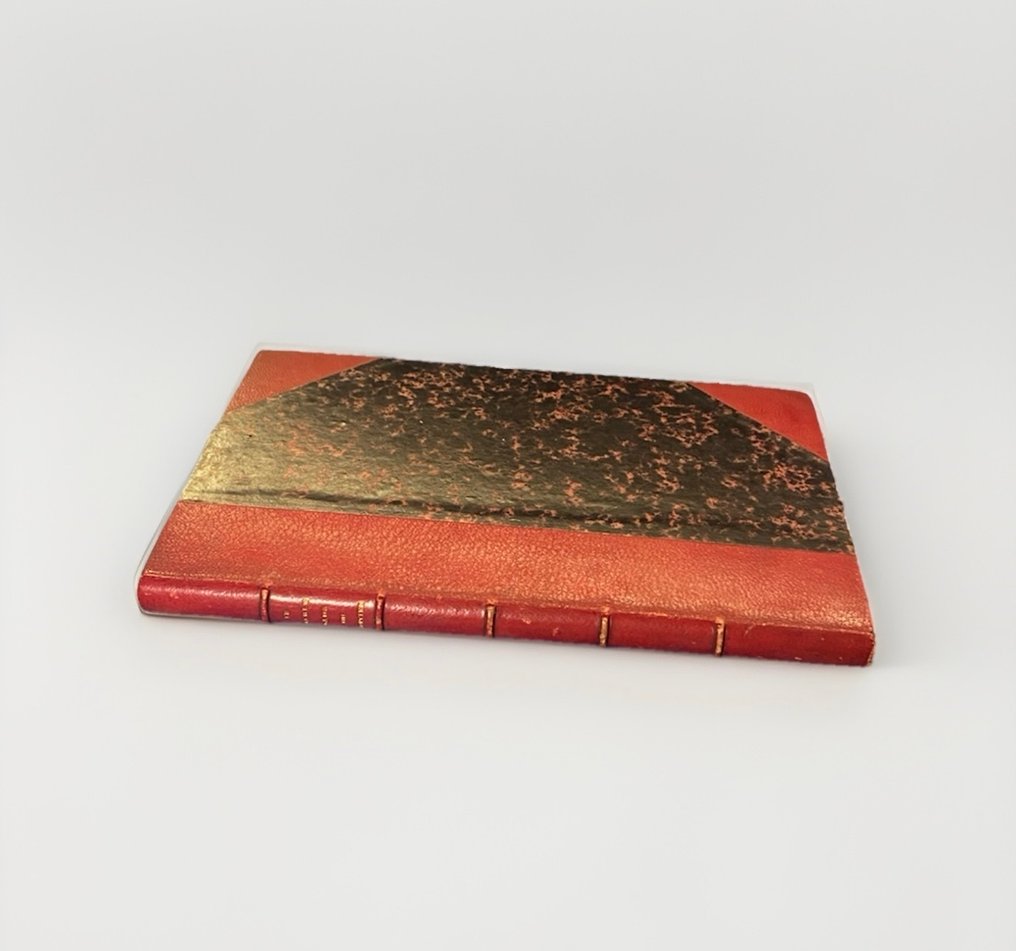
21.5 x 13.8; Pp. 123
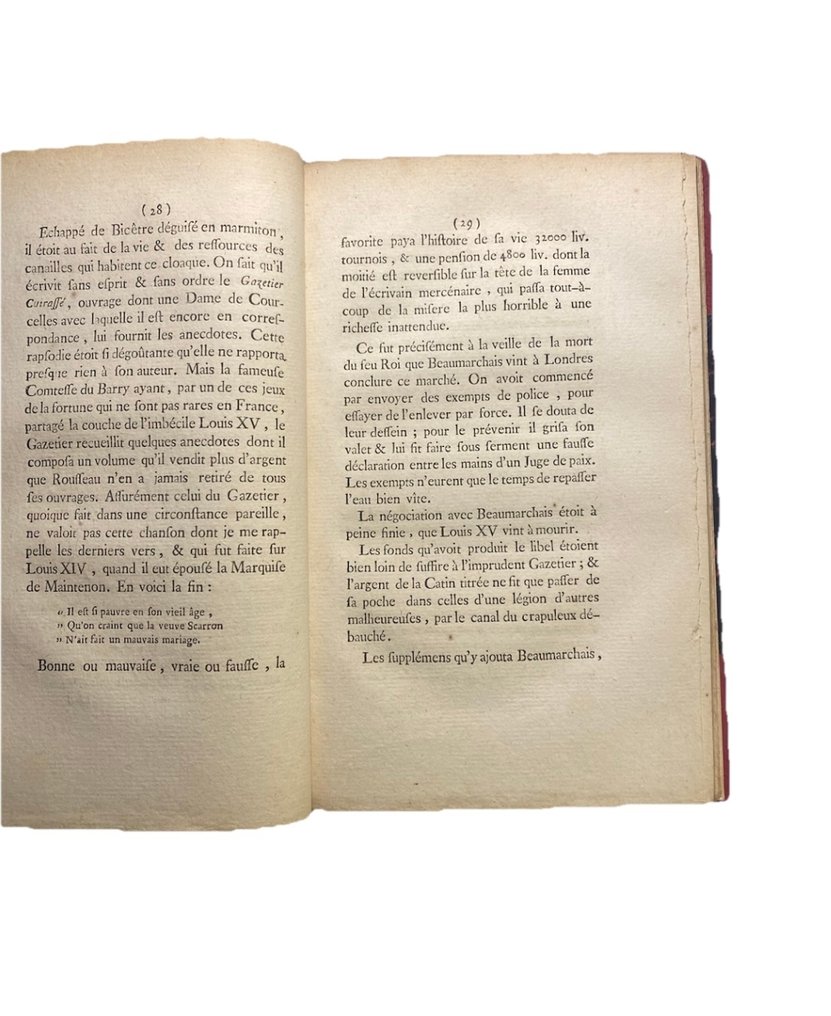
Le Diable dans un bénitier is a French satirical work published in 1784, which is set within the context of social and political critique of the time. The book immediately suggests a tone of irreverence and provocation, typical of 18th-century critical literature.
The author, Pierre Le Roux, who presents himself as an 'Engineer of the Great Paths,' employs ironic storytelling to criticize French society of the era, particularly its political and religious institutions. The plot centers around a character called the 'Gazetier cuirassé en mouche,' who appears to undergo some sort of metamorphosis or transformation, and probably serves as a satire of public figures or influential personalities.
The work is dedicated to the 'Marquis de Castries', a French politician and nobleman who was also Minister and Secretary of State. The dedication might suggest an intent of veiled criticisms of the elite of the time, especially the ruling class and its contradictions. The text also includes a critique of the authority of the Paris police and the administration of justice, expressed through the inspector 'Receveur', another fictional character.
The work is correct and revised by Abbé Aubert, who helps to give an erudite dimension to the publication. The presence of names of public figures and social and economic references indicates that the author intended the work as a satire of the political, social, and religious life of 18th-century France.
The book presents an ironic and biting critique of various aspects of French life of the time. The story seems to revolve around events and characters embodying corruption, social inequalities, and the struggle for power, all masked by a paradoxical and sometimes absurd narrative. The figure of the 'Gazetier cuirassé en mouche' could symbolize a journalist, an informant, or a character representing the hypocrisy of the political system and public opinion. The transformation of this character into something strange and grotesque evokes the idea of a distorted and deformed world.
The tone of the book is strongly satirical, and its criticisms are particularly directed at the police, the justice system, and the ruling elite. The author uses humor to express disdain for a system he considers unjust and corrupt, but does so through language that, while serious, is permeated with subtle irony.
The opera, despite dealing with heavy themes such as politics and religion, manages to maintain a lightness through its paradoxical style, making it not only a vehicle for social critique but also a literary game of the absurd.
First Edition
Anne-Gédéon, Marquis de Pellepore
The devil in a holy water font
And the metamorphosis of the cuirassed gazetteer into a fly, or the attempt of Monsieur Receiver, Inspector of the Police of Paris, Knight of St. Louis; to establish in London a police force similar to that of Paris.
Dedicated to Monseigneur the Marquis de Castries; Minister & Secretary of State for the Department of the Navy, etc. etc. etc.
Reviewed, corrected, and augmented by Mr. l'Abbé Aubert, Royal Censor.
By Pierre Le Roux, Civil Engineer.
In Paris, from the Royal Printing Office, with the Approval and Privilege of the King.
21.5 x 13.8; Pp. 123
Le Diable dans un bénitier is a French satirical work published in 1784, which is set within the context of social and political critique of the time. The book immediately suggests a tone of irreverence and provocation, typical of 18th-century critical literature.
The author, Pierre Le Roux, who presents himself as an 'Engineer of the Great Paths,' employs ironic storytelling to criticize French society of the era, particularly its political and religious institutions. The plot centers around a character called the 'Gazetier cuirassé en mouche,' who appears to undergo some sort of metamorphosis or transformation, and probably serves as a satire of public figures or influential personalities.
The work is dedicated to the 'Marquis de Castries', a French politician and nobleman who was also Minister and Secretary of State. The dedication might suggest an intent of veiled criticisms of the elite of the time, especially the ruling class and its contradictions. The text also includes a critique of the authority of the Paris police and the administration of justice, expressed through the inspector 'Receveur', another fictional character.
The work is correct and revised by Abbé Aubert, who helps to give an erudite dimension to the publication. The presence of names of public figures and social and economic references indicates that the author intended the work as a satire of the political, social, and religious life of 18th-century France.
The book presents an ironic and biting critique of various aspects of French life of the time. The story seems to revolve around events and characters embodying corruption, social inequalities, and the struggle for power, all masked by a paradoxical and sometimes absurd narrative. The figure of the 'Gazetier cuirassé en mouche' could symbolize a journalist, an informant, or a character representing the hypocrisy of the political system and public opinion. The transformation of this character into something strange and grotesque evokes the idea of a distorted and deformed world.
The tone of the book is strongly satirical, and its criticisms are particularly directed at the police, the justice system, and the ruling elite. The author uses humor to express disdain for a system he considers unjust and corrupt, but does so through language that, while serious, is permeated with subtle irony.
The opera, despite dealing with heavy themes such as politics and religion, manages to maintain a lightness through its paradoxical style, making it not only a vehicle for social critique but also a literary game of the absurd.
Details
Number of Books
1
Subject
History, Humour & caricature, Politics, Religion
Book Title
Le diable dans un bénitier
Author/ Illustrator
Anne-Gédéon
Condition
Fine
Publication year oldest item
1784
Height
21.5 cm
Edition
1st Edition
Width
13.8 cm
Language
French
Original language
Yes
Publisher
Imprimerie Royale, Parigi
Binding/ Material
Half leather
Number of pages
123
Sold by
