Vase - Clay - Japan - Bizen ware vase (No reserve price)



04
days
04
hours
50
minutes
11
seconds

15 other people are watching this object
 Bidder 0877 Bidder 0877 | €2 | |
|---|---|---|
 Bidder 3916 Bidder 3916 | €1 |
Catawiki Buyer Protection
Your payment’s safe with us until you receive your object.View details
Trustpilot 4.4 | 123641 reviews
Rated Excellent on Trustpilot.
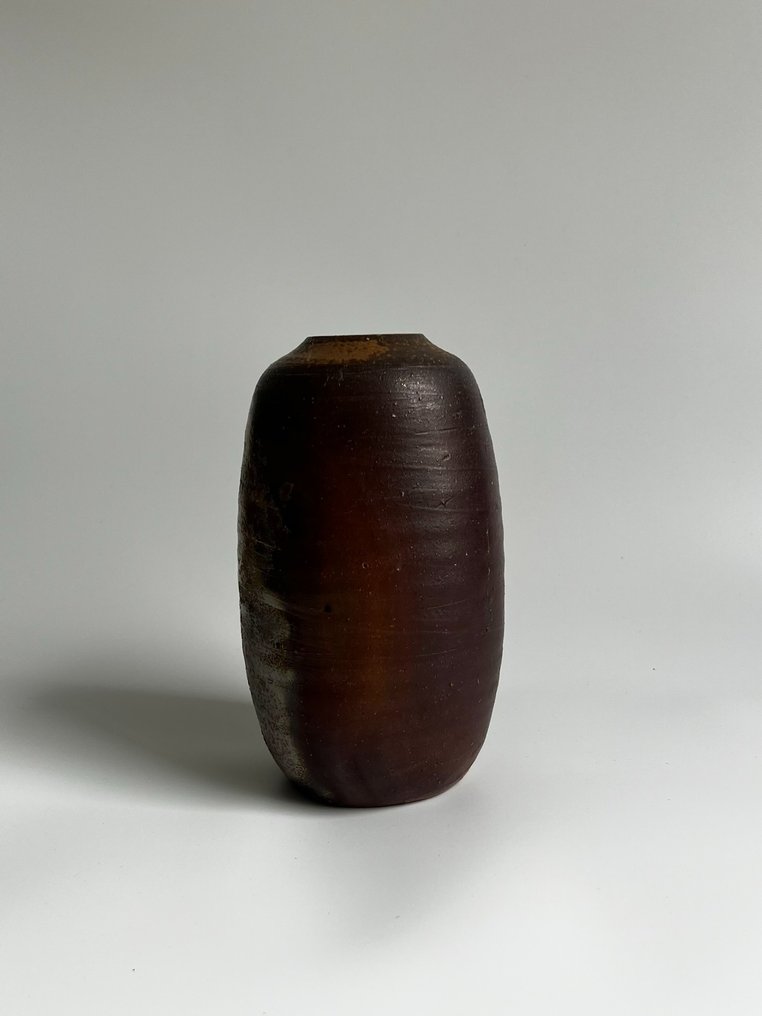
A handmade, unglazed, wood-fired Bizen ware vase by Keishu Bizen (Sato Keishu), in antique style, 18 cm high by 11 cm wide, made in Japan from clay, dating to 1990–2000, with fair condition—heavily used and possibly with minor parts missing.
AI-assisted summary
Description from the seller
This is a handmade wood-fired vase by Bizen ware master Keishu Bizen, a representative work within the Bizen ware craft system.
The name "Bizen Keishu" actually refers to Sato Keishu, a renowned Bizen ware master ("Bizen" is the category of his works, and "Keishu" is his name). He was one of the representative artisans in the Bizen ware field during the Showa era. Sato Keishu (さとう けいしゅう) was born in Onomichi City, Hiroshima Prefecture in 1944, the fourth son of Bizen ware ceramic artist Sato Takashi. He aspired to dedicate himself to ceramics in 1963, and in 1969 went to the Bizen region to specialize in Bizen ware under the guidance of his elder brother, Sato Hikaru. In 1978, he became a full member of the Japan Crafts Association. His works were selected for and won awards at numerous traditional craft exhibitions. He passed away prematurely in 1988 at the young age of 44, resulting in a scarcity of his works, each a highly prized piece in the Bizen ware collecting world.
Made using the signature "unglazed, naked-fired" technique of Bizen ware—the body is not glazed; instead, it relies entirely on the ash, temperature, and kiln atmosphere during the wood-fired firing process to create a mottled texture of interwoven gold and light gray on the dark brown body. Each fire mark and each ash hue is a unique "kiln transformation," possessing a rustic and irreplaceable natural quality.
The body retains the marks left by the craftsman's hand-shaping, its texture warm and rough to the touch, carrying the warmth of handcraftsmanship. The bottle has a rounded, full urn shape, approximately 18cm high and 11cm wide, with elegant and graceful proportions. It embodies the aesthetic of Bizen ware—"simple form, understated elegance"—and is also suitable for practical settings such as tea ceremonies and flower arrangements.
This is a handmade wood-fired vase by Bizen ware master Keishu Bizen, a representative work within the Bizen ware craft system.
The name "Bizen Keishu" actually refers to Sato Keishu, a renowned Bizen ware master ("Bizen" is the category of his works, and "Keishu" is his name). He was one of the representative artisans in the Bizen ware field during the Showa era. Sato Keishu (さとう けいしゅう) was born in Onomichi City, Hiroshima Prefecture in 1944, the fourth son of Bizen ware ceramic artist Sato Takashi. He aspired to dedicate himself to ceramics in 1963, and in 1969 went to the Bizen region to specialize in Bizen ware under the guidance of his elder brother, Sato Hikaru. In 1978, he became a full member of the Japan Crafts Association. His works were selected for and won awards at numerous traditional craft exhibitions. He passed away prematurely in 1988 at the young age of 44, resulting in a scarcity of his works, each a highly prized piece in the Bizen ware collecting world.
Made using the signature "unglazed, naked-fired" technique of Bizen ware—the body is not glazed; instead, it relies entirely on the ash, temperature, and kiln atmosphere during the wood-fired firing process to create a mottled texture of interwoven gold and light gray on the dark brown body. Each fire mark and each ash hue is a unique "kiln transformation," possessing a rustic and irreplaceable natural quality.
The body retains the marks left by the craftsman's hand-shaping, its texture warm and rough to the touch, carrying the warmth of handcraftsmanship. The bottle has a rounded, full urn shape, approximately 18cm high and 11cm wide, with elegant and graceful proportions. It embodies the aesthetic of Bizen ware—"simple form, understated elegance"—and is also suitable for practical settings such as tea ceremonies and flower arrangements.
Details
Era
1900-2000
Title additional information
Bizen ware vase
No. of items
1
Country of Origin
Japan
Designer/Artist/Maker
Bizen Keishu
Material
Clay
Style
Antique
Manufacturer/ Brand
Bizen-yaki
Condition
Fair condition - heavily used & with possibly minor parts missing
Height
18 cm
Width
11 cm
Depth
11 cm
Estimated Period
1990-2000
Sold by
