Bamboo Tea Scoop (Chashaku) "Hōrai" with Inscription by Yamaguchi Daichi, Daitoku-ji Kōrin-in - Bamboo - Yamaguchi Daichi / 山口大痴 (1914 — 1985) - Japan - Shōwa period (1926-1989)


04
days
06
hours
49
minutes
50
seconds
Current bid
€ 2
No reserve price

Expert
Selected by Marion Oliviero
Holds a master's in Chinese archaeology with extensive expertise in Japanese art.
Estimate € 150 - € 200
24 other people are watching this object
 Bidder 0760 Bidder 0760 | €2 | |
|---|---|---|
 Bidder 3279 Bidder 3279 | €1 |
Catawiki Buyer Protection
Your payment’s safe with us until you receive your object.View details
Trustpilot 4.4 | 123878 reviews
Rated Excellent on Trustpilot.
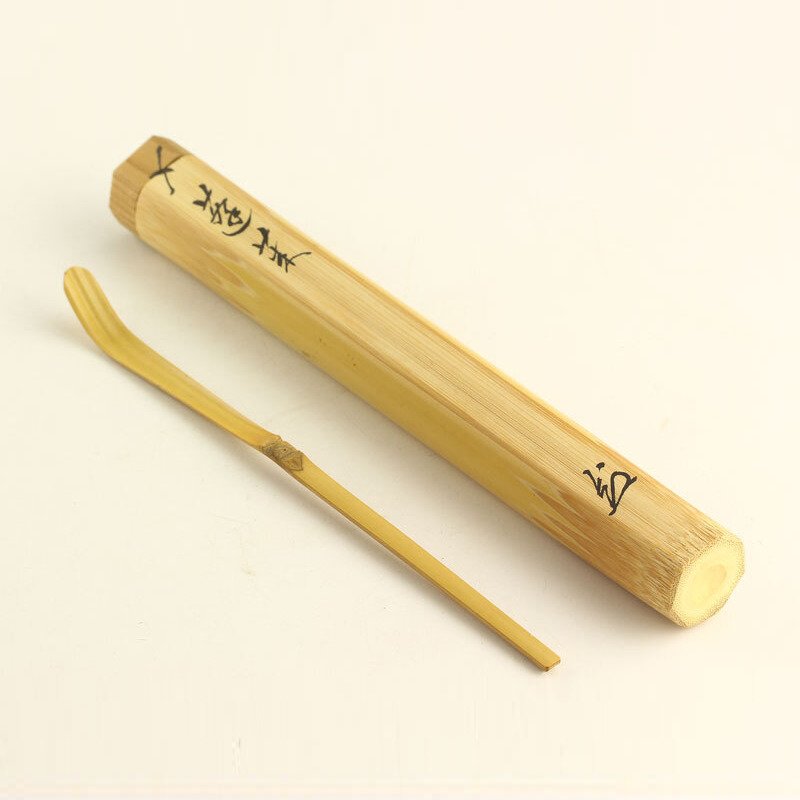
Shōwa-period bamboo chashaku titled Bamboo Tea Scoop “Hōrai” with inscription by Yamaguchi Daichi of Daitoku-ji Korin-in, 18.3 cm long, 1 cm wide, 1.3 cm deep, in excellent condition, accompanied by a bamboo kyōgo storage tube with brush calligraphy bearing the name Hōrai and a signature, and a tomobako wooden box.
AI-assisted summary
Description from the seller
A serene bamboo tea scoop carrying the poetic inscription of a Zen master—a quiet vessel for the practice of tea.
Description:
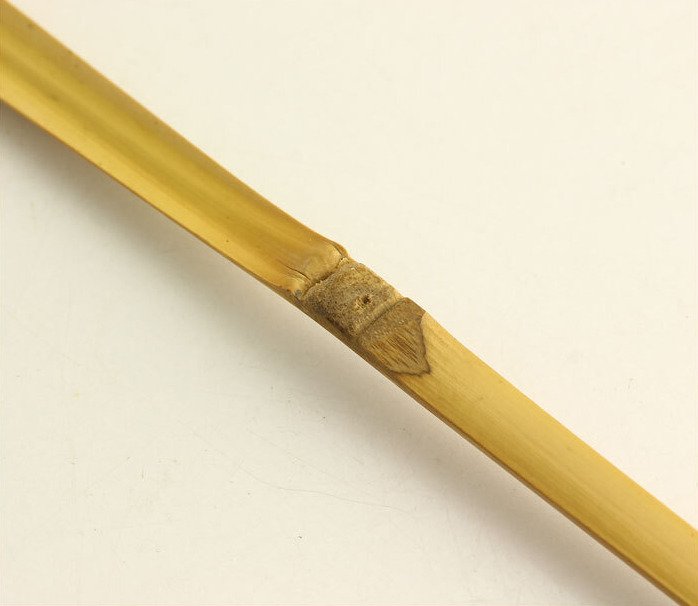
This bamboo tea scoop (chashaku) presents an elegant, slender profile with a gentle upward curve at the tip. The bamboo displays a warm, pale golden tone with subtle natural striations running along its length, revealing the organic character of the material. A single node (fushi) is positioned near the center of the shaft, adding visual interest and structural integrity.
The scoop portion (kaisaki) curves gracefully upward, shaped with refinement and care. The surface of the bamboo retains a soft, natural luster, while the underside of the node shows a lightly textured finish. The overall form is harmonious and well-proportioned, reflecting the aesthetic sensibilities associated with the Japanese tea ceremony.
The piece is accompanied by a bamboo storage tube (kyōgo) bearing brushed calligraphy with the poetic name "Hōrai" (蓬莱) and a signature. A wooden storage box (tomobako) is also included, with a paper label bearing calligraphy.
Cultural & Art Context:
The tea scoop holds a position of particular intimacy in Japanese tea culture. Carved by hand and often inscribed with poetic names by Zen priests, each chashaku becomes a unique expression of spiritual refinement. The practice of Zen masters inscribing tea utensils with evocative names (mei) has long connected the worlds of Zen Buddhism and the Way of Tea in Japan. Kōrin-in, a sub-temple of Daitoku-ji in Kyoto, has historically maintained close ties to the tea tradition.
Collector Appeal:
Tea scoops bearing the brushwork and inscription of Zen priests are treasured by tea practitioners and collectors of Japanese tea culture. This example, with its documented provenance and poetic name, offers an opportunity to acquire a piece intimately connected to the contemplative traditions of Kyoto's great Zen monasteries.
Artist Profile:
Yamaguchi Daichi (1914–1985) was a Rinzai Zen priest who served as the abbot of Kōrin-in, a sub-temple of Daitoku-ji in Kyoto. Born in Nagasaki Prefecture in 1914 (Taishō 3), he trained under Shimada Kikusen at Zenshō-ji in Suma before undertaking further practice at the monastic halls of Shōkoku-ji, Eihō-ji, and Nanzen-ji. He was appointed abbot of Kōrin-in in 1971 (Shōwa 46). In his later years, he also used the name Mansetsu (萬拙). He passed away in 1985 at the age of 71.
Shipping / Policy:
Carefully packaged and shipped from Japan by Japan Post or DHL with tracking.
If you purchase multiple items, combined shipping is available. Please contact us if needed.
Import duties, VAT (or equivalent consumption tax), and any other fees are the responsibility of the buyer.
Guarantee:
Our shop is a licensed antiques dealer in Japan.
We guarantee the authenticity of this work.
Seller's Story
Welcome to Yokohama Sakura Gallery — a small gateway to the quiet beauty of Japan.
We present a selection of Japanese art and antiques that capture the gentle passage of time and the spirit of craftsmanship.
Each piece, whether once used in daily life or made as an object of beauty, carries its own story —
a trace of the hands, materials, and moments that shaped it.
Through these works, we hope to share the charm of Japanese aesthetics —
a sense of balance, calm, and elegance found in simplicity and imperfection.
Every item is inspected and handled with care.
We are a licensed antiques dealer in Japan and guarantee the authenticity of each work.
All pieces are carefully packed and shipped worldwide with tracking.
We hope that among these quiet treasures,
you’ll find something that brings a touch of Japan’s warmth and serenity into your own space.
A serene bamboo tea scoop carrying the poetic inscription of a Zen master—a quiet vessel for the practice of tea.
Description:
This bamboo tea scoop (chashaku) presents an elegant, slender profile with a gentle upward curve at the tip. The bamboo displays a warm, pale golden tone with subtle natural striations running along its length, revealing the organic character of the material. A single node (fushi) is positioned near the center of the shaft, adding visual interest and structural integrity.
The scoop portion (kaisaki) curves gracefully upward, shaped with refinement and care. The surface of the bamboo retains a soft, natural luster, while the underside of the node shows a lightly textured finish. The overall form is harmonious and well-proportioned, reflecting the aesthetic sensibilities associated with the Japanese tea ceremony.
The piece is accompanied by a bamboo storage tube (kyōgo) bearing brushed calligraphy with the poetic name "Hōrai" (蓬莱) and a signature. A wooden storage box (tomobako) is also included, with a paper label bearing calligraphy.
Cultural & Art Context:
The tea scoop holds a position of particular intimacy in Japanese tea culture. Carved by hand and often inscribed with poetic names by Zen priests, each chashaku becomes a unique expression of spiritual refinement. The practice of Zen masters inscribing tea utensils with evocative names (mei) has long connected the worlds of Zen Buddhism and the Way of Tea in Japan. Kōrin-in, a sub-temple of Daitoku-ji in Kyoto, has historically maintained close ties to the tea tradition.
Collector Appeal:
Tea scoops bearing the brushwork and inscription of Zen priests are treasured by tea practitioners and collectors of Japanese tea culture. This example, with its documented provenance and poetic name, offers an opportunity to acquire a piece intimately connected to the contemplative traditions of Kyoto's great Zen monasteries.
Artist Profile:
Yamaguchi Daichi (1914–1985) was a Rinzai Zen priest who served as the abbot of Kōrin-in, a sub-temple of Daitoku-ji in Kyoto. Born in Nagasaki Prefecture in 1914 (Taishō 3), he trained under Shimada Kikusen at Zenshō-ji in Suma before undertaking further practice at the monastic halls of Shōkoku-ji, Eihō-ji, and Nanzen-ji. He was appointed abbot of Kōrin-in in 1971 (Shōwa 46). In his later years, he also used the name Mansetsu (萬拙). He passed away in 1985 at the age of 71.
Shipping / Policy:
Carefully packaged and shipped from Japan by Japan Post or DHL with tracking.
If you purchase multiple items, combined shipping is available. Please contact us if needed.
Import duties, VAT (or equivalent consumption tax), and any other fees are the responsibility of the buyer.
Guarantee:
Our shop is a licensed antiques dealer in Japan.
We guarantee the authenticity of this work.
Seller's Story
Welcome to Yokohama Sakura Gallery — a small gateway to the quiet beauty of Japan.
We present a selection of Japanese art and antiques that capture the gentle passage of time and the spirit of craftsmanship.
Each piece, whether once used in daily life or made as an object of beauty, carries its own story —
a trace of the hands, materials, and moments that shaped it.
Through these works, we hope to share the charm of Japanese aesthetics —
a sense of balance, calm, and elegance found in simplicity and imperfection.
Every item is inspected and handled with care.
We are a licensed antiques dealer in Japan and guarantee the authenticity of each work.
All pieces are carefully packed and shipped worldwide with tracking.
We hope that among these quiet treasures,
you’ll find something that brings a touch of Japan’s warmth and serenity into your own space.
Details
Dynastic Style/Period
Shōwa period (1926-1989)
No. of items
1
Artist
Yamaguchi Daichi / 山口大痴 (1914 — 1985)
Country of Origin
Japan
Material
Bamboo
Height
18.3 cm
Width
1 cm
Title of artwork
Bamboo Tea Scoop (Chashaku) "Hōrai" with Inscription by Yamaguchi Daichi, Daitoku-ji Kōrin-in
Depth
1.3 cm
Condition
Excellent condition
Sold by
