- - SACRAMENTARIO DEL VESCOVO WARMONDO DI IVREA - 1990-1990



12
days
05
hours
06
minutes
23
seconds
Current bid
€ 4
No reserve price

Expert
Selected by Sebastian Hau
Founded and directed two French book fairs; nearly 20 years of experience in contemporary books.
Estimate € 900 - € 1,100
15 other people are watching this object
 Bidder 6423 Bidder 6423 | €4 | |
|---|---|---|
 Bidder 1619 Bidder 1619 | €3 |
Catawiki Buyer Protection
Your payment’s safe with us until you receive your object.View details
Trustpilot 4.4 | 123759 reviews
Rated Excellent on Trustpilot.
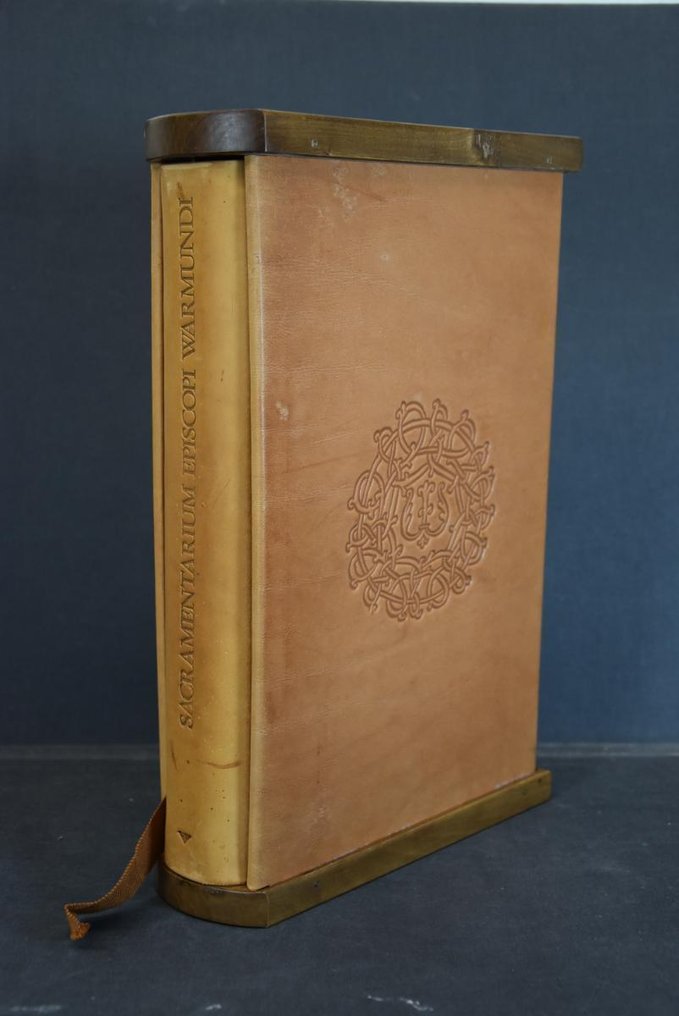
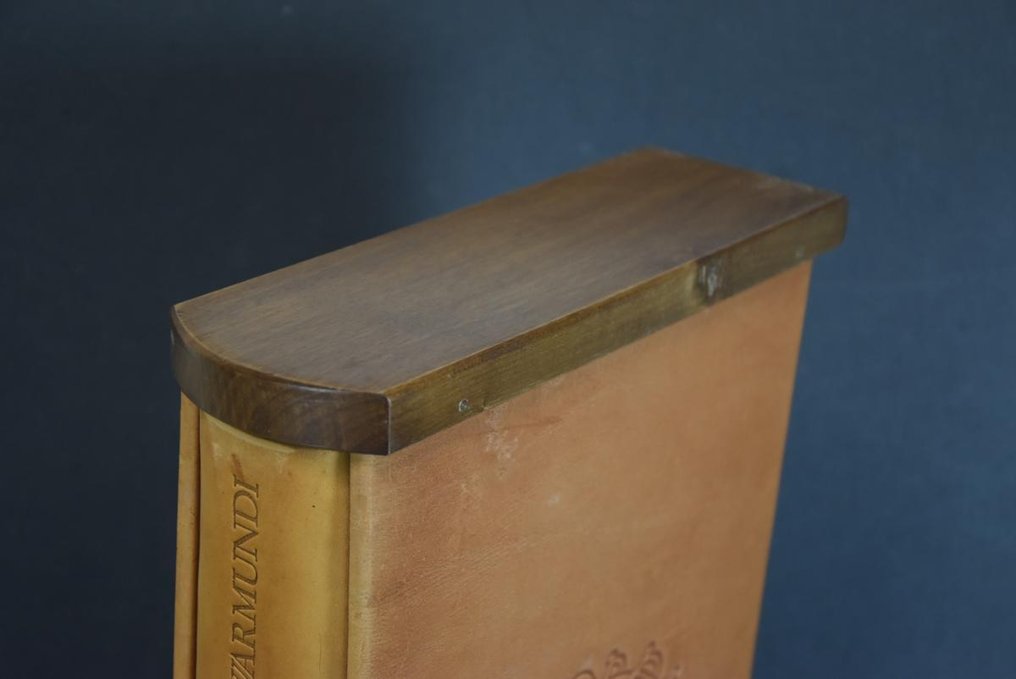
SACRAMENTARIO DEL VESCOVO WARMONDO DI IVREA, a Latin illuminated sacramentary bound in leather with a leather and wooden base coffer, editione numerata and limitata, 444 pages, 34 x 23 cm, published by Priuli & Verlucca Editori in 1990, in excellent condition (copy no. 37 of 1000).
AI-assisted summary
Description from the seller
Sacramentary of Bishop Warmondo of Ivrea. End of the 10th century. Ivrea, Biblioteca Capitolare, MS 31 LXXXVI. Priuli & Verlucca Editori - Diocese of Ivrea, 1999. Leather binding with impressions. Leather case with wooden base. In excellent condition. Edition of 1,000 copies (our no. 37). No reserve!
The sacramentary of Bishop Warmondo (in Latin, Sacramentarium Episcopi Warmundi) is a sacramentary commissioned by Bishop Warmondo of Ivrea around the year 1000 and is currently preserved at the Biblioteca Capitolare of Ivrea.[1][2][3]
The codex, measuring 22 by 31 cm, is composed of 222 sheets of parchment, written on both sides. Among the numerous codices possessed by the bishop, this is the most richly illustrated: it contains 65 full-page images and over three hundred decorated initial letters, using colors such as blue, yellow, green, and red.
The distinctive feature is the blending of traditional elements (images of saints and the life of Christ) with innovative elements (scenes of coronation of rulers and three images depicting the bishop himself).
Scholars attribute a propagandistic meaning to this pairing of themes in favor of the system of the imperial church, of which Warmondo, a supporter of Emperor Otto III of Saxony in his opposition to Arduino of Ivrea, was a proponent.
Warmondo or Varmondo or Veremondo (circa 930 – circa 1011) was an Italian bishop belonging to the noble family of Arborio. He held the episcopal seat of Ivrea from 965-968 until 1011 (probable year of his death); he was beatified by the Catholic Church.
Life
During his long episcopate of Ivrea, Warmondo brought great splendor to the city’s worship, primarily through the reconstruction of his cathedral from the foundations (as attested by an inscription on a stone embedded in its ambulatory), but also through the new impetus given to the scriptorium where copyists, illustrators, and illuminators worked. From it come the precious illuminated manuscripts now preserved in the Biblioteca Capitolare, most notably the Sacramentarium Episcopi Warmundi from the year 1002, a parchment codex of 444 pages with multiple miniatures and gold initial letters.
Warmondo is remembered mainly for being a protagonist of the Eporedian history around the year 1000, during the fierce struggle against Arduino, marquis of Ivrea, whom he contested feudal privileges over the territory around the city. Warmondo managed to obtain from Emperor Otto III the authority to administer justice, collect taxes, and mobilize local troops. He thus took on the role of 'bishop-count,' loyal to the emperor, a role that was widespread in many Italian cities at that time.
The years 997-999 were particularly bloody. Arduino, with the support of loyal vassals, incited violent riots in the city against the bishop, which caused civic mourning and led to the bishop's expulsion from his seat. Warmondo then launched two very fierce excommunications against Arduino in quick succession.
Although Arduino had become able to recognize his feudal privileges, Warmondo urged Ottone III to initiate a process against the crimes committed by his opponent. However, in 1001, Arduino, with his army, conquered Ivrea and Vercelli, expelling the respective bishops from their seats, and—taking advantage of the emperor's death—in 1002, he was proclaimed King of Italy by his loyal followers.
In 1003, the rivalry between Warmondo and Arduino was reignited, as during the blessing of the foundation stone of the Fruttuaria Abbey in San Benigno, the presence of the bishop of Ivrea, Ottobiano, is recorded alongside Arduino. (It should be remembered that both Arduino and Warmondo supported, at different times, the construction and autonomous administration of the abbey).
In 1004, the new German emperor Henry II, who had landed with his troops in Italy, defeated Arduino, allowing Warmondo to regain his power and govern his diocese.
Warmondo's name was already mentioned as a saint in the 12th century. On the other hand, in the Sacramentarium Episcopi Warmundi, he was depicted with a square halo, which iconography of the time reserved for the living in the odor of sanctity. His mortal remains are kept in a reliquary placed on the altar of a chapel in the Cathedral of Ivrea.
He was declared blessed, recognizing the immemorial cult, on September 17, 1857, by Pius IX, at the request of Monsignor Luigi Moreno, and is celebrated on November 13.
The excommunication against Arduino
The XX code of the Biblioteca Capitolare di Ivrea (which, with unintended irony, bears the title of Liber Benedictionum) preserves the text of the excommunication issued by Warmondo against Arduino; a text worth reading as a historical testimony of the level of conflict between the two contenders and of the temperament — quite uninclined to mercy — that the bishop of Ivrea must have had.
Please note that the ritual adopted by the church of Ivrea involved the excommunication being officiated with the presence of twelve priests holding lit lamps, while the bishop pronounced the terrible formula of excommunication: 'We curse Arduino and Amedeo, his brother, plunderers and destroyers of the Church of God; we curse all the citizens of Ivrea who gave them aid and counsel; may they be cursed in the city, cursed in the fields, cursed be their goods and lands, their livestock and all their animals, cursed wherever they enter and exit; may God send them hunger and pestilence; may they be cursed as vigilant, traveling, sleeping, resting. God strike them with misery, fevers, cold, heat, and infirmities until death. Strike them with delirium, blindness, and madness at all times; may their children soon be orphans and their wives widows. God, make them like chaff in the wind, like fire blazing in the forest, like flames released from the mountains. And may all these curses, from the soles of their feet to the top of their heads, envelop them everywhere, until they return penitently and submissively to the bosom of the mother Church. And all the people of this mother Church say: So be it, so be it. Amen.'
After finishing reading the excommunication, the twelve officiating priests threw their lamps to the ground and stomped on them.
Worship
The Church considers him blessed and commemorates him on November 13: from the Roman Martyrology: In Ivrea, Piedmont, the commemoration of Blessed Varmondo, bishop, who was distinguished for his lively faith, piety, and humility, claimed the Church's freedom from the snares of the powerful, built the cathedral, promoted monastic life, and established a episcopal school.
Sacramentary of Bishop Warmondo of Ivrea. End of the 10th century. Ivrea, Biblioteca Capitolare, MS 31 LXXXVI. Priuli & Verlucca Editori - Diocese of Ivrea, 1999. Leather binding with impressions. Leather case with wooden base. In excellent condition. Edition of 1,000 copies (our no. 37). No reserve!
The sacramentary of Bishop Warmondo (in Latin, Sacramentarium Episcopi Warmundi) is a sacramentary commissioned by Bishop Warmondo of Ivrea around the year 1000 and is currently preserved at the Biblioteca Capitolare of Ivrea.[1][2][3]
The codex, measuring 22 by 31 cm, is composed of 222 sheets of parchment, written on both sides. Among the numerous codices possessed by the bishop, this is the most richly illustrated: it contains 65 full-page images and over three hundred decorated initial letters, using colors such as blue, yellow, green, and red.
The distinctive feature is the blending of traditional elements (images of saints and the life of Christ) with innovative elements (scenes of coronation of rulers and three images depicting the bishop himself).
Scholars attribute a propagandistic meaning to this pairing of themes in favor of the system of the imperial church, of which Warmondo, a supporter of Emperor Otto III of Saxony in his opposition to Arduino of Ivrea, was a proponent.
Warmondo or Varmondo or Veremondo (circa 930 – circa 1011) was an Italian bishop belonging to the noble family of Arborio. He held the episcopal seat of Ivrea from 965-968 until 1011 (probable year of his death); he was beatified by the Catholic Church.
Life
During his long episcopate of Ivrea, Warmondo brought great splendor to the city’s worship, primarily through the reconstruction of his cathedral from the foundations (as attested by an inscription on a stone embedded in its ambulatory), but also through the new impetus given to the scriptorium where copyists, illustrators, and illuminators worked. From it come the precious illuminated manuscripts now preserved in the Biblioteca Capitolare, most notably the Sacramentarium Episcopi Warmundi from the year 1002, a parchment codex of 444 pages with multiple miniatures and gold initial letters.
Warmondo is remembered mainly for being a protagonist of the Eporedian history around the year 1000, during the fierce struggle against Arduino, marquis of Ivrea, whom he contested feudal privileges over the territory around the city. Warmondo managed to obtain from Emperor Otto III the authority to administer justice, collect taxes, and mobilize local troops. He thus took on the role of 'bishop-count,' loyal to the emperor, a role that was widespread in many Italian cities at that time.
The years 997-999 were particularly bloody. Arduino, with the support of loyal vassals, incited violent riots in the city against the bishop, which caused civic mourning and led to the bishop's expulsion from his seat. Warmondo then launched two very fierce excommunications against Arduino in quick succession.
Although Arduino had become able to recognize his feudal privileges, Warmondo urged Ottone III to initiate a process against the crimes committed by his opponent. However, in 1001, Arduino, with his army, conquered Ivrea and Vercelli, expelling the respective bishops from their seats, and—taking advantage of the emperor's death—in 1002, he was proclaimed King of Italy by his loyal followers.
In 1003, the rivalry between Warmondo and Arduino was reignited, as during the blessing of the foundation stone of the Fruttuaria Abbey in San Benigno, the presence of the bishop of Ivrea, Ottobiano, is recorded alongside Arduino. (It should be remembered that both Arduino and Warmondo supported, at different times, the construction and autonomous administration of the abbey).
In 1004, the new German emperor Henry II, who had landed with his troops in Italy, defeated Arduino, allowing Warmondo to regain his power and govern his diocese.
Warmondo's name was already mentioned as a saint in the 12th century. On the other hand, in the Sacramentarium Episcopi Warmundi, he was depicted with a square halo, which iconography of the time reserved for the living in the odor of sanctity. His mortal remains are kept in a reliquary placed on the altar of a chapel in the Cathedral of Ivrea.
He was declared blessed, recognizing the immemorial cult, on September 17, 1857, by Pius IX, at the request of Monsignor Luigi Moreno, and is celebrated on November 13.
The excommunication against Arduino
The XX code of the Biblioteca Capitolare di Ivrea (which, with unintended irony, bears the title of Liber Benedictionum) preserves the text of the excommunication issued by Warmondo against Arduino; a text worth reading as a historical testimony of the level of conflict between the two contenders and of the temperament — quite uninclined to mercy — that the bishop of Ivrea must have had.
Please note that the ritual adopted by the church of Ivrea involved the excommunication being officiated with the presence of twelve priests holding lit lamps, while the bishop pronounced the terrible formula of excommunication: 'We curse Arduino and Amedeo, his brother, plunderers and destroyers of the Church of God; we curse all the citizens of Ivrea who gave them aid and counsel; may they be cursed in the city, cursed in the fields, cursed be their goods and lands, their livestock and all their animals, cursed wherever they enter and exit; may God send them hunger and pestilence; may they be cursed as vigilant, traveling, sleeping, resting. God strike them with misery, fevers, cold, heat, and infirmities until death. Strike them with delirium, blindness, and madness at all times; may their children soon be orphans and their wives widows. God, make them like chaff in the wind, like fire blazing in the forest, like flames released from the mountains. And may all these curses, from the soles of their feet to the top of their heads, envelop them everywhere, until they return penitently and submissively to the bosom of the mother Church. And all the people of this mother Church say: So be it, so be it. Amen.'
After finishing reading the excommunication, the twelve officiating priests threw their lamps to the ground and stomped on them.
Worship
The Church considers him blessed and commemorates him on November 13: from the Roman Martyrology: In Ivrea, Piedmont, the commemoration of Blessed Varmondo, bishop, who was distinguished for his lively faith, piety, and humility, claimed the Church's freedom from the snares of the powerful, built the cathedral, promoted monastic life, and established a episcopal school.
Details
Number of Books
1
Subject
Illustrated, Religion
Book Title
SACRAMENTARIO DEL VESCOVO WARMONDO DI IVREA
Author/ Illustrator
-
Condition
Fine
Publication year oldest item
1990
Publication year youngest item
1990
Height
34 cm
Edition
Limited edition, Numbered edition
Width
23 cm
Language
Latin
Original language
Yes
Publisher
Priuli & Verlucca, Editori
Binding/ Material
Leather
Number of pages
444
Sold by
