Anonimo - Il libro dei tornei della nobiltà del Hraichgau - 1615-1983


12
days
04
hours
13
minutes
03
seconds

19 other people are watching this object
 Bidder 5870 Bidder 5870 | €5 | |
|---|---|---|
 Bidder 7720 Bidder 7720 | €2 |
Catawiki Buyer Protection
Your payment’s safe with us until you receive your object.View details
Trustpilot 4.4 | 123759 reviews
Rated Excellent on Trustpilot.
Il libro dei tornei della nobiltà del Hraichgau, an illustrated edition by Anonymous, in a parchment binding in German, 120 pages, original language German, with the commentary volume edited by Lotte Kurras (1983) and an accompanying case, in excellent condition.
AI-assisted summary
Description from the seller
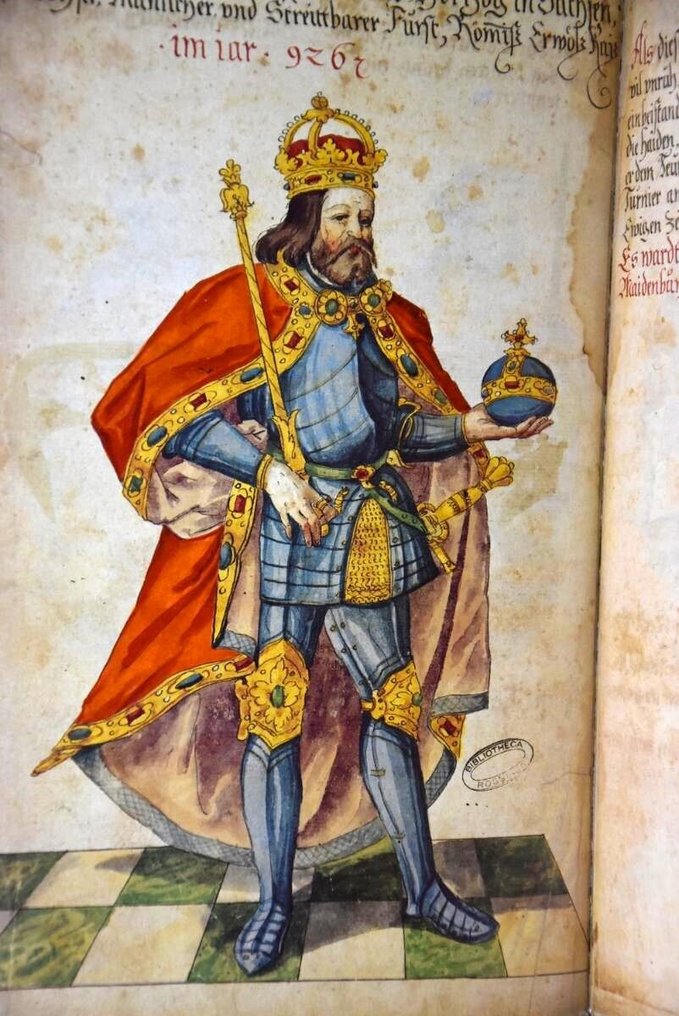
The book of tournaments of the nobility of Kraichgau. Rossiano Codex 711. circa 1615. Preserved in the Vatican Apostolic Library. Milan, Jaca Book Codices, 1983. Leather binding with impressions. Complete with the commentary volume edited by Lotte Kurras. With case. In excellent condition – slight signs of use on the case.
Rossiano 711 is a precious illuminated manuscript preserved in the Vatican Apostolic Library, known as The Book of Tournaments of the Nobility of Kraichgau, dating from around 1615. It describes knightly tournaments. It illustrates the tournaments and chivalric activities of the nobility of Kraichgau, a historic German region.
A medieval tournament is a form of competition originating from the medieval period; it began as martial games aimed at practicing the art of war, and according to historical sources, it spread from the 9th century within the Carolingian realm.
In current usage, the terms tournament and joust do not indicate different activities, although the latter is more properly a combat between two knights with a 'lance in rest,' and a tournament a fight between foot soldiers. They originated in medieval feudal times and from the main military structure of the era, the cavalry. It should be remembered that foot combat was also often organized, a specialty loved by Henry VIII of England.
Knightly duel in a tournament in the illustration Sir Nigel Sustains England’s Honor by N.C. Wyeth, from 1922.
Story
Tournaments spread throughout Europe starting from the 12th century and became increasingly important, becoming quite lavish and spectacular. Goffredo II of Preuilly set only the rules that governed them, but by his time, they were already widespread. The tournament originated in the lands of the Franks; in Italy, there are testimonies of tournaments as early as the 12th century. Originally, they involved battles with a high risk of death, but by the 13th century, the use of blunted lances and swords without points or edges became common. Even with these precautions, serious accidents continued to occur.
Tournament in Castilla.
The violence that resulted from the clashes led the Church in 1130 to prohibit, unsuccessfully, the tournaments, excommunicating the participants and forbidding Christian burial for those who died in the clashes. In the 13th century, a distinction was formalized between tournaments with 'à outrance' weapons, meaning battle weapons, and 'à plaisance' weapons, to limit injuries. Thanks to the new form of tournament, the Church abolished the prohibitions in 1281. The main regulations were written in Old French, and those who did not comply were accused of being a fellone; the last events took place until the 17th century.
Description
They consisted of combats, with no intervening hatred (Ruggero di Hoveden), involving knights in teams or pairs, on horseback but also on foot, and were governed by a precise ceremonial: the knights were called one by one by the herald of arms, who displayed their coat of arms or shield and any noble titles, presenting them to the audience crowding the arena and to the lord or authority who had organized the tournament.
The participants
In these tournaments, knights and generally members of the European high aristocracy, including the rulers of important kingdoms, participated. During the combat, knights were expected to behave loyally, fight solely for exercise, and for the display of strength (Ruggero di Hoveden), adhering to a strict code of honor directly derived from that of the military aristocracy.
The rides
A carousel
During the development of the tournament itself, that is, fought between two sides, the joust was born, an ideal duel between individual knights. Between the 15th century and the following century, the joust became the most successful event, thanks to its captivating ceremonial.
The knights, according to the rules of courtly love, jousted in the name of their service of love towards a lady.
In the 15th century, a barrier was introduced to keep the two jousting competitors separated during their gallop against each other. The goal was to dislodge the opponent with the impact of the lance, but without hitting the helmet. The lances were made of ash, so they would shatter upon impact, preventing the armor of the struck from being breached.
Tournaments originated for the physical and military training of nobles during the winter months. The main occupation of nobles in the Middle Ages was military campaigns, which were held, except in rare cases, during the warm months; in the cold months, armies were disbanded, and the cold also prevented hunting activities for some periods.
This caused a weakening of the body and reflexes, and the solution was found in organizing simulated battles, already documented in the Carolingian era in the chronicles of the historian Nitardo.
A term initially used to refer to the tournament is hastiludium, meaning 'game of lance': in the 11th century, the practice of fighting on horseback with a 'lance in rest'—that is, with a long lance firmly held under the right arm, secured by a protrusion of the armor (the rest) on which a groove of the lance rested—became widespread.
In the early tournaments, opposing formations of knights fought fiercely in wide spaces outside inhabited areas. One formation was made up of the ténants, those who had issued the challenge, and the other of the vénants, those who had accepted it.
Due to the combat methods characterized by few rules and initially limited supervision, there were many cases where tournaments were exploited to resolve disputes among nobles, leading to the death of many participants. A well-known example is the tournament held in Chalons in 1273, where a clash of blows too harsh occurred between Count of Chalons and King Edward I of England, which escalated into a full-blown conflict between the two sides of participants, so much so that the tournament was later nicknamed "The Little Battle of Chalons".[1] [2]
High society
The passion for these martial arts spread quickly among a diverse audience: soon, the tournaments took on a luxurious appearance and were organized to celebrate victories, anniversaries, agreements between lords, and religious festivals.
The organization of events became increasingly ritualistic and sumptuous, codified by a complex ceremonial. The knights' armor grew more elaborate and personalized with bright trappings and colors.
Tournaments were therefore associated with social events: in 1468 at Pas de l'Arbre d'Or, a tournament was held to celebrate the marriage of the Duke of Burgundy; in Paris in 1559, a tournament took place for the marriage between Philip II of Spain and Elizabeth, daughter of Henry II of France, who was fatally wounded there. The Challenge of Barletta, born from a matter of honor in 1503 between 13 French and 13 Italians, saw the victory of the latter.
In 1474 at Malpaga, Bartolomeo Colleoni held a tournament in honor of the guest King Christian I of Denmark, depicted in the frescoes by Romanino.
The horses used
The same topic in detail: Destriero.
Obviously, the care for horses was very important, both in terms of training and their equipment.
Horses had to be trained, just like in real battles, to respond swiftly and decisively to the rider's commands during combat, to spin and rear to allow powerful downward strikes; therefore, a harmony between man and animal was essential, achievable only through continuous training. To enable the rider to deliver an optimal impact, during the joust with a wooden or fabric divider between the participants in motion, it was crucial that the animal was well-trained to maintain a canter on the right lead, which is precisely why it was called 'destriero'.
The animal's armor was designed to protect the horse itself and its rider. The saddle had a wide arch to protect the lower abdomen and sometimes also the rider's thighs. The bridle was very thick and covered much of the horse's field of view so that the horse would not react on its own initiative during combat. The ornament included a conspicuous cloth covering, called a gualdrappa, in the colors of the rider.
Commemorative manifesto of the 4th centenary of the Disfida di Barletta.
The cultural consequences
From the mid-16th century, tournaments and jousts lost their original character, as the ideals from which they were born declined in society, leaving only the most spectacular aspects. Sometimes, jousts are included among the shows offered during medieval festivals.
From this, the carousel originated, which is a parade of knights to celebrate anniversaries or festivals. Even today in Italy, these are practiced as civic events, involving carousel exercises where participants must spear increasingly smaller rings with a lance or hit spinning poles or busts, such as:
Corsa all'Anello (Narni)
Giostra dell'Arme (San Gemini)
Giostra della Quintana (Foligno)
Calendimaggio (Assisi)
Pink Easter Palio (Assisi)
Palio of San Rufino (Assisi)
Palio della Balestra (Gubbio) and (Sansepolcro);
Saracen Joust of Sarteano (Sarteano)
Giostra del Saracino (Arezzo)
Bear Joust (Pistoia)
Knightly Joust (Sulmona)
Giostra della Quintana (Ascoli Piceno)
Palio of Niballo (Faenza)
Palio of Casole d'Elsa (Siena)
Giostra del monaco (Ferrara)
Giostra della rocca (Monselice)
Jaletta Fair (San Marco la Catola).
The book of tournaments of the nobility of Kraichgau. Rossiano Codex 711. circa 1615. Preserved in the Vatican Apostolic Library. Milan, Jaca Book Codices, 1983. Leather binding with impressions. Complete with the commentary volume edited by Lotte Kurras. With case. In excellent condition – slight signs of use on the case.
Rossiano 711 is a precious illuminated manuscript preserved in the Vatican Apostolic Library, known as The Book of Tournaments of the Nobility of Kraichgau, dating from around 1615. It describes knightly tournaments. It illustrates the tournaments and chivalric activities of the nobility of Kraichgau, a historic German region.
A medieval tournament is a form of competition originating from the medieval period; it began as martial games aimed at practicing the art of war, and according to historical sources, it spread from the 9th century within the Carolingian realm.
In current usage, the terms tournament and joust do not indicate different activities, although the latter is more properly a combat between two knights with a 'lance in rest,' and a tournament a fight between foot soldiers. They originated in medieval feudal times and from the main military structure of the era, the cavalry. It should be remembered that foot combat was also often organized, a specialty loved by Henry VIII of England.
Knightly duel in a tournament in the illustration Sir Nigel Sustains England’s Honor by N.C. Wyeth, from 1922.
Story
Tournaments spread throughout Europe starting from the 12th century and became increasingly important, becoming quite lavish and spectacular. Goffredo II of Preuilly set only the rules that governed them, but by his time, they were already widespread. The tournament originated in the lands of the Franks; in Italy, there are testimonies of tournaments as early as the 12th century. Originally, they involved battles with a high risk of death, but by the 13th century, the use of blunted lances and swords without points or edges became common. Even with these precautions, serious accidents continued to occur.
Tournament in Castilla.
The violence that resulted from the clashes led the Church in 1130 to prohibit, unsuccessfully, the tournaments, excommunicating the participants and forbidding Christian burial for those who died in the clashes. In the 13th century, a distinction was formalized between tournaments with 'à outrance' weapons, meaning battle weapons, and 'à plaisance' weapons, to limit injuries. Thanks to the new form of tournament, the Church abolished the prohibitions in 1281. The main regulations were written in Old French, and those who did not comply were accused of being a fellone; the last events took place until the 17th century.
Description
They consisted of combats, with no intervening hatred (Ruggero di Hoveden), involving knights in teams or pairs, on horseback but also on foot, and were governed by a precise ceremonial: the knights were called one by one by the herald of arms, who displayed their coat of arms or shield and any noble titles, presenting them to the audience crowding the arena and to the lord or authority who had organized the tournament.
The participants
In these tournaments, knights and generally members of the European high aristocracy, including the rulers of important kingdoms, participated. During the combat, knights were expected to behave loyally, fight solely for exercise, and for the display of strength (Ruggero di Hoveden), adhering to a strict code of honor directly derived from that of the military aristocracy.
The rides
A carousel
During the development of the tournament itself, that is, fought between two sides, the joust was born, an ideal duel between individual knights. Between the 15th century and the following century, the joust became the most successful event, thanks to its captivating ceremonial.
The knights, according to the rules of courtly love, jousted in the name of their service of love towards a lady.
In the 15th century, a barrier was introduced to keep the two jousting competitors separated during their gallop against each other. The goal was to dislodge the opponent with the impact of the lance, but without hitting the helmet. The lances were made of ash, so they would shatter upon impact, preventing the armor of the struck from being breached.
Tournaments originated for the physical and military training of nobles during the winter months. The main occupation of nobles in the Middle Ages was military campaigns, which were held, except in rare cases, during the warm months; in the cold months, armies were disbanded, and the cold also prevented hunting activities for some periods.
This caused a weakening of the body and reflexes, and the solution was found in organizing simulated battles, already documented in the Carolingian era in the chronicles of the historian Nitardo.
A term initially used to refer to the tournament is hastiludium, meaning 'game of lance': in the 11th century, the practice of fighting on horseback with a 'lance in rest'—that is, with a long lance firmly held under the right arm, secured by a protrusion of the armor (the rest) on which a groove of the lance rested—became widespread.
In the early tournaments, opposing formations of knights fought fiercely in wide spaces outside inhabited areas. One formation was made up of the ténants, those who had issued the challenge, and the other of the vénants, those who had accepted it.
Due to the combat methods characterized by few rules and initially limited supervision, there were many cases where tournaments were exploited to resolve disputes among nobles, leading to the death of many participants. A well-known example is the tournament held in Chalons in 1273, where a clash of blows too harsh occurred between Count of Chalons and King Edward I of England, which escalated into a full-blown conflict between the two sides of participants, so much so that the tournament was later nicknamed "The Little Battle of Chalons".[1] [2]
High society
The passion for these martial arts spread quickly among a diverse audience: soon, the tournaments took on a luxurious appearance and were organized to celebrate victories, anniversaries, agreements between lords, and religious festivals.
The organization of events became increasingly ritualistic and sumptuous, codified by a complex ceremonial. The knights' armor grew more elaborate and personalized with bright trappings and colors.
Tournaments were therefore associated with social events: in 1468 at Pas de l'Arbre d'Or, a tournament was held to celebrate the marriage of the Duke of Burgundy; in Paris in 1559, a tournament took place for the marriage between Philip II of Spain and Elizabeth, daughter of Henry II of France, who was fatally wounded there. The Challenge of Barletta, born from a matter of honor in 1503 between 13 French and 13 Italians, saw the victory of the latter.
In 1474 at Malpaga, Bartolomeo Colleoni held a tournament in honor of the guest King Christian I of Denmark, depicted in the frescoes by Romanino.
The horses used
The same topic in detail: Destriero.
Obviously, the care for horses was very important, both in terms of training and their equipment.
Horses had to be trained, just like in real battles, to respond swiftly and decisively to the rider's commands during combat, to spin and rear to allow powerful downward strikes; therefore, a harmony between man and animal was essential, achievable only through continuous training. To enable the rider to deliver an optimal impact, during the joust with a wooden or fabric divider between the participants in motion, it was crucial that the animal was well-trained to maintain a canter on the right lead, which is precisely why it was called 'destriero'.
The animal's armor was designed to protect the horse itself and its rider. The saddle had a wide arch to protect the lower abdomen and sometimes also the rider's thighs. The bridle was very thick and covered much of the horse's field of view so that the horse would not react on its own initiative during combat. The ornament included a conspicuous cloth covering, called a gualdrappa, in the colors of the rider.
Commemorative manifesto of the 4th centenary of the Disfida di Barletta.
The cultural consequences
From the mid-16th century, tournaments and jousts lost their original character, as the ideals from which they were born declined in society, leaving only the most spectacular aspects. Sometimes, jousts are included among the shows offered during medieval festivals.
From this, the carousel originated, which is a parade of knights to celebrate anniversaries or festivals. Even today in Italy, these are practiced as civic events, involving carousel exercises where participants must spear increasingly smaller rings with a lance or hit spinning poles or busts, such as:
Corsa all'Anello (Narni)
Giostra dell'Arme (San Gemini)
Giostra della Quintana (Foligno)
Calendimaggio (Assisi)
Pink Easter Palio (Assisi)
Palio of San Rufino (Assisi)
Palio della Balestra (Gubbio) and (Sansepolcro);
Saracen Joust of Sarteano (Sarteano)
Giostra del Saracino (Arezzo)
Bear Joust (Pistoia)
Knightly Joust (Sulmona)
Giostra della Quintana (Ascoli Piceno)
Palio of Niballo (Faenza)
Palio of Casole d'Elsa (Siena)
Giostra del monaco (Ferrara)
Giostra della rocca (Monselice)
Jaletta Fair (San Marco la Catola).
Details
Number of Books
1
Subject
Heraldry, History, Illustrated
Book Title
Il libro dei tornei della nobiltà del Hraichgau
Author/ Illustrator
Anonimo
Condition
Fine
Publication year oldest item
1615
Publication year youngest item
1983
Height
31.5 cm
Edition
Illustrated Edition
Width
20 cm
Language
German
Original language
Yes
Binding/ Material
Vellum
Number of pages
120
Sold by
