Early XXth Bed linen in pure linen with E.C. initials - Textile - 3.2 m - 2.3 m

08
days
02
hours
55
minutes
28
seconds

No bids placed
Catawiki Buyer Protection
Your payment’s safe with us until you receive your object.View details
Trustpilot 4.4 | 123718 reviews
Rated Excellent on Trustpilot.
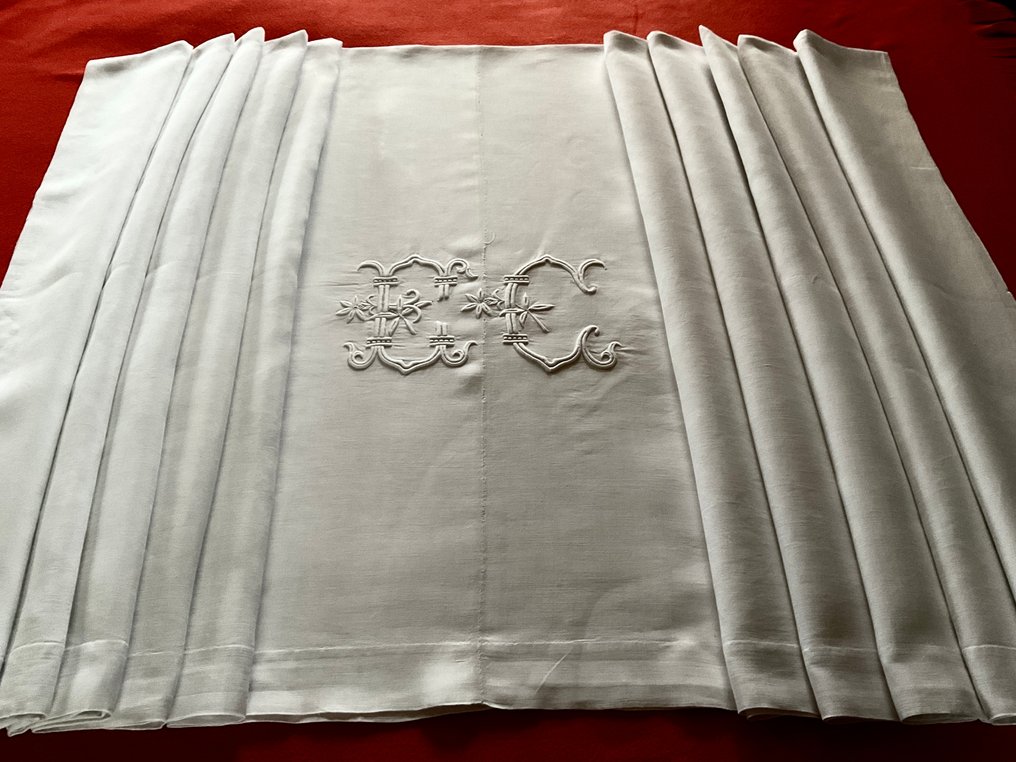
France origin, model Early XXth Bed linen in pure linen with E.C. initials, white, 3.20 m × 2.30 m, dating to circa 1920–1930, in good condition with minor signs of wear.
AI-assisted summary
Description from the seller
It is always the bride's family who provides the trousseau ( dowry ).
The quantity of items in a trousseau is entirely optional and depends not only on the amount allocated to this purchase but also on customs: even among families, some may have a need for linen.
Quantity is absolutely necessary in the countryside where linen was only washed in large batches in public washhouses or by streams a few times a year.
Women of the 20th century are much more refined, more subtle, more solemn than those women of yesteryear who sacrificed everything to appearances: under their magnificent dresses, they wore thick linen chemises, deadly corsets, and buckram linings. A special room was needed to contain the bulky wardrobes and the precious, cumbersome trousseau.
In the provinces, where the quiet hours allow for manual labor in all its
forms, lingerie plays a large role in domestic activities, and most
young girls, for the pleasure of pretty embroidery and fine lace,
carefully sew their future trousseau.
from 1928 onwards, it sometimes happened that the fiancés brought their own underwear and that the cost of buying household linen were borne by the young couple themselves.
A typical dowry for a provincial couple would consist of:
2 elegant night gowns with lace.
3 dozen handkerchiefs.
5 petticoats.
3 flannel scalloped petticoats.
2 embroidered bed linen.
6 simple bed linen.
12 pillow cases of which 2 embroidered
12 terry towels.
24 tea towels.
6 hand towels.
1 table linen with 6 napkins.
1 table linen with 8 to 10 napkins.
1 damask table linen with 12 napkins.
12 aprons.
The above would not have applied to the so called French Bourgeoisie families, nor the enclosed bed linen with E.C. initials.
The quantities of linen would have been many times multiplied and I have seen inventories of the bride having to arrive with 35 bed linen and as many pillow case sets. etc.
This bed linen in fact is one of 4 identical pieces and this would have been quite normal for the upper crust French to order half a dozen of the same family initials. And in fact all 4 pieces come from the same Bourgeoisie family. None of the children are interested in old linen! Such a pity not to carry on with the tradition.
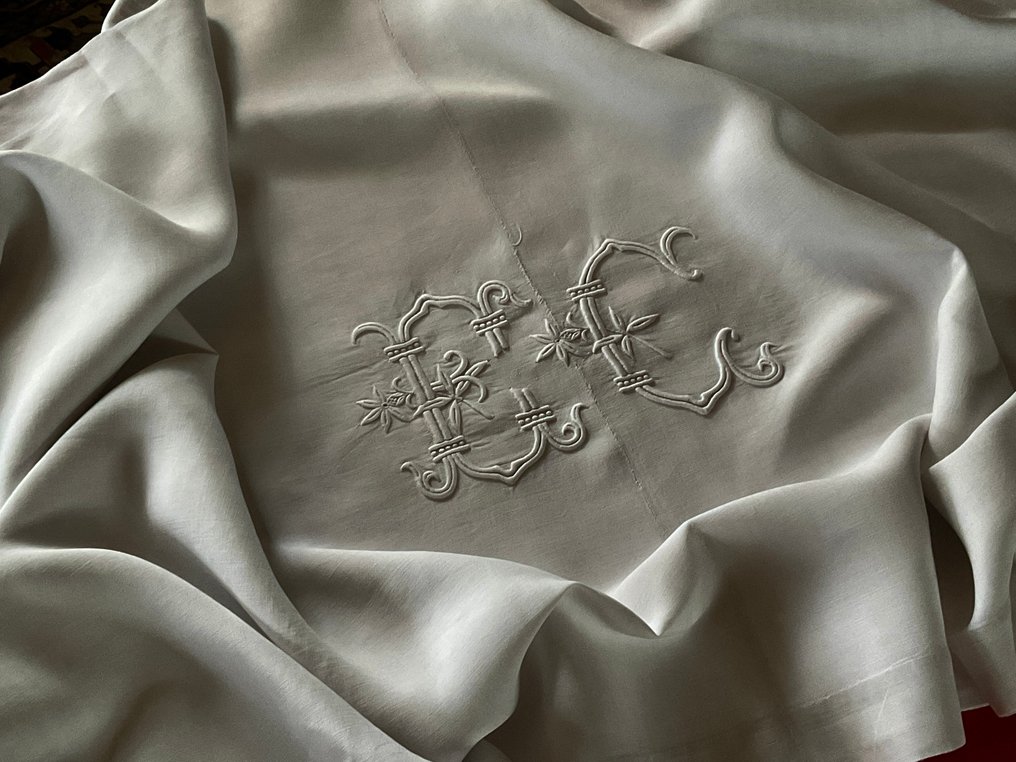
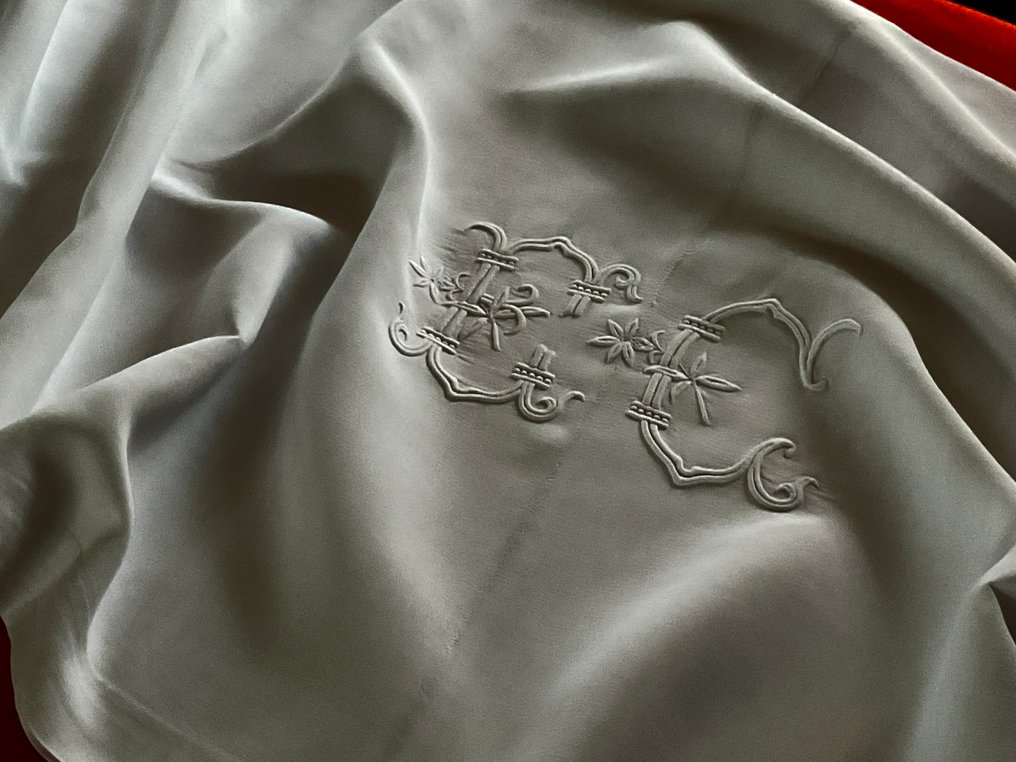
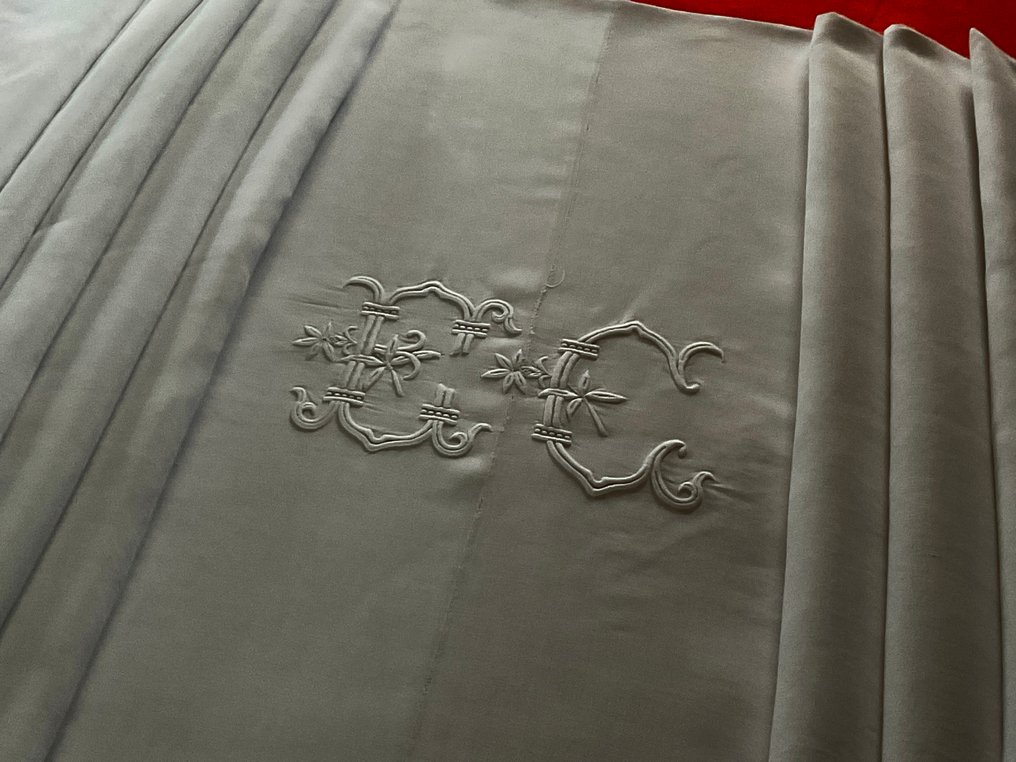
The initials are outlined twice and embroidered in high relief. Each initial is carrying some floral decoration.
The initials are 15 cm long.
We can date the bed linen to the early 20th Century as there is a seam in the centre.
Around 1920 the looms would have been lengthened to about 1m15 instead of 1 meter at the end of the 19th C.
This meant wider bed linen could be woven. Once of the loom, out workers and leaving young school girls would hand sew the selvedges together and so meticulously.
PLEASE NOTE:
There is a tiny hole which we have "filled in" with thermo collant. Also some of the selvedge centre seam had become undone which we have hand sewn meticulously again.
Vintage linen have already known a first life and can therefore have slight traces of the past.
We select the items in the best possible way, with love and dedication.
Honest descriptions and images gives a real vision of the items.
The linen that we offer for sale is not new linen, unless specifically mentioned, it is second-hand and old linen.
As such it may have already been washed, used or even worn.
In spite of the great care we take during the preparation, small imperfections can and may escape us.
They do not in any way call into question the unique and rare character of these wonderful pieces.
I present you our French Antique linen unwashed, as taken out of the armoire, unless otherwise described . It is all clean, but plan to give it a wash before use.
Please be aware of the above before you bid and buy.
Thank you for taking this into account
It is always the bride's family who provides the trousseau ( dowry ).
The quantity of items in a trousseau is entirely optional and depends not only on the amount allocated to this purchase but also on customs: even among families, some may have a need for linen.
Quantity is absolutely necessary in the countryside where linen was only washed in large batches in public washhouses or by streams a few times a year.
Women of the 20th century are much more refined, more subtle, more solemn than those women of yesteryear who sacrificed everything to appearances: under their magnificent dresses, they wore thick linen chemises, deadly corsets, and buckram linings. A special room was needed to contain the bulky wardrobes and the precious, cumbersome trousseau.
In the provinces, where the quiet hours allow for manual labor in all its
forms, lingerie plays a large role in domestic activities, and most
young girls, for the pleasure of pretty embroidery and fine lace,
carefully sew their future trousseau.
from 1928 onwards, it sometimes happened that the fiancés brought their own underwear and that the cost of buying household linen were borne by the young couple themselves.
A typical dowry for a provincial couple would consist of:
2 elegant night gowns with lace.
3 dozen handkerchiefs.
5 petticoats.
3 flannel scalloped petticoats.
2 embroidered bed linen.
6 simple bed linen.
12 pillow cases of which 2 embroidered
12 terry towels.
24 tea towels.
6 hand towels.
1 table linen with 6 napkins.
1 table linen with 8 to 10 napkins.
1 damask table linen with 12 napkins.
12 aprons.
The above would not have applied to the so called French Bourgeoisie families, nor the enclosed bed linen with E.C. initials.
The quantities of linen would have been many times multiplied and I have seen inventories of the bride having to arrive with 35 bed linen and as many pillow case sets. etc.
This bed linen in fact is one of 4 identical pieces and this would have been quite normal for the upper crust French to order half a dozen of the same family initials. And in fact all 4 pieces come from the same Bourgeoisie family. None of the children are interested in old linen! Such a pity not to carry on with the tradition.
The initials are outlined twice and embroidered in high relief. Each initial is carrying some floral decoration.
The initials are 15 cm long.
We can date the bed linen to the early 20th Century as there is a seam in the centre.
Around 1920 the looms would have been lengthened to about 1m15 instead of 1 meter at the end of the 19th C.
This meant wider bed linen could be woven. Once of the loom, out workers and leaving young school girls would hand sew the selvedges together and so meticulously.
PLEASE NOTE:
There is a tiny hole which we have "filled in" with thermo collant. Also some of the selvedge centre seam had become undone which we have hand sewn meticulously again.
Vintage linen have already known a first life and can therefore have slight traces of the past.
We select the items in the best possible way, with love and dedication.
Honest descriptions and images gives a real vision of the items.
The linen that we offer for sale is not new linen, unless specifically mentioned, it is second-hand and old linen.
As such it may have already been washed, used or even worn.
In spite of the great care we take during the preparation, small imperfections can and may escape us.
They do not in any way call into question the unique and rare character of these wonderful pieces.
I present you our French Antique linen unwashed, as taken out of the armoire, unless otherwise described . It is all clean, but plan to give it a wash before use.
Please be aware of the above before you bid and buy.
Thank you for taking this into account
Details
Era
1900-2000
Material
Linen
Model
Early XXth Bed linen in pure linen with E.C. initials
Country of Origin
France
Length
3.2 m
Colour
White
Width
2.3 m
Condition
Good condition - used with small signs of aging & blemishes
Estimated Period
1920-1930
Sold by