Gyokusendo - Dish - Copper, Tin

Opens tomorrow
Starting bid
€ 1
Add to your favourites to get an alert when the auction starts.

Expert
Selected by Marion Oliviero
Holds a master's in Chinese archaeology with extensive expertise in Japanese art.
Estimate € 180 - € 220
Catawiki Buyer Protection
Your payment’s safe with us until you receive your object.View details
Trustpilot 4.4 | 123418 reviews
Rated Excellent on Trustpilot.
Description from the seller
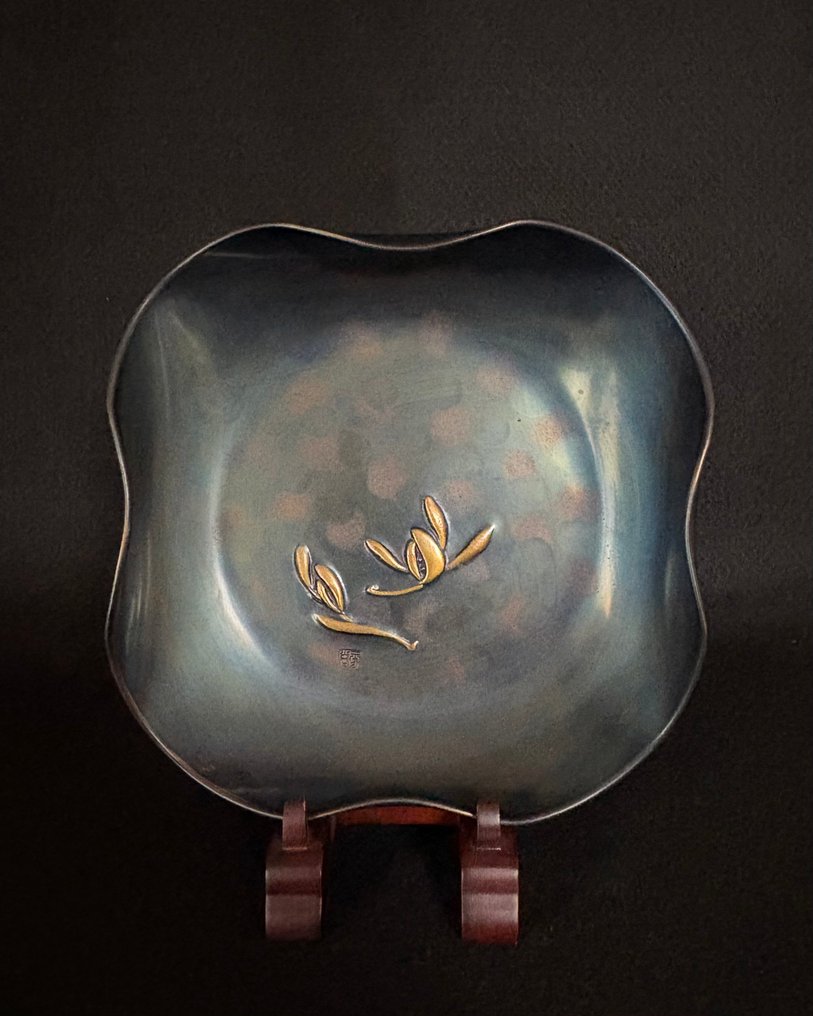
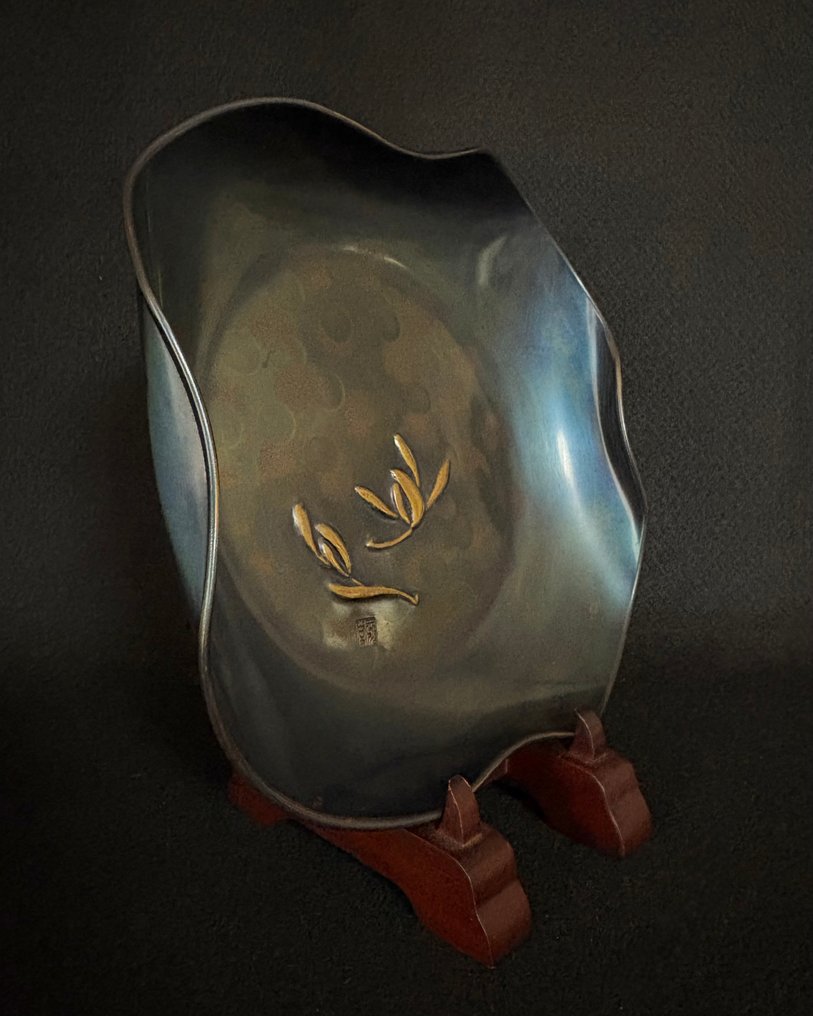
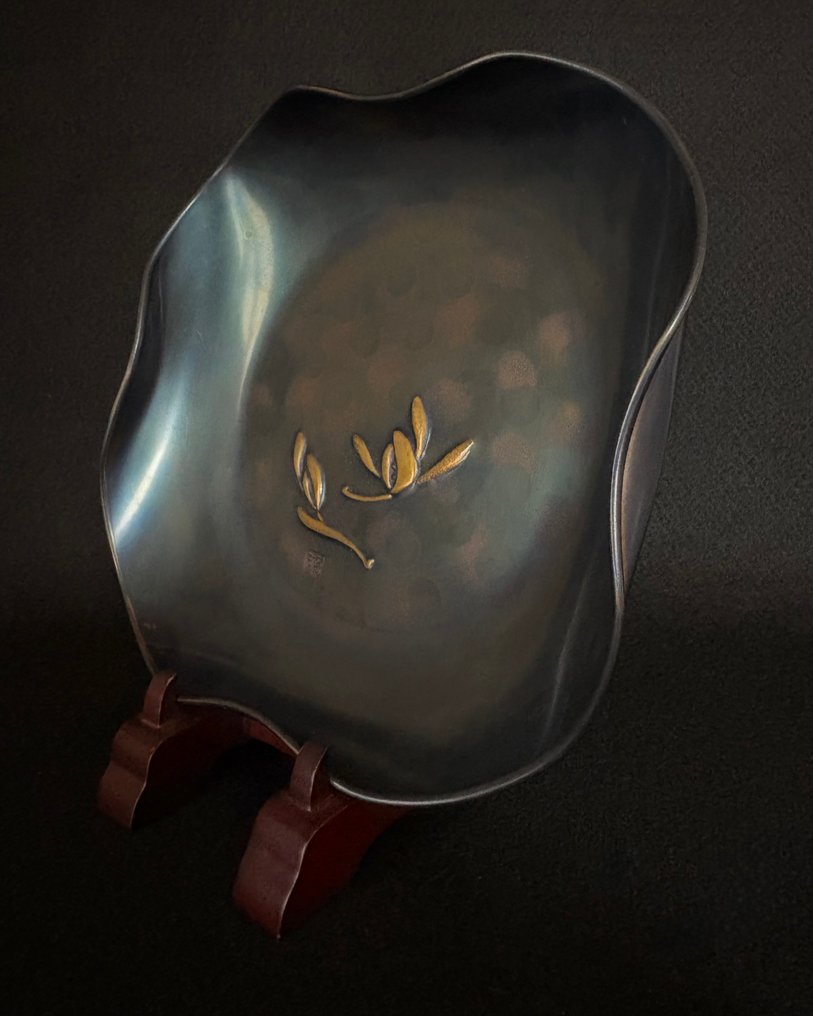
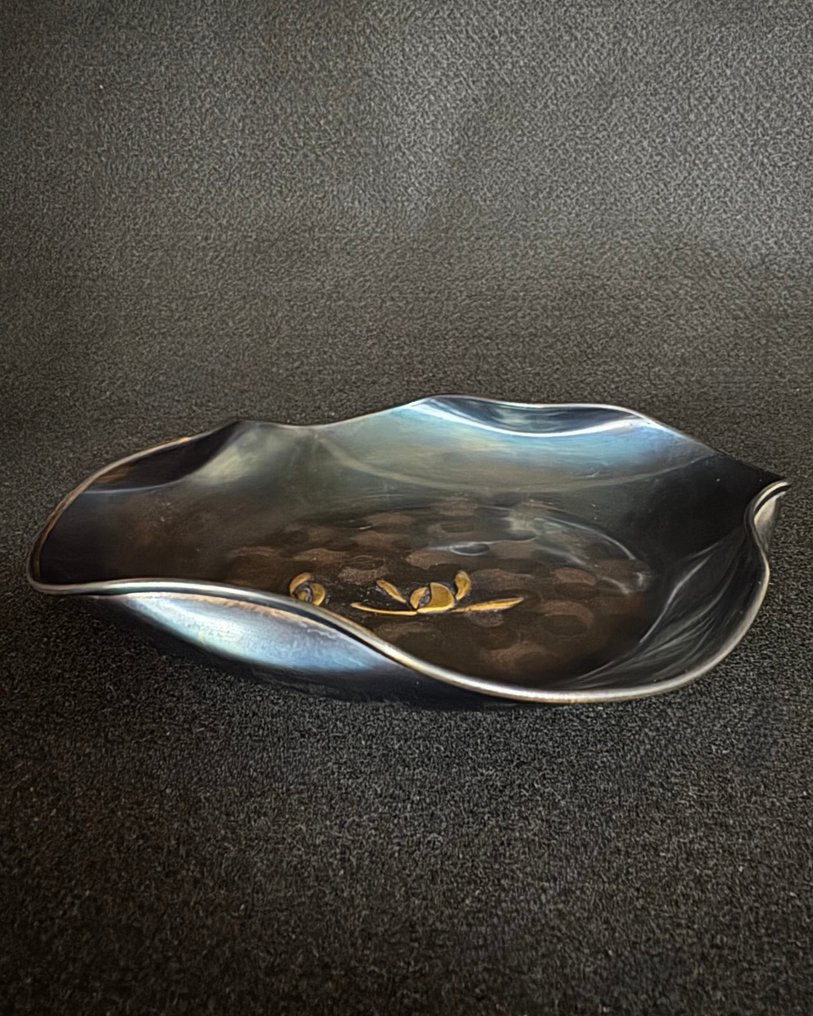
Baikakuran Kashiki 梅角蘭文菓子器(ばいかくらんもんかしき)|Gyokusendo 玉川堂(ぎょくせんどう)
This refined confectionery vessel was crafted by Gyokusendo, a distinguished workshop of tsuiki copperware founded in 1816 in Tsubame, Niigata Prefecture.
Tsubame has long been a center of metalworking, where the use of hammers in blacksmithing and copper craftsmanship became deeply rooted, supported by the stable availability of copper.
The tsuiki technique—shaping metal by repeatedly hammering copper sheets—was introduced to the region in 1768 by a traveling craftsman from Sendai.
In 1816, the first-generation master Kakubei Tamagawa inherited this technique and began producing practical household items such as pots and kettles.
In 1873, Gyokusendo exhibited its works at the Vienna World Exposition, Japan’s first official participation in a world’s fair, and formally adopted the name “Gyokusendo.”
Today, the seventh generation continues this exceptional lineage, presenting masterfully hammered metalworks both in Japan and internationally.
This piece features a plum-blossom-shaped silhouette accented with subtle orchid motifs.
The restrained decoration and soft metallic sheen create an elegant presence, making it a sophisticated confectionery vessel well suited to refined tea gatherings.
---
Artist Profile
1768
The tsuiki hammered copper technique is introduced to Tsubame, Niigata, by a traveling craftsman from Sendai.
1816
Kakubei Tamagawa, founder of Gyokusendo, inherits the technique and begins production of daily metal utensils.
1873
Gyokusendo exhibits at the Vienna World Exposition and adopts the workshop name “Gyokusendo.”
Present
The seventh generation continues the tradition, producing internationally acclaimed tsuiki copperware.
---
Accessories
Original wooden storage box (tomobako).
Original leaflet.
---
Dimensions & Weight
Height 3.5 cm.
Width 17 cm.
Depth 17 cm.
Weight 197 g.
Box size including accessories
Height 5 cm.
Width 19 cm.
Depth 19 cm.
---
Technique & Condition
Technique: Tsuiki (hammered metalwork).
Materials: Copper and tin.
Estimated period: 1970–1980.
Condition: Excellent condition.
---
Shipping
Shipping via Japan Post EMS from Japan.
Items are shipped only to countries where EMS delivery from Japan is available.
Items are securely packed to ensure safe international delivery.
Import duties, VAT, and customs handling fees are the sole responsibility of the buyer.
For bidders in the United States:
Please note that Japan Post is currently not accepting EMS shipments of commercial goods to the United States.
If the winning bidder’s shipping address is in the United States, the item will be shipped via DHL Express instead.
Please be aware that shipping costs via DHL are significantly higher than EMS rates.
Seller's Story
In the 30th year as a Japanese art dealer, sharing the aesthetics and spirit of Japanese art.
Baikakuran Kashiki 梅角蘭文菓子器(ばいかくらんもんかしき)|Gyokusendo 玉川堂(ぎょくせんどう)
This refined confectionery vessel was crafted by Gyokusendo, a distinguished workshop of tsuiki copperware founded in 1816 in Tsubame, Niigata Prefecture.
Tsubame has long been a center of metalworking, where the use of hammers in blacksmithing and copper craftsmanship became deeply rooted, supported by the stable availability of copper.
The tsuiki technique—shaping metal by repeatedly hammering copper sheets—was introduced to the region in 1768 by a traveling craftsman from Sendai.
In 1816, the first-generation master Kakubei Tamagawa inherited this technique and began producing practical household items such as pots and kettles.
In 1873, Gyokusendo exhibited its works at the Vienna World Exposition, Japan’s first official participation in a world’s fair, and formally adopted the name “Gyokusendo.”
Today, the seventh generation continues this exceptional lineage, presenting masterfully hammered metalworks both in Japan and internationally.
This piece features a plum-blossom-shaped silhouette accented with subtle orchid motifs.
The restrained decoration and soft metallic sheen create an elegant presence, making it a sophisticated confectionery vessel well suited to refined tea gatherings.
---
Artist Profile
1768
The tsuiki hammered copper technique is introduced to Tsubame, Niigata, by a traveling craftsman from Sendai.
1816
Kakubei Tamagawa, founder of Gyokusendo, inherits the technique and begins production of daily metal utensils.
1873
Gyokusendo exhibits at the Vienna World Exposition and adopts the workshop name “Gyokusendo.”
Present
The seventh generation continues the tradition, producing internationally acclaimed tsuiki copperware.
---
Accessories
Original wooden storage box (tomobako).
Original leaflet.
---
Dimensions & Weight
Height 3.5 cm.
Width 17 cm.
Depth 17 cm.
Weight 197 g.
Box size including accessories
Height 5 cm.
Width 19 cm.
Depth 19 cm.
---
Technique & Condition
Technique: Tsuiki (hammered metalwork).
Materials: Copper and tin.
Estimated period: 1970–1980.
Condition: Excellent condition.
---
Shipping
Shipping via Japan Post EMS from Japan.
Items are shipped only to countries where EMS delivery from Japan is available.
Items are securely packed to ensure safe international delivery.
Import duties, VAT, and customs handling fees are the sole responsibility of the buyer.
For bidders in the United States:
Please note that Japan Post is currently not accepting EMS shipments of commercial goods to the United States.
If the winning bidder’s shipping address is in the United States, the item will be shipped via DHL Express instead.
Please be aware that shipping costs via DHL are significantly higher than EMS rates.
Seller's Story
In the 30th year as a Japanese art dealer, sharing the aesthetics and spirit of Japanese art.
Details
Era
1900-2000
No. of items
1
Country of Origin
Japan
Manufacturer/ Brand
Gyokusendo
Material
Copper, Tin
Condition
Excellent condition: barely used with minimal signs of wear
Height
3.5 cm
Width
17 cm
Diameter
17 cm
Depth
17 cm
Estimated Period
1970-1980
Sold by
