Luigi Voltolina (1942) - Cavalli


05
days
16
hours
01
minute
51
seconds
Starting bid
€ 1
Reserve price not met

Expert
Selected by Caroline Bokobza
Graduated as French auctioneer and worked in Sotheby’s Paris valuation department.
Estimate € 200 - € 250
No bids placed
Catawiki Buyer Protection
Your payment’s safe with us until you receive your object.View details
Trustpilot 4.4 | 123641 reviews
Rated Excellent on Trustpilot.
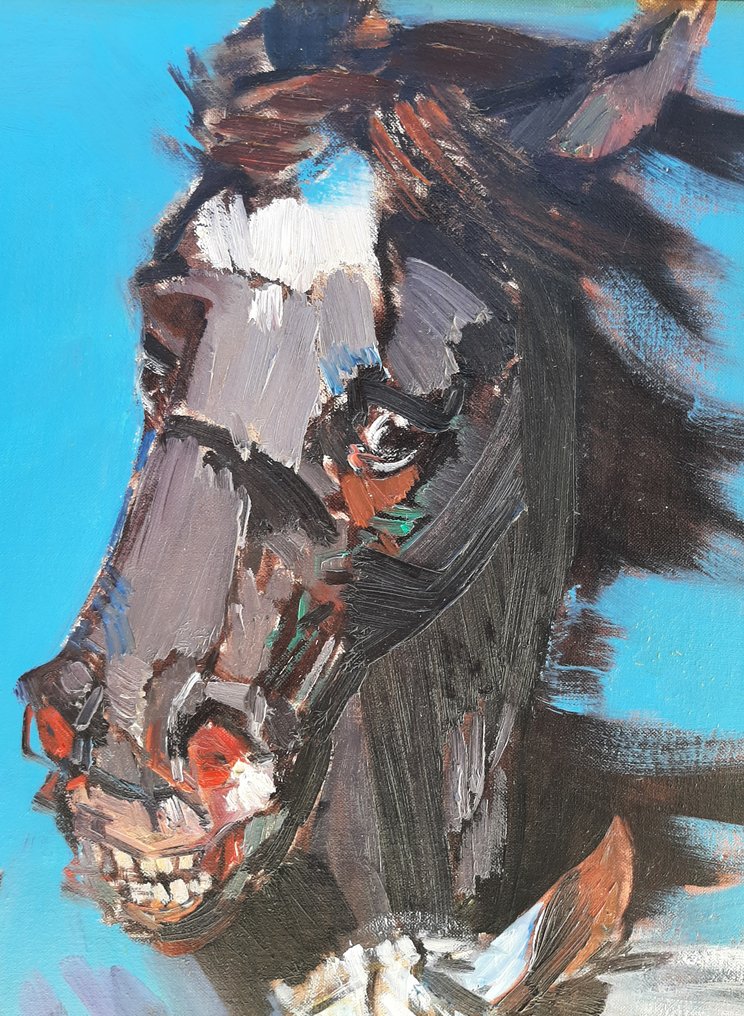
Cavalli, an original oil on canvas by Luigi Voltolina (b. 1942), 103 x 83 cm, 1970, Neo-Expressionism, Italy, sold with frame.
AI-assisted summary
Description from the seller
Author
Luigi Voltolina (1942) Italian painter. Born in Valona, he moved to Venice at the age of two and shaped his artistic identity in the fertile Venetian environment, studying at the Istituto d'Arte dei Carmini under the guidance of Mario Dinon. His creative journey has been marked from the beginning by an intense exhibition activity, which led him to engage with the cultural currents of major capitals such as Rome, where in the 1970s he participated in the prestigious X Quadriennale d’Arte, and Madrid, where encounters with Iberian folklore inspired new and evocative painting cycles. This international openness culminated in a deep connection with New York, a city that since the 1980s has become a fundamental source of inspiration for his exploration of modernity and the perception of time.
Voltolina's stylistic signature is defined through a powerful neo-expressionist figurative language, characterized by an restless search that centers on the human figure captured in moments of intense dynamic and anatomical tension. Influenced by the existentialist suggestions of Francis Bacon, her painting transposes complex moods onto the canvas. Alongside her painting work, the artist has successfully explored glass sculpture, collaborating with Murano masters, managing to translate the expressive force of her mark into essential, tactile forms.
Description
"Cavalli," oil on canvas, 103*83cm with frame, 80*60cm the canvas alone, signed at the bottom right, 1970. On the back, signature and title.
The painting depicts a powerful allegory of primal strength through the faces of two steeds that emerge forcefully from an intense, flat cobalt blue background. The composition is arranged with a vertical overlay of the heads: the upper one, brown and somber, dominates the scene with a wide-eyed stare and partially open jaws, while the lower one, defined by cool tones of white and gray, appears to be in a fierce run. A decisive horizontal yellow stroke at the base of the painting serves as a chromatic and structural counterpoint, anchoring the plastic masses of the animals and emphasizing the dynamic tension that permeates the entire canvas. The brushwork is charged with material and an almost violent gestural vigor, where the color does not merely describe form but becomes the very substance of emotion.
The painting is set in a period of great ferment for Voltolina, coinciding with the time when the artist began to gain recognition in major national exhibitions, such as the Quadriennale di Roma. The painting is an emblematic example of his neo-expressionist figurative language, which draws on existentialist suggestions from Francis Bacon. The exploration of anatomical tension and the depiction of animal strength are the pillars of the work. The painting demonstrates the artist's ability to transpose complex moods onto the pictorial surface, transforming the equestrian subject into a symbol of vitality and primordial motion. An engaging composition with a strong aesthetic impact.
Condition Report
Excellent overall condition, fully intact in every part with vivid brushstrokes and colors that are clear and lively. The frame is to be understood as complimentary.
Tracked and insured shipment with adequate packaging.
Author
Luigi Voltolina (1942) Italian painter. Born in Valona, he moved to Venice at the age of two and shaped his artistic identity in the fertile Venetian environment, studying at the Istituto d'Arte dei Carmini under the guidance of Mario Dinon. His creative journey has been marked from the beginning by an intense exhibition activity, which led him to engage with the cultural currents of major capitals such as Rome, where in the 1970s he participated in the prestigious X Quadriennale d’Arte, and Madrid, where encounters with Iberian folklore inspired new and evocative painting cycles. This international openness culminated in a deep connection with New York, a city that since the 1980s has become a fundamental source of inspiration for his exploration of modernity and the perception of time.
Voltolina's stylistic signature is defined through a powerful neo-expressionist figurative language, characterized by an restless search that centers on the human figure captured in moments of intense dynamic and anatomical tension. Influenced by the existentialist suggestions of Francis Bacon, her painting transposes complex moods onto the canvas. Alongside her painting work, the artist has successfully explored glass sculpture, collaborating with Murano masters, managing to translate the expressive force of her mark into essential, tactile forms.
Description
"Cavalli," oil on canvas, 103*83cm with frame, 80*60cm the canvas alone, signed at the bottom right, 1970. On the back, signature and title.
The painting depicts a powerful allegory of primal strength through the faces of two steeds that emerge forcefully from an intense, flat cobalt blue background. The composition is arranged with a vertical overlay of the heads: the upper one, brown and somber, dominates the scene with a wide-eyed stare and partially open jaws, while the lower one, defined by cool tones of white and gray, appears to be in a fierce run. A decisive horizontal yellow stroke at the base of the painting serves as a chromatic and structural counterpoint, anchoring the plastic masses of the animals and emphasizing the dynamic tension that permeates the entire canvas. The brushwork is charged with material and an almost violent gestural vigor, where the color does not merely describe form but becomes the very substance of emotion.
The painting is set in a period of great ferment for Voltolina, coinciding with the time when the artist began to gain recognition in major national exhibitions, such as the Quadriennale di Roma. The painting is an emblematic example of his neo-expressionist figurative language, which draws on existentialist suggestions from Francis Bacon. The exploration of anatomical tension and the depiction of animal strength are the pillars of the work. The painting demonstrates the artist's ability to transpose complex moods onto the pictorial surface, transforming the equestrian subject into a symbol of vitality and primordial motion. An engaging composition with a strong aesthetic impact.
Condition Report
Excellent overall condition, fully intact in every part with vivid brushstrokes and colors that are clear and lively. The frame is to be understood as complimentary.
Tracked and insured shipment with adequate packaging.
Details
Artist
Luigi Voltolina (1942)
Sold with frame
Yes
Sold by
Gallery
Edition
Original
Title of artwork
Cavalli
Technique
Oil painting
Signature
Signed
Country of Origin
Italy
Year
1970
Condition
Excellent condition
Height
103 cm
Width
83 cm
Style
Neo-Expressionism
Period
1960-1970
Sold by
